

Размышление об истории Италии
Размышление об истории Италии: Подробный экзамен
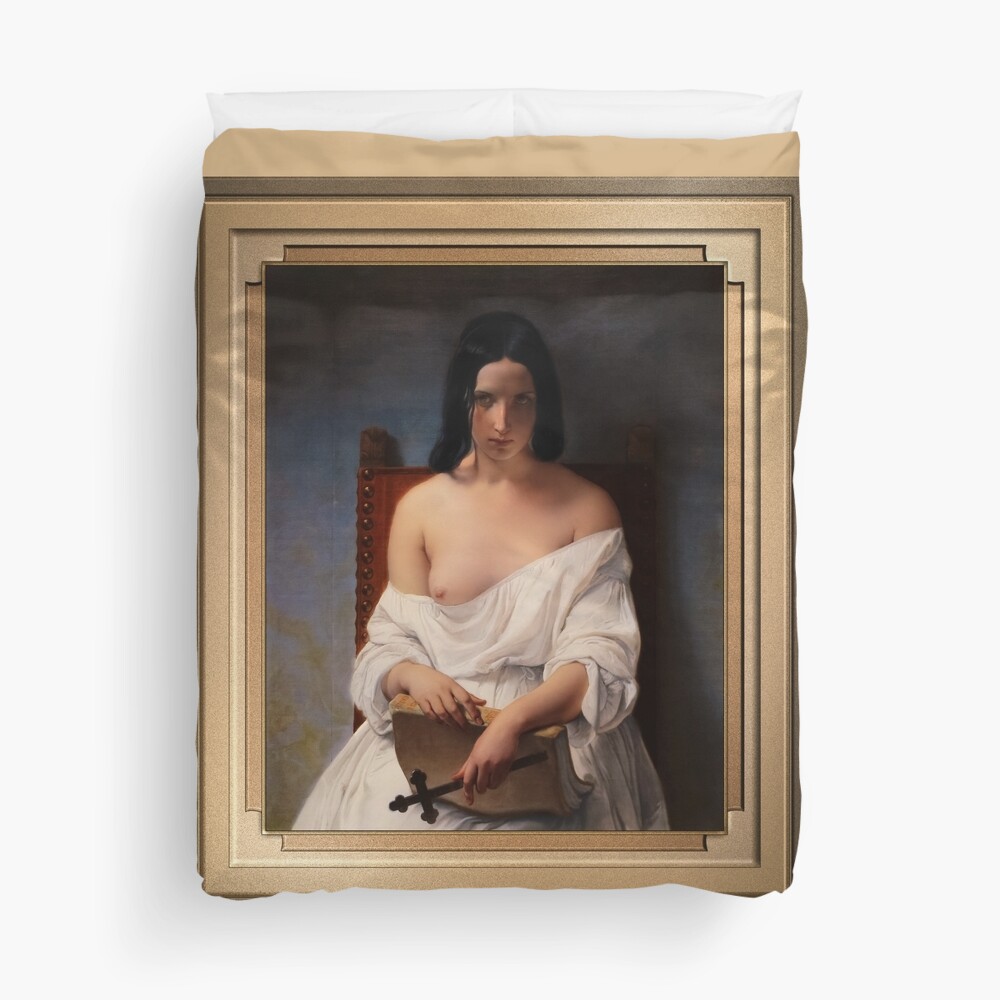
Франческо Хайес’s “Meditation on the History of Italy,Окрашенный вокруг 1851, is a compelling work within the Romantic tradition, deeply rooted in Italian nationalism and historical allegory. Картина, currently housed at the Pinacoteca di Brera in Milan, transcends a simple portrait to become a complex visual narrative reflecting the yearning for a unified and independent Italy during a period of political fragmentation and foreign domination. Hayez was a leading figure in the Risorgimento, the 19th-century movement that led to Italian unification, and his art frequently served as a vehicle for expressing patriotic sentiments.
Оглавление
Композиционная структура & Параметр
The composition is dominated by a single female figure seated upon an ornate chair against a backdrop of muted blues and grays. The chair itself appears aged and slightly dilapidated, hinting at the decline of past glories. The background fades into obscurity, suggesting a timeless setting rather than a specific historical location. This ambiguity allows for broader interpretation, encompassing Italy’s long and turbulent history. The figure is centrally positioned, drawing immediate attention to her contemplative state. The overall effect is one of quiet introspection within a space that feels both intimate and monumental.
Фигура: Identity & Наряд
The woman depicted possesses striking features – dark hair cascading down her shoulders, pale skin, and intense, melancholic eyes. Her gaze is directed downwards, suggesting deep thought or sorrow. She is draped in a simple white gown, partially slipped from one shoulder, revealing the upper portion of her chest. The fabric appears soft and flowing, adding to the sense of vulnerability and grace. The lack of elaborate ornamentation on her attire contrasts with the ornate chair, further emphasizing her individual presence and internal focus. Her bare feet rest upon the floor, grounding her in a tangible reality despite the allegorical nature of the scene.
The Book & Cross: Символические элементы
Held within her hands is an open book, its pages filled with text that remains largely illegible to the viewer. This book clearly represents Italian history and literature – the accumulated knowledge and cultural heritage of the nation. Lying across the book’s cover is a large, dark cross. The presence of the cross introduces a layer of religious significance, referencing Italy’s strong Catholic tradition and potentially alluding to the role of faith in shaping national identity. тем не мение, its placement atop the historical record suggests a complex relationship between religion and Italian history – perhaps a commentary on how faith has both supported and sometimes hindered the nation’s progress.
Освещение & Цветовая палитра
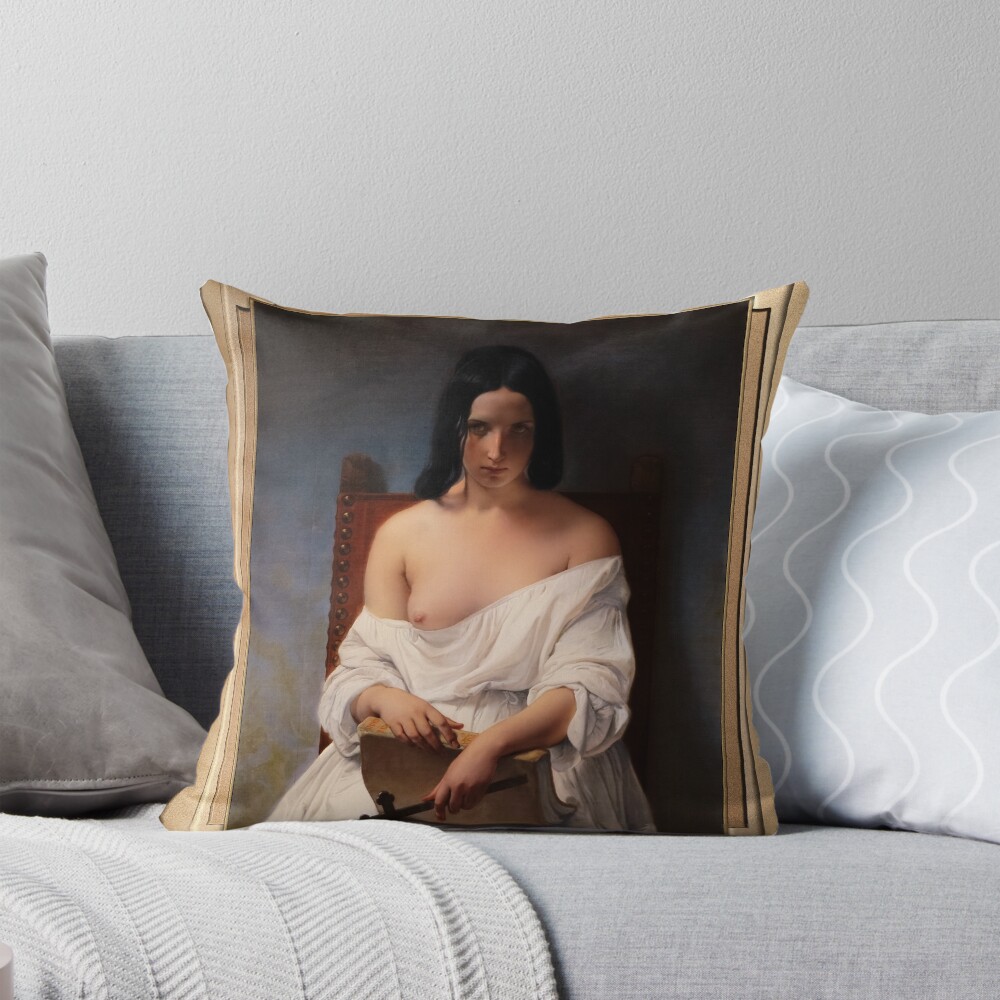
Освещение в “Размышление об истории Италии” is carefully orchestrated to enhance the painting’s emotional impact. Мягкий, diffused light illuminates the woman from above, highlighting her face and upper body while leaving much of the background shrouded in shadow. This creates a sense of mystery and emphasizes the figure’s isolation within her thoughts. The color palette is restrained, dominated by muted tones of white, серый, синий, и коричневый. These colors contribute to the painting’s somber mood and reinforce the themes of reflection and melancholy. The limited use of vibrant hues draws attention to specific details, such as the dark cross and the woman’s eyes.
Художественный стиль & Влияние
Hayez’s style is characteristic of Italian Romanticism, emphasizing emotion, индивидуализм, and a fascination with history and mythology. The painting exhibits meticulous detail in rendering the figure’s features and clothing, demonstrating Hayez’s technical skill as an artist. There are echoes of Neoclassical influences in the composition’s balance and clarity, but the overall tone is decidedly Romantic, prioritizing emotional expression over strict adherence to classical ideals. The work shares affinities with other allegorical paintings of the period, particularly those exploring themes of national identity and historical memory.
Исторический контекст & Интерпретация
Painted during a time when Italy was divided into numerous states under foreign rule or dominated by regional powers, “Размышление об истории Италии” served as a powerful symbol of hope for unification. The woman’s contemplative pose and sorrowful expression can be interpreted as representing the Italian people reflecting upon their past struggles and yearning for a brighter future. The book symbolizes the nation’s rich cultural heritage, while the cross suggests the enduring influence of religion in Italian life. Hayez deliberately avoided explicitly depicting specific historical events or figures, allowing viewers to project their own interpretations onto the painting and connect with its broader themes of national identity and aspiration.
Биография художника получена из Wikipedia.org
Франческо Айес был из относительно бедной семьи из Венеции.. Его отец, Джованни, был французского происхождения, а его мать, Клэр Торселла, был из Мурано. Франческо был младшим из пяти сыновей..
Его воспитывала сестра матери, вышла замуж за Джованни Бинаско, состоятельный судовладелец и коллекционер произведений искусства. Хайез с детства проявлял склонность к рисованию.. Его дядя, заметив его не по годам развитый талант, отдал его в ученики к реставратору в Венеции. Позже Хайес стал учеником художника Франческо Маджотто, у которого он продолжал учиться в течение трех лет..
Он был принят на курс живописи Новой академии изящных искусств в Венеции. 1806, где он учился у Теодоро Маттейни. В 1809 он выиграл конкурс Венецианской академии на год проживания в Академии Сан-Лука в Риме..
Он оставался в Риме до 1814, затем переехал в Неаполь, где Иоахим Мюрат поручил ему написать крупную работу, изображающую Улисса при дворе Алкиноя.. В середине 1830-х он посетил салон Maffei в Милане., ведущий Клара Маффеи. Позже муж Маффеи заказал Хайезу портрет своей жены.. В 1850 Хайес был назначен директором Академии Брера..
На протяжении долгой карьеры, Хайез оказался особенно плодовитым.. Его продукция включала исторические картины, призванные апеллировать к патриотической чувствительности его покровителей, а также работы, отражающие желание сопровождать неоклассический стиль великими темами., либо из библейской, либо из классической литературы.
Он также рисовал сцены из театральных постановок.. Заметно отсутствует в его творчестве, тем не мение, запрестольные образы – возможно, из-за наполеоновских вторжений, которые лишили освящения многие церкви и монастыри в Северной Италии.. Историк искусства Коррадо Риччи описал Хайеса как классика, который затем превратился в стиль эмоционального буйства.. Франческо Хайес, портретист (1859)
В его портретах есть интенсивность Энгра и движения назареев.. Часто сидит, Субъекты Хайеза часто одеты в строгие, черно-белая одежда, практически без снаряжения. Пока Хайез делал портреты для знати, он также изучал другие темы, такие как коллеги-художники и музыканты.. В конце карьеры, известно, что он работал с фотографиями.
Одной из любимых тем Хайеса была полуодетая одалиска, вызывающая восточные мотивы — излюбленная тема художников-романтиков.[3] Изображения гаремов и их женщин позволили художникам рисовать сцены, которые в противном случае были бы неприемлемы в обществе.. Даже в Марии Магдалине Хайеса больше чувственности, чем религиозного пыла..
Картина Хайеза «Поцелуй» считалась современниками одной из лучших его работ., и, возможно, это его самая известная работа. Анонимный, непринужденный жест пары не требует знания мифа или литературы для интерпретации, и обращается к современному взгляду.
Научная оценка карьеры Хайеса осложняется его склонностью не подписывать и не датировать свои работы.. Часто даты на его картинах указывают, когда работа была приобретена или продана., не время его создания. Более того, он часто рисовал одни и те же композиции несколько раз с минимальными вариациями, если они вообще были.
Среди его учеников из Академии Брера был Карло Бельджойозо., Аманцио Каттанео, Алессандро Фокози, Джованни Баттиста Ламперти, Ливо Овцы, Анджело Пьетрасанта, Антонио Шайло, Карло Антонио Тавелла, Исмаэле Теглио Милла и Франческо Валаперта.
Хайес умер в Милане., возраст 91. Его студия в Академии Брера отмечена табличкой..
Это отретушированная цифровая репродукция изображения старых мастеров, находящегося в общественном достоянии, которое можно приобрести в Интернете в качестве печать на рулонном холсте.