

Melankoliaa
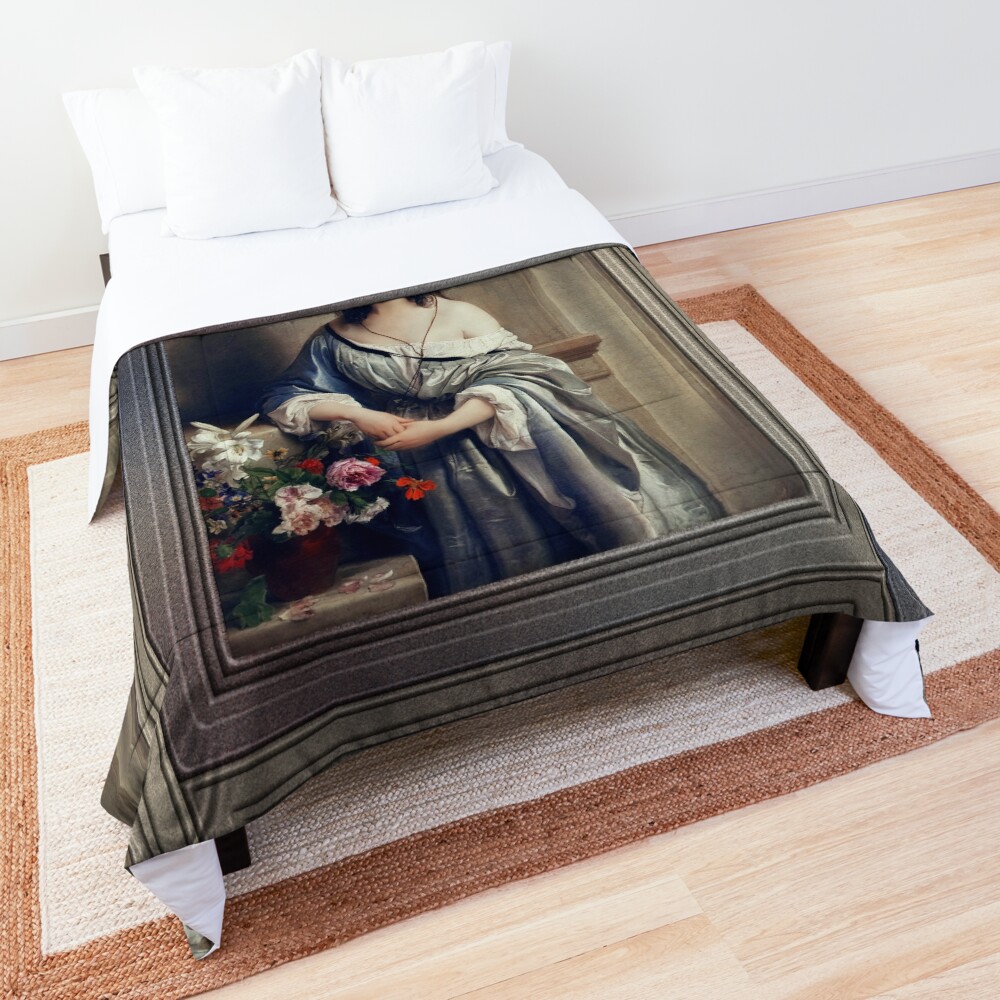
Melankolia c1841-42, italialainen taidemaalari Francesco Hayez (1791 – 1882); jota pidettiin romantiikan ajan johtavana maalarina 1800-luvun puolivälissä Milanossa Italiassa. Hänet tunnettiin hyvin historiallisista maalauksistaan, poliittisia allegorioita ja poikkeuksellisen hienoja muotokuvia.
Francesco Hayez, a prominent Italian painter of the Romantic period, captured the emotive power of human expression and drama in his renowned work “Melankoliaa”. This poignant portrait, luotu ympäri 1841-42, epitomizes the Romantic ideals of intense emotional depth, rich symbolism, and the exploration of human inner turmoil. The painting features a young woman in a reflective pose, her body angled slightly away from the viewer, yet her gaze directly engages with the observer. Her expression is one of deep contemplation and melancholy, a theme that resonates throughout much of Hayez’s oeuvre.

The primary subject of the artwork is a woman dressed in a luxurious yet simple gown of muted silvery-blue fabric. Her attire is both modest and elegant, indicative of her high social standing but also suggesting a restrained, subdued personality.
The material of her gown is rendered with Hayez’s signature meticulous brushwork, which gives the fabric a soft, almost translucent quality. It reflects light in such a way that one can almost feel its weight and texture. The delicacy of the gown contrasts with the weight of her expression, reinforcing the thematic tension of the painting.
Kohteen hiukset, dark and glossy, falls in loose waves around her shoulders, framing her face. Her posture is demure yet sorrowful, her hand gently resting on a vase of flowers placed on a table to her side. The inclusion of flowers—likely meant to symbolize transience and the fragility of life—adds a layer of complexity to the emotional narrative.
The flowers themselves are rendered with meticulous detail, a hallmark of Hayez’s technical prowess. They appear lifelike, as if they could be plucked from the canvas at any moment. This detailed rendering contrasts sharply with the somber tone of the subject, creating a sense of fragility in both the floral elements and the human form.
Aiheen takana, the setting is an interior space, subtly lit to evoke a sense of isolation and introspection. The light seems to enter from an unseen source, casting soft shadows that envelop the subject, further intensifying the feeling of seclusion. The muted colors of the background, which include soft earth tones and shades of gray, highlight the figure of the woman, making her the focal point of the composition.
The architectural features of the room, particularly the classical columns that frame the space, suggest a timeless quality. This classical influence also evokes a sense of the past and the passage of time, which ties in with the theme of melancholy.
Mieliala “Melankoliaa” is one of introspective sadness. The woman’s expression is not one of overt grief or despair but rather a quiet, contemplative sorrow. Hänen katseensa, though distant, suggests a mind lost in thought—perhaps reflecting on personal loss, unfulfilled desires, or an existential longing. Hayez was deeply interested in the psychological states of his subjects, and this painting showcases his ability to capture the complexity of emotion through subtle facial expressions and body language.
While the subject’s melancholy could be interpreted in various ways, it is important to consider the broader cultural and historical context of the painting. Created during the early 1840s, the work was produced at a time of political and social unrest in Italy.
The Romantic movement, with its emphasis on emotion, individualismi, and rebellion against societal norms, had a profound impact on the intellectual climate of the time. Hayez’s “Melankoliaa” could be seen as a reflection of the inner turmoil experienced by many individuals living through the tensions of political upheaval, as well as the personal, emotional struggles that often accompanied such periods of uncertainty.
The symbolism within the painting also speaks to broader themes of romanticism. The wistful nature of the subject, combined with the classical elements of the room and the natural motifs of the flowers, suggests an idealization of the past and an awareness of life’s fleeting nature. The woman’s contemplative pose and the stillness of the surrounding environment suggest an acceptance of these fleeting moments, evoking a sense of resignation that is characteristic of many Romantic works.
Hayez’s use of light and shadow in this painting further enhances the emotional tone. The light that falls gently across the woman’s face and gown creates a sense of intimacy, almost as if we are intruding on a private moment. Vielä, the shadows that play across her figure suggest something darker—perhaps an unspoken sadness or the weight of an unvoiced emotion. This interplay of light and shadow is a powerful tool in conveying the internal conflict of the subject, highlighting the emotional depth and complexity that Hayez was able to achieve in this piece.
Tyylin suhteen, “Melankoliaa” is quintessentially Romantic in its focus on emotion and individual experience. Hayez’s technical mastery is evident in his handling of texture and light, and his ability to convey psychological depth through subtle details is what makes this painting a standout example of Romantic portraiture. The realism with which he renders his subject, coupled with the idealization of the woman’s form, reflects the Romantic ideal of the artist as a master of both technique and emotional expression.
Lopulta, “Melankoliaa” is a masterpiece of emotional and psychological depth. Through the figure of the young woman, Hayez explores themes of introspection, loss, and the complexity of human emotion. His masterful use of light, väri-, and composition creates a timeless portrait that continues to resonate with viewers, evoking feelings of empathy and contemplation. The painting remains one of the most iconic representations of Romantic portraiture and exemplifies Francesco Hayez’s ability to capture the profound emotional states of his subjects.
Tiedot alla Wikipedia.org
Francesco Hayez oli kotoisin suhteellisen köyhästä venetsialaisesta perheestä. Hänen isänsä, Giovanni, oli ranskalaista alkuperää hänen äitinsä aikana, Chiara Torcella, oli kotoisin Muranosta. Francesco oli nuorin viidestä pojasta.
Hänet kasvatti äitinsä sisar, joka oli naimisissa Giovanni Binascon kanssa, varakas laivanvarustaja ja taiteenkeräilijä. Hayez osoitti taipumusta piirtämiseen lapsuudesta asti. Hänen setänsä, huomattuaan hänen ennenaikaisen lahjakkuutensa, opiskeli hänet taiteen restauraattoriksi Venetsiaan. Hayezista tuli myöhemmin taidemaalari Francesco Maggiotto, jonka kanssa hän jatkoi opintojaan kolme vuotta..
Hänet hyväksyttiin Venetsian New Academy of Fine Arts -akatemian maalauskurssille vuonna 1806, jossa hän opiskeli Teodoro Matteinin johdolla. Sisään 1809 hän voitti Venetsian akatemian kilpailun vuoden residenssiksi Accademia di San Lucassa Roomassa.
Hän pysyi Roomassa kunnes 1814, muutti sitten Napoliin, missä Joachim Murat tilasi hänet maalaamaan suuren teoksen, joka kuvaa Ulyssesia Alcinousin hovissa. 1830-luvun puolivälissä hän osallistui Milanon Maffei-salonkiin, majoittaja on Clara Maffei. Maffei aviomies tilasi myöhemmin Hayezille muotokuvan vaimostaan. Sisään 1850 Hayez nimitettiin Brera Academyn johtajaksi.
Pitkän uran aikana, Hayez osoittautui erityisen tuotteliaaksi. Hänen tuotantonsa sisälsi historiallisia maalauksia, jotka oli suunniteltu vetoamaan hänen suojelijoidensa isänmaalliseen herkkyyteen, sekä teoksia, jotka heijastelevat halua täydentää uusklassista tyyliä suuriin teemoihin., joko raamatullisesta tai klassisesta kirjallisuudesta.
Hän maalasi myös kohtauksia teatteriesityksistä. Ilmeisesti poissa hänen tuotannostaan, kuitenkin, ovat alttaritauluja – johtui mahdollisesti Napoleonin hyökkäyksestä, joka pyhitti monia kirkkoja ja luostareita Pohjois-Italiassa. Taidehistorioitsija Corrado Ricci kuvaili Hayezia klassistina, joka kehittyi sitten tunnemyrskyn tyyliksi.. Francesco Hayez, Suudelma (1859)
Hänen muotokuvissaan on Ingresin ja Nazarene-liikkeen intensiteetti. Usein istuvat, Hayezin kohteet pukeutuvat usein ankarasti, mustavalkoisia vaatteita, vähän tai ei ollenkaan varusteita. Vaikka Hayez teki muotokuvia aatelistolle, hän tutki myös muita aiheita, kuten muita taiteilijoita ja muusikoita. Myöhäinen uransa, hänen tiedetään käyttäneen valokuvia.
Yksi Hayezin suosikkiteemoista oli itämaisia teemoja tuova puolipukuinen Odalisque – romanttisten maalareiden suosikkiaihe.[3] Haaremien ja heidän naistensa kuvaukset antoivat taiteilijoille mahdollisuuden maalata kohtauksia, joita yhteiskunnassa ei muuten olisi hyväksytty. Jopa Hayezin Maria Magdaleenassa on enemmän aistillisuutta kuin uskonnollista intoa.
Hayezin maalaus Suudelma oli hänen aikalaistensa mielestä yksi hänen parhaista teoksistaan, ja se on ehkä hänen tunnetuin yritys. Anonyymi, parin ele ei vaikuta tulkintaan ilman myytin tai kirjallisuuden tuntemusta, ja vetoaa moderniin katseeseen.
Tieteellistä arviointia Hayezin urasta on vaikeuttanut hänen taipumuksensa olla allekirjoittamatta tai seurustelemaan teoksiaan. Usein maalausten päivämäärät osoittavat, milloin teos on hankittu tai myyty, ei sen luomisen aika. Lisäksi, hän maalasi usein samat sävellykset useita kertoja minimaalisilla vaihteluilla, jos ollenkaan.
Hänen oppilaitaan Brera Academysta olivat Carlo Belgioioso, Amanzio Cattaneo, Alessandro Focosi, Giovanni Battista Lamperti, Livo Pecora, Angelo Pietrasanta, Antonio Silo, Carlo Antonio Tavella, Ismaele Teglio Milla ja Francesco Valaperta.
Hayez kuoli Milanossa, ikä 91. Hänen studionsa Brera Academyssa on merkitty lautasella.
Tämä digitaalisen taiteen luomus, Kuten kaikki taideteokset, jotka löytyvät Xzendor7-verkkosivustolta, ovat ostettavissa verkosta useissa eri materiaalimuodoissa, mukaan lukien kanvasvedokset, akryyliprintit, metalliprintit, puu tulosteita, kehystetyt printit, julisteita, ja kuten rullatut kanvasprintit eri kokoja alkaen 12 tuumaa 72 tuumaa riippuen todellisen taideteoksen koosta ja tilauspainatusliikkeestä, josta haluat ostaa taiteen.