

עֶצֶב
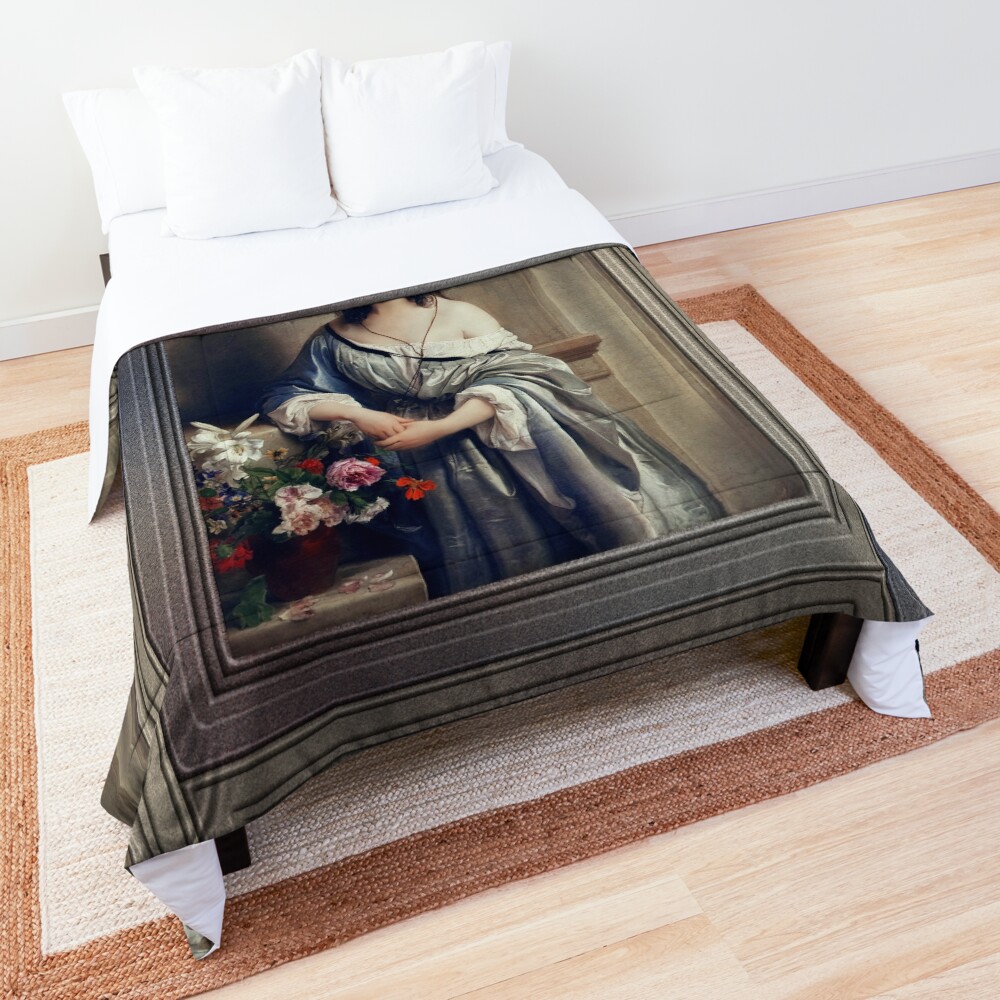
מלנכוליה c1841-42 מאת הצייר האיטלקי פרנצ'סקו הייז (1791 – 1882); אשר נתפס כצייר המוביל של תקופת הרומנטיקה באמצע המאה ה-19 במילאנו איטליה. …, אלגוריות פוליטיות ודיוקנאות משובחים יוצאי דופן.
פרנצ'סקו הייז, a prominent Italian painter of the Romantic period, captured the emotive power of human expression and drama in his renowned work “עֶצֶב”. This poignant portrait, נוצר מסביב 1841-42, epitomizes the Romantic ideals of intense emotional depth, rich symbolism, and the exploration of human inner turmoil. The painting features a young woman in a reflective pose, her body angled slightly away from the viewer, yet her gaze directly engages with the observer. Her expression is one of deep contemplation and melancholy, a theme that resonates throughout much of Hayez’s oeuvre.

The primary subject of the artwork is a woman dressed in a luxurious yet simple gown of muted silvery-blue fabric. Her attire is both modest and elegant, indicative of her high social standing but also suggesting a restrained, subdued personality.
The material of her gown is rendered with Hayez’s signature meticulous brushwork, which gives the fabric a soft, almost translucent quality. It reflects light in such a way that one can almost feel its weight and texture. The delicacy of the gown contrasts with the weight of her expression, reinforcing the thematic tension of the painting.
The subject’s hair, dark and glossy, falls in loose waves around her shoulders, framing her face. Her posture is demure yet sorrowful, her hand gently resting on a vase of flowers placed on a table to her side. The inclusion of flowers—likely meant to symbolize transience and the fragility of life—adds a layer of complexity to the emotional narrative.
The flowers themselves are rendered with meticulous detail, a hallmark of Hayez’s technical prowess. They appear lifelike, as if they could be plucked from the canvas at any moment. This detailed rendering contrasts sharply with the somber tone of the subject, creating a sense of fragility in both the floral elements and the human form.
מאחורי הנושא, the setting is an interior space, subtly lit to evoke a sense of isolation and introspection. The light seems to enter from an unseen source, casting soft shadows that envelop the subject, further intensifying the feeling of seclusion. The muted colors of the background, which include soft earth tones and shades of gray, highlight the figure of the woman, making her the focal point of the composition.
The architectural features of the room, particularly the classical columns that frame the space, suggest a timeless quality. This classical influence also evokes a sense of the past and the passage of time, which ties in with the theme of melancholy.
מצב הרוח של “עֶצֶב” is one of introspective sadness. The woman’s expression is not one of overt grief or despair but rather a quiet, contemplative sorrow. המבט שלה, though distant, suggests a mind lost in thought—perhaps reflecting on personal loss, unfulfilled desires, or an existential longing. Hayez was deeply interested in the psychological states of his subjects, and this painting showcases his ability to capture the complexity of emotion through subtle facial expressions and body language.
While the subject’s melancholy could be interpreted in various ways, it is important to consider the broader cultural and historical context of the painting. Created during the early 1840s, the work was produced at a time of political and social unrest in Italy.
The Romantic movement, with its emphasis on emotion, אינדיבידואליזם, and rebellion against societal norms, had a profound impact on the intellectual climate of the time. של הייז “עֶצֶב” could be seen as a reflection of the inner turmoil experienced by many individuals living through the tensions of political upheaval, as well as the personal, emotional struggles that often accompanied such periods of uncertainty.
The symbolism within the painting also speaks to broader themes of romanticism. The wistful nature of the subject, combined with the classical elements of the room and the natural motifs of the flowers, suggests an idealization of the past and an awareness of life’s fleeting nature. The woman’s contemplative pose and the stillness of the surrounding environment suggest an acceptance of these fleeting moments, evoking a sense of resignation that is characteristic of many Romantic works.
Hayez’s use of light and shadow in this painting further enhances the emotional tone. The light that falls gently across the woman’s face and gown creates a sense of intimacy, almost as if we are intruding on a private moment. עדיין, the shadows that play across her figure suggest something darker—perhaps an unspoken sadness or the weight of an unvoiced emotion. This interplay of light and shadow is a powerful tool in conveying the internal conflict of the subject, highlighting the emotional depth and complexity that Hayez was able to achieve in this piece.
מבחינת הסגנון, “עֶצֶב” is quintessentially Romantic in its focus on emotion and individual experience. Hayez’s technical mastery is evident in his handling of texture and light, and his ability to convey psychological depth through subtle details is what makes this painting a standout example of Romantic portraiture. The realism with which he renders his subject, coupled with the idealization of the woman’s form, reflects the Romantic ideal of the artist as a master of both technique and emotional expression.
בסופו של דבר, “עֶצֶב” is a masterpiece of emotional and psychological depth. Through the figure of the young woman, Hayez explores themes of introspection, הֶפסֵד, and the complexity of human emotion. His masterful use of light, צֶבַע, and composition creates a timeless portrait that continues to resonate with viewers, evoking feelings of empathy and contemplation. The painting remains one of the most iconic representations of Romantic portraiture and exemplifies Francesco Hayez’s ability to capture the profound emotional states of his subjects.
מידע למטה מ Wikipedia.org
פרנצ'סקו הייז היה בן למשפחה ענייה יחסית מוונציה. אביו, ג'ובאני, היה ממוצא צרפתי בזמן שאמו, קיארה טורצ'לה, היה ממוראנו. פרנצ'סקו היה הצעיר מבין חמישה בנים.
הוא חונך על ידי אחותה של אמו, שנישאה לג'ובאני בינסקו, בעל אוניה ואספן אמנות אמיד. הייז הפגין נטייה לציור מילדות. דודו, לאחר שהבחין בכישרון הקדום שלו, למד אותו אצל משחזר אמנות בוונציה. הייז היה לימים תלמידו של הצייר פרנצ'סקו מג'וטו, אצלו המשיך את לימודיו במשך שלוש שנים.
הוא התקבל לקורס הציור של האקדמיה החדשה לאמנויות יפות בוונציה ב 1806, שם למד אצל תאודורו מטייני. ב 1809 הוא זכה בתחרות מהאקדמיה של ונציה לשנה אחת באקדמיה די סן לוקה ברומא.
הוא נשאר ברומא עד 1814, לאחר מכן עבר לנאפולי שם הוזמן על ידי יואכים מוראט לצייר יצירה מרכזית המתארת את יוליסס בחצר אלקינוס. באמצע שנות ה-30 הוא למד בסלון מאפי במילאנו, בהנחיית קלרה מאפי. בעלה של מאפי יזמין מאוחר יותר את הייז דיוקן של אשתו. ב 1850 הייז מונה למנהל האקדמיה בררה.
במהלך קריירה ארוכה, הייז התגלה כפורה במיוחד. תפוקתו כללה ציורים היסטוריים שנועדו לפנות לרגישות הפטריוטית של פטרוניו וכן יצירות המשקפות את הרצון ללוות סגנון ניאו-קלאסי לנושאים גדולים., או מהספרות המקראית או הקלאסית.
הוא גם צייר סצנות ממצגות תיאטרליות. נעדר באופן בולט מיצירתו, למרות זאת, הם מזבחים – אולי בגלל פלישות נפוליאון שחיללו כנסיות ומנזרים רבים בצפון איטליה. היסטוריון האמנות קוראדו ריצ'י תיאר את הייז כקלאסיקאי שהתפתח לאחר מכן לסגנון של מהומה רגשית. פרנצ'סקו הייז, … (1859)
לדיוקנאות שלו יש עוצמה של אינגרס ושל התנועה הנצרית. לעתים קרובות יושבים, הנושאים של הייז לבושים לעתים קרובות בקפידה, בגדים בשחור ולבן, עם מעט או בלי אבזור. ואילו הייז עשה דיוקנאות עבור האצולה, הוא גם חקר נושאים אחרים כמו עמיתים אמנים ומוזיקאים. בסוף הקריירה שלו, ידוע שהוא עבד באמצעות תצלומים.
אחד הנושאים האהובים על הייז היה אודליסק בלבוש למחצה, המעורר נושאים מזרחיים - נושא אהוב על ציירים רומנטיים.[3] התיאורים של ההרמונים והנשים שלהם אפשרו לאמנים את היכולת לצייר סצנות שאינן מקובלות בחברה אחרת. אפילו למרי מגדלנה של הייז יש יותר חושניות מאשר להט דתי.
ציורו של הייז "הנשיקה" נחשב בין יצירותיו הטובות ביותר על ידי בני דורו, והוא אולי המאמץ הידוע ביותר שלו. האנונימי, מחווה בלתי מושפעת של בני הזוג אינה דורשת ידע במיתוס או ספרות כדי לפרש, ופונה למבט מודרני.
הערכה מדעית של הקריירה של הייז הסתבכה בגלל הנטייה שלו לא לחתום או לצאת עם יצירותיו. לעתים קרובות תאריכים בציוריו מציינים מתי היצירה נרכשה או נמכרה, לא זמן יצירתו. יתר על כך, לעתים קרובות הוא צייר את אותן קומפוזיציות מספר פעמים עם וריאציות מינימליות אם בכלל.
בין תלמידיו מאקדמיית בררה היו קרלו בלגיוסו, Amanzio Cattaneo, אלסנדרו פוקוסי, ג'ובאני בטיסטה למפרטי, ליבו פקורה, אנג'לו פיאטרסנטה, אנטוניו שילה, קרלו אנטוניו טבלה, איסמאלה טגליו מילה ופרנצ'סקו ואלפרטה.
הייז מת במילאנו, גיל 91. הסטודיו שלו באקדמיית בררה מסומן בצלחת.
יצירת אמנות דיגיטלית זו, כמו כל יצירות האמנות שניתן למצוא באתר Xzendor7 זמין לרכישה אונליין במגוון פורמטים חומריים כולל הדפסי קנבס, הדפסי אקריליק, הדפסי מתכת, הדפסי עץ, הדפסים ממוסגרים, עמוד הבית של Xzendor7, וכמו הדפסי קנבס מגולגלים במגוון גדלים מ 12 אינצ'ים ל 72 אינצ'ים בהתאם לגודל הגרפיקה בפועל ולחנות ההדפסה לפי דרישה ממנה תבחר לקנות את האמנות.