

우울
이탈리아 화가 Francesco Hayez의 우울 c1841-42 (1791 – 1882); 19세기 중반 이탈리아 밀라노에서 낭만주의 시대를 대표하는 화가로 평가받는. 그는 그의 위대한 역사 그림으로 유명했습니다., 정치적 알레고리와 뛰어난 초상화.
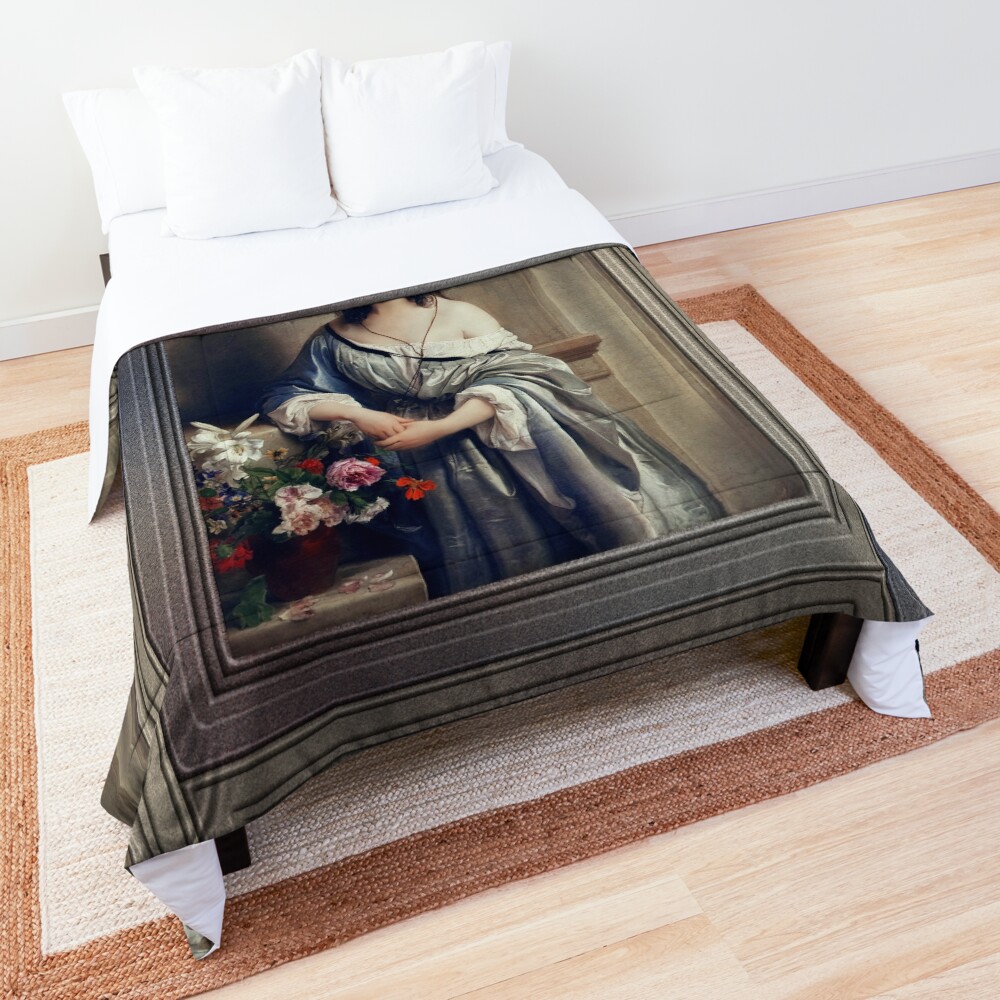
프란체스코 하이에즈, a prominent Italian painter of the Romantic period, captured the emotive power of human expression and drama in his renowned work “우울”. This poignant portrait, 주위에 만들어졌습니다 1841-42, epitomizes the Romantic ideals of intense emotional depth, 풍부한 상징성, and the exploration of human inner turmoil. The painting features a young woman in a reflective pose, her body angled slightly away from the viewer, yet her gaze directly engages with the observer. Her expression is one of deep contemplation and melancholy, a theme that resonates throughout much of Hayez’s oeuvre.

The primary subject of the artwork is a woman dressed in a luxurious yet simple gown of muted silvery-blue fabric. Her attire is both modest and elegant, indicative of her high social standing but also suggesting a restrained, subdued personality.
The material of her gown is rendered with Hayez’s signature meticulous brushwork, which gives the fabric a soft, almost translucent quality. It reflects light in such a way that one can almost feel its weight and texture. The delicacy of the gown contrasts with the weight of her expression, reinforcing the thematic tension of the painting.
The subject’s hair, dark and glossy, falls in loose waves around her shoulders, 그녀의 얼굴을 프레이밍. Her posture is demure yet sorrowful, her hand gently resting on a vase of flowers placed on a table to her side. The inclusion of flowers—likely meant to symbolize transience and the fragility of life—adds a layer of complexity to the emotional narrative.
The flowers themselves are rendered with meticulous detail, a hallmark of Hayez’s technical prowess. They appear lifelike, as if they could be plucked from the canvas at any moment. This detailed rendering contrasts sharply with the somber tone of the subject, creating a sense of fragility in both the floral elements and the human form.
주제 뒤에, the setting is an interior space, subtly lit to evoke a sense of isolation and introspection. The light seems to enter from an unseen source, casting soft shadows that envelop the subject, further intensifying the feeling of seclusion. The muted colors of the background, which include soft earth tones and shades of gray, highlight the figure of the woman, 그녀를 작품의 중심으로 삼는다.
The architectural features of the room, particularly the classical columns that frame the space, suggest a timeless quality. This classical influence also evokes a sense of the past and the passage of time, which ties in with the theme of melancholy.
분위기 “우울” is one of introspective sadness. The woman’s expression is not one of overt grief or despair but rather a quiet, contemplative sorrow. 그녀의 시선, though distant, suggests a mind lost in thought—perhaps reflecting on personal loss, unfulfilled desires, or an existential longing. Hayez was deeply interested in the psychological states of his subjects, and this painting showcases his ability to capture the complexity of emotion through subtle facial expressions and body language.
While the subject’s melancholy could be interpreted in various ways, it is important to consider the broader cultural and historical context of the painting. Created during the early 1840s, the work was produced at a time of political and social unrest in Italy.
The Romantic movement, with its emphasis on emotion, 개인주의, and rebellion against societal norms, had a profound impact on the intellectual climate of the time. Hayez’s “우울” could be seen as a reflection of the inner turmoil experienced by many individuals living through the tensions of political upheaval, as well as the personal, emotional struggles that often accompanied such periods of uncertainty.
The symbolism within the painting also speaks to broader themes of romanticism. The wistful nature of the subject, combined with the classical elements of the room and the natural motifs of the flowers, suggests an idealization of the past and an awareness of life’s fleeting nature. The woman’s contemplative pose and the stillness of the surrounding environment suggest an acceptance of these fleeting moments, evoking a sense of resignation that is characteristic of many Romantic works.
Hayez’s use of light and shadow in this painting further enhances the emotional tone. The light that falls gently across the woman’s face and gown creates a sense of intimacy, almost as if we are intruding on a private moment. 아직, the shadows that play across her figure suggest something darker—perhaps an unspoken sadness or the weight of an unvoiced emotion. This interplay of light and shadow is a powerful tool in conveying the internal conflict of the subject, highlighting the emotional depth and complexity that Hayez was able to achieve in this piece.
스타일 면에서는, “우울” is quintessentially Romantic in its focus on emotion and individual experience. Hayez’s technical mastery is evident in his handling of texture and light, and his ability to convey psychological depth through subtle details is what makes this painting a standout example of Romantic portraiture. The realism with which he renders his subject, coupled with the idealization of the woman’s form, reflects the Romantic ideal of the artist as a master of both technique and emotional expression.
궁극적으로, “우울” is a masterpiece of emotional and psychological depth. Through the figure of the young woman, Hayez explores themes of introspection, loss, and the complexity of human emotion. His masterful use of light, 색깔, and composition creates a timeless portrait that continues to resonate with viewers, evoking feelings of empathy and contemplation. The painting remains one of the most iconic representations of Romantic portraiture and exemplifies Francesco Hayez’s ability to capture the profound emotional states of his subjects.
아래 정보 Wikipedia.org
Francesco Hayez는 베니스의 비교적 가난한 가정 출신이었습니다.. 그의 아버지, 조반니, 그의 어머니는 프랑스 출신이었고, 끼아라 토르첼라, 무라노 출신. 프란체스코는 다섯 아들 중 막내였다..
그는 어머니의 여동생에게 자랐다., 조반니 비나스코와 결혼한 사람, 부유한 선주이자 미술품 수집가. Hayez는 어린 시절부터 그림에 대한 소질을 보였습니다.. 그의 삼촌, 그의 조숙한 재능을 눈치채고, 그를 베니스의 미술 복원가의 제자로 삼았다.. Hayez는 나중에 화가 Francesco Maggiootto의 제자가 되어 3년 동안 공부를 계속했습니다..
그는 베니스의 신 미술 아카데미의 회화 과정에 입학했습니다. 1806, 테오도로 마테이니 밑에서 공부한 곳. 에 1809 그는 로마의 아카데미아 디 산 루카에서 1년 레지던시를 위해 베니스 아카데미에서 경쟁에서 우승했습니다..
그는 로마에 머물 때까지 1814, 그 후 나폴리로 이주하여 요아킴 무라트의 의뢰를 받아 알키노우스 궁정에서 율리시스를 묘사한 주요 작품을 그렸습니다.. 1830년대 중반에 그는 밀라노의 마페이 살롱에 참석했습니다., Clara Maffei 주최. Maffei의 남편은 나중에 Hayez에게 아내의 초상화를 의뢰했습니다.. 에 1850 Hayez는 Brera Academy의 이사로 임명되었습니다..
오랜 경력 동안, Hayez는 특히 다작으로 판명되었습니다.. 그의 작품에는 후원자들의 애국심에 호소하기 위해 고안된 역사적인 그림과 웅장한 주제에 신고전주의 양식을 동반하려는 욕망이 반영된 작품이 포함되었습니다., 성경이나 고전 문학에서.
그는 또한 연극 프레젠테이션의 장면을 그렸습니다.. 그의 작품에서 눈에 띄게 빠져있다., 하나, 제단이다 – 아마도 북부 이탈리아의 많은 교회와 수녀원을 신성시했던 나폴레옹의 침략 때문일 것입니다.. 미술사가 Corrado Ricci는 Hayez를 고전주의자로 묘사한 후 감정적 격동의 스타일로 진화했습니다.. 프란체스코 하이에즈, 키스 (1859)
그의 초상화에는 Ingres와 Nazarene 운동의 강도가 있습니다.. 자주 앉아, Hayez의 주제는 종종 엄격한 옷을 입습니다., 검은색과 흰색 옷, 거의 또는 전혀 장신구 없이. Hayez가 귀족을 위한 초상화를 만드는 동안, 그는 또한 동료 예술가와 음악가와 같은 다른 주제를 탐구했습니다.. 그의 경력에 늦게, 그는 사진을 사용하여 작업한 것으로 알려져 있습니다..
Hayez가 가장 좋아하는 테마 중 하나는 낭만주의 화가들이 가장 좋아하는 주제인 동양 테마를 연상시키는 반옷을 입은 오달리스크였습니다.[3] 하렘과 그 여성의 묘사는 예술가들이 사회에서 용인되지 않는 장면을 그릴 수 있는 능력을 허용했습니다.. Hayez의 막달라 마리아도 종교적 열정보다 관능적입니다..
Hayez의 그림 Kiss는 그의 동시대 사람들에 의해 그의 최고의 작품 중 하나로 간주되었습니다., 아마도 그의 가장 잘 알려진 노력일 것입니다.. 익명의, 부부의 영향을 받지 않는 제스처는 해석하는 데 신화나 문학에 대한 지식이 필요하지 않습니다., 현대적인 시선에 호소합니다..
Hayez의 경력에 대한 과학적 평가는 그의 작품에 서명하지 않거나 데이트를 하지 않는 경향으로 인해 복잡해졌습니다.. 종종 그의 그림에서 날짜는 작품을 구입하거나 판매한 시기를 나타냅니다., 생성 시간이 아니라. 더구나, 그는 종종 최소한의 변형으로 동일한 구성을 여러 번 그렸습니다..
브레라 아카데미의 제자 중에는 카를로 벨지오이오소(Carlo Belgioioso)가 있었습니다., 아만지오 카타네오, 알레산드로 포코시, 조반니 바티스타 람페르티, 리보 양, 안젤로 피에트라산타, 안토니오 사일로, 카를로 안토니오 타벨라, 이스마엘레 테글리오 밀라와 프란체스코 발라페르타.
Hayez는 밀라노에서 사망했습니다., 나이 91. 브레라 아카데미의 그의 스튜디오는 접시로 표시되어 있습니다..
이 디지털 아트 창작, Xzendor7 웹사이트에서 찾을 수 있는 모든 예술 작품과 마찬가지로 캔버스 인쇄를 포함한 다양한 재료 형식으로 온라인에서 구매할 수 있습니다., 아크릴 프린트, 금속 지문, 목판화, 액자 인쇄, 포스터, 그리고 압연 캔버스 인쇄 부터 다양한 사이즈로 12 인치에 72 실제 작품의 크기와 작품을 구매하기로 선택한 주문형 인쇄소에 따라 인치.