

Memories
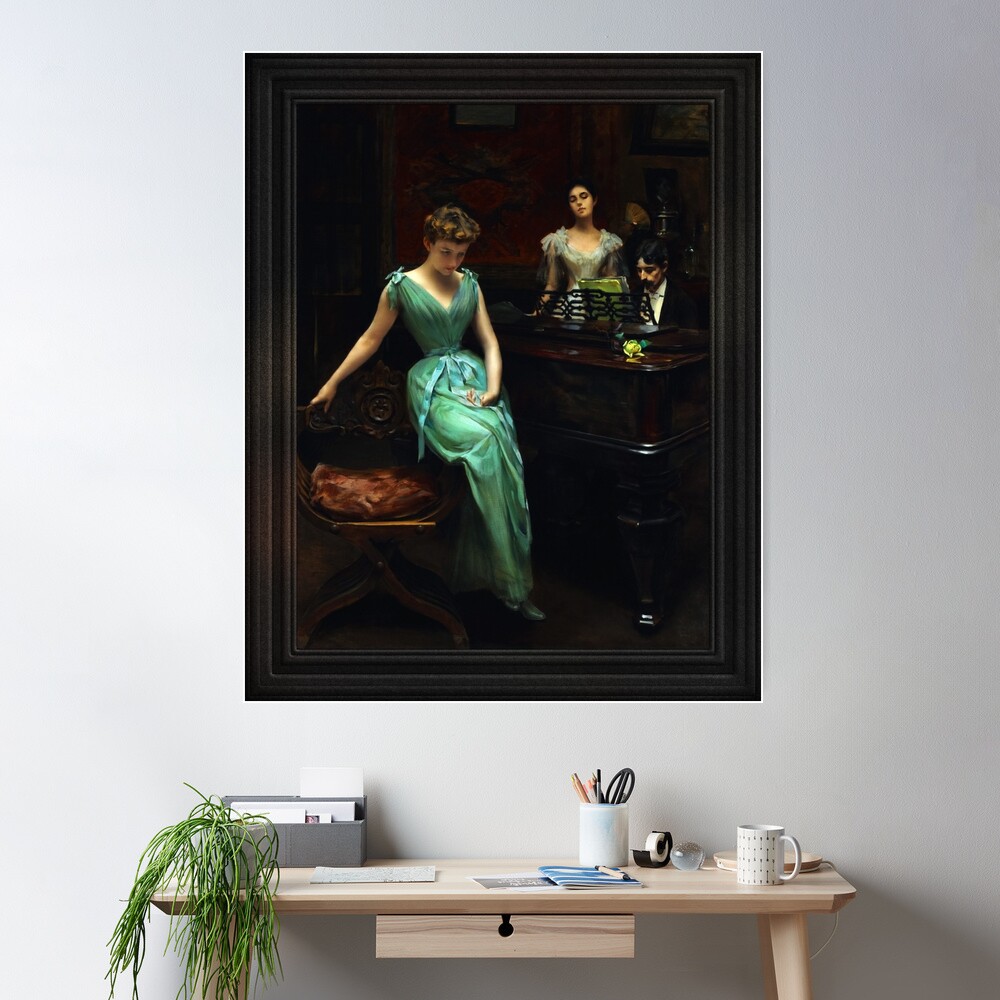
Ricordi di Irving Ramsay Wiles (1861 – 1948), an accomplished American painter known for his refined skill in ritrattistica and genre painting, captures the delicate interplay of light and shadow in his artwork. The painting depicts a serene and intimate domestic scene, subtly conveying a sense of nostalgia through its composition and nuanced portrayal of the figures.
Wiles masterfully blends realism with a touch of romantic idealization, producing an emotionally evocative narrative. The theme of memory is central to this piece, suggesting both the passage of time and the quiet reflection of moments gone by. The figures are caught in a seemingly timeless moment, draped in the soft, comforting light that floods the interior space, allowing the viewer to almost feel the stillness of the scene.
Sommario
The Figures and Their Roles
The main subject of Memories is a tranquil domestic gathering, set within an opulent, yet intimate room. Two women and a man occupy the space, their poses and expressions imbued with a sense of contemplative stillness. Sulla sinistra, una giovane donna, dressed in a flowing green gown, sits on an ornate, carved chair with an air of quiet introspection.
Her head is slightly lowered as her eyes are cast down, lost in her own thoughts or perhaps in the memory of a past event. The green gown, with its soft, silky fabric, adds an element of tranquility to her posture and complements the gentle mood of the composition.
Alla sua destra, another woman, equally poised and elegant, stands at a piano, absorbed in the music or possibly deep in thought. She is dressed in a pale, ethereal gown that contrasts subtly with the green of the seated figure, further distinguishing the two women while maintaining a harmonic color palette throughout the composition.
La sua postura, dignified and graceful, suggests she may be part of a larger, unwritten narrative, perhaps the catalyst for the contemplative mood of the scene, or the memory that the seated woman is reflecting upon. Her hands rest lightly upon the sheet music, which is visible, though not fully detailed, leaving the mystery of the music open to interpretation.
Sullo sfondo, a man, perhaps a companion to the women, sits at the piano. His attire is dark and formal, as would be expected in a domestic setting of the period. His attention is focused on the music, but his gaze, lowered toward the sheet music, conveys a certain distance from the emotional undercurrent of the scene. His presence, though central in the composition, is quieter, as he seems to remain detached from the introspective mood of the women. The viewer is left to wonder if he is involved in their reverie or simply an observer of this domestic quietude.
L'ambientazione e l'ambiente
L'impostazione di Memories is a richly furnished room, the details of which speak to the taste and wealth of the period. The furniture is ornate, with intricate carvings on the chair and the table, enhancing the sense of a well-established home. The piano, placed toward the right of the painting, is an integral part of the scene, both an instrument of music and a symbol of cultural refinement.
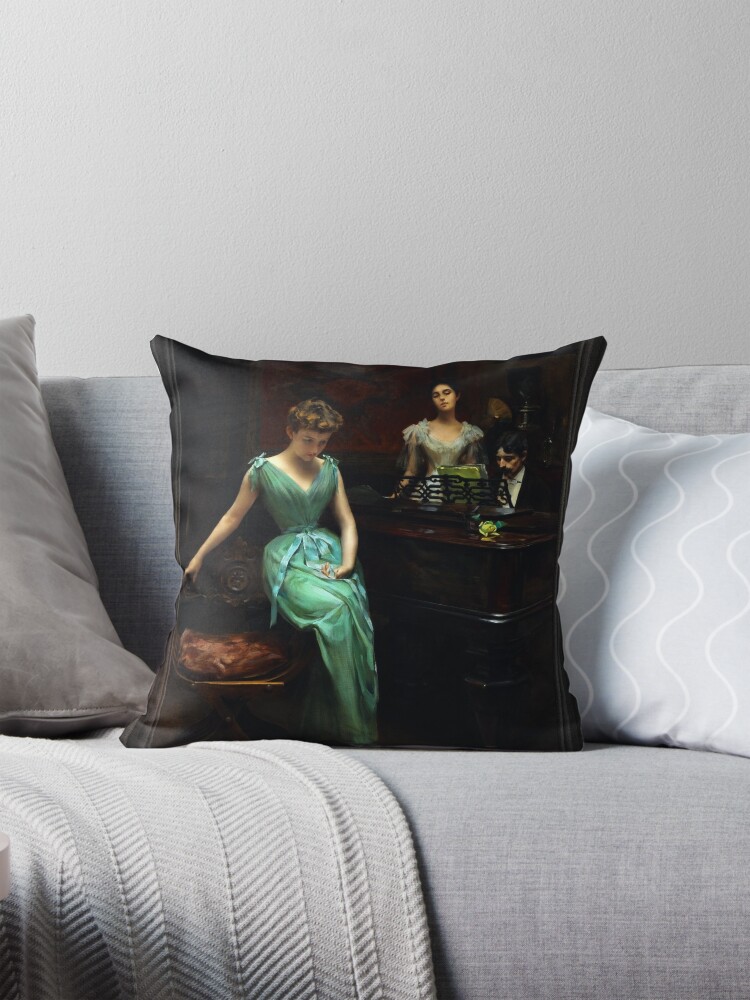
It also hints at the role of music in memory, suggesting that it may act as a conduit for recollections of past events or emotions. The piano’s elegant lines and dark wood provide a stark contrast to the pale, soft tones of the figures, drawing attention to the central area of the composition where the individuals sit and stand.
The walls of the room are adorned with dark tapestries or paintings, which suggest a sophisticated, albeit somewhat somber, atmosfera. The red tones in the background provide a warmth that contrasts with the cool colors of the figures’ capi di abbigliamento, further enhancing the peaceful mood of the scene. The light in the room is subtle but enveloping, casting soft shadows on the faces of the figures and the folds of their clothing. It hints at a late afternoon or early evening moment, where the fading light reflects a sense of quiet reflection and nostalgia.
The flower, placed delicately on the piano, is another important element in the composition. Its placement beside the sheet music gives it symbolic weight, possibly representing the fragility of memory or the fleeting nature of the moment captured in the painting. La rosa, as a classic symbol of love and remembrance, complements the underlying theme of Memories, the passing of time and the ephemeral nature of human experiences.
The Mood and Emotional Resonance
The overall mood of the painting is one of quiet contemplation and emotional depth. The soft lighting and muted color palette contribute to the intimate atmosphere, inviting the viewer to reflect on the passage of time and the nature of memory. Le cifre’ espressioni facciali, subtle but telling, suggest an internal dialogue, each woman lost in her own thoughts while the man seems absorbed in the music. Their stillness speaks volumes, and the viewer is left to imagine what memories they may be recalling, whether of love, perdita, or a shared experience.
Wiles’ mastery of light and shadow enhances the emotional resonance of the piece. The figures are softly illuminated, creating an almost ethereal effect as they sit within the space. Their elegance and composure seem to suggest that they are part of a bygone era, congelato in tempo. The painting evokes a feeling of nostalgia, not only for the era it represents but also for the memories that it alludes to, memories that may have once been vivid and full of emotion but are now receding into the past, just as the light in the room begins to fade.
Conclusione
Irving Ramsay Wiles’ Memories is a masterful rendering of a domestic scene that speaks to the deeper emotional currents beneath the surface of everyday life. The carefully composed setting, the tender portrayal of the figures, and the symbolic elements within the painting all work together to convey a poignant message about the passing of time and the nature of memory. Through his refined technique and thoughtful exploration of light and shadow, Wiles captures a timeless moment, inviting the viewer to ponder the memories and experiences that shape our lives.
Memories is a retouched digital art old masters reproduction of a public domain image that is available for purchase online as a stampa su tela arrotolata.
Bio dell'artista da Wikipedia.org
Irving Ramsay Wiles ha studiato al Sedgwick Institute di Great Barrington, e ha imparato le basi della pittura da suo padre, Lemuele M. Wiles (1826 – 1905), che si è concentrato principalmente sui paesaggi. A partire dal 1879 per 1881 ha studiato nella Art Students League di New York sotto James Carroll Beckwith e William Merritt Chase, e poi a Parigi sotto Carolus-Duran.
Nei suoi primi anni, ha lavorato come illustratore per riviste americane, e in seguito si dedicò con grande successo alla ritrattistica. Era un membro della Society of American Artists, che ha preceduto il suo 1897 elezione alla National Academy of Design come associato. Wiles era anche un membro dell'American Water Color Society.