

思い出
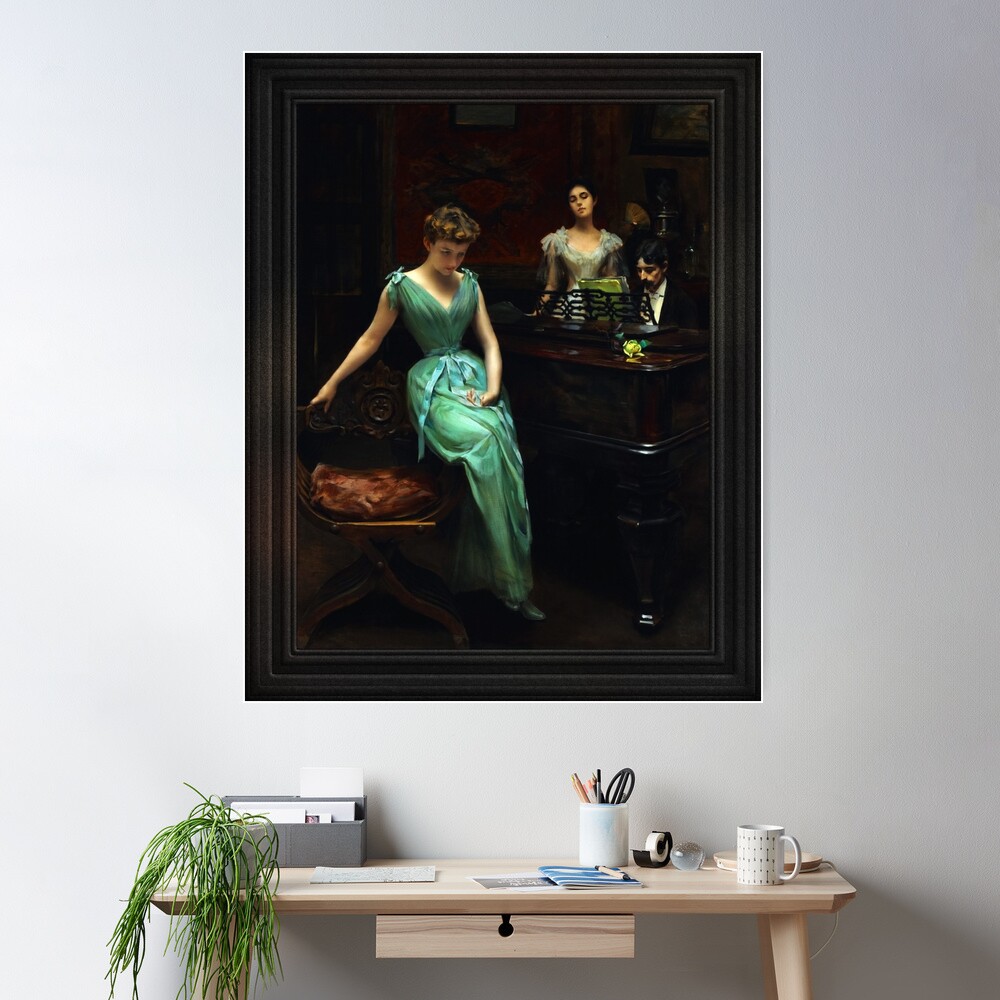
アーヴィング・ラムゼー・ワイルズの思い出 (1861 – 1948), 彼の洗練されたスキルで知られる熟練したアメリカの画家 肖像画 とジャンルの絵, 彼のアートワークに光と影の繊細な相互作用を捉えています. 絵画は、穏やかで親密な国内のシーンを描いています, その構成と微妙な懐かしさを微妙に伝え、微妙な人物の描写.
ウィルズは、リアリズムとロマンチックな理想化のタッチを見事に融合させます, 感情的に刺激的な物語を生み出します. メモリのテーマは、この作品の中心です, 時間の経過と過去の瞬間の静かな反射の両方を提案する. 数字は一見時代を超越した瞬間に巻き込まれます, ソフトでドレープされています, 内部空間にあふれる慰めの光, 視聴者がシーンの静けさをほとんど感じるようにする.
目次
数字とその役割
の主な主題 思い出 is a tranquil domestic gathering, set within an opulent, yet intimate room. Two women and a man occupy the space, their poses and expressions imbued with a sense of contemplative stillness. 左に, 若い女性, dressed in a flowing green gown, sits on an ornate, carved chair with an air of quiet introspection.
Her head is slightly lowered as her eyes are cast down, lost in her own thoughts or perhaps in the memory of a past event. The green gown, 柔らかい, silky fabric, adds an element of tranquility to her posture and complements the gentle mood of the composition.
彼女の右に, another woman, equally poised and elegant, stands at a piano, absorbed in the music or possibly deep in thought. She is dressed in a pale, 座っている人物の緑と微妙に対照的なエーテルのガウン, 構成全体に高調波カラーパレットを維持しながら、2人の女性をさらに区別する.
彼女の姿勢, 威厳があり、優雅です, 彼女がより大きな人の一部であるかもしれないことを示唆しています, 書かれていない物語, おそらく、シーンの瞑想的なムードの触媒, または座っている女性が反映している記憶. 彼女の手は楽譜に軽く眠ります, 見える, 完全に詳細ではありませんが, 音楽の謎を解釈に開放してください.
バックグラウンドで, 男, おそらく女性の仲間, ピアノに座っています. 彼の服装は暗くてフォーマルです, 期間の国内環境で予想されるように. 彼の注意は音楽に焦点を合わせています, しかし、彼の視線, 楽譜に向かって下げられました, シーンの感情的な底流から一定の距離を伝える. 彼の存在, 作曲の中心ですが, 静かです, 彼は女性の内省的な気分から切り離されたままであるように見えるので. 視聴者は、彼が彼らの空想に関与しているのか、それとも単にこの家庭の静かな観察者であるのか疑問に思われます.
The Setting and Surroundings
の設定 思い出 豊かな家具付きの部屋です, その詳細は、時代の味と豊かさに語りかけます. 家具は華やかです, 椅子とテーブルに複雑な彫刻があります, 確立された家の感覚を高める. ピアノ, 絵画の右に配置されています, シーンの不可欠な部分です, 音楽の道具と文化的洗練の象徴の両方.
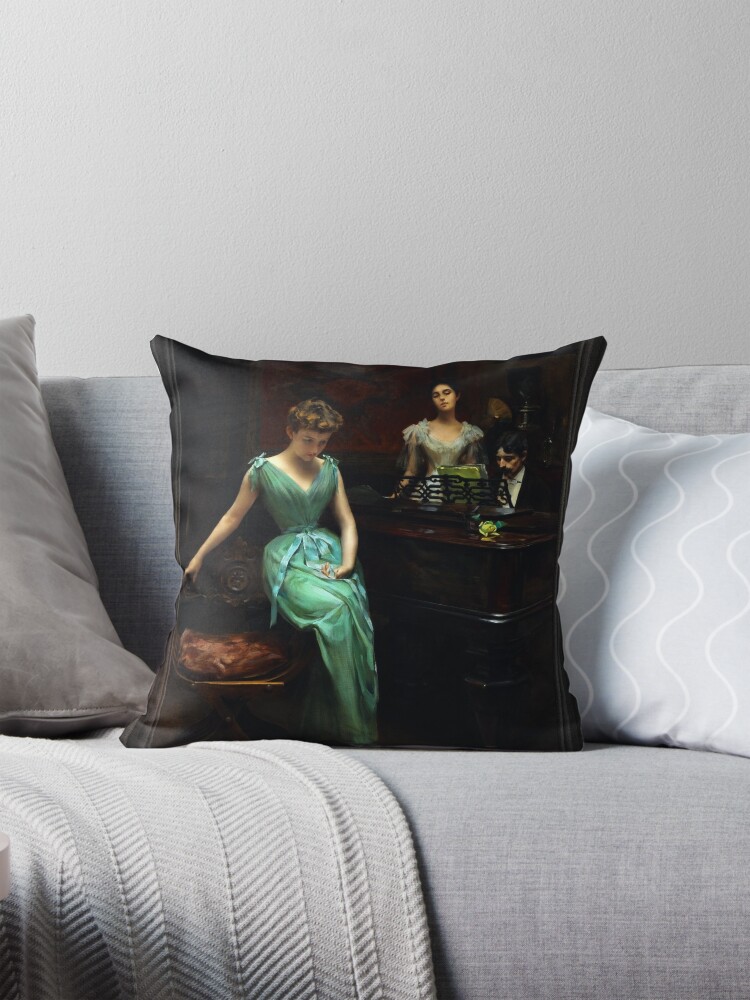
It also hints at the role of music in memory, suggesting that it may act as a conduit for recollections of past events or emotions. The piano’s elegant lines and dark wood provide a stark contrast to the pale, soft tones of the figures, drawing attention to the central area of the composition where the individuals sit and stand.
The walls of the room are adorned with dark tapestries or paintings, which suggest a sophisticated, albeit somewhat somber, 雰囲気. The red tones in the background provide a warmth that contrasts with the cool colors of the figures’ 衣類, further enhancing the peaceful mood of the scene. The light in the room is subtle but enveloping, casting soft shadows on the faces of the figures and the folds of their clothing. It hints at a late afternoon or early evening moment, where the fading light reflects a sense of quiet reflection and nostalgia.
The flower, placed delicately on the piano, is another important element in the composition. Its placement beside the sheet music gives it symbolic weight, possibly representing the fragility of memory or the fleeting nature of the moment captured in the painting. バラ, as a classic symbol of love and remembrance, complements the underlying theme of 思い出, the passing of time and the ephemeral nature of human experiences.
The Mood and Emotional Resonance
The overall mood of the painting is one of quiet contemplation and emotional depth. The soft lighting and muted color palette contribute to the intimate atmosphere, inviting the viewer to reflect on the passage of time and the nature of memory. 数字’ 表情, subtle but telling, suggest an internal dialogue, each woman lost in her own thoughts while the man seems absorbed in the music. Their stillness speaks volumes, and the viewer is left to imagine what memories they may be recalling, whether of love, 損失, or a shared experience.
Wiles’ mastery of light and shadow enhances the emotional resonance of the piece. The figures are softly illuminated, creating an almost ethereal effect as they sit within the space. Their elegance and composure seem to suggest that they are part of a bygone era, 時間内に凍結. The painting evokes a feeling of nostalgia, not only for the era it represents but also for the memories that it alludes to, memories that may have once been vivid and full of emotion but are now receding into the past, just as the light in the room begins to fade.
結論
アーヴィング・ラムゼイ・ウィル」 思い出 日常生活の表面下のより深い感情的な流れに語る国内のシーンの見事なレンダリングです. 慎重に構成された設定, 数字の優しい描写, そして、絵画内の象徴的な要素はすべて一緒に働き、時間の経過と記憶の性質について心に留まるメッセージを伝えるために働きます. 彼の洗練されたテクニックと光と影の思慮深い探求を通して, ウィルは時代を超越した瞬間を捉えています, 視聴者が私たちの生活を形作る記憶と経験を熟考するように招待する.
Memories は、パブリック ドメインの画像を修正したデジタル アートの古いマスターの複製であり、画像としてオンラインで購入できます。 ロールドキャンバスプリント.
アーティストバイオから Wikipedia.org
アーヴィング・ラムゼー・ワイルズは、グレートバリントンのセジウィック研究所で教育を受けました, 父から絵画の基礎を学びました, レムエルM. ワイルズ (1826 – 1905), 主に風景に焦点を当てた人. から 1879 に 1881 彼はニューヨークのアートスチューデントリーグでジェームズキャロルベックウィズとウィリアムメリットチェイスに師事しました。, その後、カロリュス・デュランの下でパリに.
彼の初期の頃, 彼はアメリカの雑誌のイラストレーターとして働いていました, その後、彼は肖像画に大成功を収めました。. 彼は全米芸術家協会の会員でした, 彼の前に 1897 アソシエイトとして国立デザインアカデミーに選出. ワイルズはアメリカ水色協会の会員でもありました.