

Minerva en Mercurius bewapenen Perseus (Minerva and Mercury Arming Perseus), c1604
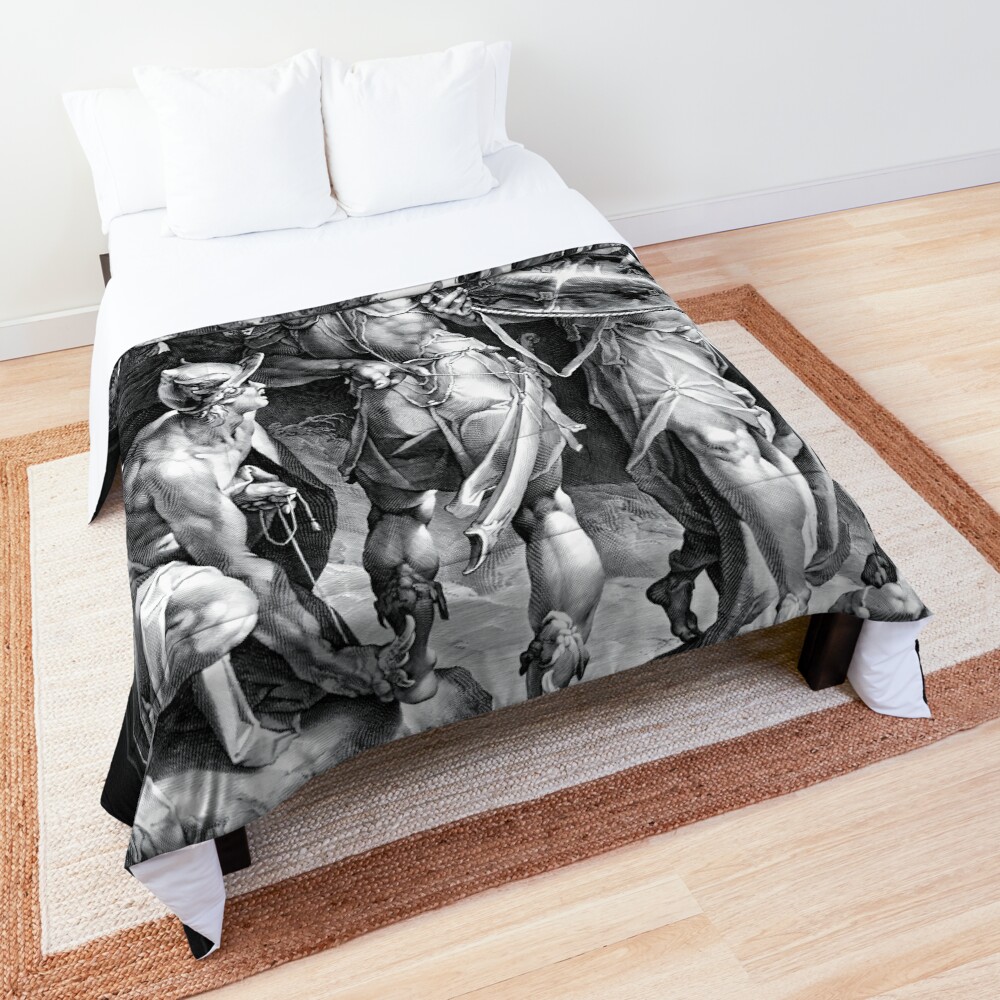
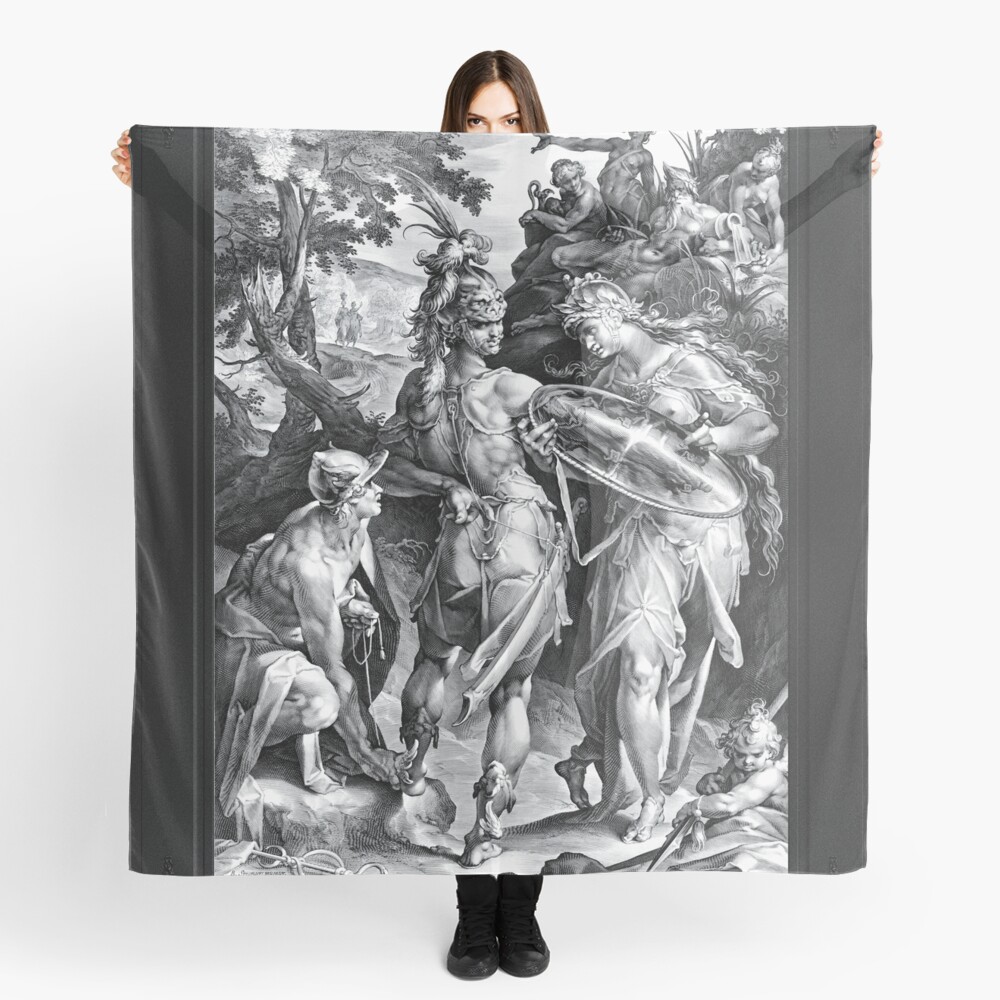
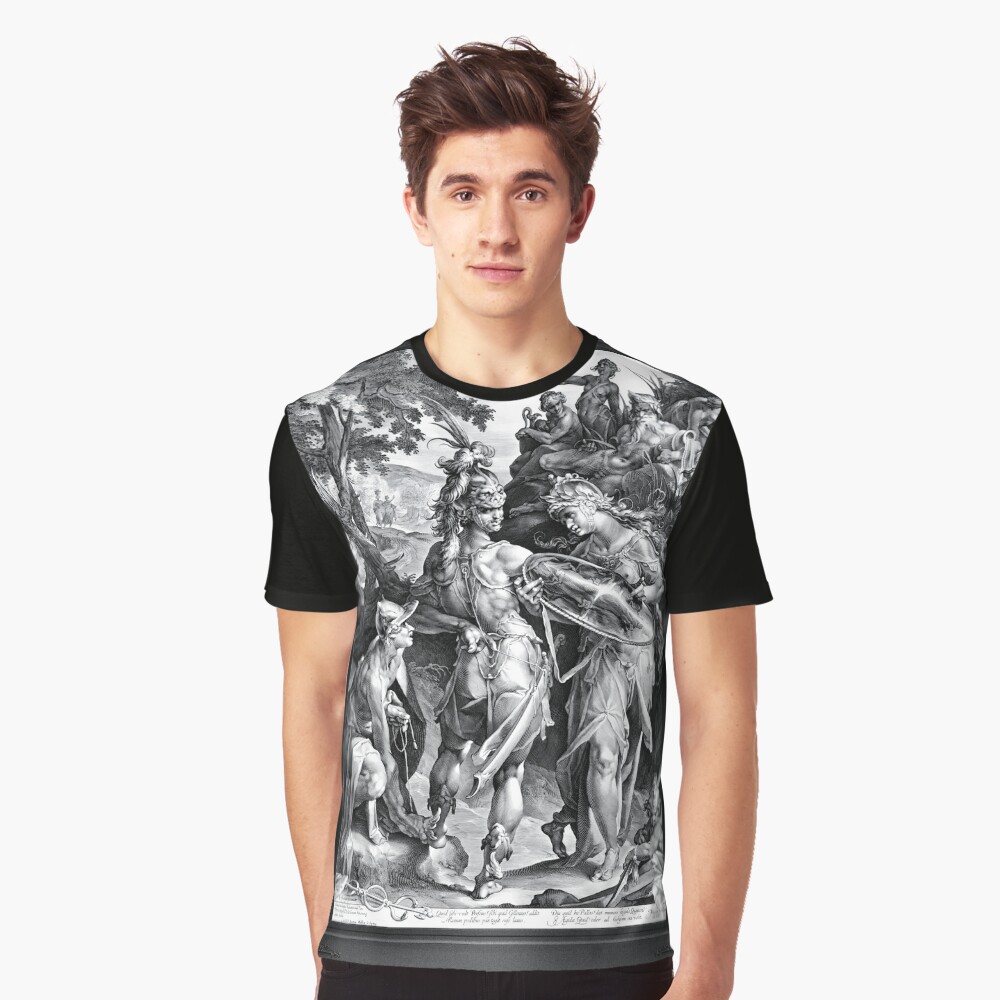
Indgraveringen Minerva en Mercurius bewapenen Perseus (Minerva and Mercury Arming Perseus), oprettet i 1604 by the Dutch engraver Jan Harmensz. Muller (1571 – 1628), offers a compelling visual narrative drawn from classical mythology. This highly detailed print captures the moment when the gods Minerva and Mercury provide the hero Perseus with the tools he needs to defeat the monstrous Medusa. Scenen, rich in symbolism and action, exemplifies the mannerist style that defined much of the Dutch Renaissance, combining mythological grandeur with intricate craftsmanship.
Indholdsfortegnelse
Main Subject and Characters
The central figures of the artwork are Minerva, the goddess of wisdom, and Mercury, the messenger god, who are depicted arming Perseus for his daunting mission. The portrayal of Perseus is particularly notable for his youthful and heroic demeanor, emphasizing the divine assistance he receives. Perseus stands in the center of the composition, confidently poised as Minerva hands him the shield, a crucial element in his quest to defeat Medusa. His gaze is focused, conveying a sense of readiness and determination.
Minerva, adorned with her characteristic helmet and armor, stands behind Perseus, her posture dignified and supportive. She holds a shield in one hand while her other hand extends toward the hero, offering both guidance and protection. Her calm, authoritative expression contrasts with the action surrounding her, embodying wisdom and strategy. Mercury, positioned at Perseus’ side, is seen in the act of preparing him for the battle ahead. He is often depicted with winged sandals and a caduceus, symbolizing his role as the divine messenger and his speed in assisting Perseus.
Objekter og symbolik
The objects in this engraving are meticulously detailed, each holding symbolic significance. The most prominent of these is the shield that Minerva presents to Perseus. The shield’s reflective surface will allow Perseus to view Medusa’s image without directly gazing upon her, a crucial aspect of the myth. The shield’s intricate design and polished surface reflect the engraver’s skill in rendering texture and light. The shield serves as both a tool of protection and a symbol of divine favor.
Mercury is shown with the caduceus, the staff entwined with two serpents, a powerful emblem of his role as a guide and protector. His winged sandals, which suggest swiftness and freedom, further emphasize his divine nature and role in the mythological narrative. Derudover, the presence of the gods highlights the importance of divine intervention in mortal affairs, a recurring theme in classical mythology.
Terræn og baggrund
The terrain depicted in the engraving is a rugged, rocky landscape, typical of the mythical scenes often associated with the gods and heroes of antiquity. The jagged rocks and winding paths suggest the treacherous journey that lies ahead for Perseus as he sets out to slay Medusa. The background is filled with a mountainous horizon, signifying the dangerous and remote location of the Medusa’s lair.
Behind Perseus and the gods, there are several smaller figures who represent the entourage of gods and heroes that often surround mythological events. These figures, though less detailed than the central characters, contribute to the composition’s dynamic energy, and their gazes and poses add to the narrative flow. The overall composition seems to convey the tension between mortal heroism and divine support, as well as the intricacies of mythological storytelling.
Stil og teknik
Jan Harmensz. Muller’s engraving reflects the high level of detail typical of the Mannerist style, which dominated European art during the late Renaissance. The intricate cross-hatching, delicate shading, and smooth lines are indicative of the artist’s virtuosity in handling the medium of engraving. The attention to detail in the folds of the garments, the textures of the armor, and the reflections on the shield show Muller’s deep understanding of human anatomy and the subtleties of light and shadow.
Brugen af chiaroscuro, or the contrast between light and dark, is a prominent feature in this work. This technique serves not only to model the figures in a realistic manner but also to create a dramatic atmosphere that underscores the mythological narrative. The figures emerge from a dark, shaded background, drawing the viewer’s eye toward the illuminated characters at the center of the scene. The dynamic poses of the figures, particularly the gestures of Minerva and Mercury, imbue the scene with a sense of motion and life, despite the still nature of the engraving.
Tema og humør
The engraving presents a heroic and mythological theme, drawing from classical stories to evoke the timeless struggle between mortals and the gods. The act of arming Perseus reflects a broader narrative of divine intervention in human affairs, where the gods assist heroes in overcoming seemingly insurmountable challenges. The mood is one of anticipation and readiness, with Perseus poised to embark on his perilous journey, supported by the wisdom of Minerva and the speed of Mercury.
There is an underlying tension in the engraving, as the viewer understands that Perseus must face a terrifying foe, yet the gods’ involvement lends an air of inevitability to his success. The mood is further enriched by the compositional balance between the calm, controlled demeanor of Minerva and the active, guiding presence of Mercury. The figures are arranged in such a way that their placement and posture create a harmonious yet dramatic tension within the composition.
Konklusion
Jan Harmensz. Muller’s Minerva en Mercurius bewapenen Perseus is a masterful engraving that captures a moment from classical mythology with elegance and complexity. The composition is rich with symbolism, meticulously detailed figures, and a carefully crafted narrative. Through his technical expertise and artistic vision, Muller creates a vivid portrayal of divine intervention and the heroic journey, providing a glimpse into the mythological world that has captivated generations.
Dette er en remastered digital art old master reproduktion af et offentligt domæne billede, der kan købes online som en rullet lærred print.
Denne digitale kunstskabelse, som med alt det kunstværk, der kan findes på Xzendor7-webstedet, er det tilgængeligt for køb online i en række materialeformater, herunder lærredstryk, akryltryk, metaltryk, trætryk, indrammede tryk, plakater, og som rullede lærred udskriver i forskellige størrelser fra 12 tommer til 72 tommer afhængigt af størrelsen på det faktiske kunstværk og den print-on-demand-butik, du vælger at købe kunsten fra.
Kunstværket er også tilgængeligt på en bred vifte af mænds og kvinders beklædning, krus, totes, tørklæder, notesbøger og journaler og mange boligindretningsprodukter.
Om Kunstneren
Jan Muller var en hollandsk guldaldergravør og maler, der blev født i Amsterdam den 1571 og lærte håndværket gravering af sin far Harmen Jansz. Muller (1540 – 1617) der var bogtrykker, gravør, og udgiver.
Jan var en produktiv og dygtig gravør, der var kendt for sin sans for detaljer, og fremstillede lavet tegninger, graveringer, malerier, og var især kendt for sine portrætter af politiske personer, royalty, og andre fremtrædende personer fra tiden.
Jans mest berømte værker omfatter hans indgraveringer af de mytologiske figurer Minerva og Merkur, hans portrætter af den hollandske kongefamilie, og hans samarbejder med billedhuggeren Adriaen de Vries (1545 – 1626), hollandsk guldaldermaler, Rembrandt Harmenszoon van Rijn (1606 – 1669), og den flamske gravør, Jan Sadeler (1550 – 1600).
Han var også kendt for sine tegninger af den store hollandske landskabsmaler, Jan van Goyen (1596 – 1656), som blev lavet til en udgave af van Goyens værker; og han blev en vigtig skikkelse i hollandsk gravering, og hans værker ses som et vidnesbyrd om den hollandske kunsts guldalder.
Jan var også en respekteret lærer, at give sine færdigheder videre til sine elever, som omfattede den hollandske gravør og maler, Pieter de Molyn (1597 – 1661); og var en vigtig bidragyder til kunstens hollandske guldalder.