

Mínerva og Merkúríus vopna Perseus (Minerva og Mercury Arming Perseus), c1604
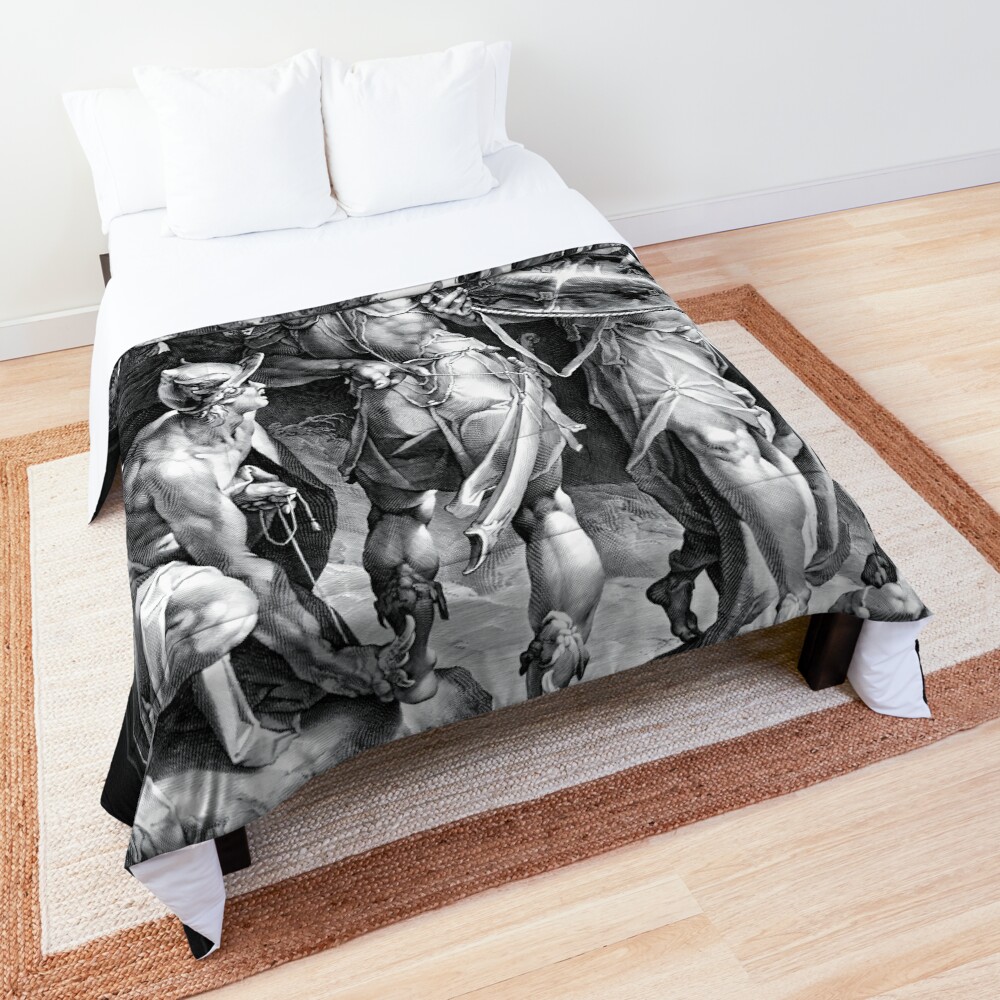
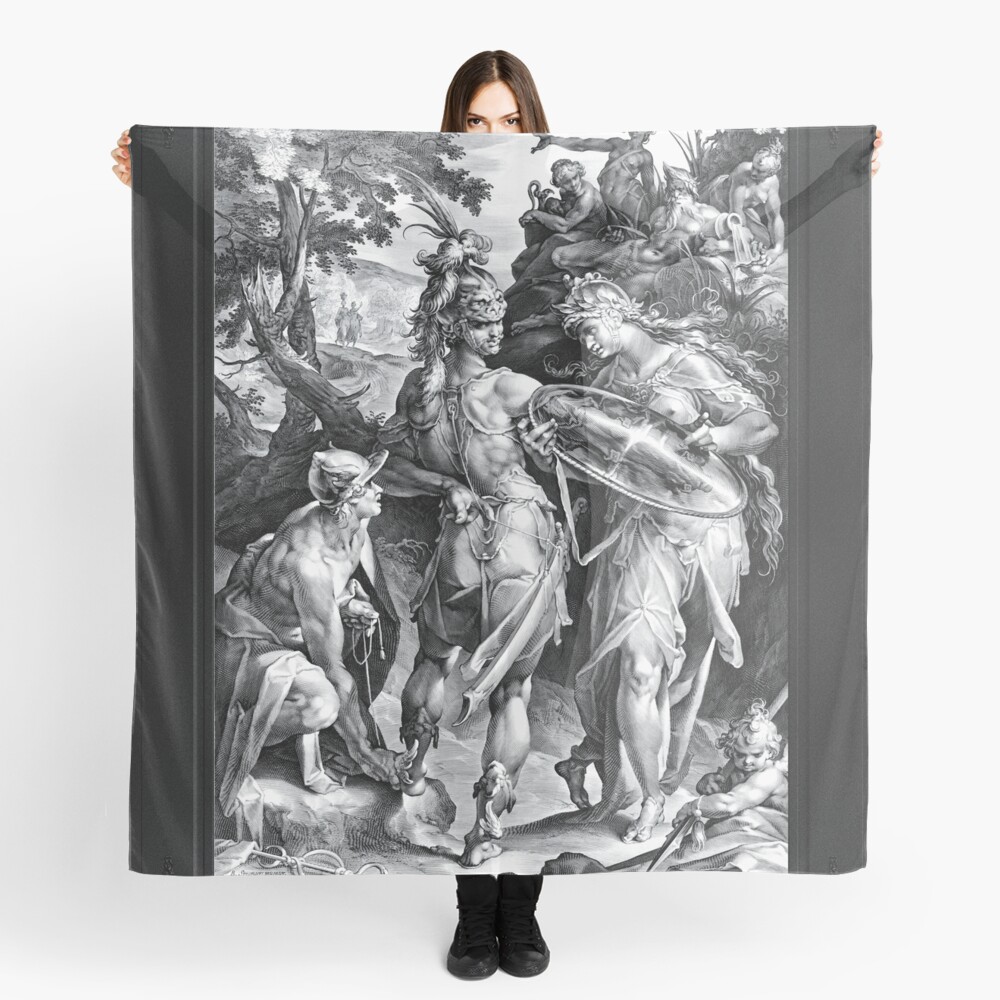
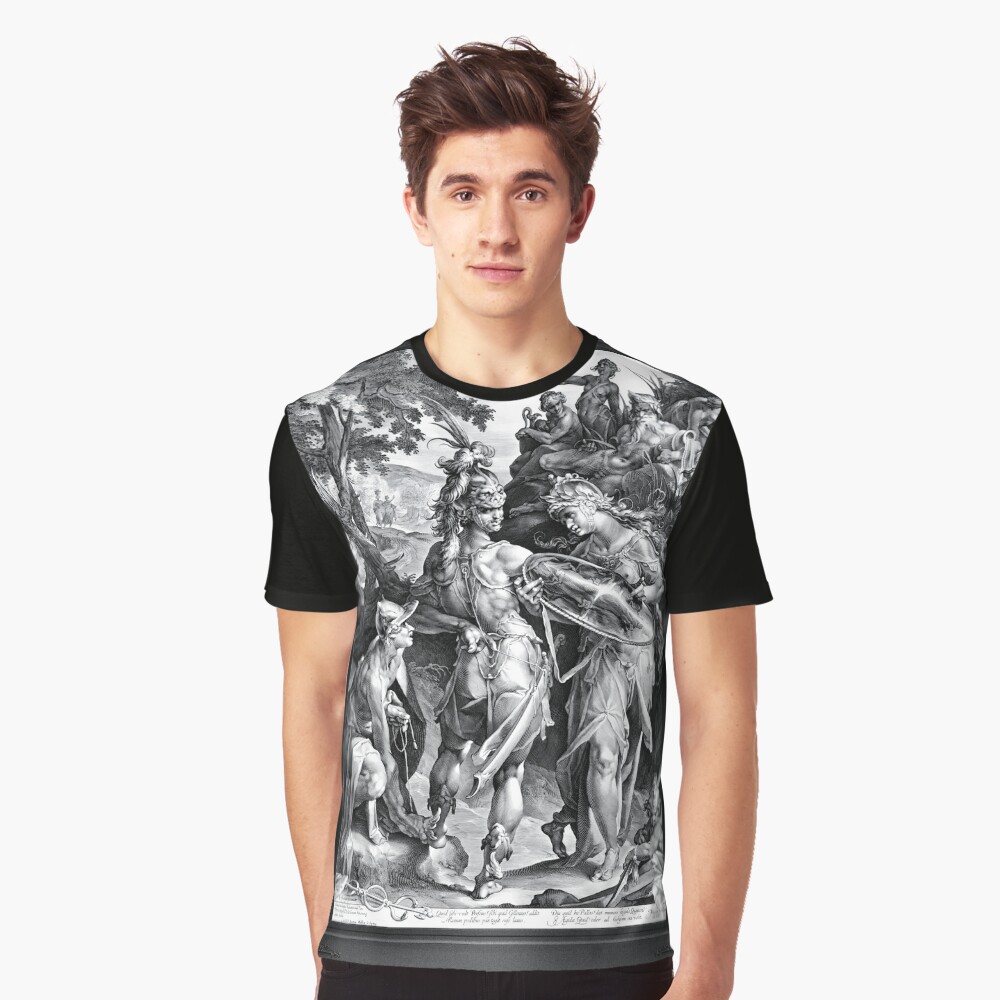
The engraving Mínerva og Merkúríus vopna Perseus (Minerva og Mercury Arming Perseus), búið til í 1604 by the Dutch engraver Jan Samræma. Muller (1571 – 1628), offers a compelling visual narrative drawn from classical mythology. This highly detailed print captures the moment when the gods Minerva and Mercury provide the hero Perseus with the tools he needs to defeat the monstrous Medusa. Atriðið, rich in symbolism and action, exemplifies the mannerist style that defined much of the Dutch Renaissance, combining mythological grandeur with intricate craftsmanship.
Efnisyfirlit
Main Subject and Characters
The central figures of the artwork are Minerva, the goddess of wisdom, and Mercury, the messenger god, who are depicted arming Perseus for his daunting mission. The portrayal of Perseus is particularly notable for his youthful and heroic demeanor, emphasizing the divine assistance he receives. Perseus stands in the center of the composition, confidently poised as Minerva hands him the shield, a crucial element in his quest to defeat Medusa. His gaze is focused, conveying a sense of readiness and determination.
Minerva, adorned with her characteristic helmet and armor, stands behind Perseus, her posture dignified and supportive. She holds a shield in one hand while her other hand extends toward the hero, offering both guidance and protection. Rólegheitin hennar, authoritative expression contrasts with the action surrounding her, embodying wisdom and strategy. Mercury, positioned at Perseus’ side, is seen in the act of preparing him for the battle ahead. He is often depicted with winged sandals and a caduceus, symbolizing his role as the divine messenger and his speed in assisting Perseus.
Hluti og táknfræði
The objects in this engraving are meticulously detailed, each holding symbolic significance. The most prominent of these is the shield that Minerva presents to Perseus. The shield’s reflective surface will allow Perseus to view Medusa’s image without directly gazing upon her, a crucial aspect of the myth. The shield’s intricate design and polished surface reflect the engraver’s skill in rendering texture and light. The shield serves as both a tool of protection and a symbol of divine favor.
Mercury is shown with the caduceus, the staff entwined with two serpents, a powerful emblem of his role as a guide and protector. His winged sandals, which suggest swiftness and freedom, further emphasize his divine nature and role in the mythological narrative. Auk þess, the presence of the gods highlights the importance of divine intervention in mortal affairs, a recurring theme in classical mythology.
Landslag og bakgrunnur
The terrain depicted in the engraving is a rugged, rocky landscape, typical of the mythical scenes often associated with the gods and heroes of antiquity. The jagged rocks and winding paths suggest the treacherous journey that lies ahead for Perseus as he sets out to slay Medusa. The background is filled with a mountainous horizon, signifying the dangerous and remote location of the Medusa’s lair.
Behind Perseus and the gods, there are several smaller figures who represent the entourage of gods and heroes that often surround mythological events. Þessar tölur, though less detailed than the central characters, contribute to the composition’s dynamic energy, and their gazes and poses add to the narrative flow. The overall composition seems to convey the tension between mortal heroism and divine support, as well as the intricacies of mythological storytelling.
Stíll og tækni
Jan Harmensz. Muller’s engraving reflects the high level of detail typical of the Mannerist style, which dominated European art during the late Renaissance. The intricate cross-hatching, delicate shading, and smooth lines are indicative of the artist’s virtuosity in handling the medium of engraving. The attention to detail in the folds of the garments, the textures of the armor, and the reflections on the shield show Muller’s deep understanding of human anatomy and the subtleties of light and shadow.
The use of chiaroscuro, or the contrast between light and dark, is a prominent feature in this work. This technique serves not only to model the figures in a realistic manner but also to create a dramatic atmosphere that underscores the mythological narrative. The figures emerge from a dark, shaded background, drawing the viewer’s eye toward the illuminated characters at the center of the scene. The dynamic poses of the figures, particularly the gestures of Minerva and Mercury, imbue the scene with a sense of motion and life, despite the still nature of the engraving.
Þema og stemning
The engraving presents a heroic and mythological theme, drawing from classical stories to evoke the timeless struggle between mortals and the gods. The act of arming Perseus reflects a broader narrative of divine intervention in human affairs, where the gods assist heroes in overcoming seemingly insurmountable challenges. The mood is one of anticipation and readiness, with Perseus poised to embark on his perilous journey, supported by the wisdom of Minerva and the speed of Mercury.
There is an underlying tension in the engraving, as the viewer understands that Perseus must face a terrifying foe, yet the gods’ involvement lends an air of inevitability to his success. The mood is further enriched by the compositional balance between the calm, controlled demeanor of Minerva and the active, guiding presence of Mercury. The figures are arranged in such a way that their placement and posture create a harmonious yet dramatic tension within the composition.
Niðurstaða
Jan Harmensz. Muller’s Mínerva og Merkúríus vopna Perseus is a masterful engraving that captures a moment from classical mythology with elegance and complexity. The composition is rich with symbolism, meticulously detailed figures, and a carefully crafted narrative. Through his technical expertise and artistic vision, Muller creates a vivid portrayal of divine intervention and the heroic journey, providing a glimpse into the mythological world that has captivated generations.
Þetta er endurgerð stafræn list af gömlum meistara eftirgerð af mynd sem er í almenningseign sem hægt er að kaupa á netinu sem rúllað strigaprentun.
Þessi stafræna listsköpun, eins og með öll listaverkin sem finna má á Xzendor7 vefsíðunni er hægt að kaupa á netinu í ýmsum efnissniðum þar á meðal strigaprentun, akrýl prentun, málmprentun, viðarprentanir, innrömmuð prentun, veggspjöld, og sem rúlluð strigaprentun í ýmsum stærðum frá 12 tommur til 72 tommur eftir stærð raunverulegu listaverksins og prentunarversluninni sem þú velur að kaupa listina frá.
Listaverkin eru einnig fáanleg á breitt úrval af herra- og kvenfatnaði, krúsar, töskur, trefla, minnisbækur og dagbækur og margar heimilisskreytingarvörur.
Um Listamanninn
Jan Muller var hollenskur gullaldargrafari og málari sem fæddist í Amsterdam á 1571 og lærði leturgröftur af föður sínum Harmen Jansz. Muller (1540 – 1617) sem var bókaprentari, leturgröftur, og útgefandi.
Jan var afkastamikill og vandvirkur leturgröftur sem var þekktur fyrir athygli sína á smáatriðum, og framleitt teikningar, leturgröftur, málverk, og var sérstaklega þekktur fyrir portrettmyndir sínar af stjórnmálamönnum, kóngafólk, og fleiri áberandi persónur þess tíma.
Frægustu verk Jans eru meðal annars leturgröftur hans af goðsögulegum persónum Mínervu og Merkúríusar, portrett hans af hollensku konungsfjölskyldunni, og samstarf hans við myndhöggvarann Adriaen de Vries (1545 – 1626), Hollenskur gullaldarmálari, Rembrandt Harmenszoon van Rijn (1606 – 1669), og flæmska leturgröfturinn, Jan Sadeler (1550 – 1600).
Hann var einnig þekktur fyrir teikningar sínar af hinum mikla hollenska landslagsmálara, Jan van Goyen (1596 – 1656), sem voru gerðar fyrir útgáfu á verkum van Goyens; og hann varð mikilvæg persóna í hollenskri leturgröftu, og litið er á verk hans sem vitnisburð um gullöld hollenskrar myndlistar.
Jan var líka virtur kennari, miðla færni sinni til nemenda sinna, sem innihélt hollenska leturgrafarann og málarann, Pieter de Molyn (1597 – 1661); og var mikilvægur þátttakandi í hollenskri gullöld listarinnar.