

Mischief and Repose c1895
John William Godward’s painting, שובבות ומנוחה c1895, captures the essence of his signature classical style, offering a glimpse into a world of serene beauty and luxurious indulgence. אלוהים (1861 – 1922), is known for his exquisite depictions of classical figures and tranquil settings, influenced heavily by the neoclassical traditions. ביצירה זו, Godward combines two starkly contrasting elements: mischief and repose, embodied in the characters of two young women. Through his delicate portrayal of these figures and their environment, Godward delivers a narrative rich with emotional depth and historical reverence.
תוכן העניינים
The Main Subjects
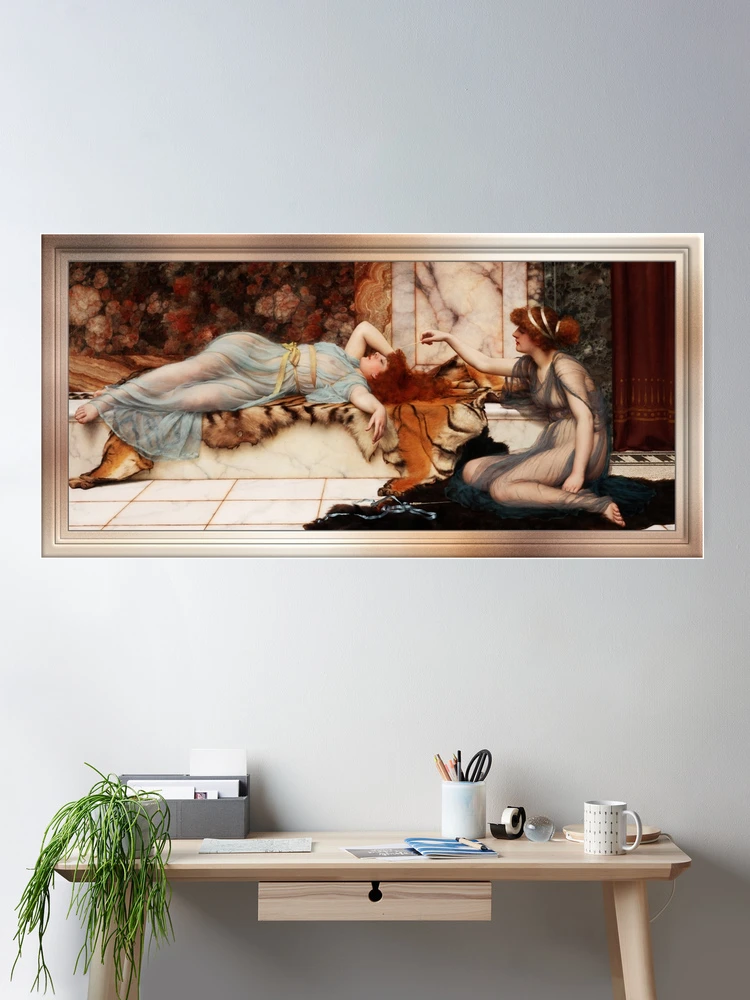
At the center of the composition are two women, seemingly caught in a delicate moment of interaction. The reclining figure, dressed in a pale gown, lies languidly across a fur-covered divan. תנוחתה, suggestive of repose, hints at an atmosphere of idle relaxation, with her head turned toward the other figure. The relaxed, almost languid pose of the first figure evokes a sense of indifference to the world around her, a luxury afforded only to those of wealth and status in the classical world.
In stark contrast, the second woman leans over her companion with a playful expression, gently touching her hair. This act of mischief is subtle, as she delicately twirls a strand of the reclining woman’s auburn hair around her finger. Her posture—sitting, yet leaning forward with a sense of intent—imbues the scene with a sense of energy and flirtation. The subtle smile that plays on her lips suggests a sense of playful dominance over the other figure, creating a dynamic between the two women.
The Objects and Terrain
The luxurious environment surrounding the figures further amplifies the aristocratic nature of the scene. The figures are placed within a richly adorned room that is designed to exude opulence. The floor is made of polished marble, with intricate geometric patterns that enhance the sense of depth and grandeur. A large, fur rug rests across the marble floor, providing a luxurious space for the reclining figure. The fur, along with the soft pastel tones of the נשים‘s clothing, adds an additional layer of richness to the overall aesthetic.
The background of the painting is equally impressive, with a backdrop of lush, red marble walls that are swirled with white and gold veins. This intricate texture not only suggests wealth but also brings a sense of timelessness to the piece, reinforcing the classical theme that Godward often employed in his works. השימוש בשיש, both on the floor and the walls, enhances the feeling of permanence and the eternal, as if these figures are timeless beings captured in a fleeting moment of mischief and repose.
חומרים וטכניקה
John William Godward’s technique in שובבות ומנוחה is meticulous and refined, demonstrating his exceptional skill in rendering textures and light. His use of oil paints allows for the rich depth of color that enhances the luxurious textures of the fur, שַׁיִשׁ, and flowing garments. The women’s skin is rendered with a smoothness that suggests softness, almost ethereal in quality, while the texture of their gowns is meticulously depicted, flowing in soft, natural folds.
The background and foreground are equally well-executed, with Godward’s careful application of light and shadow creating a depth that allows the figures to stand out against the rich marble and fabric. The interplay between the light falling across the women’s faces and bodies highlights their delicate features, adding a sense of realism to the dreamlike setting. The smooth transitions of light between the figures and the environment further demonstrate Godward’s mastery of the medium.
The Style and Mood of the Artwork
הסגנון של שובבות ומנוחה firmly places it within the neoclassical tradition, with its reverence for classical forms, idealized figures, and an emphasis on harmony and beauty. Godward’s attention to detail and the serene atmosphere he creates exemplify the neoclassical ideals of beauty and perfection. The carefully constructed composition, with its emphasis on geometric patterns in the architecture and the smoothness of the figures’ forms, invites the viewer into a world where the classical past meets the present moment of indulgence and luxury.
The mood of the painting is serene yet charged with a subtle undercurrent of playful tension. The reclining figure exudes tranquility, perhaps representing a moment of inner peace or introspection. לעומת זאת, the figure leaning forward to twirl her companion’s hair introduces a moment of flirtatious mischief, breaking the stillness of the scene with a slight gesture. This contrast between repose and mischief lends the painting an air of intrigue, where the viewer is left to wonder about the relationship between the two women and the story unfolding in the quiet space they inhabit.
Godward’s ability to capture the nuances of human interaction, paired with his impeccable technique, makes שובבות ומנוחה a prime example of the artist’s skill and the allure of the classical tradition. Through his portrayal of these two women, Godward brings to life a moment of contrast, where relaxation and playfulness coexist, offering a snapshot of a world filled with both tranquility and the promise of adventure.
זהו רפרודוקציה של אמנות דיגיטלית משופרת ותיקים של תמונה של נחלת הכלל.
יצירת אמנות דיגיטלית זו, כמו כל יצירות האמנות שניתן למצוא באתר Xzendor7 זמין לרכישה אונליין במגוון פורמטים חומריים כולל הדפסי קנבס, הדפסי אקריליק, הדפסי מתכת, הדפסי עץ, הדפסים ממוסגרים, עמוד הבית של Xzendor7, וכהדפסי קנבס מגולגלים במגוון גדלים מ 12 אינצ'ים ל 72 אינצ'ים בהתאם לגודל הגרפיקה בפועל ולחנות ההדפסה לפי דרישה ממנה תבחר לקנות את האמנות.
יצירות האמנות זמינות גם במגוון רחב של בגדי גברים ונשים, ספלים, טוטס, צעיפים, מחברות ויומנים ומוצרי עיצוב לבית רבים.
ביו אמן
מידע למטה מ Wikipedia.org
He was the eldest of five children, ונקרא על שם אביו ג'ון וסבו ויליאם. He was christened at St. Mary’s Church in Battersea on 17 אוֹקְטוֹבֶּר 1861.
גודווארד היה ניאו-קלאסיסטי ויקטוריאני, ולכן, בתיאוריה, חסיד של פרדריק לייטון. למרות זאת, הוא קשור יותר מבחינה סגנונית לסר לורנס אלמה-תדמה, איתו חלק נטייה לעיבוד של אדריכלות קלאסית - במיוחד, מאפייני נוף סטטיים שנבנו משיש.