

Miss January Varga Girl 1944
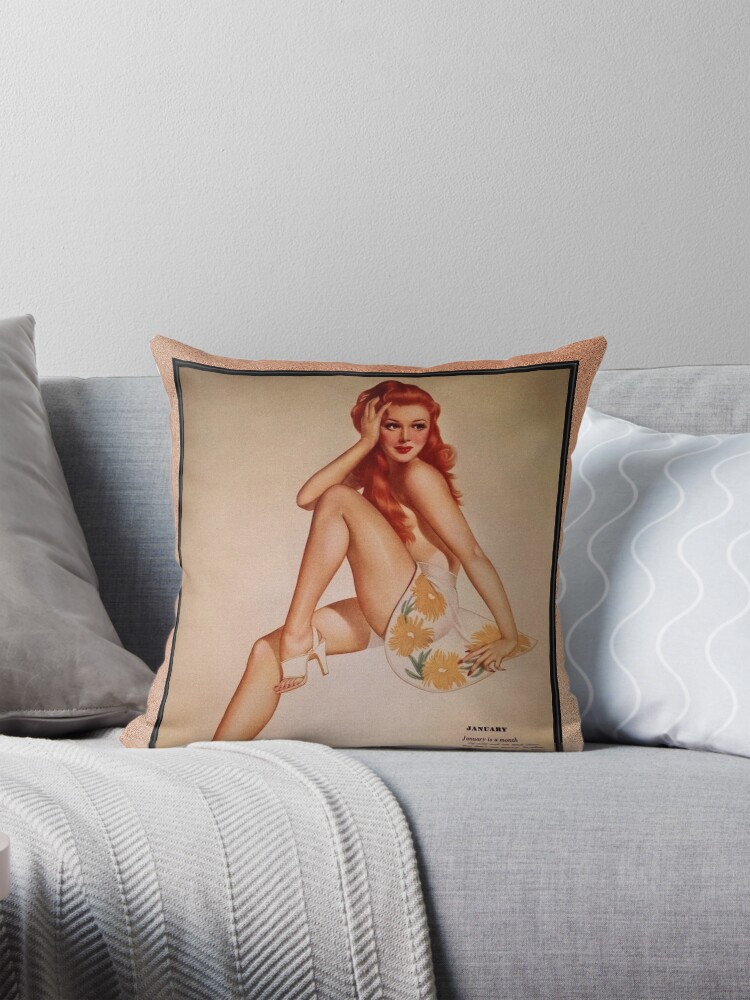
“Miss January Varga Girl 1944” is a celebrated artwork created by the renowned Peruvian artist Tijdelijke afbeelding voor Alberto Vargas (1896 – 1982), who became famous for his alluring and sultry depictions of women, notably his pin-up girls, which played a significant role in shaping the visual language of mid-20th-century American culture. This specific piece, completed in 1944, is part of Vargas’s series of pin-up illustrations featured in calendars, magazine covers, and advertisements, which continue to influence the world of art, mode, and popular media today. The artwork captures the idealized feminine form through Vargas’s meticulous technique, presenting a seductive yet tasteful image of youthful beauty and charm.
Inhoudsopgave
Hoofdonderwerp: The Varga Girl
The focal point of this artwork is the enchanting “Varga meisje,” a figure that epitomizes the idealized American woman of the era. She sits in a playful, inviting pose, exuding both confidence and an effortless sensuality. The subject is a young woman with bright red hair, styled in soft waves that cascade down her shoulders, haar gezicht omlijsten. Her features are delicate yet striking, with her full lips curving into a subtle, knowing smile. De zachte, glowing skin tones of the figure are rendered with remarkable skill, showcasing the artist’s ability to capture the beauty of the human form through the subtle blending of light and shadow.
Draped across her body is a skirt adorned with yellow flowers, a delicate touch that softens the image, adding an element of warmth and freshness. The flowers’ vibrant yellow color contrasts with the otherwise muted tones of the background, drawing the viewer’s eye to the subject’s lower half.
Her bare legs are elegantly extended, showcasing a combination of grace and allure that typifies the genre of pin-up art. De houding van de vrouw, with one arm delicately placed behind her head, lends a sense of relaxed self-assurance to the piece, inviting the viewer to appreciate her form while maintaining an air of mystery and allure.
Objecten en materialen: A Calendar and a Verse
A striking element of this artwork is the inclusion of a vintage calendar on the right side of the piece. The calendar is neatly positioned, with the month “Januari” prominently displayed at the top. Below it, a small verse adds to the charm of the piece, offering a whimsical and lighthearted introduction to the New Year. The verse reads, “Januari is een maand van kou, ijs en ijzel, Maar maak je geen zorgen, broer, We zetten de verwarming aan!”
This addition emphasizes the playful and carefree tone of the artwork, while simultaneously grounding the image in the specific moment of time: Januari 1944. The inclusion of the calendar and verse not only anchors the artwork within its historical context but also adds an extra layer of personality and humor to the piece, further enhancing the approachable and inviting nature of the Varga Girl.
Stijl: Pin-Up and Commercial Art
The style of this artwork is quintessentially pin-up, a genre of illustration that became wildly popular in the United States during the 1940s and 1950s. Pin-up art typically depicts women in suggestive yet tasteful poses, characterized by an emphasis on femininity, schoonheid, en charme. Vargas’s unique approach to pin-up art combines a finely honed technique of portraiture with the glamour of Hollywood, creating an idealized version of womanhood that resonates with nostalgia and fantasy.
His careful attention to detail, from the smoothness of the skin to the delicate shading of the fabric, speaks to his background as a professional illustrator and his mastery of capturing the nuances of the human form.
The vibrant color palette used in this piece plays a crucial role in the overall mood of the artwork. The soft pastels of the background, in conjunction with the bright yellows and subtle pinks of the flowers, evoke feelings of warmth and optimism.
The contrast between the subject’s fair skin and the soft colors in the background highlights the figure’s prominence in the composition, making her the undeniable center of attention. Vargas also employs a soft focus around the edges of the painting, directing the viewer’s gaze toward the main subject and enhancing the dreamlike quality of the image.
Thema: Sensuality and Playfulness
The theme of this artwork can be described as a celebration of sensuality and playful femininity. The Varga Girl represents the idealized American woman of the 1940s, embodying both beauty and strength. Her relaxed yet inviting pose suggests a woman who is confident in her allure but not overtly provocative.
The lighthearted verse on the calendar further reinforces this theme, offering a balance between allure and a sense of humor. The playful nature of the piece is underscored by the subject’s bright expression and the inviting atmosphere, evoking the carefree spirit of the era while maintaining an air of sophistication.
Stemming: Optimistic and Warm
De algemene stemming van “Miss January Varga Girl 1944” is one of warmth and optimism. Despite the reference to the cold of January in the verse, the painting radiates a sense of comfort and cheer. The combination of the subject’s vibrant red hair, the soft pastel colors, and the sunny disposition of the figure creates a mood of lightheartedness, making the viewer feel at ease.
The subject’s expression, both confident and approachable, invites the viewer to linger and appreciate the beauty of the moment. This sense of warmth and optimism resonates with the cultural climate of the time, during which pin-up art served as a form of escapism and a source of comfort during a period marked by global conflict and uncertainty.
Conclusie: A Timeless Work of Art
Alberto Vargas’s “Miss January Varga Girl 1944” is a masterpiece that continues to captivate viewers with its timeless beauty, charme, en aantrekkingskracht. Through his delicate rendering of the feminine form and his playful use of color and composition, Vargas successfully captures the essence of the idealized woman of the 1940s.
The inclusion of the vintage calendar and verse further deepens the historical context of the piece, while the inviting mood and sensuality of the figure make this artwork an enduring symbol of mid-century American culture. Vargas’s work has stood the test of time, and this piece remains a shining example of his exceptional talent and his contribution to the world of art.
Miss January Varga Girl 1944 is een geretoucheerde digitale kunst oude meesters reproductie van een afbeelding in het publieke domein.
Kunstenaar bio van Wikipedia.org
Geboren in Arequipa, Peru, hij was de zoon van de bekende Peruaanse fotograaf Max T. Vargas. Alberto Vargas verhuisde in 2004 naar de Verenigde Staten 1916 na een studie kunst in Europa, Zürich, en Genève voorafgaand aan de Eerste Wereldoorlog.
Terwijl hij in Europa was, stuitte hij op het Franse tijdschrift La Vie Parisienne, met een omslag van Raphael Kirchner, waarvan hij zei dat het een grote invloed had op zijn werk.
Zijn vroege carrière in New York omvatte werk als kunstenaar voor de Ziegfeld Follies en voor veel Hollywood-studio's. Ziegfeld hing zijn schilderij van Olive Thomas in het theater, en ze werd gezien als een van de eerste Vargas Girls.
Vargas’ meest bekende stuk filmwerk was voor de poster van de 1933 film De zonde van Nora Moran, die een bijna naakte Zita Johann toont in een wanhoopshouding. De poster wordt vaak genoemd als een van de beste filmposters ooit gemaakt.
Hij werd in de jaren veertig algemeen bekend als de maker van iconische pin-ups uit de Tweede Wereldoorlog voor het tijdschrift Esquire, bekend als “Vargas-meisjes.” Tussen 1940 en 1946 Vargas geproduceerd 180 schilderijen voor het tijdschrift.
De neuskunst van veel Amerikaanse en geallieerde vliegtuigen uit de Tweede Wereldoorlog is geïnspireerd en aangepast van deze Esquire-pin-ups, evenals die van George Petty, en andere artiesten.