

Monument to Mignard c1735
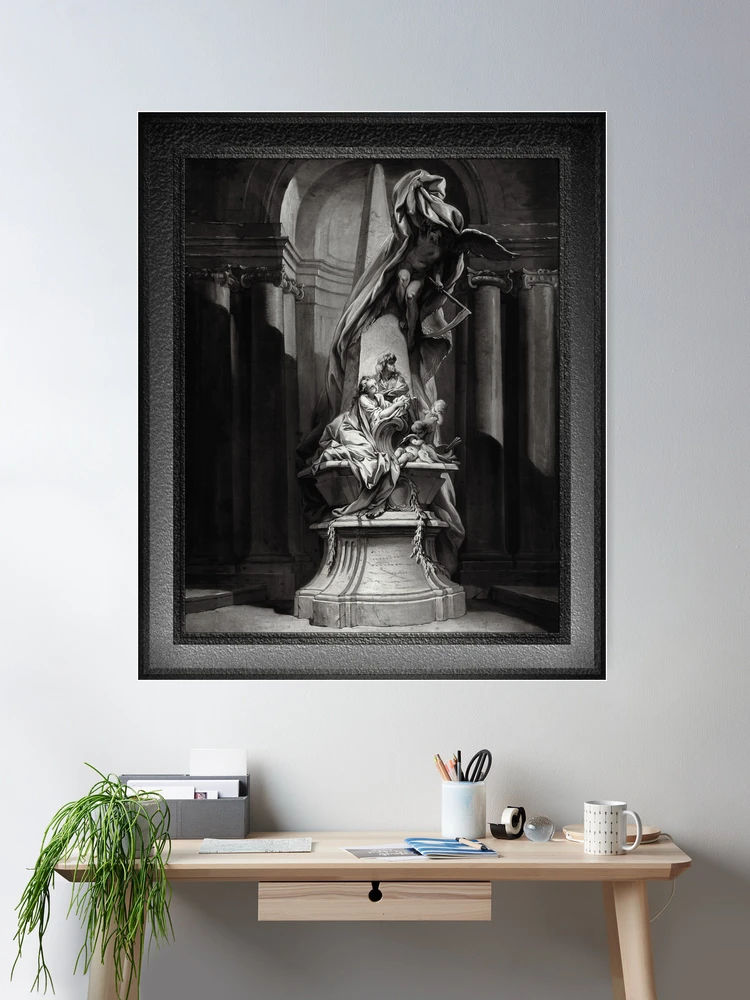
Pomnik Mignarda z 1735 roku autorstwa francuskiego malarza Francois Boucher (1703 – 1770); znany również jako rysownik, grawer i dekorator w stylu francuskiego rokoko, był dobrze znany ze swojego bogatego mitologicznego, motywy alegoryczne i erotyczne, był nadwornym malarzem Ludwika XV i ulubieńcem markizy de Pompadour.
François Bouchera “Pomnik Mignarda,” pomalowane dookoła 1735, is a compelling and emotive depiction of the human condition, crafted in the Rococo style. This masterpiece is a tribute to either the renowned French artist Pierre Mignard (1612–1695), known as Mignard le Romain or his brother Nicolas Mignard (1606 -1668) known as Mignard d’Avigno. Both french painters known for their portraits, religious and mythological scenes; who were influential figures in French art and the predecessor of many Rococo artists. The monument represents both the grandeur of the Mignard legacy and the ethereal qualities of art and immortality.
Spis treści
Styl i technika
Boucher’s approach to the painting combines the elegance of Rococo with the formal compositional structure of Baroque. Rococo art is known for its lightness, łaska, and often playful themes, which are all present in this piece. Miękkie, delicate brushwork and gentle tonal contrasts give the painting a serene, almost dreamlike quality. The use of chiaroscuro—the dramatic contrast between light and dark—adds a deep emotional gravity to the otherwise graceful and fluid scene. Despite the subject’s connection to a memorial, Boucher imbues the scene with an otherworldly sense of beauty, elevating the theme of remembrance into one of reverence and artistic transcendence.
The artist’s signature light palette—an array of soft grays, upławy, and muted earth tones—dominates the work. The use of these tones is characteristic of Boucher’s style, which often sought to evoke feelings of serenity and contemplation through the careful modulation of light and shadow. The careful blending of the figures and environment further enhances the romantic and serene nature of the piece, which contrasts with the heavy, monumental subject matter.
Temat i nastrój
At its heart, “Pomnik Mignarda” explores the concept of artistic immortality. Through Boucher’s portrayal, Mignard is both physically and symbolically immortalized. The monument in the artwork is not just a physical structure but represents the enduring legacy of Mignard’s contributions to French art, ensuring his influence persists long after his death.
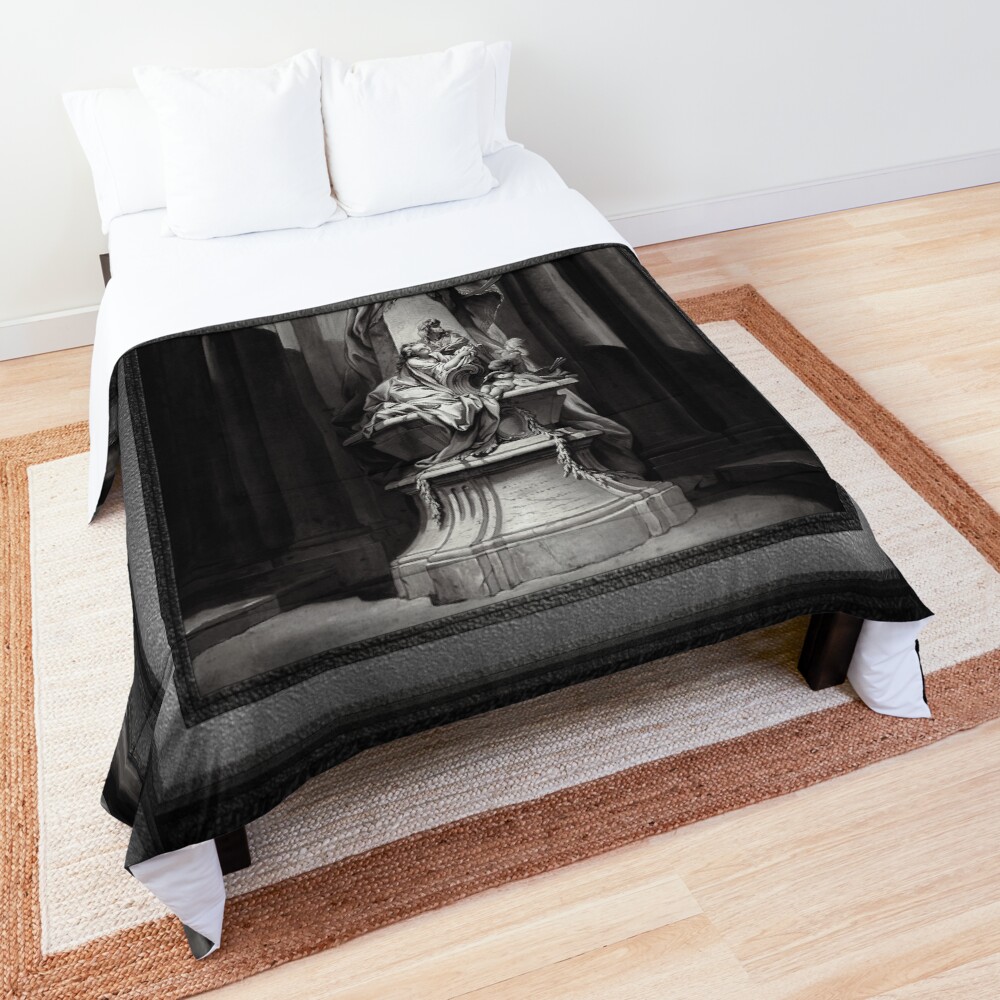
There is a melancholic yet noble atmosphere to the piece. The figures that surround the monument, seemingly in mourning, represent the continuation of Mignard’s artistic lineage. Centralna postać, draped in flowing robes and seated in a solemn pose, could be seen as an allegorical figure of Fame or Art itself, preserving and honoring Mignard’s memory. Surrounding this figure are other smaller figures, each contributing to the narrative of loss and tribute. Their expressions of grief are subtle yet poignant, underlining the emotional weight of the scene.
The overall mood of the painting is one of quiet reverence. There is no overt display of sadness or grief, but rather a meditative reflection on the passage of time and the eternal nature of art. Boucher’s use of light and shadow in the scene also conveys a sense of transcendence, where the figures appear to exist between the earthly and divine realms.
The Monument and Surrounding Elements
The monumental structure that stands at the center of the composition is both imposing and elegant. It is a grand obelisk-like column, adorned with flowing drapery that seems to animate the sculpture, bringing it to life. The monument serves as a symbol of both the permanence of Mignard’s artistic achievements and the transient nature of human life. The draped fabric around the monument adds a sense of softness, reminding the viewer of the connection between life and death, beauty and loss.
The surrounding architecture, with its classical columns and arc-like structures, references the grandeur of ancient Roman or Greek monuments. These elements enhance the sense of timelessness, suggesting that Mignard’s legacy is not merely confined to the present but is part of a greater historical continuum. The architecture serves as a visual counterpart to the central monument, grounding the ethereal figures and adding depth to the space.
The sculptural elements, both on the monument and surrounding it, add to the solemnity of the scene. Small figures of children and angels are seen in the painting, representing the innocence and purity that continue even in the face of death. These figures emphasize the cyclical nature of life and the unbroken continuity of artistic expression. In this, Boucher elevates Mignard to a nearly divine status, suggesting that through his art, Mignard has achieved a kind of immortality.
The Figures and Their Significance
The figures depicted in the painting are not merely decorative; each one plays a role in the overall narrative of artistic immortality. At the center of the scene, a draped figure—possibly an allegorical representation of Fame or Art—gently points toward the monument, guiding the viewer’s attention to Mignard’s legacy. This figure seems to embody the concept of memory and preservation, ensuring that the artist’s achievements will not fade away with time.
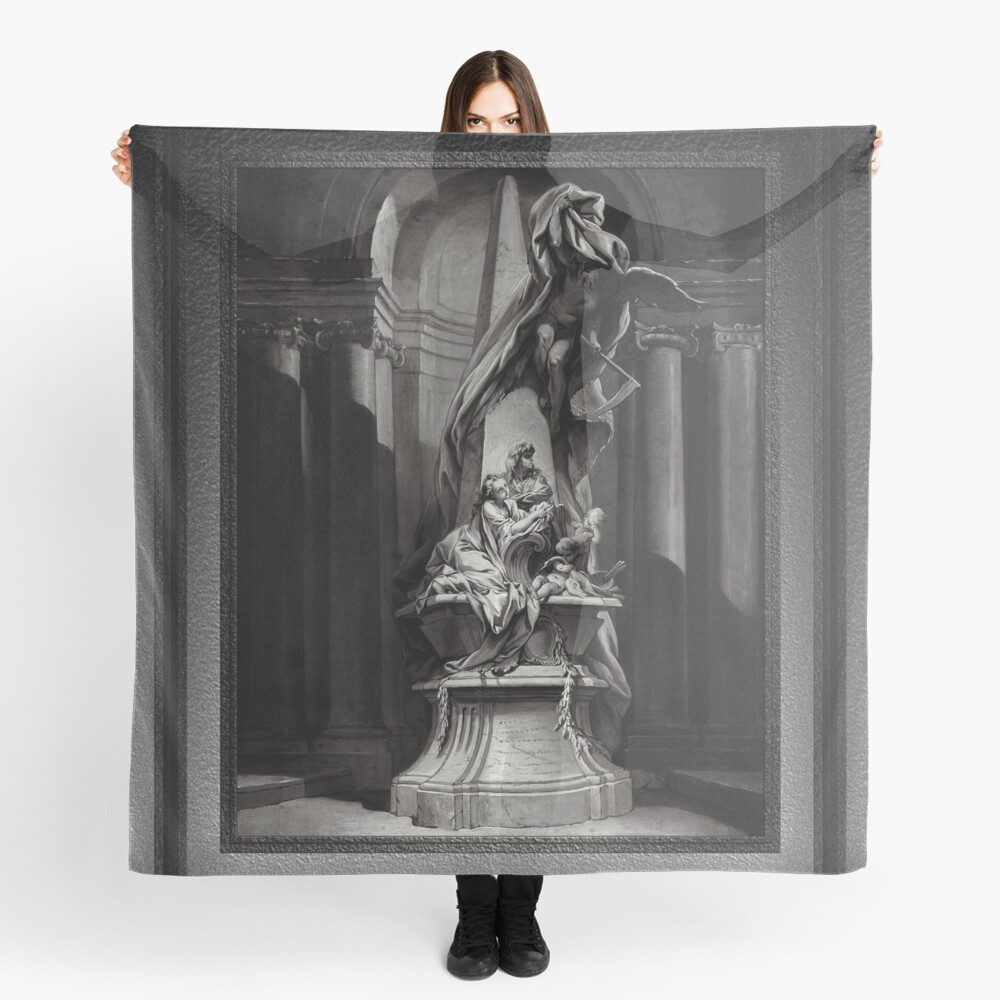
In addition to the central figure, several smaller figures can be observed seated or standing near the monument. Te liczby, often depicted in a state of contemplation or mourning, serve as representations of the viewers or admirers of Mignard’s work. Their placement around the monument suggests that art is not an isolated endeavor, but a collective experience shared by many. This idea reinforces the theme of art as an enduring force, capable of uniting generations across time.
The use of drapery in the figures’ clothing, particularly in the robes of the central figure, is typical of Boucher’s style. The flowing fabrics emphasize the movement and grace of the figures, suggesting both the passage of time and the connection between the living and the deceased. The gentle folds of the fabric add an element of softness to the otherwise rigid monument, symbolizing the balance between life and death, the ephemeral and the eternal.
Wniosek
Bouchera “Pomnik Mignarda” is a rich and evocative work that goes beyond simply memorializing an artist. Through the Rococo style, Boucher creates a scene that feels both timeless and intimate. The painting is a meditation on memory, immortality, and the perpetual nature of art. By combining elements of classical architecture, soft tonalities, and allegorical figures, Boucher elevates the figure of Mignard to a symbolic plane, forever enshrined within the realm of artistic and cultural immortality.
Monument to Mignard to wyretuszowana cyfrowa reprodukcja obrazu z domeny publicznej.
Informacje poniżej od Wikipedia.org
Pochodzący z Paryża, Boucher był synem mniej znanego malarza Nicolasa Bouchera, który dał mu pierwszy trening artystyczny. W wieku siedemnastu lat, obraz Bouchera podziwiał malarz François Lemoyne. Lemoyne mianował później Bouchera swoim uczniem, ale już po trzech miesiącach, poszedł do pracy dla grawera Jean-François Cars.
W 1720, zdobył elitarne Grand Prix de Rome za malarstwo, ale dopiero pięć lat później skorzystał z wynikającej z tego możliwości studiowania we Włoszech, z powodu problemów finansowych w Królewskiej Akademii Malarstwa i Rzeźby.[1] Po powrocie ze studiów we Włoszech został przyjęty do zrefundowanej Académie de peinture et de sculpture na 24 listopad 1731. Jego kawałek recepcji (kawałek recepcji) był jego Rinaldo i Armida z 1734.
Boucher poślubił Marie-Jeanne Buzeau w 1733. Para miała razem troje dzieci. Boucher został członkiem wydziału w 1734 i od tego momentu jego kariera nabrała tempa, gdy został mianowany profesorem, a następnie rektorem Akademii, zostaje inspektorem w Królewskiej Manufakturze Gobelinów i wreszcie premierem Peintre du Roi (Pierwszy malarz króla) w 1765. Portret Marie-Louise O'Murphy c. 1752
Boucher zmarł dnia 30 Móc 1770 w rodzinnym Paryżu. Jego imię, wraz z tym jego patronki Madame de Pompadour, stał się synonimem francuskiego stylu rokoko, prowadząc braci Goncourt do pisania: “Boucher jest jednym z tych mężczyzn, którzy reprezentują smak stulecia, kto wyraża?, personifikować i ucieleśniać go.”
Boucher słynie z tego, że mówi, że natura jest “zbyt zielony i słabo oświetlony” (zbyt zielony i źle oświetlony).
Boucher był związany z grawerem kamieni szlachetnych Jacques Guay, kogo nauczył rysować. Był również mentorem dla morawsko-austriackiego malarza Martina Ferdinanda Quadala oraz neoklasycznego malarza Jacquesa-Louisa Davida w 1767.[4] Później, Boucher wykonał serię rysunków dzieł Guay, które Madame de Pompadour następnie wygrawerowała i rozprowadziła jako ładnie oprawiony tom wśród uprzywilejowanych dworzan