

Moonlit Reverie: A Study in Light and Form by Luis Ricardo Falero
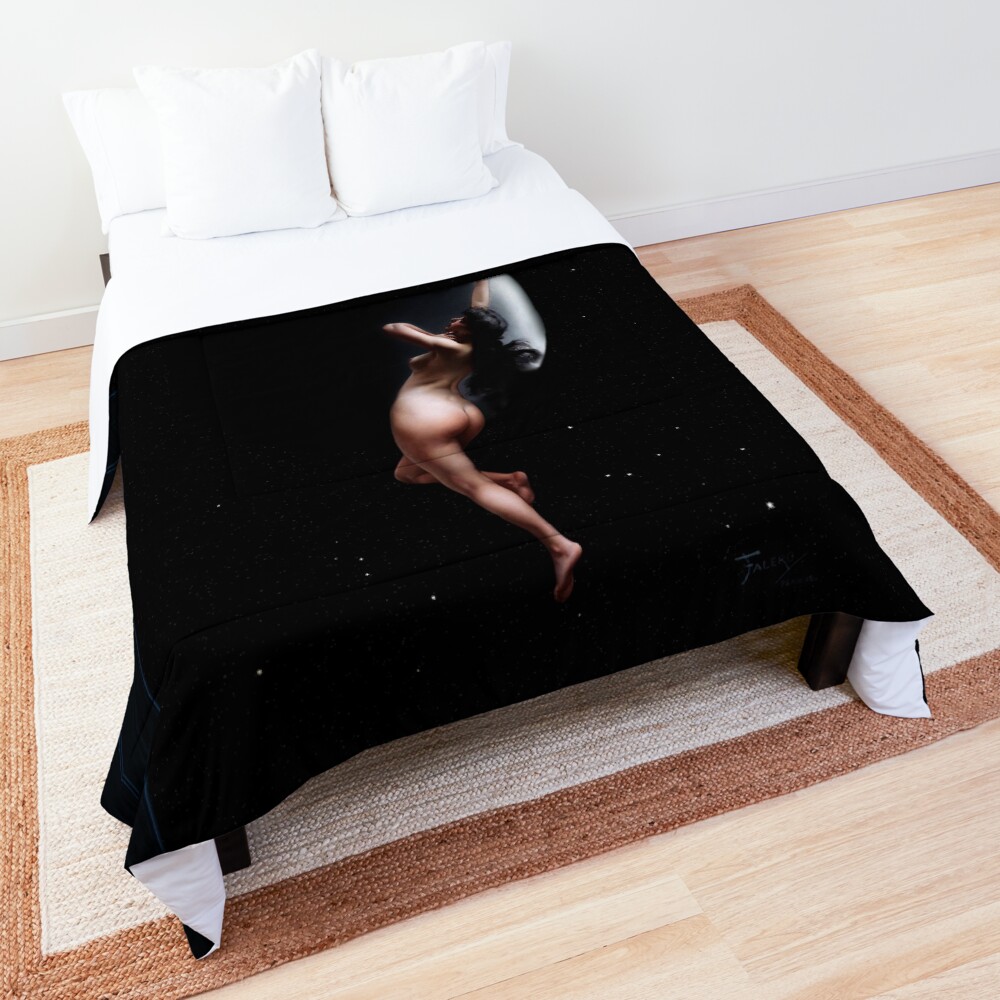
Luis Ricardo Falero’s “Moon Nymph,” inguru margotua 1896, is a captivating example of late 19th-century academic painting, blending classical ideals with a burgeoning Romantic sensibility. The artwork presents a solitary female figure suspended against the backdrop of a vast, star-studded night sky and a luminous crescent moon.
Falero’s masterful use of chiaroscuro – the dramatic interplay of light and shadow – is immediately apparent, drawing the viewer’s eye to the central subject while simultaneously emphasizing the immensity of the surrounding cosmos. The painting evokes a sense of ethereal beauty and quiet contemplation, inviting viewers into a dreamlike realm where earthly concerns fade away.
Edukien taula
Konposizio-elementuak & Teknika
The composition is strikingly simple yet profoundly effective. The figure occupies the lower portion of the canvas, her form gracefully arcing upwards towards the moon. This upward trajectory creates a visual flow that guides the eye from the darkness below to the radiant light above. Falero’s technique demonstrates a clear understanding of anatomical accuracy and idealized beauty, hallmarks of academic training.
While the figure is nude, the presentation avoids any sense of overt sensuality; horren ordez, it emphasizes her form as an embodiment of natural grace and harmony with the celestial environment. Leuna, blended brushstrokes contribute to the painting’s overall softness and dreamlike quality. There’s a palpable stillness in the scene, heightened by the absence of any other figures or objects beyond the moon and stars.
Kolore Paleta & Argiztapena
The color palette is deliberately restrained, dominated by deep blacks and blues representing the night sky, punctuated by the silvery glow of the moon and the subtle flesh tones of the figure. Falero’s skillful manipulation of light is central to the painting’s impact. The moonlight casts a gentle radiance on the woman’s body, highlighting her contours while leaving much of her form in shadow.
This creates a sense of mystery and adds depth to the composition. The stars scattered across the sky are rendered as tiny points of light, adding texture and visual interest to the otherwise dark background. The contrast between the darkness of space and the illuminated figure is dramatic, emphasizing the woman’s isolation and her connection to the lunar sphere.
Sinbolismoa & Interpretazioa
While Falero’s work doesn’t explicitly convey a narrative, it resonates with symbolic meaning rooted in classical mythology and Romantic ideals. The moon has long been associated with femininity, intuition, and the subconscious, making its prominence in the painting significant. The figure’s upward reach towards the moon suggests an aspiration or yearning for something beyond the earthly realm – perhaps spiritual enlightenment or connection to a higher power.
Her pose evokes a sense of weightlessness and freedom, as if she is unbound by gravity and earthly limitations. The overall effect is one of quiet transcendence, inviting viewers to contemplate the mysteries of existence and the beauty of the natural world. The painting’s lack of overt narrative allows for multiple interpretations, making it a deeply personal and evocative work of art.
Falero’s Artistic Context

Luis Ricardo Falero was an Argentine painter who received his training in Europe, studying at the Real Academia de Bellas Artes de San Fernando in Madrid. His artistic style reflects the influence of academic painting traditions prevalent during the late 19th century, characterized by a focus on technical skill, zehaztasun anatomikoa, and idealized beauty.
Alabaina, Falero’s work also demonstrates an appreciation for Romanticism’s emphasis on emotion, irudimena, and the sublime power of nature. “Moon Nymph” exemplifies this synthesis of influences, showcasing Falero’s ability to create works that are both technically proficient and emotionally resonant. His paintings often depict mythological or allegorical subjects, reflecting a broader cultural interest in classical themes during his time.
Ondarea & Esangura
“Moon Nymph” stands as a testament to Falero’s artistic talent and the enduring appeal of Romantic ideals. The painting’s timeless beauty and evocative imagery continue to captivate viewers today. It serves as a valuable example of late 19th-century academic painting, demonstrating the artist’s mastery of technique and his ability to create works that are both aesthetically pleasing and intellectually stimulating. The artwork’s enduring popularity speaks to its universal themes of beauty, aspiration, eta mundu naturalarekiko lotura.
Bio artista honetatik eratorria Wikipedia.org
Falero Granadan jaio zen eta jatorriz Espainiako Armadan egin zuen karrera, baina gurasoei eman zien’ etsipena. Oinez joan zen Parisera, non artea ikasi zuen, kimika eta ingeniaritza mekanikoa.
Azken bi hauetan egin behar zituen esperimentuak arriskutsuak ziren, margolaritzan bakarrik bideratzea erabakitzera eramanez.[3] He was a student of Gabriel Ferrier.[4] Parisen ondoren, Londresen ikasi zuen, where he eventually settled.[2]
Falerok astronomiarekiko interes berezia zuen eta zeruko konstelazioa sartu zuen bere lan askotan, esaterako “Kometa baten ezkontza” eta “Izar bikiak”. Astronomiarekiko interesak eta ezagutzak Camille Flammarionen lanak ilustratzera ere eraman zuten.
In 1896, bere heriotzaren urtea, Maud Harveyk aitatasunagatik auzitara eraman zuen Falero. Trajeak Falerok Harvey liluratu zuela esaten zuen hura zegoenean 17, lehenik bere etxeko neskame gisa, eta gero eredua. Haurdun zegoela jakin zuenean, baztertu egin zuen.
Kasua irabazi zuen eta astean bost txelin ematen zizkioten haien seme-alaben alde. Falero University College ospitalean hil zen, Londres, urterekin 45
Moon Nymph is a retouched digital art reproduction of a public domain image that is available for purchase as a canvas art print online.