

Devaneio ao luar: Um estudo em luz e forma por Luis Ricardo Falero
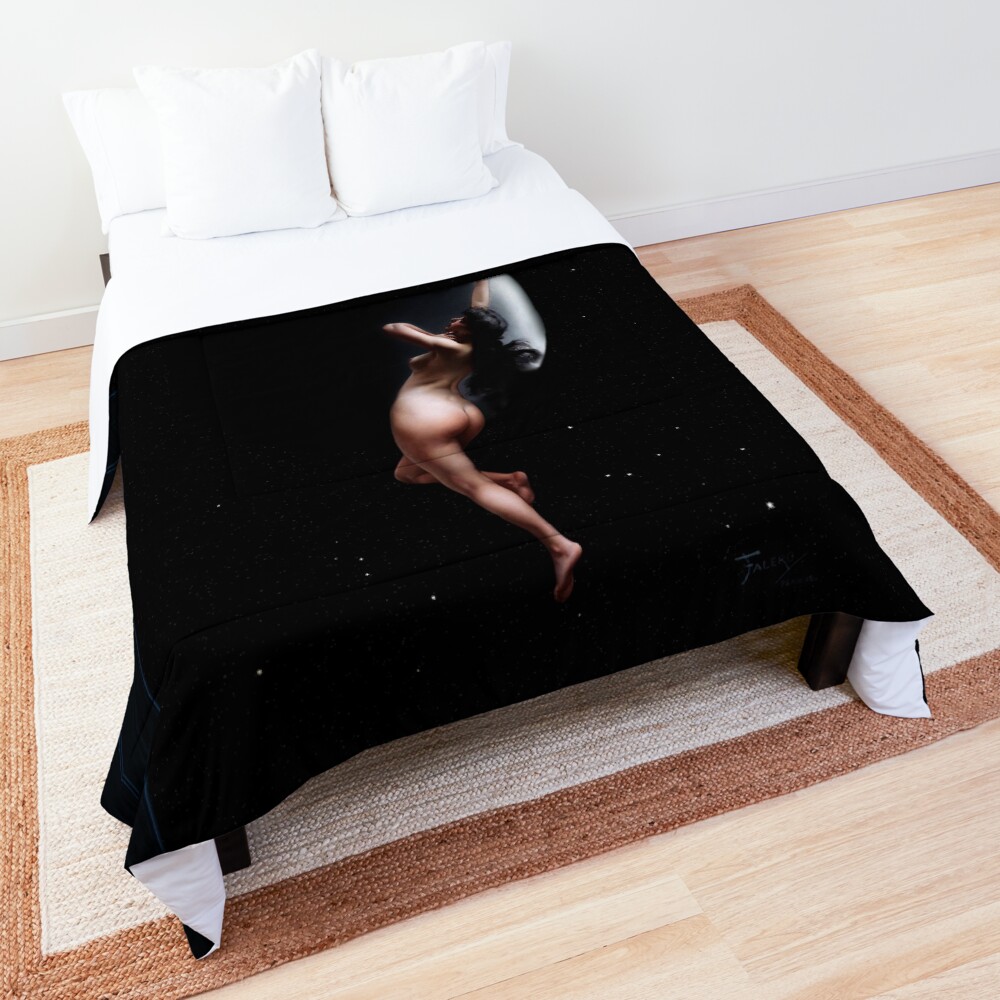
Luis Ricardo Falero“Ninfa da Lua”,”pintado por volta 1896, é um exemplo cativante da pintura acadêmica do final do século XIX, misturando ideais clássicos com uma crescente sensibilidade romântica. A obra apresenta uma figura feminina solitária suspensa contra o pano de fundo de uma vasta, céu noturno repleto de estrelas e uma lua crescente luminosa.
O uso magistral do claro-escuro por Falero – a interação dramática de luz e sombra – é imediatamente aparente, atraindo o olhar do observador para o tema central e, ao mesmo tempo, enfatizando a imensidão do cosmos circundante. A pintura evoca uma sensação de beleza etérea e contemplação silenciosa, inviting viewers into a dreamlike realm where earthly concerns fade away.
Índice
Compositional Elements & Técnica
The composition is strikingly simple yet profoundly effective. The figure occupies the lower portion of the canvas, her form gracefully arcing upwards towards the moon. This upward trajectory creates a visual flow that guides the eye from the darkness below to the radiant light above. Falero’s technique demonstrates a clear understanding of anatomical accuracy and idealized beauty, hallmarks of academic training.
While the figure is nude, the presentation avoids any sense of overt sensuality; em vez de, it emphasizes her form as an embodiment of natural grace and harmony with the celestial environment. O suave, blended brushstrokes contribute to the painting’s overall softness and dreamlike quality. There’s a palpable stillness in the scene, heightened by the absence of any other figures or objects beyond the moon and stars.
Paleta de cores & Lighting
The color palette is deliberately restrained, dominated by deep blacks and blues representing the night sky, punctuated by the silvery glow of the moon and the subtle flesh tones of the figure. Falero’s skillful manipulation of light is central to the painting’s impact. The moonlight casts a gentle radiance on the woman’s body, highlighting her contours while leaving much of her form in shadow.
This creates a sense of mystery and adds depth to the composition. The stars scattered across the sky are rendered as tiny points of light, adding texture and visual interest to the otherwise dark background. The contrast between the darkness of space and the illuminated figure is dramatic, emphasizing the woman’s isolation and her connection to the lunar sphere.
Simbolismo & Interpretação
While Falero’s work doesn’t explicitly convey a narrative, it resonates with symbolic meaning rooted in classical mythology and Romantic ideals. The moon has long been associated with femininity, intuition, and the subconscious, making its prominence in the painting significant. The figure’s upward reach towards the moon suggests an aspiration or yearning for something beyond the earthly realm – perhaps spiritual enlightenment or connection to a higher power.
Her pose evokes a sense of weightlessness and freedom, as if she is unbound by gravity and earthly limitations. The overall effect is one of quiet transcendence, inviting viewers to contemplate the mysteries of existence and the beauty of the natural world. The painting’s lack of overt narrative allows for multiple interpretations, making it a deeply personal and evocative work of art.
Contexto Artístico de Falero

Luis Ricardo Falero was an Argentine painter who received his training in Europe, studying at the Real Academia de Bellas Artes de San Fernando in Madrid. His artistic style reflects the influence of academic painting traditions prevalent during the late 19th century, characterized by a focus on technical skill, anatomical accuracy, and idealized beauty.
No entanto, Falero’s work also demonstrates an appreciation for Romanticism’s emphasis on emotion, imagination, and the sublime power of nature. “Moon Nymph” exemplifies this synthesis of influences, showcasing Falero’s ability to create works that are both technically proficient and emotionally resonant. His paintings often depict mythological or allegorical subjects, reflecting a broader cultural interest in classical themes during his time.
Legado & Significance
“Moon Nymph” stands as a testament to Falero’s artistic talent and the enduring appeal of Romantic ideals. The painting’s timeless beauty and evocative imagery continue to captivate viewers today. It serves as a valuable example of late 19th-century academic painting, demonstrating the artist’s mastery of technique and his ability to create works that are both aesthetically pleasing and intellectually stimulating. The artwork’s enduring popularity speaks to its universal themes of beauty, aspiration, and connection to the natural world.
Biografia do artista derivada de Wikipédia.org
Falero nasceu em Granada e originalmente seguiu carreira na Marinha Espanhola, but gave it up to his parents’ disappointment. He traveled on foot to Paris, onde estudou arte, química e engenharia mecânica.
The experiments which he had to conduct in the latter two were dangerous, leading him to decide to focus on painting alone.[3] He was a student of Gabriel Ferrier.[4] Depois de Paris, he studied in London, where he eventually settled.[2]
Falero tinha um interesse particular pela astronomia e incorporou constelações celestes em muitas de suas obras., como “O casamento de um cometa” e “Estrelas Gêmeas”. Seu interesse e conhecimento em astronomia também o levaram a ilustrar as obras de Camille Flammarion.
Em 1896, o ano de sua morte, Maud Harvey processou Falero por paternidade. O processo alegou que Falero seduziu Harvey quando ela era 17, primeiro servindo como sua empregada doméstica, and then model. Quando ele descobriu que ela estava grávida, ele a dispensou.
Ela ganhou o caso e recebeu cinco xelins por semana para sustentar seu filho. Falero morreu no University College Hospital, Londres, com a idade de 45
Moon Nymph is a retouched digital art reproduction of a public domain image that is available for purchase as a canvas art print online.