

Měsíční krásky: A Celestial Dance in Falero’s Vision
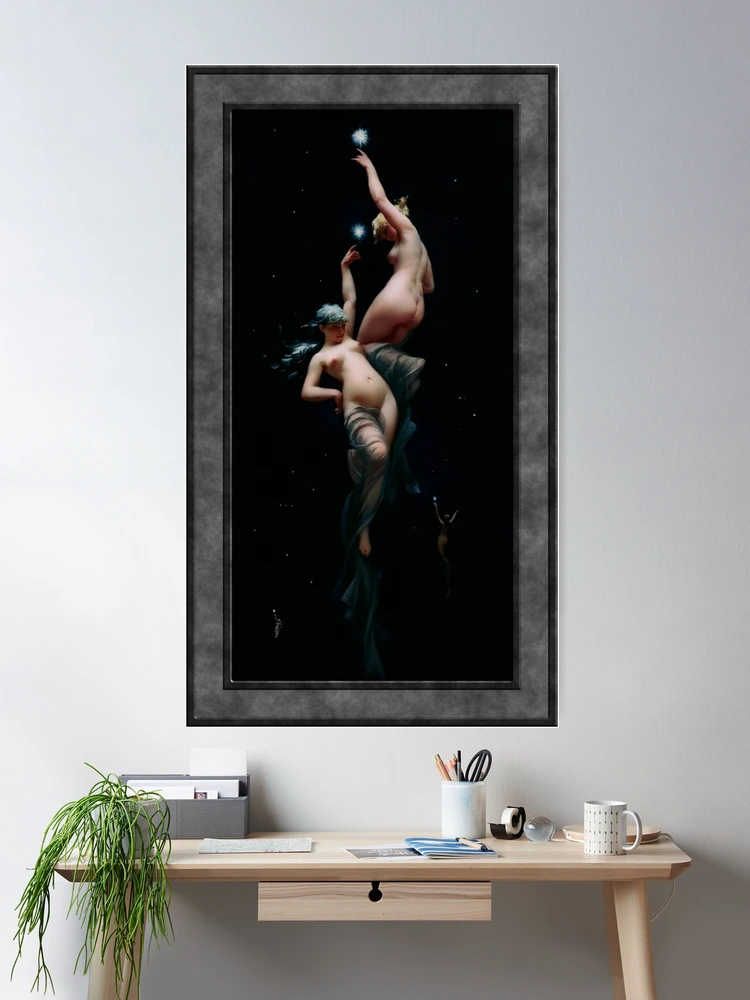
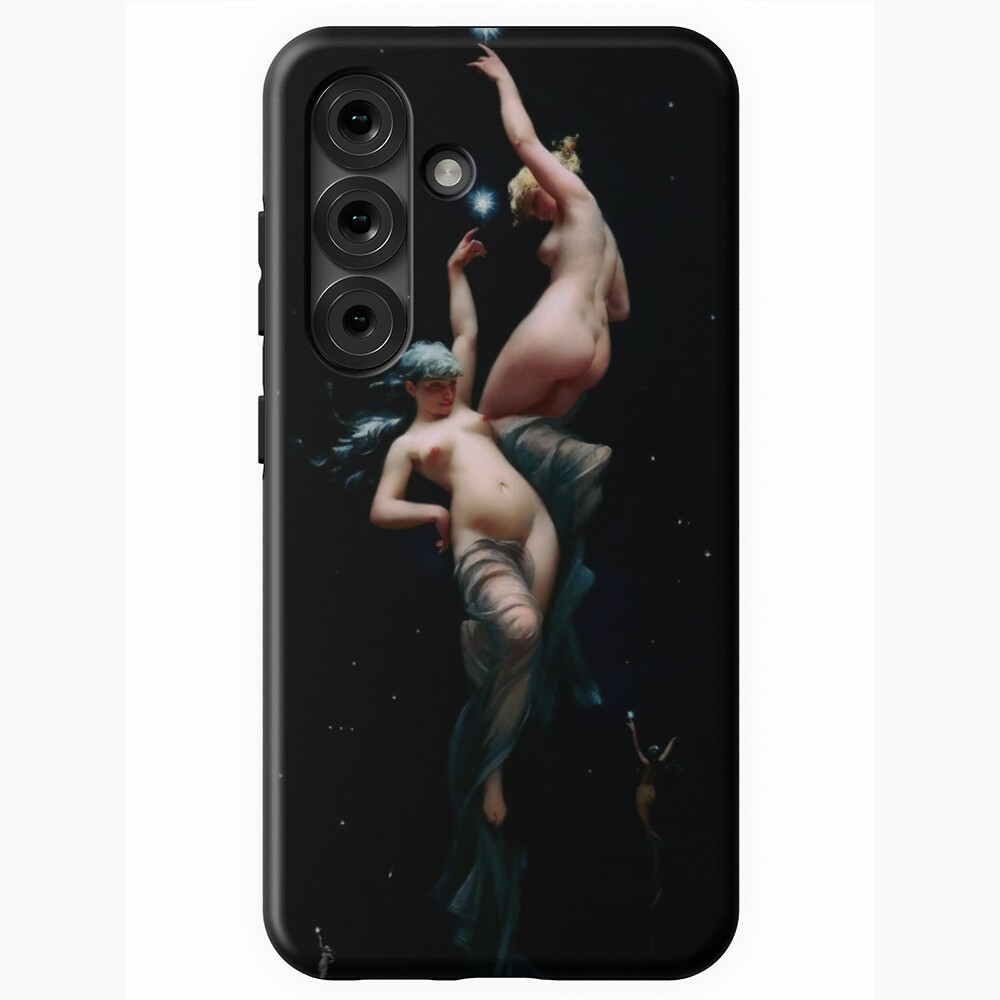
Moonlit Beauties by Luis Ricardo Falero (1851-1896) was a Spanish painter known for his evocative depictions of mythological subjects and allegorical scenes, often imbued with a romantic sensibility. “Měsíční krásky,” painted during the height of his career, exemplifies this style, presenting a captivating vision of two female figures suspended within a star-studded night sky. The artwork is not merely a representation; it’s an exploration of ethereal beauty, milost, and perhaps, the very essence of dreams. Falero’s masterful use of light and shadow creates a sense of otherworldly wonder, drawing the viewer into a realm where earthly constraints dissolve.
Obsah
Kompoziční harmonie & Verticality
The painting is characterized by its striking vertical format, which emphasizes the figures’ ascent and their connection to the vastness above. Složení je pečlivě vyvážené; the two women are positioned asymmetrically but in a way that creates visual equilibrium. One figure appears slightly lower, leaning towards the left of the frame, while the other floats higher on the right, creating a dynamic interplay between them. This asymmetry prevents the image from feeling static and contributes to the overall sense of movement and lightness. The dark background serves as a dramatic foil, highlighting the luminous skin tones and flowing drapery of the figures.
Figures & Their Gestures
The two female figures are rendered with remarkable anatomical accuracy and an idealized beauty characteristic of academic painting during this period. Both are nude, their bodies bathed in soft moonlight. One figure, positioned lower in the composition, appears to be reaching upwards towards a star, her hand outstretched as if attempting to grasp it. Her expression is serene, almost contemplative, suggesting a moment of quiet wonder or aspiration. The other figure floats higher, also extending an arm toward a distant star, but with a more active and engaged gesture. She seems to be actively drawing the starlight down towards herself, creating a sense of connection between the celestial realm and the human form.
Světlo & Atmosphere: A Study in Luminosity
Falero’s skill lies particularly in his handling of light. The painting is dominated by a cool, silvery luminescence emanating from the moon and stars above. This light doesn’t simply illuminate the figures; it transforms them, creating a soft glow that emphasizes their curves and contours. The dark background isn’t merely black; it’s filled with countless tiny stars, rendered with delicate brushstrokes, which contribute to the painting’s atmospheric depth. The interplay of light and shadow creates a sense of mystery and enchantment, further enhancing the otherworldly quality of the scene. The artist uses chiaroscuro techniques effectively, contrasting bright highlights with deep shadows to sculpt the forms and create a dramatic effect.
Paleta barev & Technika
The color palette is restrained but effective, primarily consisting of cool tones – blues, stříbra, and whites – which reinforce the nocturnal setting. Subtle touches of warmer colors, such as flesh tones and hints of gold in the drapery, provide contrast and visual interest. Falero’s technique demonstrates a mastery of academic painting traditions. The brushwork is smooth and blended, creating a seamless surface that enhances the illusion of realism. There’s a meticulous attention to detail evident in the rendering of the figures’ anatomy, the folds of their drapery, and the texture of the night sky.
Symbolismus & Výklad
While the painting doesn’t explicitly depict a specific mythological narrative, it evokes themes of aspiration, connection with the cosmos, and the pursuit of beauty. The stars themselves can be interpreted as symbols of hope, osud, or divine inspiration. The act of reaching for them suggests a desire to transcend earthly limitations and connect with something greater than oneself. The two figures could represent different aspects of human nature – perhaps reason and intuition, or aspiration and fulfillment. Nakonec, the painting’s meaning is open to interpretation, inviting viewers to project their own thoughts and emotions onto the scene.
Falero’s Place in Art History
Falero was a product of his time, influenced by the academic traditions of 19th-century European art. His work shares affinities with artists like Bouguereau and Cabriel, who were known for their idealized depictions of classical subjects. nicméně, Falero’s paintings possess a unique sensibility, characterized by a greater emphasis on atmosphere and emotion than some of his contemporaries. “Měsíční krásky” stands as a testament to his artistic skill and his ability to create images that are both beautiful and evocative. It is a captivating example of the Romantic spirit in Spanish art.
Informace níže odvozené Wikipedia.org
Falero se narodil v Granadě a původně se věnoval kariéře ve španělském námořnictvu, ale vzdal to rodičům zklamání; když se rozhodl odcestovat do Paříže, kde studoval umění, chemie a strojírenství.
Během studia chemie a strojírenství; experimenty, které musel provádět, považoval za příliš nebezpečné, což ho přivedlo k tomu, aby zaměřil svou pozornost pouze na malbu.
V důsledku toho se stal studentem francouzského portrétisty a orientalisty Gabriel-Joseph-Marie-Augustin Ferrier (1847 – 1914). Po Paříži, přestěhoval do Londýna, kde pokračoval ve studiu, a nakonec se vyrovnal.
Falero měl zvláštní zájem o astronomii a do mnoha svých děl začlenil nebeská souhvězdí, jako “Manželství komety” a “Twin Stars”. Jeho zájem a znalosti astronomie ho také vedly k ilustraci děl Camille Flammarionové.
v 1896, rok jeho smrti, Maud Harvey žalovala Falera o otcovství. Oblek tvrdil, že Falero svedla Harveyho, když byla 17, nejprve sloužil jako jeho služebná, a pak jeho model. Když zjistil, že je těhotná, propustil ji.
Vyhrála případ a získala pět šilinků týdně na podporu jejich dítěte. Falero zemřel v univerzitní fakultní nemocnici, Londýn, ve věku 45
Toto je retušovaná reprodukce starého umění digitálního umění obrazu veřejného díla.