

Mosè
Moïse du graveur italien Domenico Cunego (1727 – 1803); dopu un travagliu di Parmigianino (Francesco Mazzola 1503 – 1540) .png
Questu hè un drammaticu è imponente incisione chì rapprisenta u caratteru biblicu in una pusizioni seduta, cupertu cù una longa tela nantu à i so gammi è a cintura cù i so pedi appoghjate nantu à dui grossi blocchi di petra, cum'è a so figura facia una ombra contr'à un muru di petra pianu.
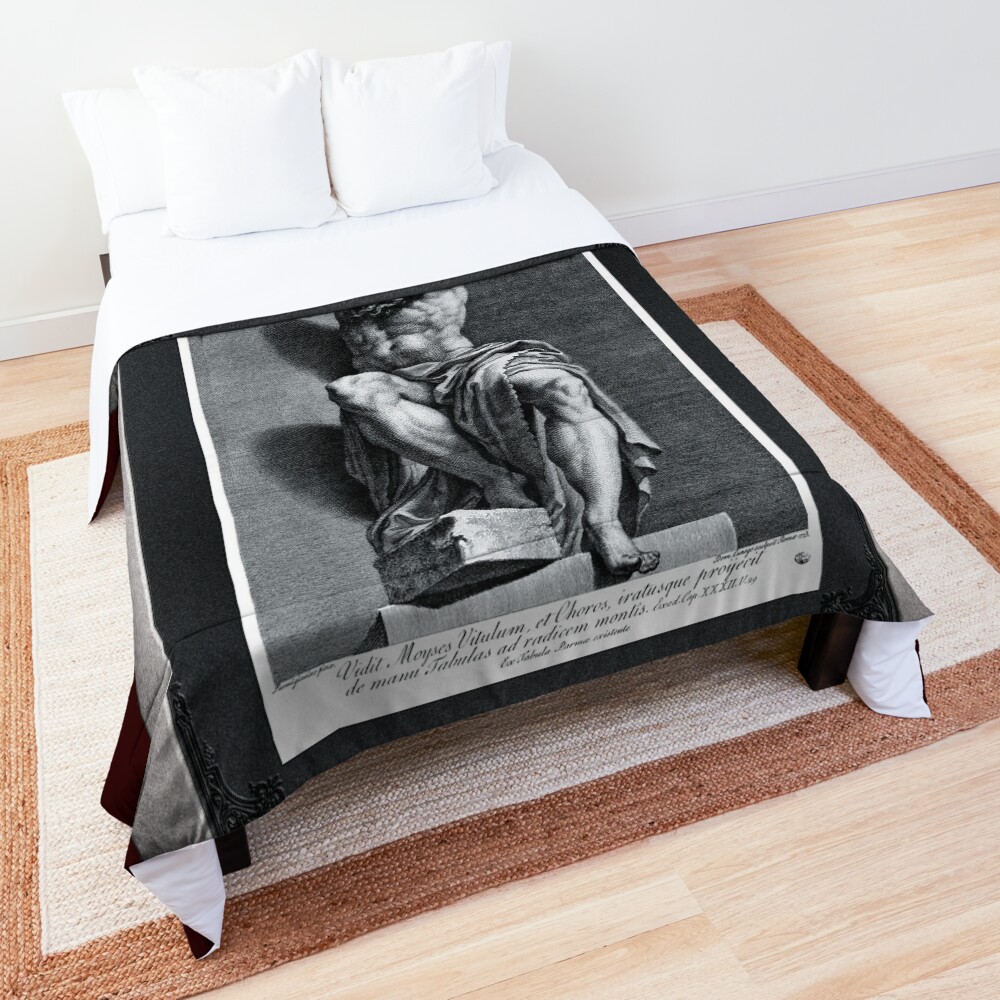
Pudemu vede trè fasci di luce chì irradianu da u spinu di a so testa à ogni latu mentre tene sopra à a so testa i Dui Tavulini di Petra di l'Anticu Testamentu chjamati i Dieci Cumandamenti nantu à quale u DIO Onnipotente hà scrittu cù a so Manu Astrale e Leghji chì l'omu deve campà.; but that the Israelite’s were not ready to receive, as they lost faith and turned their back to the word of GOD.
We can also see in this majestic and inspiring engraving, that the Tablets are inscribed with the Word and Law of GOD, and that he is about to cast them down against those individuals that have committed a most grievous sin in the Sight of GOD, as told in the Bible by turning away from the Lord, and instead worshipping an idle made of gold resembling that of a calf.
Below the engraving are the words Parmiginrino pin. r. _ Dom Cunego Sculpsit Roma 1773; Vidit Moyse Vitulum, et Choros, iratusque proijecit; de manu Tabulas ad radicem montis. Exoc. Cap XXXII. v.29; Ex Tabula Parmae existente
Questa hè una ripruduzzione di l'antichi maestri d'arte digitale rimasterizzata di una maghjina di duminiu publicu chì hè dispunibule cum'è a stampa su tela in linea.