

Portrait of The Hon. Mrs Harold Ritchie
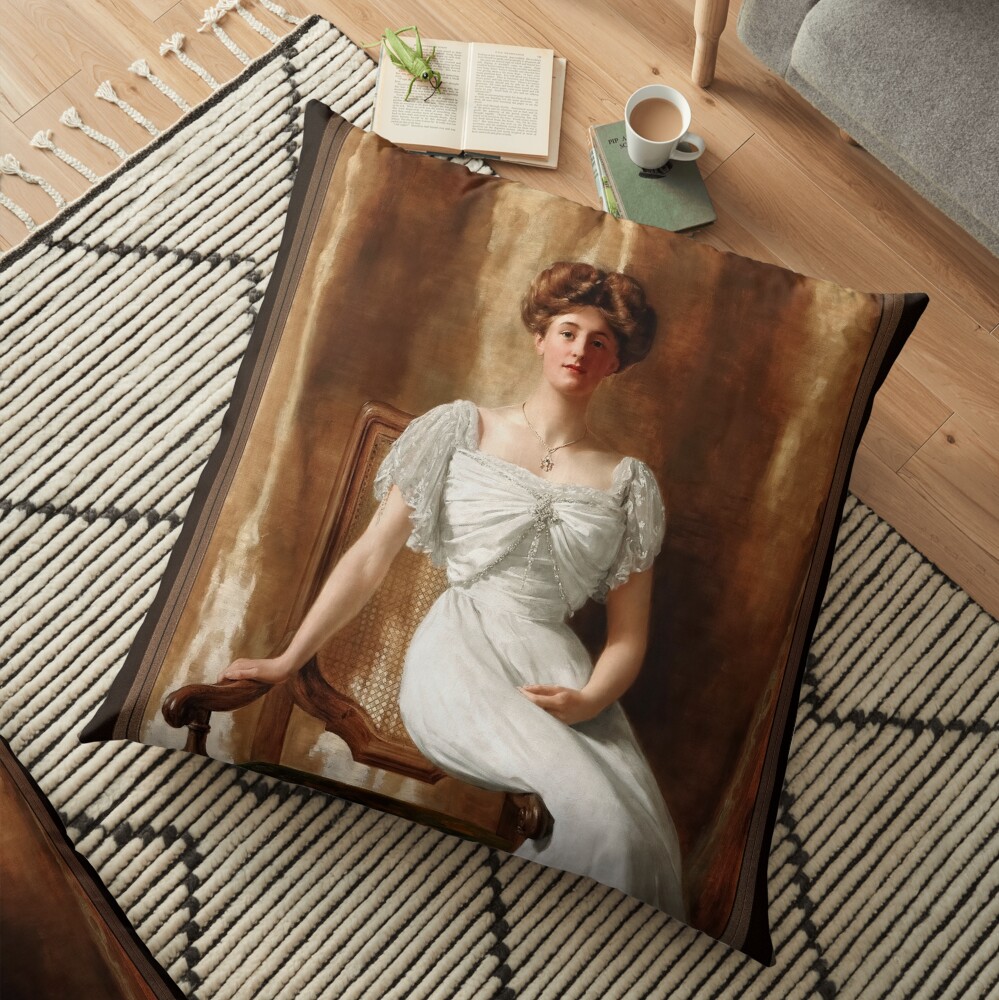
“Portrait of The Hon. Mrs Harold Ritchie” is an exemplary work created by British artist John Collier (1850 – 1934) in the early 20th century. Known for his portraiture and historical scenes, Collier’s signature style and meticulous attention to detail shine through in this refined portrayal. Naskita en 1850, Collier had a prolific career spanning various themes, ranging from dramatic depictions of historical figures to delicate, intimate portraits such as the one in question.
The portrait was created with the primary aim of capturing the elegance and personality of Mrs. Harold Ritchie, a woman who stands at the intersection of Victorian and Edwardian high society. This work, crafted during the Edwardian era, reflects the shifting societal values of the time, particularly in the realm of portraiture, where the portrayal of elegance and personal distinction was paramount.
Enhavtabelo
La Subjekto: Mrs. Harold Ritchie
En la koro de la komponado, Mrs. Harold Ritchie is depicted with poise and grace. The artist’s keen eye for detail is evident in every aspect of the portrayal, from the delicate folds of her white gown to the serene expression that graces her face. Her posture is one of composure, with one arm gently resting on the wooden armrest of the chair, while the other sits calmly in her lap. The careful positioning of her body conveys both strength and delicacy. Collier captures her with an air of subtle dignity, as though she were a figure of both refinement and mystery, a portrait of idealized femininity in the social climate of the time.
Mrs. Ritchie is dressed in a stunning white gown, which appears to be crafted from a light, flowing material. La robo, with its puffed sleeves and pleated fabric, is indicative of the fashion of the Edwardian period, a style known for its soft, ethereal qualities that still embraced structured elements.
The garment’s high neckline, combined with the delicacy of the lace trim and the decorative brooch at the chest, enhances the feeling of aristocratic elegance. The soft sheen of her gown contrasts beautifully with the more matte textures of the background, aldonante profundon al la komponado. Her delicate necklace, composed of a small pendant, further complements her refined appearance.
Her hair is styled in an elegant updo, with voluminous curls that frame her face. The soft waves of her hair, meticulously arranged, speak to the fashionable hairstyles of the time and contribute to the overall sense of grace. Her facial features are delicately rendered, with an emphasis on her eyes and lips, which convey both serenity and strength. The artist skillfully captures her youthful beauty, allowing the viewer to feel a sense of intimacy with the subject while maintaining her elevated status.
Objects and Surroundings
The background of the portrait is a warm, neutral-toned drapery that serves to highlight the subject in the foreground. The soft folds of the fabric create a sense of depth, subtly enhancing the portrait’s composition. This background is not an empty space but rather serves as a rich visual contrast to the detailed rendering of Mrs. Ritchie.
The luxurious drapery, with its silky texture, evokes the wealth and social standing of the subject, setting the tone of nobility and refinement. The choice of such a background is a common feature in portraiture from the late 19th and early 20th centuries, where the background would often act as a complement to the subject without competing for attention.
The wooden armchair upon which Mrs. Ritchie is seated is an important detail within the artwork. The chair’s intricate woodwork and cushioned seat provide a grounding element to the composition, balancing the ethereal quality of the gown and drapery.
Its carved details, visible on the armrests and legs, reflect the craftsmanship and attention to detail that would have been admired in the high society of the time. The color and texture of the chair’s upholstery further emphasize the luxurious setting, creating a sense of balance between the soft and hard textures present in the piece.
Materialoj kaj tekniko
John Collier’s mastery as a painter is evident in the meticulous technique used throughout this portrait. The artist employs oil paints to achieve a rich, layered effect, creating a luminous quality that makes the fabric of Mrs. Ritchie’s gown appear almost tangible. The interplay of light and shadow on her face and body reveals Collier’s technical expertise, with the soft modeling of her features contributing to the lifelike nature of the portrait.
The artist’s ability to capture both the physical and emotional presence of his subjects is one of the defining characteristics of his work, and here, the serene yet compelling gaze of Mrs. Ritchie invites viewers to connect with her on a personal level.
The texture of the painting is smooth and polished, allowing the viewer to appreciate the fine details, such as the folds in the gown and the delicate patterns of lace. Collier’s application of paint is soft yet precise, lending a sense of realism to the portrait while maintaining an almost dreamlike quality. The use of light, particularly in the rendering of the skin tones, adds a luminous glow to the subject, enhancing her natural beauty.
Stilo, Temo, kaj humoro
The overall mood of the portrait is one of serene elegance, with an air of quiet dignity. The soft tones of the background, combined with the graceful posture of the subject, suggest a moment frozen in time, capturing Mrs. Harold Ritchie at her most composed. The use of light and shadow on her face and gown evokes a sense of calm, while the background hints at an atmosphere of refinement and social status.
The style of the portrait is firmly grounded in the academic tradition of portraiture, where attention to detail, realism, and idealized representations of the subject were key. Collier’s technique, with its careful handling of texture and light, places this work within the tradition of 19th and early 20th-century portraiture.
The color palette is composed of soft, muted tones, with a focus on whites, beiges, and browns, which contributes to the timeless quality of the painting. The portrayal of Mrs. Ritchie is both flattering and dignified, offering a glimpse into the world of Edwardian high society.
Konkludo
“Portrait of The Hon. Mrs Harold Ritchie” stands as a testament to John Collier’s skill in capturing not just the physical likeness but also the essence of his subject. Through his refined technique, he offers us a glimpse into the beauty and grace of an Edwardian lady, all while creating a visual narrative of aristocratic elegance and social standing. The delicate rendering of the subject, the luxurious textures, and the serene mood come together to create a work of enduring beauty and historical significance.
Artwork Information
Portrait of The Hon. Mrs Harold Ritchie by British Painter John Collier (1850 – 1934); Pre-Raphaelite and prominent portrait painter and a leading writer of his time.
This is a beautiful portrait of the wife of Lt. Col. Hon. Harold Ritchie; D.S.O. (1876 – 1918); the third son of Charles Thomson 1st Baron Ritchie of Dundee (1838 – 1906); decorated with the Distinguished Service Order for his gallantry and bravery in during World War I, where he suffered wounds that led to his death.
He married Ella Priestly (? – 1956) en 1907; who was the daughter of Robert Chambers Priestly O.B.E, of High Wycombie Buckinghamshire.
Ĉi tio estas readaptita cifereca arta reproduktaĵo de malnovaj majstroj de publika domajna bildo disponebla kiel a tolo presaĵo rete.