

Portrait vum Hon. Mrs Harold Ritchie
“Portrait vum Hon. Mrs Harold Ritchie” is an exemplary work created by British artist John Collier (1850 – 1934) in the early 20th century. Known for his portraiture and historical scenes, Collier’s signature style and meticulous attention to detail shine through in this refined portrayal. Gebuer zu 1850, Collier had a prolific career spanning various themes, ranging from dramatic depictions of historical figures to delicate, intimate portraits such as the one in question.
The portrait was created with the primary aim of capturing the elegance and personality of Mrs. Harold Ritchie, a woman who stands at the intersection of Victorian and Edwardian high society. Dowou, crafted during the Edwardian era, reflects the shifting societal values of the time, particularly in the realm of portraiture, where the portrayal of elegance and personal distinction was paramount.
Inhaltsverzeechnes
D'Sujet: Mme. Harold Ritchie
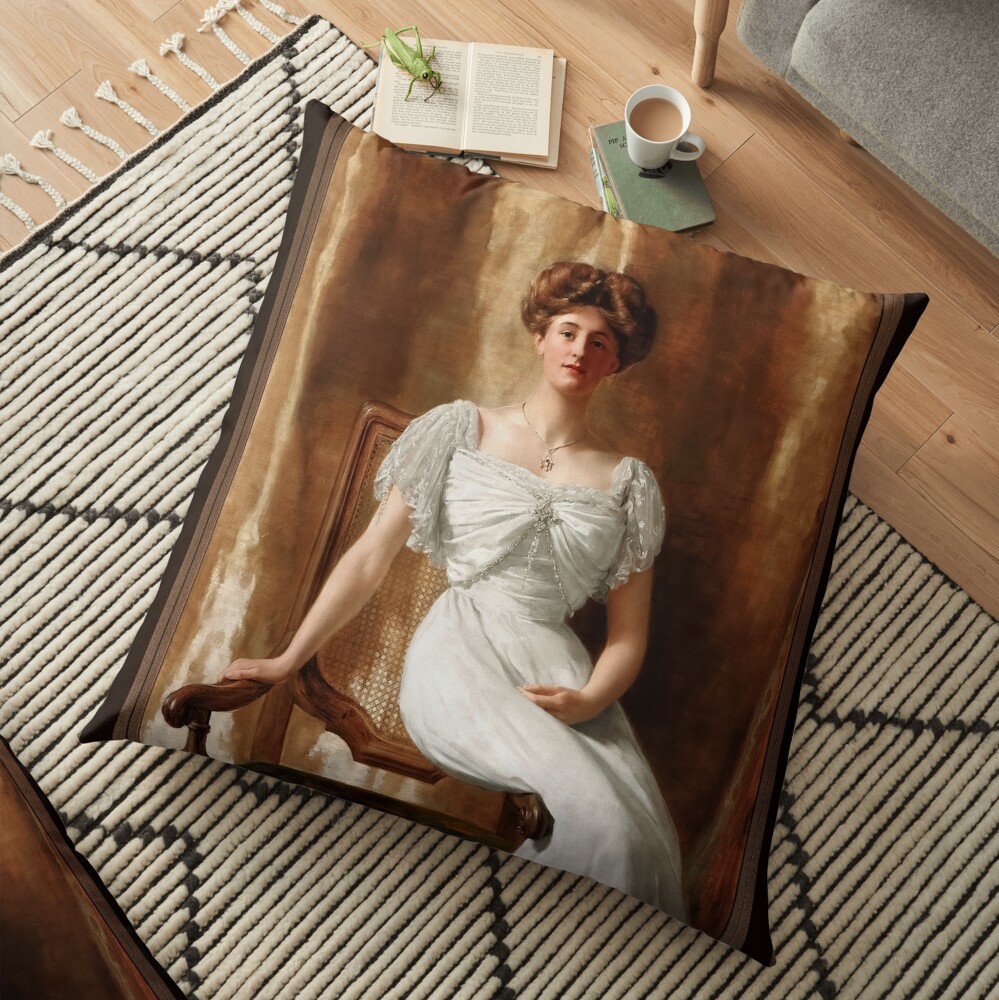
Am Häerz vun der Zesummesetzung, Mme. Den Harold Ritchie ass mat Poise a Gnod duergestallt. Dem Kënschtler säin Aen fir Detailer ass evident an all Aspekt vun der Porträt, vun de delikate Falten vun hirem wäisse Kleed bis zum rouegen Ausdrock, deen hiert Gesiicht gräift. Hir Haltung ass eng vu Rou, mat engem Aarm sanft op den hëlzenen Armrest vum Stull, während déi aner roueg an hirem Schouss sëtzt. Déi virsiichteg Positionéierung vun hirem Kierper vermëttelt souwuel Kraaft an Delikatesse. Collier erfaasst hatt mat enger Loft vu subtiler Dignitéit, wéi wa si eng Figur vu Verfeinerung a Geheimnis wier, e Portrait vun der idealiséierter Weiblechkeet am soziale Klima vun der Zäit.
Mme. Ritchie ass an engem beandrockende wäisse Kleed gekleet, which appears to be crafted from a light, flowing material. De Kleed, with its puffed sleeves and pleated fabric, is indicative of the fashion of the Edwardian period, a style known for its soft, ethereal qualities that still embraced structured elements.
The garment’s high neckline, combined with the delicacy of the lace trim and the decorative brooch at the chest, enhances the feeling of aristocratic elegance. The soft sheen of her gown contrasts beautifully with the more matte textures of the background, d'Tiefe fir d'Kompositioun ze addéieren. Her delicate necklace, composed of a small pendant, further complements her refined appearance.
Hir Hoer sinn an engem elegante Updo styléiert, with voluminous curls that frame her face. The soft waves of her hair, virsiichteg arrangéiert, speak to the fashionable hairstyles of the time and contribute to the overall sense of grace. Her facial features are delicately rendered, mat engem Akzent op hir Aen a Lippen, déi souwuel Rou a Kraaft vermëttelen. D'Kënschtlerin erfaasst hir jugendlech Schéinheet, erlaabt dem Betrachter e Gefill vun Intimitéit mam Thema ze fillen, wärend hiren erhiewte Status behalen.
Objeten an Ëmgéigend
Den Hannergrond vum Portrait ass waarm, neutral-gestéinte Draperie déi déngt fir d'Thema am Virdergrond ze markéieren. Déi mëll Falten vum Stoff kreéieren e Gefill vun Tiefe, subtil d'Kompositioun vum Portrait verbesseren. Dësen Hannergrond ass keen eidele Raum, mee déngt éischter als e räiche visuelle Kontrast zum detailléierte Rendering vun der Madame. Ritchie.
De luxuriéise Draperi, mat senger seidlecher Textur, rifft de Räichtum an de soziale Stand vum Thema op, den Toun vun Adel a Verfeinerung setzen. D'Wiel vun esou engem Hannergrond ass eng gemeinsam Feature an der Portrait aus dem spéiden 19. a fréien 20. Joerhonnert, wou den Hannergrond dacks als Ergänzung zum Thema wier ouni sech ëm d'Opmierksamkeet ze konkurréiere.
Déi hëlze Fotell op där d'Mme. Ritchie sëtzt ass e wichtegen Detail am Konschtwierk. De komplizéierten Holzwierk vum Stull an de gepolsterte Sëtz liwweren e Grondelement fir d'Kompositioun, Balance déi ätheresch Qualitéit vum Kleed an Draperie.
Seng geschnëtzt Detailer, siichtbar op den Armrests a Been, reflektéiert d'Handwierk an d'Opmierksamkeet op Detailer déi an der héijer Gesellschaft vun der Zäit bewonnert ginn hätt. D'Faarf an d'Textur vun der Polsterung vum Stull ënnersträichen de luxuriéise Kader weider, creating a sense of balance between the soft and hard textures present in the piece.
Materialien an Technik
John Collier’s mastery as a painter is evident in the meticulous technique used throughout this portrait. The artist employs oil paints to achieve a rich, layered effect, creating a luminous quality that makes the fabric of Mrs. Ritchie’s gown appear almost tangible. The interplay of light and shadow on her face and body reveals Collier’s technical expertise, with the soft modeling of her features contributing to the lifelike nature of the portrait.
The artist’s ability to capture both the physical and emotional presence of his subjects is one of the defining characteristics of his work, an hei an hei, the serene yet compelling gaze of Mrs. Ritchie invites viewers to connect with her on a personal level.
The texture of the painting is smooth and polished, allowing the viewer to appreciate the fine details, such as the folds in the gown and the delicate patterns of lace. Collier’s application of paint is soft yet precise, lending a sense of realism to the portrait while maintaining an almost dreamlike quality. D'Benotzung vu Liicht, particularly in the rendering of the skin tones, adds a luminous glow to the subject, verbessert hir natierlech Schéinheet.
Stil, Thema, a Stëmmung
The overall mood of the portrait is one of serene elegance, with an air of quiet dignity. Déi mëll Téin vum Hannergrond, combined with the graceful posture of the subject, suggest a moment frozen in time, capturing Mrs. Harold Ritchie at her most composed. The use of light and shadow on her face and gown evokes a sense of calm, iwwerdeems den Hannergrond Hiweiser op eng Atmosphär vun Verfeinerung a soziale Status.
De Stil vum Portrait ass fest an der akademescher Traditioun vu Porträt gegrënnt, wou Opmierksamkeet op Detailer, Realismus, an idealiséiert Representatioune vum Thema ware Schlëssel. Colliers Technik, mat senger virsiichteg Ëmgank mat Textur a Liicht, stellt dëst Wierk an der Traditioun vum Portrait aus dem 19. a fréien 20. Joerhonnert.
D'Faarfpalette besteet aus mëllen, muted Téin, mat engem Fokus op Wäiss, beige, an brong, wat zu der zäitloser Qualitéit vum Bild bäidréit. D'Bildung vun der Madame. De Ritchie ass souwuel gefleegter a wierdeg, bitt en Abléck an d'Welt vun der Edwardian High Society.
Conclusioun
“Portrait vum Hon. Mrs Harold Ritchie” steet als Testament fir dem John Collier seng Fäegkeet fir net nëmmen déi kierperlech Ähnlechkeet z'erreechen, awer och d'Essenz vu sengem Thema. Duerch seng raffinéiert Technik, he offers us a glimpse into the beauty and grace of an Edwardian lady, all while creating a visual narrative of aristocratic elegance and social standing. The delicate rendering of the subject, the luxurious textures, and the serene mood come together to create a work of enduring beauty and historical significance.
Artwork Informatiounen
Portrait vum Hon. Mrs Harold Ritchie by British Painter John Collier (1850 – 1934); Pre-Raphaelite and prominent portrait painter and a leading writer of his time.
This is a beautiful portrait of the wife of Lt. Col. Hon. Harold Ritchie; D.S.O. (1876 – 1918); the third son of Charles Thomson 1st Baron Ritchie of Dundee (1838 – 1906); decorated with the Distinguished Service Order for his gallantry and bravery in during World War I, where he suffered wounds that led to his death.
He married Ella Priestly (? – 1956) an 1907; who was the daughter of Robert Chambers Priestly O.B.E, vun High Wycombie Buckinghamshire.
Dëst ass eng remastered digital Konscht al Master Reproduktioun vun engem Public Domain Bild dat als verfügbar ass Canvas Print online.