

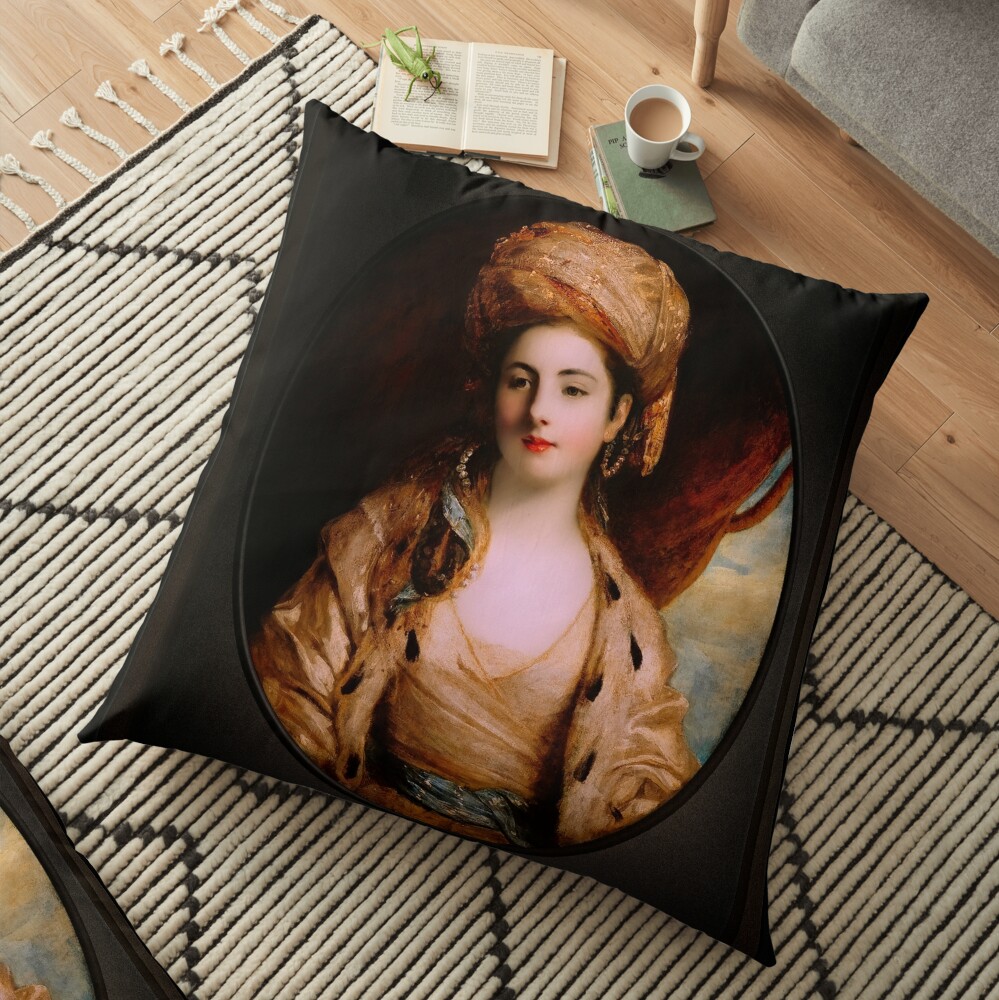
Mrs Richard Paul Jodrell (Vertue Jodrell) c1774-76
Izenburua duen koadroa Mrs Richard Paul Jodrell (Vertue Jodrell), created between 1774 eta 1776 by renowned British artist Sir Joshua Reynolds (1723 – 1792), is a fine example of portraiture from the Georgian era. The work beautifully captures the elegance and opulence of the period, offering a glimpse into the sophistication and style of late 18th-century British society. As was characteristic of Reynolds’ portraits, the depiction combines technical mastery with an emphasis on the sitter’s personality, edertasuna, and social status. Margolanaren gaia, andrea. Richard Paul Jodrell, is portrayed in the classical style of the time, dressed in a luxurious gown, with her posture and demeanor radiating an air of refinement.
The composition of the painting places Mrs. Jodrell at the forefront, with a simple yet rich background that serves to enhance her presence. The artist’s use of a muted yet warm color palette reflects the soft lighting and creates an aura of elegance. The figure is delicately framed in a rounded oval shape, an artistic device commonly used in portraiture to emphasize the individual and remove the distraction of a busy background. The fine details of Mrs. Jodrell’s attire and accessories showcase the wealth and status of the sitter, while her poised posture and calm expression speak to her refinement and the grace that Reynolds was known to capture in his subjects.
Edukien taula
Estiloa eta Teknika
Sir Joshua Reynolds was a leading figure in British portraiture during the 18th century, and his work is often associated with the Rococo and early Neoclassical styles. His technical expertise is evident in this portrait, where the careful attention to detail and the rich textures of fabric, larru, and hair are remarkable. Reynolds was known for his use of broad, yet controlled brushstrokes, which can be seen in the way the fabric of Mrs. Jodrell’s gown flows across her body. The smoothness of the skin is masterfully rendered, with subtle highlights and shadows that give her face a lifelike glow.
The soft modeling of light on her face and gown enhances her beauty and grace, a hallmark of Reynolds’ technique. The rendering of her delicate features, her slightly turned head, her serene expression, and the gentle contours of her neck and shoulders, further exemplifies Reynolds’ ability to blend realism with idealization. Atzealdea, bigunez errendatua, painterly strokes, emphasizes the subject without detracting from her importance. It is not an overtly detailed scene but rather a calming, harmonious backdrop that contrasts with Mrs. Jodrell’s rich attire and radiant skin.
Reynolds employed a method of creating texture that was very advanced for his time. The folds in the fabric of Mrs. Jodrell’s gown appear soft and luxurious, while the sheen on her silk shawl suggests its weight and tactile quality. The use of light and shadow gives volume to the materials, making them almost tangible. Ilea, styled in the fashionable high coiffure of the time, is both finely rendered and stylish, further demonstrating Reynolds’ mastery over different textures.
Gaia eta Aldartea
The mood of this portrait is one of poised elegance and serene composure. andrea. Jodrell is depicted as a woman of dignity and grace, her face reflecting a calm and confident demeanor. This was typical of the period’s portraiture, where subjects were often shown in a light that conveyed their higher social standing and respectable character. The calmness in her expression suggests a certain inner strength, as well as the social expectations placed on women of the time, especially those of the upper classes.
The theme of the portrait is one of refinement and status, not only in Mrs. Jodrell’s appearance but also in her surroundings. The rich materials of her gown, her fine jewelry, and the overall elegance of her attire suggest that she was a woman of means, likely from a prominent family in Georgian Britain. The softness of the lighting and the minimalistic background emphasize her figure, making her the undeniable focus of the painting. There is a sense of formality in the composition, suggesting that the portrait was commissioned to showcase her elegance and social prominence, as well as her connection to the artistic and intellectual circles of the time.
The oval framing of the portrait adds to this sense of timelessness, making it seem as though Mrs. Jodrell’s grace and poise are eternal qualities. The use of an oval frame was a common device in Reynolds’ portraits, serving to give the subject an almost saintly, immortal quality. The lack of a highly detailed background further isolates her from the surrounding world, directing the viewer’s attention entirely on her.
The Significance of the Portrait
The portrait of Mrs. Richard Paul Jodrell (Vertue Jodrell) is significant not only as a work of art but also as a representation of the role and image of women in 18th-century British society. It offers a glimpse into the fashion, edertasuna, and social mores of the Georgian period, providing a historical record of the attire, postura, and composure expected of women in the upper echelons of society.
For Reynolds, this portrait reflects his ability to transcend the simple act of depicting a person and instead craft an image of lasting elegance. He was able to capture the essence of his subjects, making each portrait an exploration of their character, personality, and social position. Erretratu zehatz honetan, andrea. Jodrell’s beauty and wealth are undeniable, but there is also a deeper sense of humanity and grace that resonates through Reynolds’ masterful rendering.
As one of Reynolds’ key contributions to British portraiture, this work remains an iconic example of 18th-century portrait art, a testament to his skill and his understanding of both his subjects and the world around him. It continues to captivate audiences with its timeless elegance and the sophistication of the period it represents.
Hau domeinu publikoko irudi baten erreprodukzioa da arte digitaleko maisu zaharren erreprodukzioa, sarean erosteko moduan dagoena mihise inprimatua.
Artistaren bio eratorria Wikipedia.org
Sir Joshua Reynolds PRA FRS FRSA (16 uztaila 1723 – 23 Otsaila 1792) margolari ingelesa zen, erretratuetan espezializatua. John Russellek esan zuen XVIII. mendeko Europako margolari nagusietako bat izan zela.[1] Sustatu zuen “Estilo handia” inperfektuaren idealizazioaren mende zegoen pinturan. Errege Akademiako sortzaile eta lehen presidentea izan zen, eta Jurgi III.ak zaldun izendatu zuen 1769.
Reynolds Plymptonen jaio zen, Devon, on 16 uztaila 1723[2] Errevaren hirugarren semea. Samuel Reynolds, herriko Plympton Free Grammar Schooleko maisua. Bere aita Balliol Collegeko kidea izan zen, Oxford, baina ez zuen bere semerik unibertsitatera bidali.[3] Bere ahizpetako bat Mary Palmer zen (1716–1794), zazpi urte zaharragoa, Devonshire Dialogue-ren egilea, marrazteko zaletasunak mutila zenean eragin handia izan zuela esaten da.
In 1740 60 £ eman zituen, Thomas Hudson erretratu-margolari ordaintzen zitzaion primaren erdia, Josuren ikasleentzat, eta bederatzi urte geroago Italian egindako gastuetarako dirua aurreratu zuen. Bere beste anai-arrebak Frances Reynolds eta Elizabeth Johnson ziren.
Mutil moduan, Zachariah Mudgeren eraginpean etorri zen, zeinaren filosofia platonistarekin egon zen bizitza osoan. Reynoldsek Teofrastoren liburu arruntean laburpenak egin zituen, Plutarko, Seneka, Marko Antonio, Ovidio, William Shakespeare, John Milton, Alexander Pope, John Dryden, Joseph Addison, Richard Steele, Aphra Behn, eta Leonardo da Vinciren artearen teoriari buruzko pasarteak, Charles Alphonse Du Fresnoy, eta André Félibien.
Reynoldsen eragin handiena izan zuen lana Jonathan Richardsonen An Essay on the Theory of Painting izenekoa izan zen. (1715). Reynolds’ kopia komentatua ia berrehun urtez galdu zen, Cambridgeko liburu-denda batean agertu zen arte, sinadurarekin inskribatuta ‘J. Reynolds Pictor', eta Arteen Errege Akademiaren bilduman dago orain, Londres.