

Netty But Nice
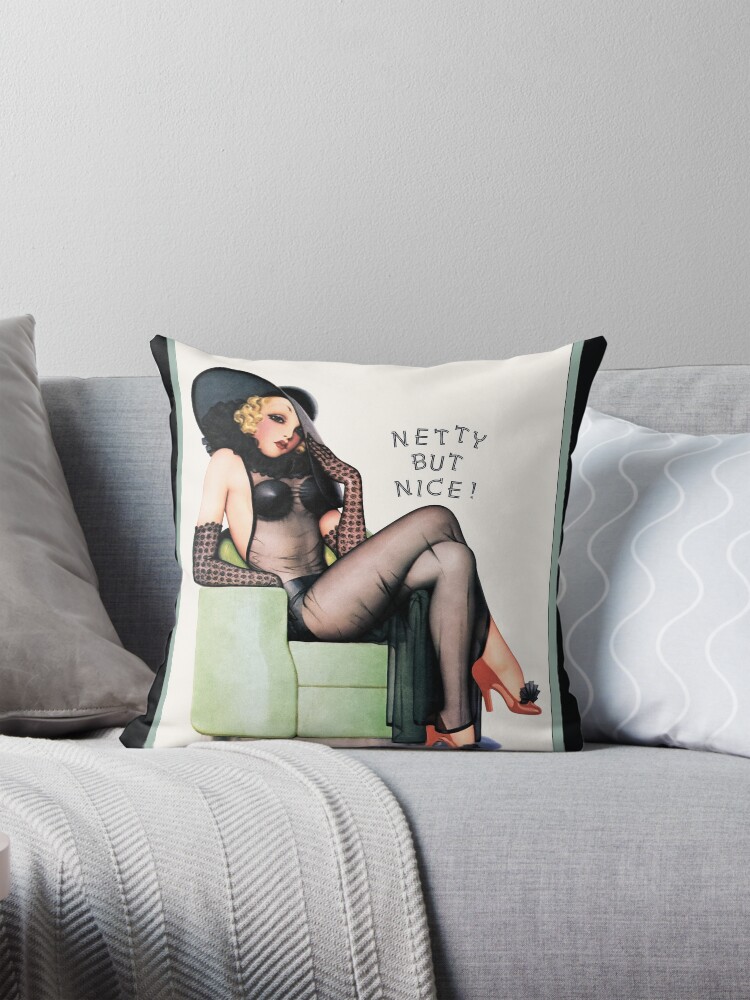
“Netty But Nice!” is an iconic illustration by the American artist Enoch Bolles, vytvořeno v 1930. Bolles, narozen v 1883 a zemřít v 1976, was known for his depictions of glamorous women, and this artwork exemplifies his mastery of the pin-up genre. The piece features a seductive and playful portrayal of a fashionable woman, exuding confidence, charm, a půvab. Through her demeanor and attire, Bolles captures the spirit of the Jazz Age, a time when both art and culture were evolving rapidly. Použití tučného písma, stylized forms and rich colors contributes to a sense of luxury and refinement, perfectly suited for the era’s fascination with fashionable women.
Obsah
Hlavní předmět a složení
At the center of “Netty But Nice!” sits a woman in a relaxed pose. Her figure is elongated and elegantly framed, dressed in a form-fitting, sheer outfit that suggests both sensuality and sophistication. She lounges on a green upholstered chair, her body turned slightly to the side as if she is engaged in a casual yet seductive conversation.
The model’s attire is distinctive, consisting of sheer black stockings, a black dress with a fitted bodice, and a wide-brimmed black hat that covers much of her curly hair. Její držení těla, i když uvolněný, maintains an air of composure, with one arm resting nonchalantly on the arm of the chair and the other draped over her knee. Her right foot is perched atop a bright red high heel, an accessory that adds a sense of dynamism to her otherwise composed demeanor.
The woman’s face is framed with soft, voluminous curls that cascade over her shoulder, while her expression is playful, tinged with a sense of mystery. Její tma, arched eyebrows and inviting eyes draw the viewer’s gaze directly to her face, enhancing the flirtatious tone of the piece. The words “NETTY BUT NICE!” are printed in bold, art-deco style letters beside her, contributing to the overall cheeky nature of the artwork. The caption serves not only as a playful commentary on the woman’s character but also as a nod to the witty, flirtatious culture of the time.
Objekty a podrobnosti
The setting in “Netty But Nice!” is minimalist, with the woman seated in a simple but elegant green armchair. The chair’s design, with its smooth, rounded back and metallic base, embodies the streamlined, modern aesthetics of the early 20th century, known for its Art Deco influence.
The green upholstery of the chair contrasts sharply with the woman’s sheer black attire, further drawing attention to her as the focal point. Beneath the chair, the gleaming metallic base hints at the luxurious materials favored during the 1930s, blending comfort with high style. The absence of intricate background detail, focusing all attention on the woman, highlights the visual simplicity that was characteristic of pin-up art at the time.
The woman’s high heels are bright red, an intentional color choice to further emphasize her elegance and assert her femininity. These shoes, with their prominent red hue and flower embellishments, make a striking statement that aligns with the bold, attention-grabbing nature of pin-up culture.
The stockinged legs are another focal point, with delicate lace details visible along the tops of the stockings. These subtle details enhance the sense of allure and sensuality that Bolles frequently portrayed in his work. Her choice of accessories—a black wide-brimmed hat and fishnet gloves—are reflective of the fashionable trends of the 1920s and 1930s. Spolu, they serve as visual markers of the woman’s high social standing, sofistikovanost, and desirability.
Styl, Téma, a nálada
Enoch Bolles’ work is often associated with the pin-up style, a genre that emerged in the early 20th century and became synonymous with American pop culture during the 1920s and 1930s. Pin-up art was known for its stylized, glamorous depictions of women, often with an air of cheeky playfulness and flirtation. “Netty But Nice!” is a quintessential example of this style, with Bolles’ masterful use of clean lines, minimal background, and attention to the details of fashion and posture. The figure of the woman is portrayed with smooth, flowing lines that emphasize the elegance of her shape, while the soft color palette of pastels and neutrals accentuates the visual harmony of the piece.
The overall theme of the painting reflects the social and cultural ideals of the time, which often celebrated youthful beauty, smyslnost, and feminine allure. The exaggerated proportions of the woman’s figure, such as her long, elegant legs and hourglass shape, exemplify the idealized vision of the female form that was common in pin-up art. The playful tone of the caption “NETTY BUT NICE!” further underscores the lighthearted nature of the work, reflecting the confident and independent woman of the 1930s who embodied both sophistication and fun.
The mood of the artwork is one of relaxed confidence. The woman appears self-assured, sitting comfortably in her chair, yet her gaze and posture suggest an invitation, drawing the viewer into her world of charm and flirtation. Her carefree attitude and the subtle sensuality of her pose create a timeless sense of allure that continues to captivate audiences today. The combination of bold color choices, streamlined composition, and elegant fashion elements produces a sense of timeless beauty that remains quintessentially American in its cultural appeal.
Závěr
“Netty But Nice!” by Enoch Bolles captures the essence of 1930s glamour, exemplifying the fashion, důvěra, and playful spirit of the time. With its elegant yet playful portrayal of the female form, the painting serves as a reflection of an era fascinated by beauty and style, while also embodying the carefree and confident attitude of the modern woman. Through Bolles’ use of color, čára, a složení, the artwork continues to resonate as a classic example of American pin-up art.
Toto je retušovaná reprodukce starého umění digitálního umění obrazu veřejného díla.
Tato digitální umělecká tvorba, stejně jako všechna umělecká díla, která lze nalézt na webu Xzendor7, je k dispozici ke koupi online v různých materiálových formátech včetně tisků na plátno, akrylové tisky, kovové potisky, otisky dřeva, zarámované tisky, plakáty, a jako rolované obrazy na plátně v různých velikostech od 12 palce až 72 palce v závislosti na velikosti skutečného uměleckého díla a obchodu s tiskem na vyžádání, ve kterém se rozhodnete umění koupit.
Umělecká díla jsou k dispozici také na široké škále pánského a dámského oblečení, hrnky, totes, šátky, sešity a deníky a mnoho produktů pro domácí dekoraci.
Životopis umělce
Níže uvedené informace jsou odvozeny z Wikipedia.org
Enoch se narodil chemikovi parfémů Enochu Bollesovi, Jr a Catherine Keep v Marion County, března na Floridě 3, 1883.
Studoval na New York National Academy of Design (je. 1825), a publikoval svou první ilustraci na obálkách humoristických časopisů; Soudce a puk dovnitř 1914; stal se nejznámějším pro ilustrování pulp magazínu Film Fun.
Pak v 1923 stal se výhradním umělcem obálky pro Filmový časopis a v této pozici bude pokračovat až do roku 1943, když se časopis stal obětí tehdejšího tažení generálního poštmistra proti oplzlému materiálu.
Během Enochova působení v časopise Film Fun Magazine vytvořil 200 kusy obal umění, a minimálně 300 doplňkové obálky pro další pikantní pulp časopisy, včetně Breezy Stories, Pepovy a newyorské noci.
Enochova měsíční sestava All-American Beauty přesně pózovaná v nápaditém kostýmu je zodpovědná za definování umění American Pin Up Illustration. Byl také všestranným ilustrátorem, který vytvořil reklamní umění pro mnoho produktů té doby, jako jsou Sun-Maid Raisins a Zippo Lighters..
Ve věku 60, v 1943 Enoch musel ukončit profesionální kariéru kvůli psychickým problémům, a byl uvězněn v Psychiatrické nemocnici Greystone Park v New Jersey po většinu zbytku svého života; ale pokračoval v malování portrétů na zakázku a pro osobní potěšení.
Nakonec byl propuštěn z Psychiatrické nemocnice v Greystone Park v 1969 a zemřel o sedm let později na srdeční selhání ve věku let 93.