

Nuda Kun Rozoj
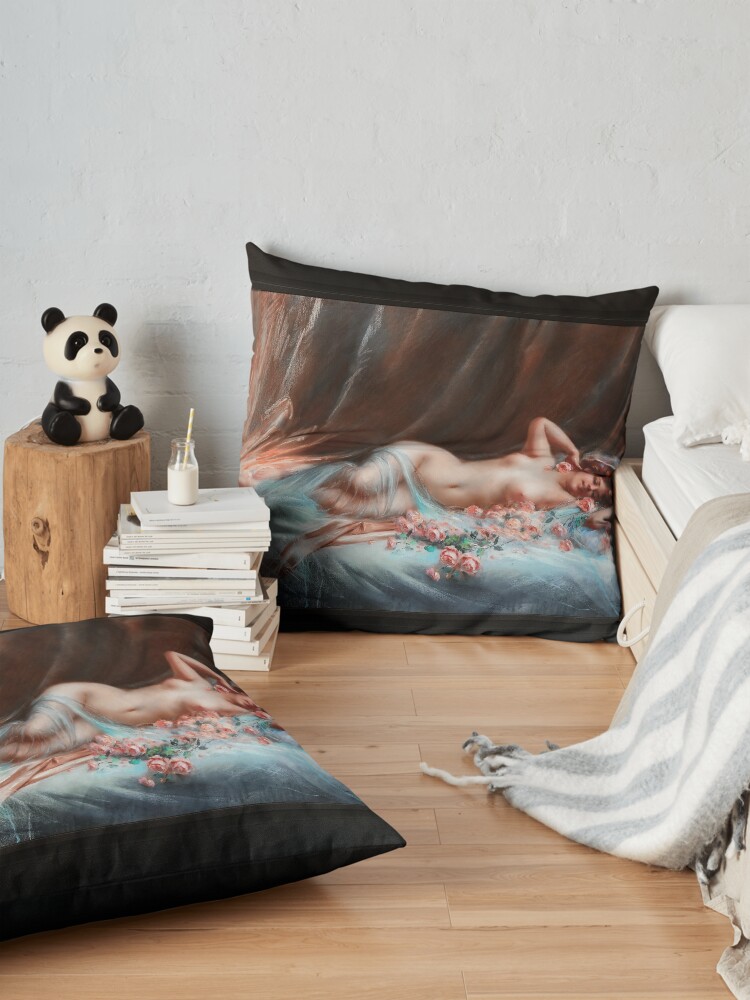
Delphin Enjolras’ ĉefverko Nuda Kun Rozoj (La Nudo kun Rozoj), kreita en 1907, staras kiel bela reprezentado de franca akademia pentraĵo dum la malfruaj 19-a kaj fruaj 20-a jarcentoj.. Enjolras, fama artisto konata pro sia delikata traktado de la homa formo kaj lia lerta manipulado de lumo kaj teksturo, prezentas intiman kaj malĉastan portretadon de la ina nudo.
Naskita en 1857 kaj enirante 1945, La kariero de Enjolras ampleksis periodon en kiu la klasika tradicio de pentraĵo estis ĉiam pli defiita fare de la burĝonaj modernismaj movadoj.. Tamen, funkcias kiel Nuda Kun Rozoj montru lian necedeblan engaĝiĝon al klasikaj teknikoj, infuzita de romantika sensualeco kiu markis la humoron de lia epoko.
Enhavtabelo
La temo kaj konsisto
La ĉefa temo de Nuda Kun Rozoj estas kuŝanta virina figuro, rendered in soft, flowing lines that emphasize the graceful curves of her body. Her nude form lies serenely across a soft, luxurious background, bathed in the gentle light of an indistinct, almost ethereal setting. The model’s posture suggests a languorous, contemplative state, as her eyes are gently closed, her head turned slightly to the side in repose. Her expression is serene, almost dreamlike, allowing the viewer to imagine her thoughts as she drifts into a peaceful slumber. The artist has captured her in an unguarded moment, inviting the viewer to reflect on the beauty and vulnerability of the human form.
The figure is delicately surrounded by a scattering of roses, which lie softly on the surface where she reclines. The roses add a layer of texture and color to the painting, their soft pinks and whites juxtaposed against the pale tones of her skin, creating a harmonious balance between the floral elements and the nude.
The soft petals of the flowers seem to mirror the smooth contours of her body, further enhancing the painting’s romantic and sensual atmosphere. La floroj, while clearly a symbolic element of feminine beauty, do not overpower the subject but instead complement it, adding depth and interest without detracting from the central figure.
La Agordo kaj Materialoj
The setting of Nuda Kun Rozoj is minimalist, with the focus squarely on the figure and the flowers that surround her. The artist has chosen a simple backdrop of soft, swirling drapery, which serves to frame the subject while maintaining the piece’s overall softness. La varma, muted tones of the drapery, which fade seamlessly into the rest of the painting, create an inviting space for the nude figure to exist. There is no stark contrast between the figure and the surroundings; Anstataŭe, the painting invites the viewer into a harmonious world of subtlety and elegance.
Enjolras uses oil paints with an evident mastery, allowing the textures of both the roses and the skin to emerge in soft, lifelike detail. La glata, almost velvety texture of the skin contrasts with the delicate texture of the fabric and the petals of the roses, showcasing the artist’s ability to render a range of tactile sensations through his brushwork.
His careful use of light further enhances the sensuality of the scene, casting soft highlights and shadows across the body, creating depth and form. The lighting is gentle, flatante, and almost glowing, lending the entire scene an air of dreamlike quality. This use of light and shadow also highlights the artist’s exceptional understanding of human anatomy, giving the figure a realistic, three-dimensional presence while retaining an ethereal quality that elevates the piece beyond simple portraiture.
Artistic Style and Influence
Enjolras’ style in Nuda Kun Rozoj is deeply rooted in the traditions of academic realism, but it also carries subtle influences from the more intimate and romantic movements of the late 19th century. The attention to detail in the rendering of the figure, as well as the soft, harmonious use of color, aligns him with the classical tradition of figure painting.
Tamen, there is a certain tenderness in his depiction of the nude, a sensitivity to the subject that speaks to the influence of the Symbolist movement, which often favored a more introspective and emotional approach to art. The roses, ankaŭ, can be seen as a nod to the Symbolists, whose work frequently featured delicate floral motifs imbued with meaning.
The blending of these influences, academic realism with a touch of romanticism and symbolism, creates a painting that feels both timeless and of its time, capturing the transition between the 19th and 20th centuries in French art.
Humoro kaj Interpreto
La humoro de Nuda Kun Rozoj is one of tranquility and sensuality. The artist’s use of soft lighting and smooth textures enhances the sense of calm that envelops the scene. The figure’s repose, the closed eyes, and the quiet expression all suggest a moment of peace and contemplation, invitante la spektanton paŝi en mondon, kie la ordinaraj zorgoj de la vivo momente estas flankenlasitaj.
La ĉeesto de la rozoj, ofte asociita kun amo kaj beleco, plue plifortigas la temon de la pentraĵo de virineco kaj sensualeco. Estas certa sentempeco al la verko, ĉar la figuro povus facile esti vizio el la klasika antikveco, tamen la mola sensualeco de la peco parolas al la pli modernaj interpretoj de beleco kaj graco.
La ĝenerala efiko estas unu el intima allogeco, kie la spektanto ne estas nur observanto, sed estas invitita partopreni la serenan belecon de la momento. La verko elvokas trankvilan respekton por la homa formo kaj la natura mondo, igita en la delikata kaj pripensema maniero kiu estis karakterizaĵo de Enjolras’ alproksimiĝo al arto. En Nuda Kun Rozoj, the artist has captured more than just a nude figure; he has captured a mood, a fleeting moment in time that is both deeply personal and universally resonant.
Ĉi tio estas readaptita cifereca arto malnova majstra reproduktaĵo de publika domajna bildo, kiu estas havebla kiel tola presaĵo interrete..
Artisto Bio
Informoj Malsupre Derivita De Vikipedio.org
Delphin estis naskita en Coucouron, situante en suda Francio al Casimir Enjolras kaj Delphine Laurens en 1857.
Li studis akvarelojn sub la franca akvarelisto Gaston Gérard ĉe la “Lernejo de Desegnaĵo de la Urbo de Parizo” aŭ City of Paris Drawing School kaj li ankaŭ studis sub Jean-Léon Gérôme (1824 – 1904) ĉe la Belartoj (Lernejo de Belartoj), kaj ĉe la Pascal Dagnan-Bouveret.
En la frua parto de Delphins pentrista kariero, li ĉefe pentris pejzaĝojn; sed poste transiros en pentrado de portretoj de junaj virinoj, pri kiu li elstaris.
Lia portretado temigis belajn kaj elegantajn junajn virinojn, kutime per lampa lumo farante sekularan taskon kiel ekzemple legado aŭ kudrado; vestitaj aŭ nudaj; kun multaj el liaj pli postaj verkoj estantaj de sensuala kaj erotika naturo.