

Nymphs and Satyr
Nymphs and Satyr: A Study in Classical Fantasy
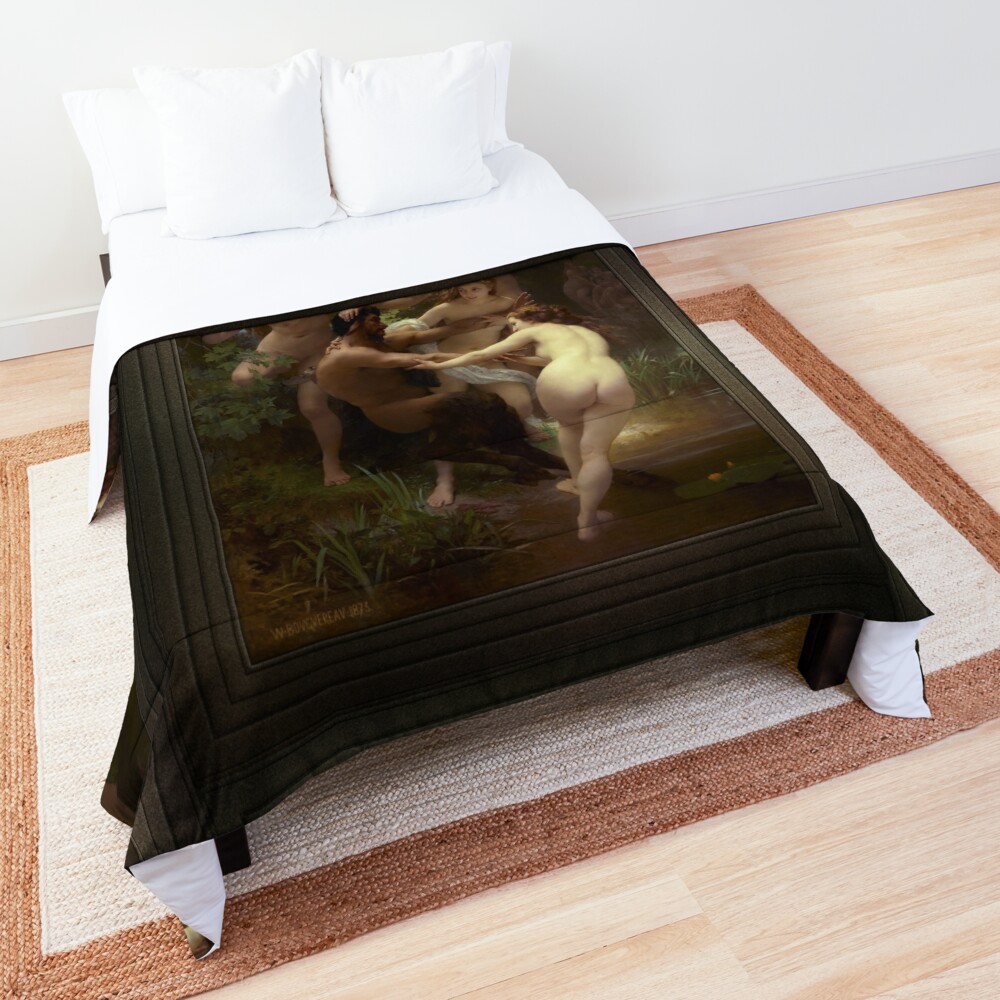
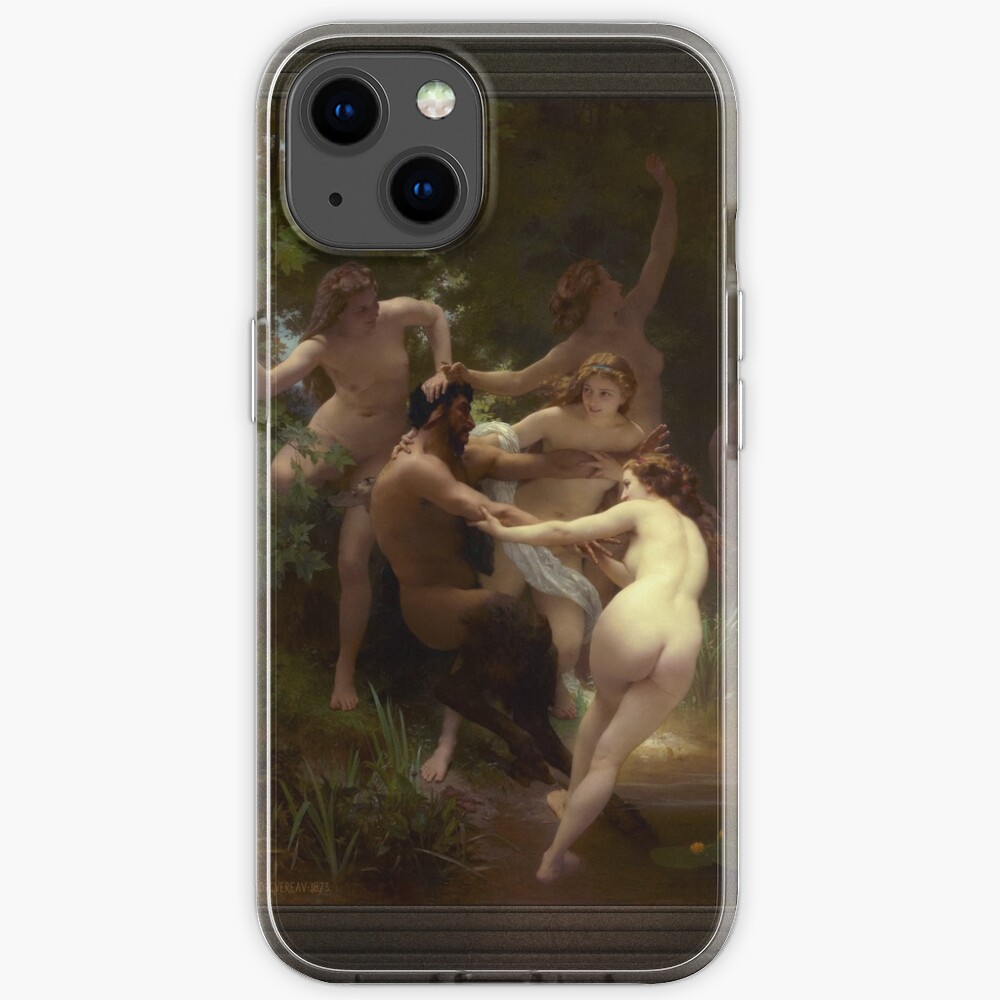
William-Adolphe Bouguereau’s “Nymphs and Satyr,” inguruan margotua 1873, exemplifies the artist’s celebrated academic style and his fascination with mitologikoa subjects. The painting depicts a playful scene of nymphs playfully encircling a satyr within a lush woodland setting. It is a work that showcases Bouguereau’s technical mastery – particularly his ability to render flesh tones and create an atmosphere of idyllic beauty, while also reflecting the broader artistic trends of 19th-century France, specifically the revival of classical themes and allegorical narratives.
Edukien taula
Konposizio Egitura & Narrazioa
The composition is carefully structured around a central figure: the satyr. He occupies the lower center of the canvas, his dark skin contrasting with the lighter complexions of the surrounding nymphs. The arrangement isn’t one of aggression or threat; baizik, it conveys a sense of lighthearted pursuit and playful entanglement.
The nymphs are positioned in a dynamic circular formation around him, their bodies intertwined and their expressions ranging from amusement to gentle teasing. This creates a visual rhythm that draws the viewer’s eye across the canvas, emphasizing the interaction between the figures. Hondoa nahita lausotuta dago, receding into a dense forest of verdant foliage, which serves to isolate the group and focus attention on the central action.
The Figures: Ninfak & Satyr
Each nymph possesses distinct features and postures, contributing to the overall sense of movement and vitality. Their bodies are rendered with meticulous detail, showcasing Bouguereau’s skill in depicting the human form. They wear minimal attire – flowing drapery that clings to their forms while revealing the contours of their bodies, a common characteristic of academic nudes during this period.
Their hair is loosely arranged, cascading around their shoulders and adding to the overall sense of naturalness. The satyr, a creature from Greek mythology representing wild nature and revelry, stands out due to his darker skin tone and more rugged features. His posture suggests surprise and perhaps mild discomfort as he finds himself surrounded by the playful nymphs. He is depicted with horns and pointed ears, characteristic attributes of his mythological identity.
Kolore Paleta & Argiztapena
Bouguereau’s use of color contributes significantly to the painting’s atmosphere. The palette is dominated by warm earth tones – greens, marroiak, and ochres – which evoke a sense of natural harmony. The nymphs’ skin tones are rendered with remarkable subtlety, capturing the play of light on their bodies. Bigun bat, diffused light filters through the foliage, illuminating the figures from above and creating gentle shadows that enhance their three-dimensionality. The lighting is not harsh or dramatic; horren ordez, it contributes to the overall sense of tranquility and idyllic beauty. The contrast between the satyr’s darker skin and the nymphs’ lighter complexions further emphasizes the visual dynamic within the composition.
Eragin artistikoak & Estilo
“Nymphs and Satyr” reflects Bouguereau’s training in the academic tradition, which emphasized technical skill, zehaztasun anatomikoa, and idealized beauty. His work draws inspiration from classical sculpture and Renaissance painting, evident in the graceful poses of the figures and the harmonious composition.
Bouguereau was a proponent of realism, but his paintings are not simply representational; they possess an element of idealization that elevates them beyond mere depictions of reality. The painting’s subject matter, a mythological scene, was also popular among artists during this period, reflecting a broader interest in classical themes and allegorical narratives. Bouguereau’s style is often associated with the academic tradition, characterized by its emphasis on technical proficiency and idealized beauty.
Exekuzio Teknikoa & Xehetasuna
The painting’s surface reveals meticulous brushwork, particularly evident in the rendering of flesh tones and foliage. Bouguereau employed a layering technique to build up color gradually, creating subtle gradations and enhancing the sense of realism.
The details are rendered with precision – from the delicate folds of drapery to the individual strands of hair, demonstrating Bouguereau’s mastery of his craft. The artist’s attention to detail extends to the background elements as well; the foliage is depicted with a remarkable degree of naturalism, creating a convincing sense of depth and atmosphere.
Ondarea & Esangura
“Nymphs and Satyr” remains one of Bouguereau’s most celebrated works, admired for its technical brilliance and its depiction of idyllic beauty. The painting exemplifies the artist’s ability to synthesize classical themes with contemporary artistic trends, creating a work that is both timeless and representative of its era. It stands as a testament to Bouguereau’s enduring legacy as one of the leading academic painters of his time.
Artistaren bio adeitasuna Wikipedia.org
William Adolphe Bouguereau La Rochellen jaio zen, Frantzia, on 30 Azaroa 1825, ardo eta oliba olio merkatarien familia batean.[4] Théodore Bouguereauren semea (jaioa 1800) eta Marie Bonnin (1804), Adeline izenez ezaguna, William katoliko hezi zen. Anaia nagusi bat zuen, Alfred, eta ahizpa txiki bat, Marie (Hanna izenez ezagutzen dena), zazpi urte zituela hil zena.
Familia Saint-Martin-de-Ré-ra joan zen bizitzera 1832. urtean beste anai-arreba bat jaio zen 1834, Kitty. Urtean 12, Bouguereau Mortagnera joan zen bere osaba Eugènerekin egotera, apaiza eta naturarekiko maitasuna garatu zuen, erlijioa eta literatura.
In 1839, Ponseko kolegio katoliko batera apaizgaia ikastera bidali zuten. Hemen Louis Sage-k marrazten eta margotzen irakatsi zion, Ingresekin ikasi zuena. Bouguereauk gogoz kontra utzi zituen ikasketak bere familiara itzultzeko, orain Bordelen bizi da.
Bertan bertako artista bat ezagutu zuen, Charles Marioneau, eta Marrazketa eta Pintura Udal Eskolan hasi zen azaroan 1841. Bouguereau dendako laguntzaile gisa ere aritu zen, litografiak eskuz margotu eta kromolitografia erabiliz erreproduzitzen ziren koadro txikiak egitea.
Bere klaseko ikaslerik onena izan zen laster, eta Parisen artista izatea erabaki zuen. Mugimendua finantzatzeko, erretratuak saltzen zituen - 33 olioak hiru hilabetetan. Guztiak sinatu gabe zeuden eta bakarra aurkitu da. Zahartuta heldu zen Parisera 20 martxoan 1846.
Heriotzaren aurreko berdintasuna (Hil aurretik berdintasuna), 1848, olioa mihise gainean, 141 × 269 cm (55.5 × 105.9 urtean), Orsay museoa, Paris. Berdintasuna da Bouguereauren lehen koadro nagusia, Pariseko Arte Ederretako Eskolan bi urteren ondoren ekoitzi zuen 23.
Bouguereau École des Beaux-Arts-eko ikaslea izan zen.[4] Marrazketan duen prestakuntza formala osatzeko, disekzio anatomikoetara joan zen eta jantzi historikoak eta arkeologia ikasi zituen.
François-Édouard Picot-en estudioan onartu zuten, bertan pintura ikasi zuen estilo akademikoan. Dante eta Virgilio infernuan (1850) bere lan neoklasikoen lehen adibidea izan zen.
Pintura akademikoak gai historiko eta mitologikoetan jarri zuen estatus gorena, eta Bouguereauk Prix de Rome irabaztea erabaki zuen, horrek hiru urteko bizilekua irabaziko zion Erromako Villa Medicin, Italia, non ikasgai formalez gain Berpizkundeko artistak eta haien maisulanak bertatik bertara aztertu ahal izan zituen, baita greziera ere, Etruskoa, eta antzinate erromatarrak.
Nymphs and Satyr is a retouched digital art reproduction of a public domain image which is available for purchase as a ijetzitako mihise inprimatu sarean.