

Nymphs agus Satyr
Nymphs agus Satyr: A Study in Classical Fantasy
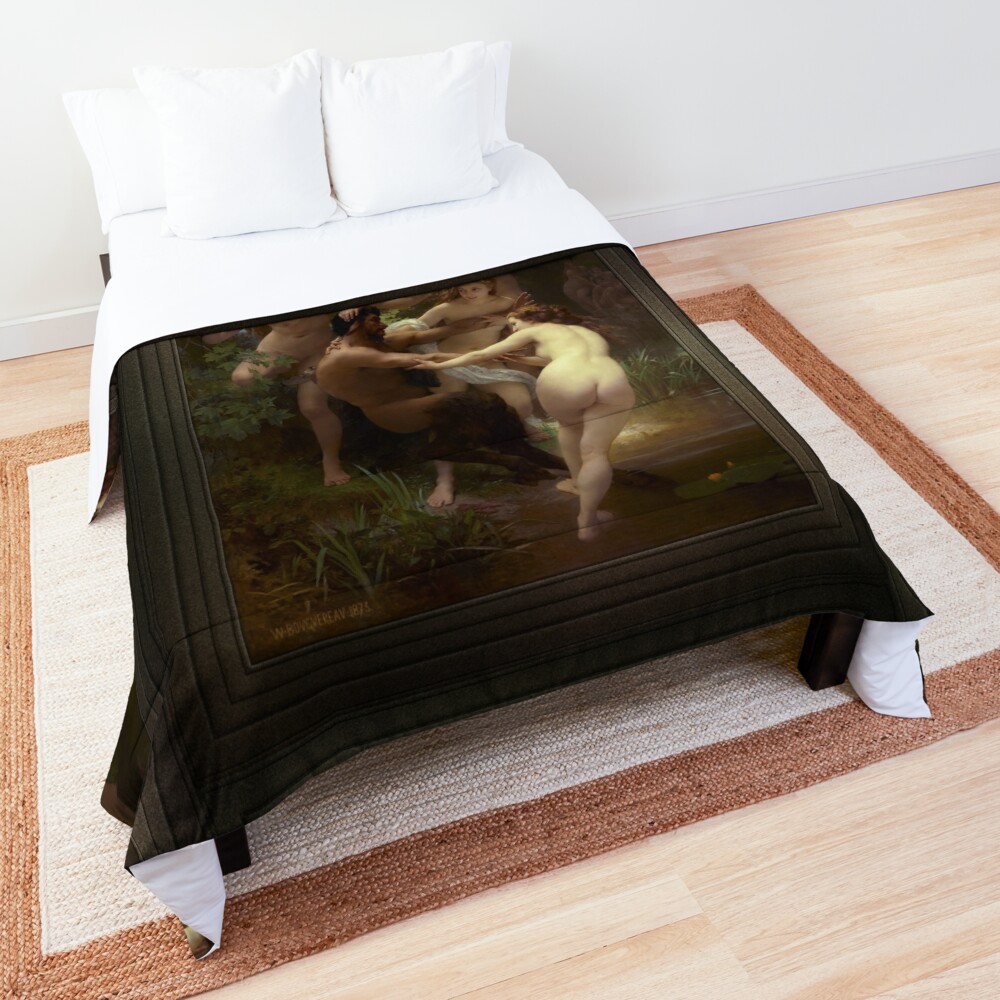
William-Adolphe Bouguereau’s “Nymphs and Satyr,” péinteáilte timpeall 1873, exemplifies the artist’s celebrated academic style and his fascination with miotaseolaíoch subjects. The painting depicts a playful scene of nymphs playfully encircling a satyr within a lush woodland setting. It is a work that showcases Bouguereau’s technical mastery – particularly his ability to render flesh tones and create an atmosphere of idyllic beauty, while also reflecting the broader artistic trends of 19th-century France, specifically the revival of classical themes and allegorical narratives.
Clár na nÁbhar
Struchtúr Comhdhéanta & Insint
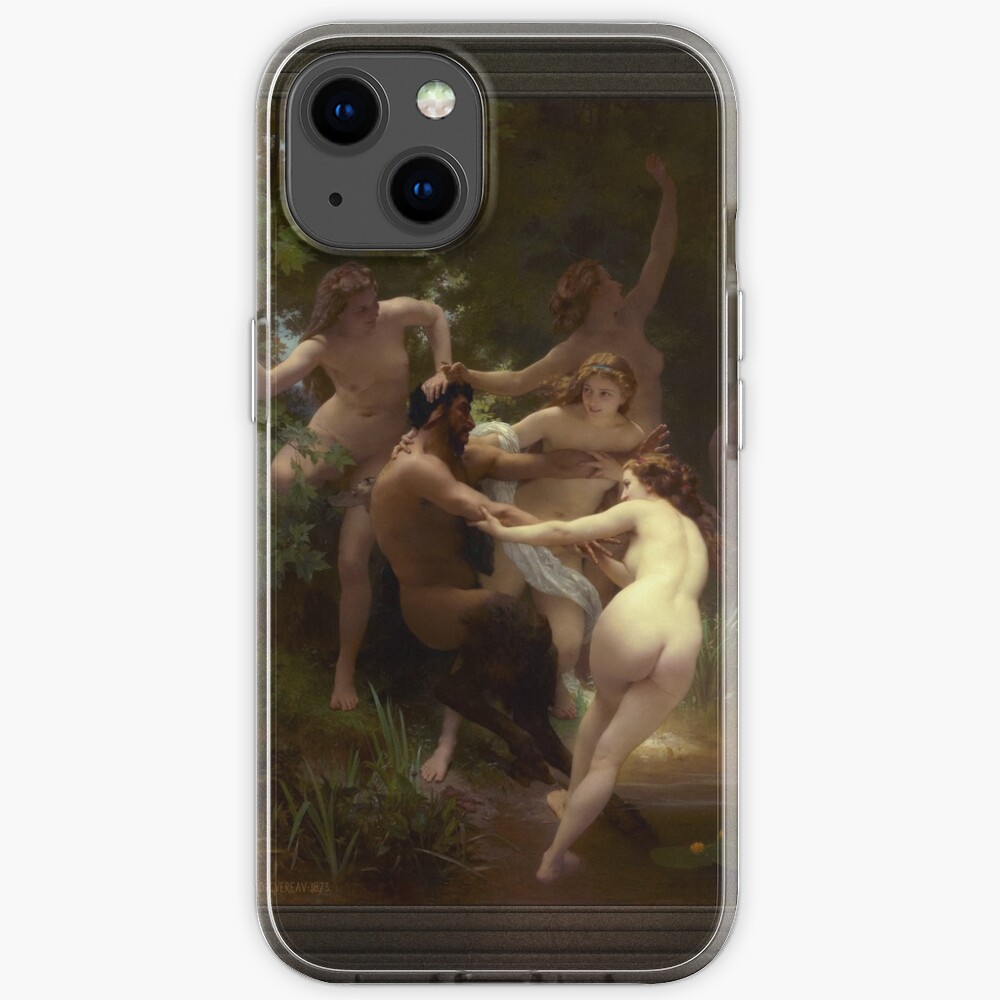
The composition is carefully structured around a central figure: the satyr. He occupies the lower center of the canvas, his dark skin contrasting with the lighter complexions of the surrounding nymphs. The arrangement isn’t one of aggression or threat; in áit, it conveys a sense of lighthearted pursuit and playful entanglement.
The nymphs are positioned in a dynamic circular formation around him, their bodies intertwined and their expressions ranging from amusement to gentle teasing. This creates a visual rhythm that draws the viewer’s eye across the canvas, emphasizing the interaction between the figures. The background is deliberately blurred, receding into a dense forest of verdant foliage, which serves to isolate the group and focus attention on the central action.
The Figures: Nymphs & Satyr
Each nymph possesses distinct features and postures, contributing to the overall sense of movement and vitality. Their bodies are rendered with meticulous detail, showcasing Bouguereau’s skill in depicting the human form. They wear minimal attire – flowing drapery that clings to their forms while revealing the contours of their bodies, a common characteristic of academic nudes during this period.
Their hair is loosely arranged, cascading around their shoulders and adding to the overall sense of naturalness. The satyr, a creature from Greek mythology representing wild nature and revelry, stands out due to his darker skin tone and more rugged features. His posture suggests surprise and perhaps mild discomfort as he finds himself surrounded by the playful nymphs. He is depicted with horns and pointed ears, characteristic attributes of his mythological identity.
Pailéad Dathanna & Soilsiú
Bouguereau’s use of color contributes significantly to the painting’s atmosphere. The palette is dominated by warm earth tones – greens, donn, and ochres – which evoke a sense of natural harmony. The nymphs’ skin tones are rendered with remarkable subtlety, capturing the play of light on their bodies. A bog, diffused light filters through the foliage, illuminating the figures from above and creating gentle shadows that enhance their three-dimensionality. The lighting is not harsh or dramatic; ina ionad, it contributes to the overall sense of tranquility and idyllic beauty. The contrast between the satyr’s darker skin and the nymphs’ lighter complexions further emphasizes the visual dynamic within the composition.
Tionchair Ealaíne & Stíl
“Nymphs and Satyr” reflects Bouguereau’s training in the academic tradition, a leag béim ar scil theicniúil, cruinneas anatamaíocha, agus áilleacht idéalach. His work draws inspiration from classical sculpture and Renaissance painting, evident in the graceful poses of the figures and the harmonious composition.
Bouguereau was a proponent of realism, but his paintings are not simply representational; they possess an element of idealization that elevates them beyond mere depictions of reality. The painting’s subject matter, a mythological scene, was also popular among artists during this period, reflecting a broader interest in classical themes and allegorical narratives. Bouguereau’s style is often associated with the academic tradition, characterized by its emphasis on technical proficiency and idealized beauty.
Forghníomhú Teicniúil & Sonraigh
The painting’s surface reveals meticulous brushwork, particularly evident in the rendering of flesh tones and foliage. Bouguereau employed a layering technique to build up color gradually, creating subtle gradations and enhancing the sense of realism.
The details are rendered with precision – from the delicate folds of drapery to the individual strands of hair, demonstrating Bouguereau’s mastery of his craft. The artist’s attention to detail extends to the background elements as well; the foliage is depicted with a remarkable degree of naturalism, creating a convincing sense of depth and atmosphere.
Oidhreacht & Suntas
“Nymphs and Satyr” remains one of Bouguereau’s most celebrated works, admired for its technical brilliance and its depiction of idyllic beauty. The painting exemplifies the artist’s ability to synthesize classical themes with contemporary artistic trends, creating a work that is both timeless and representative of its era. It stands as a testament to Bouguereau’s enduring legacy as one of the leading academic painters of his time.
Ealaíontóir Bio cúirtéise Wikipedia.org
Rugadh William-Adolphe Bouguereau i La Rochelle, An Fhrainc, ar 30 Samhain 1825, isteach i dteaghlach ceannaithe fíona agus ola olóige.[4] Mac Théodore Bouguereau (rugadh é 1800) agus Marie Bonnin (1804), ar a dtugtar Adeline, Caitliceach a tógadh William. Bhí deartháir níos sine aige, Alfred, agus deirfiúr níos óige, Marie (ar a dtugtar Hanna), a fuair bás nuair a bhí sí seacht.
Bhog an teaghlach go Saint-Martin-de-Ré i 1832. Rugadh siblín eile i 1834, Kitty. Ag aois 12, Chuaigh Bouguereau go Mortagne chun fanacht lena uncail Eugène, sagart agus d’fhorbair sé grá don dúlra, reiligiún agus litríocht.
I 1839, cuireadh chun staidéir don tsagartacht é i gcoláiste Caitliceach i Pons. Anseo mhúin Louis Sage é a tharraingt agus a phéinteáil, a bhí tar éis staidéar a dhéanamh faoi Ingres. D’fhág Bouguereau go drogallach a chuid staidéir chun filleadh ar a theaghlach, ina gcónaí anois i Bordeaux.
Ansin bhuail sé le healaíontóir áitiúil, Charles Marionneau, agus cuireadh tús leis sa Scoil Bardasach Líníochta agus Péinteála i mí na Samhna 1841. D'oibrigh Bouguereau mar chúntóir siopa freisin, lithographs a dhathú le lámh agus pictiúir bheaga a dhéanamh a atáirgeadh ag úsáid crómatagrafaíochta.
Ba ghearr go raibh sé ar an dalta ab fhearr ina rang, agus shocraigh sé a bheith ina ealaíontóir i bPáras. Chun an t-aistriú a mhaoiniú, dhíol sé portráidí - 33 olaí i dtrí mhí. Níor síníodh gach ceann acu agus níor rianaíodh ach ceann amháin. Tháinig sé go Páras in aois 20 i mí an Mhárta 1846.
Comhionannas roimh bhás (Comhionannas Roimh Bhás), 1848, ola ar chanbhás, 141 × 269 cm (55.5 × 105.9 in), Músaem Orsay, Páras. Is é an comhionannas an chéad phéintéireacht mhór ag Bouguereau, a táirgeadh tar éis dhá bhliain ag an École des Beaux-Arts de Paris ag aois a 23.
Tháinig Bouguereau mar mhac léinn ag an École des Beaux-Arts.[4] Chun cur lena oiliúint fhoirmiúil i líníocht, d’fhreastail sé ar dhíscaoilte anatamaíocha agus rinne sé staidéar ar fheistis stairiúla agus ar sheandálaíocht.
Glacadh leis i stiúideo François-Édouard Picot, áit a ndearna sé staidéar ar phéintéireacht sa stíl acadúil. Dante agus Virgil i Ifreann (1850) sampla luath dá shaothair nua-chlasaiceacha.
Chuir péintéireacht acadúil an stádas is airde ar ábhair stairiúla agus mhiotaseolaíochta, agus bheartaigh Bouguereau an Prix de Rome a bhuachan, a gheobhadh áit chónaithe trí bliana dó sa Villa Medici sa Róimh, An Iodáil, áit i dteannta le ceachtanna foirmiúla d’fhéadfadh sé staidéar pearsanta a dhéanamh ar ealaíontóirí an Renaissance agus a gcuid sárshaothair, chomh maith leis an nGréigis, Etruscan, agus seaniarsmaí Rómhánacha.
Nymphs and Satyr is a retouched digital art reproduction of a public domain image which is available for purchase as a priontáil chanbhás rollta ar líne.