

Nymfer og Satyr
Nymfer og Satyr: A Study in Classical Fantasy
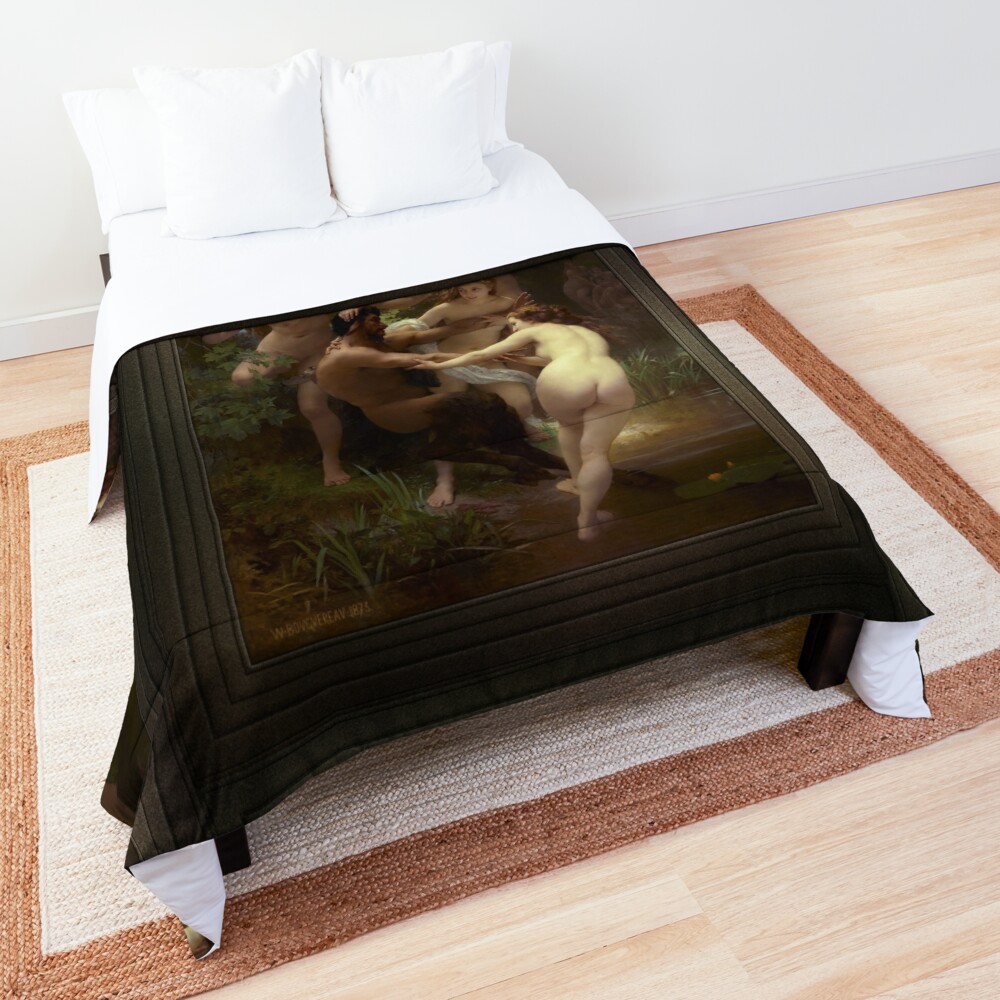
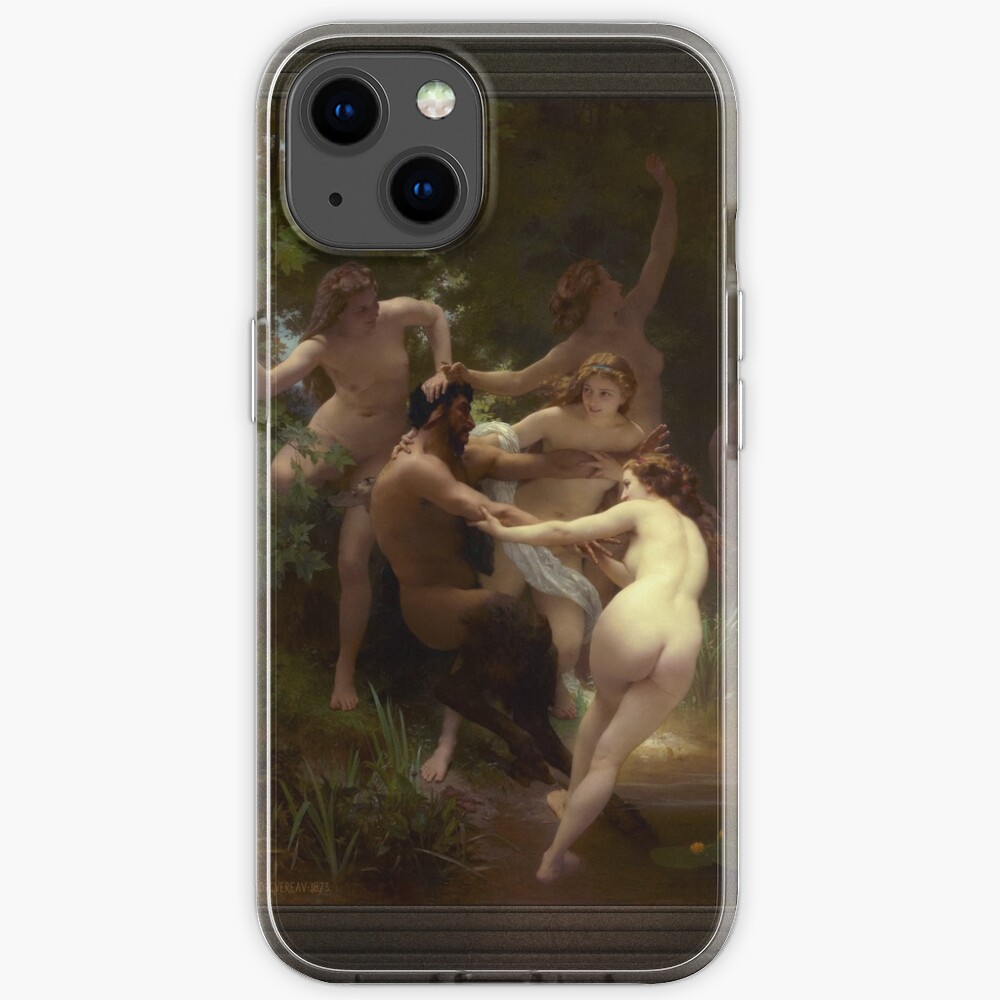
William-Adolphe Bouguereau’s “Nymphs and Satyr,” malt rundt 1873, exemplifies the artist’s celebrated academic style and his fascination with mytologisk subjects. The painting depicts a playful scene of nymphs playfully encircling a satyr within a lush woodland setting. It is a work that showcases Bouguereau’s technical mastery – particularly his ability to render flesh tones and create an atmosphere of idyllic beauty, while also reflecting the broader artistic trends of 19th-century France, specifically the revival of classical themes and allegorical narratives.
Innholdsfortegnelse
Komposisjonsstruktur & Fortelling
The composition is carefully structured around a central figure: the satyr. He occupies the lower center of the canvas, his dark skin contrasting with the lighter complexions of the surrounding nymphs. The arrangement isn’t one of aggression or threat; ganske, it conveys a sense of lighthearted pursuit and playful entanglement.
The nymphs are positioned in a dynamic circular formation around him, their bodies intertwined and their expressions ranging from amusement to gentle teasing. This creates a visual rhythm that draws the viewer’s eye across the canvas, emphasizing the interaction between the figures. The background is deliberately blurred, receding into a dense forest of verdant foliage, which serves to isolate the group and focus attention on the central action.
Figurene: Nymphs & Satyr
Each nymph possesses distinct features and postures, contributing to the overall sense of movement and vitality. Their bodies are rendered with meticulous detail, showcasing Bouguereau’s skill in depicting the human form. They wear minimal attire – flowing drapery that clings to their forms while revealing the contours of their bodies, a common characteristic of academic nudes during this period.
Their hair is loosely arranged, cascading around their shoulders and adding to the overall sense of naturalness. The satyr, a creature from Greek mythology representing wild nature and revelry, stands out due to his darker skin tone and more rugged features. His posture suggests surprise and perhaps mild discomfort as he finds himself surrounded by the playful nymphs. He is depicted with horns and pointed ears, characteristic attributes of his mythological identity.
Fargepalett & Belysning
Bouguereau’s use of color contributes significantly to the painting’s atmosphere. The palette is dominated by warm earth tones – greens, brune, and ochres – which evoke a sense of natural harmony. The nymphs’ skin tones are rendered with remarkable subtlety, capturing the play of light on their bodies. En myk, diffused light filters through the foliage, illuminating the figures from above and creating gentle shadows that enhance their three-dimensionality. The lighting is not harsh or dramatic; i stedet, it contributes to the overall sense of tranquility and idyllic beauty. The contrast between the satyr’s darker skin and the nymphs’ lighter complexions further emphasizes the visual dynamic within the composition.
Kunstneriske påvirkninger & Stil
“Nymphs and Satyr” reflects Bouguereau’s training in the academic tradition, som la vekt på tekniske ferdigheter, anatomical accuracy, og idealisert skjønnhet. His work draws inspiration from classical sculpture and Renaissance painting, evident in the graceful poses of the figures and the harmonious composition.
Bouguereau was a proponent of realism, but his paintings are not simply representational; they possess an element of idealization that elevates them beyond mere depictions of reality. The painting’s subject matter, a mythological scene, was also popular among artists during this period, reflecting a broader interest in classical themes and allegorical narratives. Bouguereau’s style is often associated with the academic tradition, characterized by its emphasis on technical proficiency and idealized beauty.
Teknisk utførelse & Detail
The painting’s surface reveals meticulous brushwork, particularly evident in the rendering of flesh tones and foliage. Bouguereau employed a layering technique to build up color gradually, creating subtle gradations and enhancing the sense of realism.
The details are rendered with precision – from the delicate folds of drapery to the individual strands of hair, demonstrating Bouguereau’s mastery of his craft. The artist’s attention to detail extends to the background elements as well; the foliage is depicted with a remarkable degree of naturalism, creating a convincing sense of depth and atmosphere.
Arv & Betydning
“Nymphs and Satyr” remains one of Bouguereau’s most celebrated works, admired for its technical brilliance and its depiction of idyllic beauty. The painting exemplifies the artist’s ability to synthesize classical themes with contemporary artistic trends, creating a work that is both timeless and representative of its era. It stands as a testament to Bouguereau’s enduring legacy as one of the leading academic painters of his time.
Artist bio med tillatelse Wikipedia.org
William-Adolphe Bouguereau ble født i La Rochelle, Frankrike, på 30 november 1825, inn i en familie av vin- og olivenoljehandlere.[4] Sønn av Théodore Bouguereau (Født 1800) og Marie Bonnin (1804), kjent som Adeline, William ble oppdratt som katolikk. Han hadde en eldre bror, Alfred, og en yngre søster, Marie (kjent som Hanna), som døde da hun var syv.
Familien flyttet til Saint-Martin-de-Ré i 1832. Et annet søsken ble født i 1834, Kattunge. I en alder av 12, Bouguereau dro til Mortagne for å bli hos onkelen Eugène, en prest og utviklet en kjærlighet til naturen, religion og litteratur.
I 1839, han ble sendt for å studere for prestedømmet ved en katolsk høyskole i Pons. Her ble han lært å tegne og male av Louis Sage, som hadde studert under Ingres. Bouguereau forlot motvillig studiene for å komme tilbake til familien, bor nå i Bordeaux.
Der traff han en lokal kunstner, Charles Marionneau, og begynte på Municipal School of Drawing and Painting i november 1841. Bouguereau jobbet også som butikkassistent, håndfarge litografier og lage små malerier som ble gjengitt ved hjelp av krolitografi.
Han var snart den beste eleven i klassen, og bestemte seg for å bli kunstner i Paris. For å finansiere flytten, han solgte portretter - 33 oljer på tre måneder. Alle var usignerte og bare én er sporet. Han ankom i alder alder 20 i mars 1846.
Likhet før døden (Likhet før døden), 1848, olje på lerret, 141 × 269 cm (55.5 × 105.9 i), Orsay -museet, Paris. Likhet er Bouguereaus første store maleri, produsert etter to år på École des Beaux-Arts de Paris i en alder av 23.
Bouguereau ble student ved École des Beaux-Arts.[4] For å supplere sin formelle opplæring i tegning, han deltok på anatomiske disseksjoner og studerte historiske kostymer og arkeologi.
Han ble tatt opp i studioet til François-Édouard Picot, hvor han studerte maleri i den akademiske stilen. Dante og Virgil i helvete (1850) var et tidlig eksempel på hans nyklassiske verk.
Akademisk maleri plasserte høyeste status på historiske og mytologiske emner, og Bouguereau bestemte seg for å vinne Prix de Rome, som ville skaffe ham en treårig bolig på Villa Medici i Roma, Italia, hvor han i tillegg til formelle leksjoner kunne studere renessansekunstnerne og deres mesterverk fra første hånd, så vel som gresk, Etruskisk, og romerske antikviteter.
Nymphs and Satyr is a retouched digital art reproduction of a public domain image which is available for purchase as a rullet lerretstrykk online.