

Odalisque c1858
“Odalisque c1858” is a masterpiece by the French artist アンリ・ピエール・ピクー, 誰から住んでいたのか 1824 に 1895. ペイントされた 1858, this artwork represents a fine example of Romanticism, a movement that sought to convey deep emotion, 官能性, and vivid imagery. The subject matter and composition reflect the opulence and sensuality typical of the 19th-century French salons. Picou’s work, filled with vivid color and graceful detail, encapsulates the atmosphere of the Orient and the allure of the harem, an artistic theme that gained popularity in European art during the 19th century.
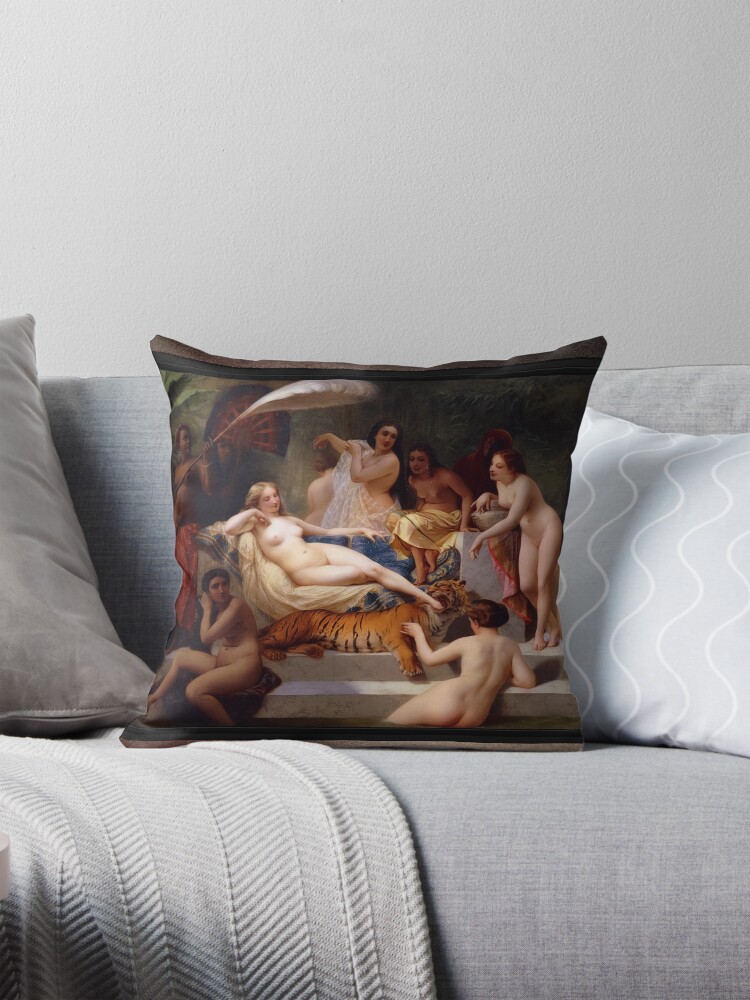
The painting depicts an exotic and opulent scene set within a lush, green garden. 手前で, a reclining nude woman lies draped over a luxurious tiger skin rug, her body elegantly posed to convey both relaxation and sensuality.
絵画の主題, often referred to as an “odalisque” in the art world, refers to a woman in a harem, typically a concubine or servant, though in this case, the figure embodies a sense of power and beauty rather than mere submission. The subject’s position, partially turned to the side, suggests a moment of repose, そして彼女の表現, while not overly emotive, evokes a serene yet slightly aloof mood. The figure is meticulously detailed, ソフトで, porcelain-like skin that contrasts with the vivid richness of her surroundings.
目次
設定と構成
The background of the painting is a lush, 自然環境, with the surrounding foliage creating a sense of depth and enclosure. The warm tones of the earth and the deep greens of the trees contrast against the vibrant golds and turquoises of the woman’s attire, which consists of flowing, sheer fabrics. These colors and textures evoke a sense of Eastern luxury, in line with the Romanticized view of the Orient that was prevalent in European art of the time.
The setting itself, comprising not just a garden but also figures of other women and servants—adds a sense of social hierarchy to the piece. バックグラウンドで, several other figures are partially visible. Some women are depicted in various stages of undress, attending to the main figure in a way that suggests both intimacy and exotic allure. The way they are positioned around the central figure highlights the harem setting and the role of women within it. The inclusion of a tiger further adds to the exoticism, as it symbolizes power and mystery, reflecting the theme of untamed nature and luxury.
The Figures and Their Role
In addition to the reclining odalisque, the painting features a number of secondary figures, including female attendants and an exotic servant. One such figure stands at the back, holding a fan and facing the central figure, adding to the dynamic of the scene. The presence of these figures serves to reinforce the sense of the harem environment, where women are not only objects of desire but also part of a larger, intricate social structure.
The figures in the painting are rendered with remarkable attention to detail, especially in terms of their anatomy and expressions. The artist pays great care to the human form, emphasizing the smoothness and softness of the flesh in stark contrast to the more tactile textures of the tiger skin rug and the surrounding environment. The female figures, each with their unique postures and roles, form a visual harmony that draws the viewer’s eye back to the central reclining figure.
Symbolism and Theme
The central theme of the painting is the depiction of female sensuality, そして拡張によって, the romanticized concept of the Orient. In the 19th century, the harem became a popular subject in European art, often seen as a symbol of luxury, forbidden beauty, and exotic allure. しかしながら, Picou’s portrayal moves beyond a simple depiction of sensuality, suggesting a more complex narrative about power, 欲望, and the roles of women in different cultures.
The use of the tiger skin rug as a central motif is highly symbolic. Tigers, in European art, were often associated with untamed forces, 強さ, and sometimes danger. 女性, by lying atop the tiger, suggests her control over the ferocity and wildness of the animal, a metaphor for both her own power and the heightened sense of mystery associated with the East. The female form, smooth and vulnerable, is in contrast with the wildness of the tiger, yet it is not subdued or submissive, it is regal, 落ち着いた, and in control of her surroundings.
The harem, as depicted in this piece, is less a place of confinement than a space of empowerment and mystery, where women exist outside the usual rules of society and are able to express a more sensual and liberated existence. This is reflected in the calm demeanor of the central figure and the luxuriousness of the scene itself. By presenting the odalisque in a state of repose, Picou adds a layer of depth to the piece, suggesting that the woman’s power lies not in overt action, but in her allure, her mystery, and her presence.
The Mood and Emotional Tone
The mood of the painting is one of quiet luxury and latent power. The serene expression of the central figure contrasts with the more active, yet passive, roles of the other women and the exotic environment around her. The sensuality in the painting is not overtly provocative but is instead conveyed through the soft lines of the female form, the opulence of the setting, and the harmonious interaction between the figures and their surroundings. There is an almost dreamlike quality to the scene, enhanced by the naturalistic details and the rich color palette.
The interaction between the various figures in the painting, some passive, others active, creates a subtle tension within the composition. This interplay of emotions and roles adds a layer of narrative complexity to the piece, allowing the viewer to interpret the scene in a variety of ways, depending on their own perspective.
結論
Henri-Pierre Picou’s “Odalisque c1858” is an exquisite representation of 19th-century French Romanticism. Through the lush, sensual portrayal of the reclining figure and the exotic environment, Picou creates a mood that combines luxury with mystery. The painting encapsulates the fascination with the Orient that was prevalent during the era, while also exploring themes of power, 官能性, そして女性らしさ. Its careful composition, 細部への注意, and use of symbolism make it a work of enduring beauty, capturing a moment in time when the allure of the harem was woven into the fabric of European artistic imagination.
フランスの画家によるオダリスク c1858 アンリ・ピエール・ピクー (1824 – 1895); J
オダリスクは、トルコの後宮の女性係員または女中でした。 (オスマン帝国の家庭で妻や妾が使用する隔離された居住区。).
このオダリスクの絵は、主要な妻または側室である可能性のある裸の中心的な女性像を示しています, 装飾用の枕とシーツを敷いた大理石のソファで休んでいる; それは、プールにつながる二重に積み重ねられた大理石の土台の一部です; 背景には緑の植物があります.
彼女は他の8人の裸の女性に囲まれています; 部分的に水のプールにある 2 つ. 主なメスの足を口に入れている若いトラをかわいがります。.
他に女性が3人います (オダリスクに最も似ている), 大理石の台座でリラックスしている他の女性のニーズに応えている奴隷であると想定できます.
Odalisque は、パブリック ドメインの画像をレタッチしたデジタル アートの古い巨匠の複製であり、次のように購入できます。 家の装飾壁アートプリント.
このデジタルアート作品は、, Xzendor7 Web サイトにあるすべてのアートワークと同様に、キャンバス プリントを含むさまざまな素材形式でオンラインで購入できます。, アクリルプリント, メタルプリント, 木版, 額入りプリント, ポスター, ロール状のキャンバス プリントとしてさまざまなサイズでご利用いただけます。 12 インチから 72 インチは、実際のアートワークのサイズと、アートを購入するために選択したオンデマンド プリント ショップによって異なります。.
このアートワークは、幅広いメンズおよびウィメンズのアパレルでも利用可能です, マグカップ, トートバッグ, スカーフ, ノートや日記帳、その他多くの室内装飾品.
アーティスト略歴
以下の情報から派生 Wikipedia.org
もう一人の若い女の子が床にあるシートに座っている奴隷と遊んでいる間, もう一人の若い女の子が床にあるシートに座っている奴隷と遊んでいる間, ジャン=レオンジェローム, もう一人の若い女の子が床にあるシートに座っている奴隷と遊んでいる間, もう一人の若い女の子が床にあるシートに座っている奴隷と遊んでいる間.
もう一人の若い女の子が床にあるシートに座っている奴隷と遊んでいる間. もう一人の若い女の子が床にあるシートに座っている奴隷と遊んでいる間; もう一人の若い女の子が床にあるシートに座っている奴隷と遊んでいる間.
ピコウが最初にデビューしたのは、サロンでの芸術的なスタイルです。 1847; ピコウが最初にデビューしたのは、サロンでの芸術的なスタイルです。, ピコウが最初にデビューしたのは、サロンでの芸術的なスタイルです。. ピコウが最初にデビューしたのは、サロンでの芸術的なスタイルです。, ピコウが最初にデビューしたのは、サロンでの芸術的なスタイルです。.
ピコウが最初にデビューしたのは、サロンでの芸術的なスタイルです。 1848 ピコウが最初にデビューしたのは、サロンでの芸術的なスタイルです。, ピコウが最初にデビューしたのは、サロンでの芸術的なスタイルです。, ピコウが最初にデビューしたのは、サロンでの芸術的なスタイルです。 “ピコウが最初にデビューしたのは、サロンでの芸術的なスタイルです。, ピコウが最初にデビューしたのは、サロンでの芸術的なスタイルです。, ピコウが最初にデビューしたのは、サロンでの芸術的なスタイルです。”
に 1875, ピコウが最初にデビューしたのは、サロンでの芸術的なスタイルです。, ピコウが最初にデビューしたのは、サロンでの芸術的なスタイルです。.
ピコウはパリのマゼンタ大通りで大規模なワークショップを開催しました, ピコウはパリのマゼンタ大通りで大規模なワークショップを開催しました. ピコウはパリのマゼンタ大通りで大規模なワークショップを開催しました 1853 ピコウはパリのマゼンタ大通りで大規模なワークショップを開催しました, ピコウはパリのマゼンタ大通りで大規模なワークショップを開催しました (ピコウはパリのマゼンタ大通りで大規模なワークショップを開催しました), ピコウはパリのマゼンタ大通りで大規模なワークショップを開催しました 1857.
ピコウはパリのマゼンタ大通りで大規模なワークショップを開催しました 1847, ピコウはパリのマゼンタ大通りで大規模なワークショップを開催しました, ピコウはパリのマゼンタ大通りで大規模なワークショップを開催しました 1893. ピコウはパリのマゼンタ大通りで大規模なワークショップを開催しました; ピコウはパリのマゼンタ大通りで大規模なワークショップを開催しました, ピコウはパリのマゼンタ大通りで大規模なワークショップを開催しました, ピコウはパリのマゼンタ大通りで大規模なワークショップを開催しました.