

Odalisque c1858
“Odalisque c1858” is a masterpiece by the French artist 앙리 피에르 피쿠, 살았던 사람 1824 NS 1895. 페인트 1858, this artwork represents a fine example of Romanticism, a movement that sought to convey deep emotion, 호색, and vivid imagery. The subject matter and composition reflect the opulence and sensuality typical of the 19th-century French salons. Picou’s work, filled with vivid color and graceful detail, encapsulates the atmosphere of the Orient and the allure of the harem, an artistic theme that gained popularity in European art during the 19th century.
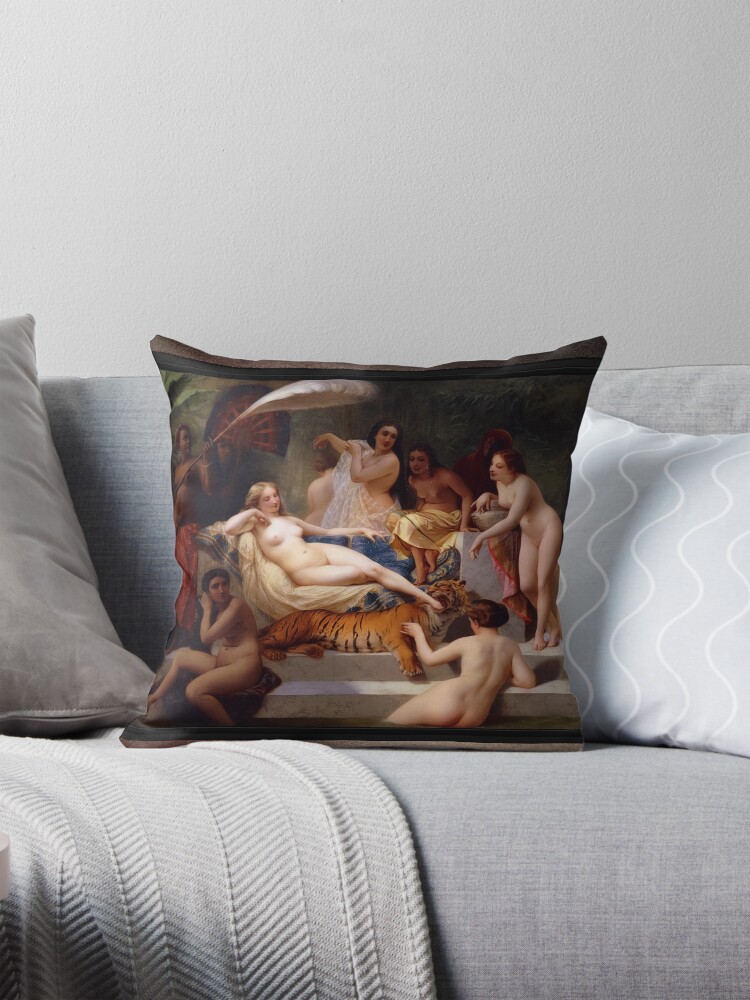
The painting depicts an exotic and opulent scene set within a lush, green garden. 전경에서, a reclining nude woman lies draped over a luxurious tiger skin rug, her body elegantly posed to convey both relaxation and sensuality.
그림의 주제, often referred to as an “odalisque” in the art world, refers to a woman in a harem, typically a concubine or servant, though in this case, the figure embodies a sense of power and beauty rather than mere submission. The subject’s position, partially turned to the side, suggests a moment of repose, and her expression, while not overly emotive, evokes a serene yet slightly aloof mood. The figure is meticulously detailed, 부드러운, porcelain-like skin that contrasts with the vivid richness of her surroundings.
목차
설정 및 구성
The background of the painting is a lush, 자연 환경, with the surrounding foliage creating a sense of depth and enclosure. The warm tones of the earth and the deep greens of the trees contrast against the vibrant golds and turquoises of the woman’s attire, which consists of flowing, sheer fabrics. These colors and textures evoke a sense of Eastern luxury, in line with the Romanticized view of the Orient that was prevalent in European art of the time.
설정 자체, comprising not just a garden but also figures of other women and servants—adds a sense of social hierarchy to the piece. 백그라운드에서, several other figures are partially visible. Some women are depicted in various stages of undress, attending to the main figure in a way that suggests both intimacy and exotic allure. The way they are positioned around the central figure highlights the harem setting and the role of women within it. The inclusion of a tiger further adds to the exoticism, as it symbolizes power and mystery, reflecting the theme of untamed nature and luxury.
The Figures and Their Role
In addition to the reclining odalisque, the painting features a number of secondary figures, including female attendants and an exotic servant. One such figure stands at the back, holding a fan and facing the central figure, adding to the dynamic of the scene. The presence of these figures serves to reinforce the sense of the harem environment, where women are not only objects of desire but also part of a larger, intricate social structure.
The figures in the painting are rendered with remarkable attention to detail, especially in terms of their anatomy and expressions. The artist pays great care to the human form, emphasizing the smoothness and softness of the flesh in stark contrast to the more tactile textures of the tiger skin rug and the surrounding environment. The female figures, each with their unique postures and roles, form a visual harmony that draws the viewer’s eye back to the central reclining figure.
상징성과 주제
The central theme of the painting is the depiction of female sensuality, and by extension, the romanticized concept of the Orient. In the 19th century, the harem became a popular subject in European art, often seen as a symbol of luxury, forbidden beauty, and exotic allure. 하지만, Picou’s portrayal moves beyond a simple depiction of sensuality, suggesting a more complex narrative about power, 욕구, and the roles of women in different cultures.
The use of the tiger skin rug as a central motif is highly symbolic. Tigers, in European art, were often associated with untamed forces, 힘, and sometimes danger. 여자, by lying atop the tiger, suggests her control over the ferocity and wildness of the animal, a metaphor for both her own power and the heightened sense of mystery associated with the East. 여성 형태, smooth and vulnerable, is in contrast with the wildness of the tiger, yet it is not subdued or submissive, it is regal, 침착한, and in control of her surroundings.
The harem, as depicted in this piece, is less a place of confinement than a space of empowerment and mystery, where women exist outside the usual rules of society and are able to express a more sensual and liberated existence. This is reflected in the calm demeanor of the central figure and the luxuriousness of the scene itself. By presenting the odalisque in a state of repose, Picou adds a layer of depth to the piece, suggesting that the woman’s power lies not in overt action, but in her allure, her mystery, and her presence.
기분과 감정적 어조
The mood of the painting is one of quiet luxury and latent power. The serene expression of the central figure contrasts with the more active, yet passive, roles of the other women and the exotic environment around her. The sensuality in the painting is not overtly provocative but is instead conveyed through the soft lines of the female form, the opulence of the setting, and the harmonious interaction between the figures and their surroundings. There is an almost dreamlike quality to the scene, enhanced by the naturalistic details and the rich color palette.
The interaction between the various figures in the painting, some passive, others active, creates a subtle tension within the composition. This interplay of emotions and roles adds a layer of narrative complexity to the piece, allowing the viewer to interpret the scene in a variety of ways, depending on their own perspective.
결론
Henri-Pierre Picou’s “Odalisque c1858” is an exquisite representation of 19th-century French Romanticism. Through the lush, sensual portrayal of the reclining figure and the exotic environment, Picou creates a mood that combines luxury with mystery. The painting encapsulates the fascination with the Orient that was prevalent during the era, while also exploring themes of power, 호색, 그리고 여성스러움. Its careful composition, 세부 사항에 대한 관심, and use of symbolism make it a work of enduring beauty, capturing a moment in time when the allure of the harem was woven into the fabric of European artistic imagination.
프랑스 화가의 오달리스크 c1858 앙리 피에르 피쿠 (1824 – 1895); 초기 초상화 작업과 역사적 주제로 유명하며 말년에는 우화 및 신화 주제로 유명합니다.
오달리스크(Odalisque)는 터키의 세라글리오(Seraglio)에서 여종업원 또는 하녀였습니다. (오스만 제국 가정에서 아내와 첩들이 사용하는 격리된 거실.).
이 오달리스크 그림은 주요 아내 또는 첩일 수 있는 누드 중앙 여성 인물을 보여줍니다., 장식용 베개와 시트로 덧대어진 대리석 소파에 앉아 있다; 수영장으로 이어지는 이중 대리석 바닥의 일부입니다.; 그리고 배경에는 녹색 식물이 있습니다.
그녀는 다른 8명의 나체 여성에게 둘러싸여 있습니다.; 부분적으로 물 웅덩이에 있는 두 개. 주인공 암컷의 발을 입에 물고 있는 어린 호랑이를 쓰다듬고 있는 모습.
여자도 3명 더 있다 (오달리스크와 가장 흡사한), 대리석 받침대에서 휴식을 취하는 다른 여성의 필요를 충족시키는 노예라고 생각할 수 있습니다..
Odalisque는 귀하가 구매할 수 있는 공개 도메인 이미지를 수정한 디지털 아트 옛 거장의 복제품입니다. 홈 장식 벽 예술 인쇄.
이 디지털 아트 창작, Xzendor7 웹사이트에서 찾을 수 있는 모든 예술 작품과 마찬가지로 캔버스 인쇄를 포함한 다양한 재료 형식으로 온라인에서 구매할 수 있습니다., 아크릴 프린트, 금속 지문, 목판화, 액자 인쇄, 포스터, 그리고 압연 캔버스로 다양한 크기로 인쇄됩니다. 12 인치에 72 실제 작품의 크기와 작품을 구매하기로 선택한 주문형 인쇄소에 따라 인치.
이 작품은 다양한 남성복과 여성복에서도 볼 수 있습니다., 머그, 토트백, 스카프, 노트북, 저널 및 다양한 홈 데코 제품.
아티스트 약력
아래에서 파생 된 정보 Wikipedia.org
Henri-Pierre는 학문적인 화가이자 Neo-Grec 학교의 창시자 중 한 사람입니다., 그의 절친한 친구 Gustave Boulanger와 함께, 장 레옹 제롬, 장 루이 하몽, 또한 학문적 화가.
Paul Delaroche와 이후 Charles Gleyre의 워크샵에서 공부한 모든 남성. Picou의 스타일은 Gleyre의 영향을 크게 받았습니다.; 나머지 그룹은 일반적으로 고전적이고 신화적인 주제를 그렸습니다..
처음으로 데뷔한 피쿠는 살롱에서 아티스틱한 스타일로 1847; 그리고 이듬해에는 그의 그림으로 2급 메달을 수상했습니다., 키드누스의 클레오파트라와 안토니우스. 키드누스의 클레오파트라라고도 함, 그것은 일반적으로 Picou의 걸작으로 간주됩니다.
의 살롱에서 상영 1848 Cléopâtre et Antoine sur le Cydnus는 비평가 테오필 고티에에 의해 쓰여졌습니다., 주제가 너무 야심적이라고 생각한 사람, 그러나 또한 말했다 “그대로, 젊은 예술가의 미래에 최고의 희망을 줍니다., 살롱에서 가장 중요한 7~8개의 그림 중 하나입니다.”
에 1875, 그림은 뉴욕에서 전시되었다, 이후 샌프란시스코의 한 개인 미술관 벽에서 한 장소를 찾았습니다..
Picou는 Boulevard de Magenta에서 파리의 대규모 작업장을 유지했습니다., 그의 광대한 프레스코화 작업을 할 수 있는 공간을 제공했습니다.. 그의 인기는 계속해서 상승했고 그는 계속해서 2010년 로마에서 2등상을 수상했습니다. 1853 그의 그림을 위해, 성전에서 장사꾼들을 몰아내는 예수님 (성전에서 쫓겨난 대부자들), 그리고 그의 살롱 그림에 대한 또 다른 2급 메달 1857.
데뷔 당시부터 1847, 그는 살롱에서 단골이되었습니다, 그의 마지막 전시회까지 거의 매년 1893. 그는 프랑스 제2제국 말기에 가장 세련된 화가로 불렸다.; 그리고 많은 커미션을 받았습니다., 많은 교회의 대형 종교 프레스코화 커미션 포함, Église Saint-Roch를 포함한.