

Odalisque c1858
“Odalisque c1858” is a masterpiece by the French artist Henri-Pierre Picou, que viveu de 1824 para 1895. Painted in 1858, this artwork represents a fine example of Romanticism, a movement that sought to convey deep emotion, sensualidade, and vivid imagery. The subject matter and composition reflect the opulence and sensuality typical of the 19th-century French salons. Picou’s work, filled with vivid color and graceful detail, encapsulates the atmosphere of the Orient and the allure of the harem, an artistic theme that gained popularity in European art during the 19th century.
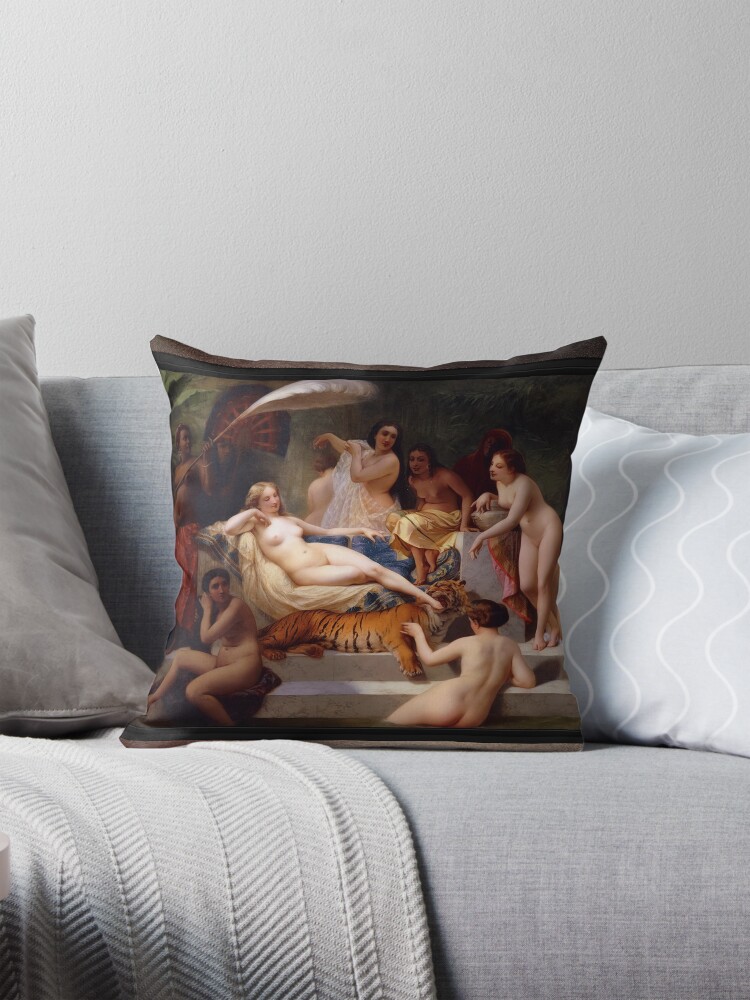
The painting depicts an exotic and opulent scene set within a lush, green garden. Em primeiro plano, a reclining nude woman lies draped over a luxurious tiger skin rug, her body elegantly posed to convey both relaxation and sensuality.
The subject of the painting, often referred to as an “odalisque” in the art world, refers to a woman in a harem, typically a concubine or servant, though in this case, the figure embodies a sense of power and beauty rather than mere submission. The subject’s position, partially turned to the side, suggests a moment of repose, and her expression, while not overly emotive, evokes a serene yet slightly aloof mood. The figure is meticulously detailed, com macio, porcelain-like skin that contrasts with the vivid richness of her surroundings.
Índice
The Setting and Composition
The background of the painting is a lush, natural setting, com a folhagem circundante criando uma sensação de profundidade e fechamento. Os tons quentes da terra e os verdes profundos das árvores contrastam com os dourados e turquesas vibrantes do traje da mulher, que consiste em fluir, tecidos transparentes. Essas cores e texturas evocam uma sensação de luxo oriental, em linha com a visão romantizada do Oriente que prevalecia na arte europeia da época.
A configuração em si, compreendendo não apenas um jardim, mas também figuras de outras mulheres e criadas – acrescenta um senso de hierarquia social à peça. Em segundo plano, várias outras figuras são parcialmente visíveis. Algumas mulheres são retratadas em vários estágios de nudez, atendendo à figura principal de uma forma que sugere intimidade e fascínio exótico. The way they are positioned around the central figure highlights the harem setting and the role of women within it. The inclusion of a tiger further adds to the exoticism, as it symbolizes power and mystery, reflecting the theme of untamed nature and luxury.
The Figures and Their Role
In addition to the reclining odalisque, the painting features a number of secondary figures, including female attendants and an exotic servant. One such figure stands at the back, holding a fan and facing the central figure, adding to the dynamic of the scene. The presence of these figures serves to reinforce the sense of the harem environment, where women are not only objects of desire but also part of a larger, intricate social structure.
The figures in the painting are rendered with remarkable attention to detail, especially in terms of their anatomy and expressions. The artist pays great care to the human form, emphasizing the smoothness and softness of the flesh in stark contrast to the more tactile textures of the tiger skin rug and the surrounding environment. The female figures, each with their unique postures and roles, form a visual harmony that draws the viewer’s eye back to the central reclining figure.
Symbolism and Theme
The central theme of the painting is the depiction of female sensuality, and by extension, the romanticized concept of the Orient. In the 19th century, the harem became a popular subject in European art, often seen as a symbol of luxury, forbidden beauty, and exotic allure. No entanto, Picou’s portrayal moves beyond a simple depiction of sensuality, suggesting a more complex narrative about power, desire, e os papéis das mulheres em diferentes culturas.
A utilização do tapete de pele de tigre como motivo central é altamente simbólica. Tigres, na arte europeia, eram frequentemente associados a forças indomáveis, força, e às vezes perigo. A mulher, deitado em cima do tigre, sugere seu controle sobre a ferocidade e selvageria do animal, uma metáfora tanto para seu próprio poder quanto para o elevado senso de mistério associado ao Oriente. A forma feminina, suave e vulnerável, está em contraste com a selvageria do tigre, ainda assim não é subjugado ou submisso, é real, calma, e no controle de seu entorno.
O harém, como retratado nesta peça, é menos um lugar de confinamento do que um espaço de empoderamento e mistério, onde as mulheres existem fora das regras habituais da sociedade e são capazes de expressar uma existência mais sensual e libertada. This is reflected in the calm demeanor of the central figure and the luxuriousness of the scene itself. By presenting the odalisque in a state of repose, Picou adds a layer of depth to the piece, suggesting that the woman’s power lies not in overt action, but in her allure, her mystery, and her presence.
The Mood and Emotional Tone
The mood of the painting is one of quiet luxury and latent power. The serene expression of the central figure contrasts with the more active, yet passive, roles of the other women and the exotic environment around her. The sensuality in the painting is not overtly provocative but is instead conveyed through the soft lines of the female form, the opulence of the setting, and the harmonious interaction between the figures and their surroundings. Há uma qualidade quase onírica na cena, realçado pelos detalhes naturalistas e pela rica paleta de cores.
A interação entre as várias figuras da pintura, algum passivo, outros ativos, cria uma tensão sutil dentro da composição. Esta interação de emoções e papéis adiciona uma camada de complexidade narrativa à peça, permitindo ao espectador interpretar a cena de várias maneiras, dependendo de sua própria perspectiva.
Conclusão
Henri-Pierre Picou “Odalisque c1858” é uma representação requintada do romantismo francês do século XIX. Através da exuberante, retrato sensual da figura reclinada e do ambiente exótico, Picou cria um clima que combina luxo com mistério. A pintura resume o fascínio pelo Oriente que prevalecia naquela época, ao mesmo tempo que explora temas de poder, sensualidade, e feminilidade. Sua composição cuidadosa, atenção aos detalhes, e o uso do simbolismo fazem dela uma obra de beleza duradoura, capturando um momento em que o fascínio do harém estava entrelaçado no tecido da imaginação artística europeia.
Odalisca c1858 do pintor francês Henri-Pierre Picou (1824 – 1895); conhecido por seus primeiros retratos e temas históricos e em seus últimos anos por seus temas alegóricos e mitológicos
Uma odalisca era uma atendente ou camareira em um serralho turco (um alojamento isolado usado por esposas e concubinas em uma casa otomana.).
Esta pintura Odalisca mostra uma figura feminina central nua que pode ser a esposa principal ou concubina, está descansando em um sofá de mármore acolchoado com travesseiros e lençóis decorativos; que faz parte de uma base dupla de mármore que leva a uma piscina; and in the background there are green plants.
She is surrounded by eight other nude women; two that are partially in the pool of water. with one petting a young tiger that is putting the foot of the main female into its mouth.
There are also three more females (which are most like the Odalisque), that one can assume are slaves that are providing for the needs of the other women that are relaxing on the marble pedestal.
Odalisque is a retouched digital art old masters reproduction of a public domain image that you can purchase as home decor wall art prints.
Esta criação de arte digital, assim como todas as obras de arte que podem ser encontradas no site do Xzendor7 estão disponíveis para compra on-line em uma variedade de formatos de materiais, incluindo impressões em tela, impressões acrílicas, impressões metálicas, gravuras em madeira, impressões emolduradas, cartazes, e como impressões em tela enrolada em vários tamanhos, desde 12 polegadas para 72 polegadas, dependendo do tamanho da obra de arte real e da loja de impressão sob demanda em que você escolher comprar a arte.
A arte também está disponível em uma ampla variedade de roupas masculinas e femininas, canecas, bolsas, lenços, cadernos e diários e muitos produtos de decoração para casa.
Biografia do artista
Informações abaixo derivadas de Wikipédia.org
Henri-Pierre foi um pintor acadêmico e um dos fundadores da escola Neo-Grec, junto com seus amigos íntimos Gustave Boulanger, Jean-Léon Gérôme, e Jean-Louis Hamon, também pintores acadêmicos.
Todos os homens estudaram nas oficinas de Paul Delaroche e mais tarde de Charles Gleyre. O estilo de Picou foi visivelmente influenciado por Gleyre; enquanto o resto do grupo geralmente pintava temas clássicos e mitológicos.
Picou estreou seu estilo artístico no Salão de 1847; e no ano seguinte foi premiado com uma medalha de segunda classe por sua pintura, Cleópatra e Antônio no Cydnus. Também conhecida como Cleópatra no Cydnus, é comumente considerada a obra-prima de Picou.
A exposição no Salão de 1848 de Cleópatra e Antônio no Cydnus foi escrito pelo crítico Théophile Gautier, que achava que o assunto era muito ambicioso, mas também disse que “Como é, dá a melhor esperança para o futuro do jovem artista, e está entre as sete ou oito pinturas mais importantes do Salão.”
Em 1875, a pintura foi exibida em Nova York, e depois encontrou um lugar nas paredes de uma galeria de arte privada em São Francisco.
Picou manteve uma grande oficina em Paris no Boulevard de Magenta, o que lhe deu espaço para trabalhar em seus amplos afrescos. Sua popularidade continuou a crescer e ele ganhou o Segundo Prêmio de Roma em 1853 por sua pintura, Jesus expulsando os vendedores do Templo (Os agiotas expulsos do templo), e outra medalha de segunda classe pela sua pintura de salão em 1857.
Desde a sua estreia em 1847, ele se tornou frequentador assíduo do Salão, exibindo quase todos os anos até sua exposição final em 1893. Ele foi considerado o pintor mais elegante no final do Segundo Império Francês.; e recebeu muitas comissões, incluindo encomendas de grandes afrescos religiosos de muitas igrejas, que incluía a Église Saint-Roch.