

Dealbh boireannach Oriental c1890
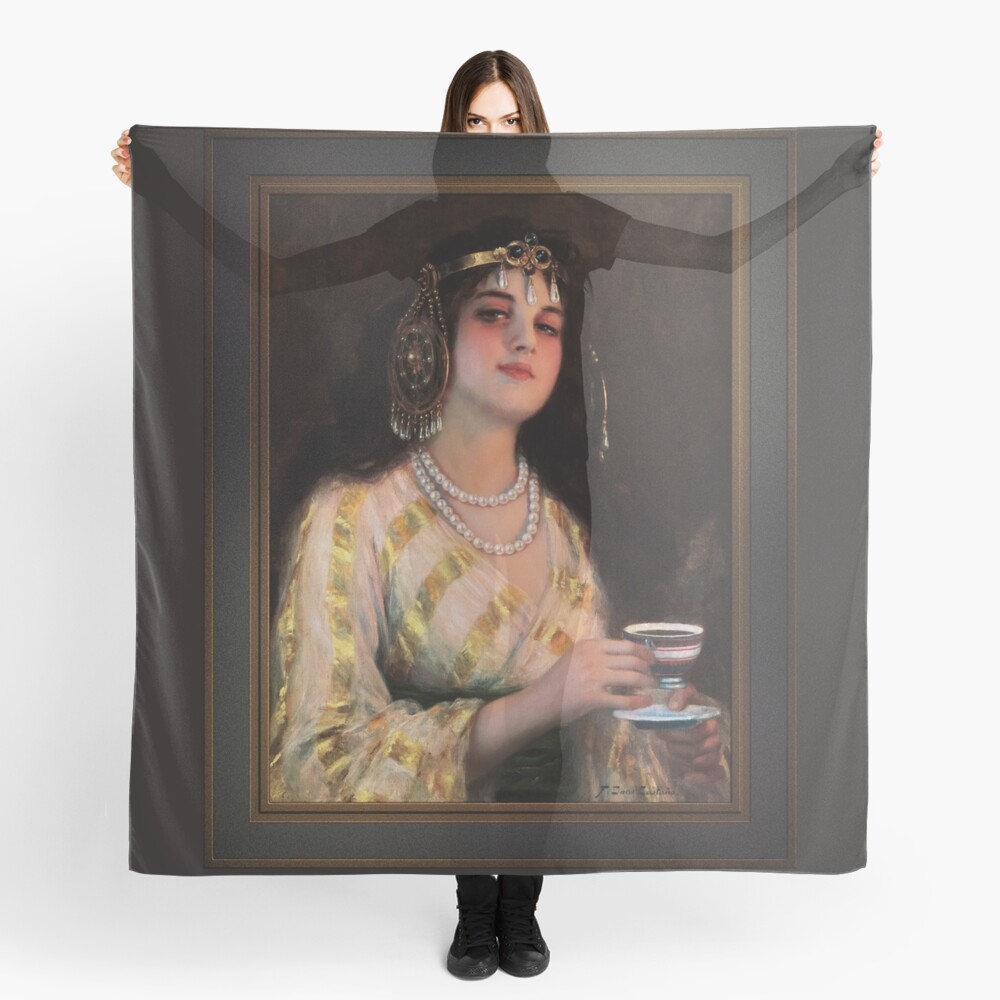
“Òir Dealbh de bhoireannach,” air a chruthachadh timcheall 1890 leis a' pheantair agus an gràbhalaiche Spàinnteach Francisco Sans Castaño (1868-1937), a’ taisbeanadh dealbh eireachdail de bhoireannach air a sgeadachadh ann an èideadh eireachdail, a’ glacadh an ùidh a bha aig deireadh na 19mh linn leis an Orient. Caol-chnò, neach-ealain ioma-chruthach a tha ainmeil airson a sheallaidhean eachdraidheil agus gnè, thug e seachad an dealbh seo le aire gu mion-fhiosrachadh sòghail a tha a’ nochdadh an dà chuid faireachdainn de dhìomhaireachd agus ùrachadh. Is e cuspair an deilbh boireannach brèagha aig a bheil sealladh a’ nochdadh an dà chuid misneachd agus serenity. Cleachdadh dath Castaño, Solas, agus tha inneach a’ cur ri eireachdas an t-seallaidh, cruthachadh àile a tha beairteach ann an cultar agus bòidhchead.
Clàr-innse
Cuspair agus sgrìobhadh
Is e prìomh chuspair an deilbh boireannach òg air a sgeadachadh ann an deise ghrinn a tha coltach gu bheil i a’ nochdadh blasan is buaidh an ama.. A h-o chionn fhada, tha falt dorcha air a stialladh gu grinn agus air a neartachadh le ceann-cinn air a sgeadachadh le seudan agus sgeadachaidhean crochte, a tha air an comharrachadh le glaodh bog an t-solais. Tha faireachdainn socair agus socair na boireannach, le fios gàire a’ moladh pearsa de neart sàmhach, gràs, agus urram.
Tha i a’ cumail soitheach beag ann an aon làimh, a’ greimeachadh gu socair air a’ chupa sgeadaichte mar gum biodh e air chall ann an smuain, perhaps contemplating the contents or simply holding it as part of her poised demeanor. The vessel, likely a traditional cup from a distant culture, is intricately decorated with fine patterns and colors. This object adds to the sense of cultural layering and adds a depth to the otherwise simple yet poignant composition.
A h-èideadh, a luxurious gown with golden stripes, further emphasizes the centrality of the subject’s elegance. An gùn, with its delicate fabric and shimmering golden details, suggests wealth, and the subtle interplay of light on the material adds depth and texture to the piece. The painting’s background remains dark, with the focus on the woman herself, allowing her figure to stand out against the shadowy backdrop. This contrast between the subject and her surroundings heightens the subject’s significance, directing all attention to her poised presence.
Stoidhle agus innleachd
Castaño’s style in this portrait is rooted in realism, with a particular emphasis on texture and light. The artist uses soft brushwork to create a smooth, almost ethereal effect in the subject’s skin, especially on her face, where every detail—her soft lips, the gleam in her eyes, and the subtle shading on her cheekbones—adds a sense of life and vitality. The artist’s attention to detail is evident in the rendering of the woman’s jewels and the soft fabric of her gown, with the golden stripes on her dress shimmering with a realism that almost invites the viewer to touch them.
The use of light in the portrait is masterful, with highlights accentuating the jewelry and the textures of the clothing. This illumination contrasts with the deep shadows surrounding the subject, which suggests a quiet introspection or a moment of contemplation. An dorch, almost indistinct background serves to isolate the woman, making her the unequivocal focal point of the composition.
Castaño’s technique in this piece also reflects the late 19th-century romanticism and the fascination with “exotic” themes. This focus on the Orient or Eastern cultures was a prevalent trend in European art at the time, with many artists exploring subjects and themes from far-flung regions of the world. Ann an “Oriental Portrait of Woman,” Castaño subtly incorporates this exoticism without sacrificing the richness and emotional depth of his subject.
Mood agus cuspair
The mood of the painting can be described as one of calm confidence and enigmatic elegance. The woman in the portrait radiates a sense of mystery, heightened by her aloof gaze and the dark background. There is a quiet power to her presence, as though she belongs to a world of splendor and privilege, yet she remains detached from it, lost in a moment of introspection.
The theme of the painting reflects the late 19th-century fascination with the “Orient,” which was often romanticized and viewed through the lens of European exoticism. Castaño’s portrayal, ge-tà, does not depict the woman in a purely stereotypical or fantastical way; an àite sin, it celebrates her individuality and refinement. This nuanced approach invites the viewer to contemplate the woman’s life and identity, beyond the simple notion of her as an exotic figure. The choice of attire, the jewels, and the cup she holds seem to tell a story, suggesting that the woman may be part of a larger cultural narrative, one that the viewer is only given a brief glimpse into.
Stuthan agus innleachd
The materials used by Castaño in this portrait likely include oil paints, as was typical for artists of this period. The oil medium allows for rich, vibrant colors and smooth gradations of light, lending the portrait a sense of realism. The artist’s meticulous application of paint, especially in the rendering of the woman’s jewelry, gown, and the subtle play of light on her skin, demonstrates a high level of craftsmanship.
The texture of the painting is particularly noticeable in the woman’s gown, where the gold elements shimmer with a delicacy that contrasts with the darker tones of the background. The highlights and shadows throughout the piece are carefully orchestrated to create depth and focus the viewer’s attention on the subject’s face and hands.
Co-dhùnadh
Francisco Sans Castaño’s “Oriental Portrait of Woman” is a masterful work that blends realism, doimhneachd faireachail, and exoticism in a way that both captivates and intrigues. Through meticulous attention to detail and the thoughtful use of light and shadow, Castaño brings the subject to life, allowing her to transcend her historical and cultural context and become a timeless symbol of grace and elegance. This portrait not only reflects the artist’s technical prowess but also captures the mood of a period obsessed with the allure of the East, offering a glimpse into a world both distant and alluring, yet intimately human.
Is e seo ath-riochdachadh seann mhaighstirean ealain didseatach ath-leasaichte de ìomhaigh raon poblach a tha ri fhaighinn mar a clò-bhualadh canabhas air-loidhne.