

Over London by Rail
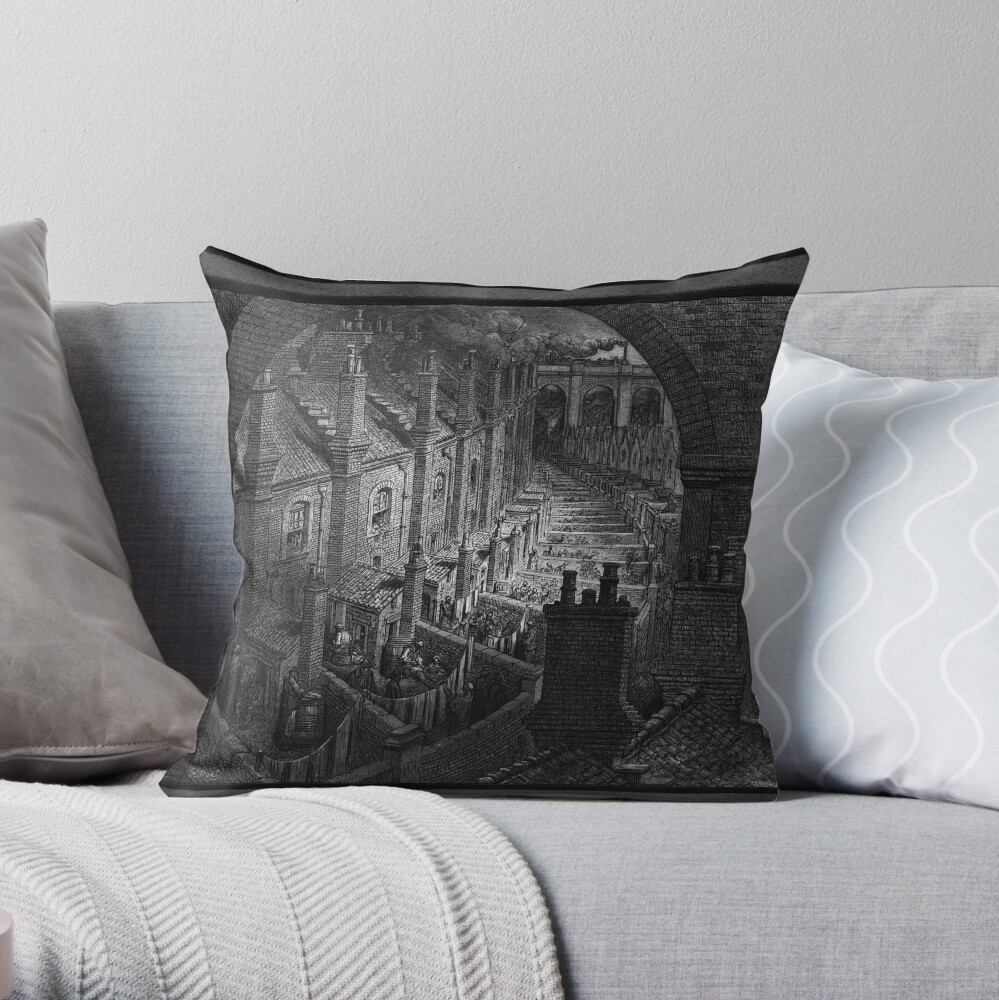
Over London by Rail c1870, from London: A Pilgrimage c1872 by French Engraver Gustave Doré (1832 – 1883); though he primarily worked as a wood engraver, he also was a printmaker, caricaturost, comics artist, illustrator and a sculptor.
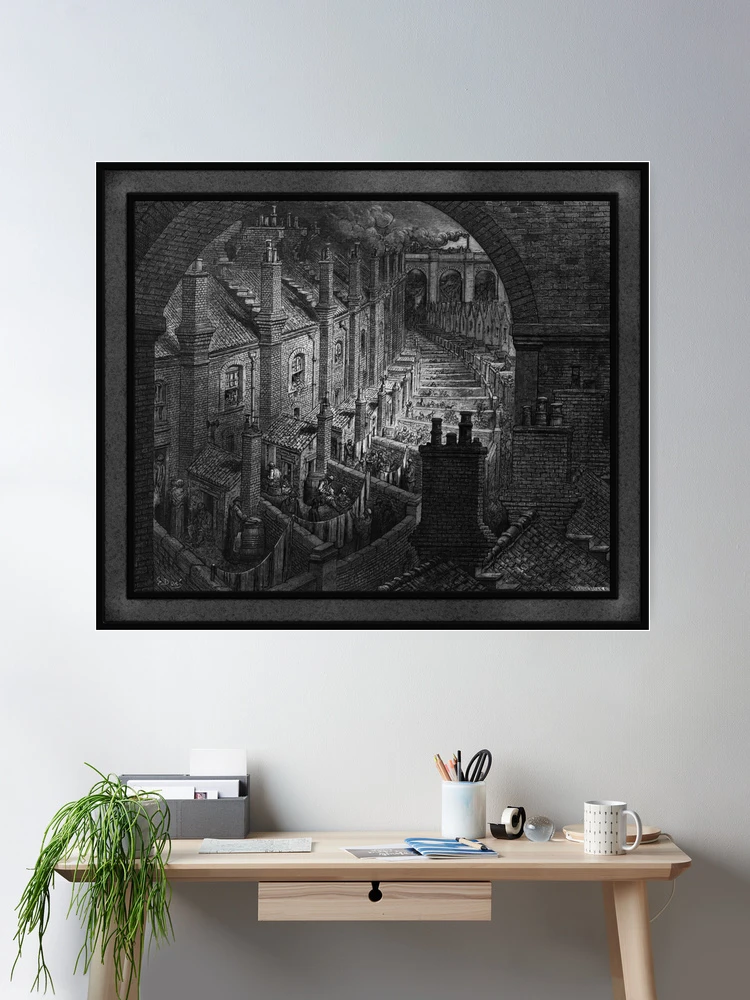
Over London by Rail is part of a series of engravings done by Gustave Doré for the book London: A Pilgrimage, which was conceived in 1868 by the journalist and playwright William Blanchard Jerrold (1826 – 1884).
Gustave accompanied Blanchard on a journey across the London metropolis that took a long hard look at the horrible poverty and living condition of nineteenth century London; documenting it with words and images by Gustave; of which Over London by Rail is 1 de 180 that he produced for the book.
In this engraving we see how much of the poor lived at the time in cramped quarter; and near industrial sites that spewed large volumes of smoke over the residents homes endangering their well being and reducing their life expectancy.
Follow this link to purchase the book Londres: A Pilgrimage
This is a retouched digital art old masters reproduction of a public domain image that is available online for purchase as an acrylic, mihisea, metala eta egurra art print.
Informazioa Behean Deribatua Wikipedia.org
Doré was born in Strasbourg, France and by the age of 5 was a child prodigy artist; creating drawings that were mature beyond his years. Then at the age of 12, he began carving in stone, eta by 15, began his career working as a caricaturist for the French paper Le journal pour rire.
In the beginning wood engraving was his primary method of artistic expression during the late 1840s and early 1850s, making several text comics, like Les Travaux d’Hercule (1847), Trois artistes incompris et mécontents (1851), Les Dés-agréments d’un voyage d’agrément (1851) and L’Histoire de la Sainte Russie (1854).
Gero, Cervantesen liburuetako eszenak irudikatzeko enkarguak irabazi zituen Dorék, Rabelais, Balzac, Milton, eta Dante. Ilustrazioak ere egin zituen “Gargantua eta Pantagruel” urtean 1854; besterik ez zenean 22 urteak.
In 1853 Doreri Lord Byronen lanak ilustratzeko eskatu zioten; eta enkargu horrek argitaletxe britainiarrentzat lan osagarria ekarri zuen, Biblia ilustratu berri bat barne, eta hiru urte geroago ekoiztuko zuen 12 The Legend of The Wandering Juduaren folio tamainako ilustrazioak, garai hartako aspaldiko ikuspegi antisemitak hedatzen zituena, Pierre-Jean de Bérangerrek Eugène Sueren eleberri batetik ateratako poema labur batengatik 1845.
1860ko hamarkadan Dorék Cervantesen Kixoteren frantsesezko edizio bat ilustratu zuen, eta bere zaldunaren eta bere ezkutariaren irudikapenak, Antso Panza, hain famatu egin dira non ondorengo irakurleengan eragina izan dutela, artistak, eta eszena eta zinema zuzendariak’ fisikoaren ideiak “begiratu” bi pertsonaien artean.
Edgar Allan Poeren tamaina handiko edizio bat ere ilustratu zuen “Belea”, irabazi zion ahalegina 30,000 Harper argitaletxearen frankoak & Anaiak sartu 1883.
Bere ilustrazioak Bibliarako (1866) arrakasta handia izan zuten, eta barruan 1867 Dorek bere lanen erakusketa garrantzitsu bat egin zuen Londresen, horrek Bond kaleko Doré galeria sortu zuen, Londres. In 1869, Blanchard Jerrold, Douglas William Jerrolden semea, elkarrekin lan egitea proposatu zuen Londresen erretratu integral bat egiteko.
Jerroldek Rudolph Ackermannek ekoiztutako The Microcosm of London-etik lortu zuen ideia, William Pyne, eta Thomas Rowlandson (-tik hiru liburukitan argitaratua 1808 to 1810). Dorék bost urteko kontratua sinatu zuen Grant argitaletxearekin & Co that involved his staying in London for three months a year, and he received the vast sum of £10,000 a year for the project.
Though Doré was mainly celebrated for his paintings during his time, and though they remain world-renowned even till this day, it is his woodcuts and engravings, like those he did for Jerrold, that demonstrated is exceptional artistic talent as an artist with an individual vision.