

Paalhuis og den nye broen, Amsterdam, in the Winter c1640/1666
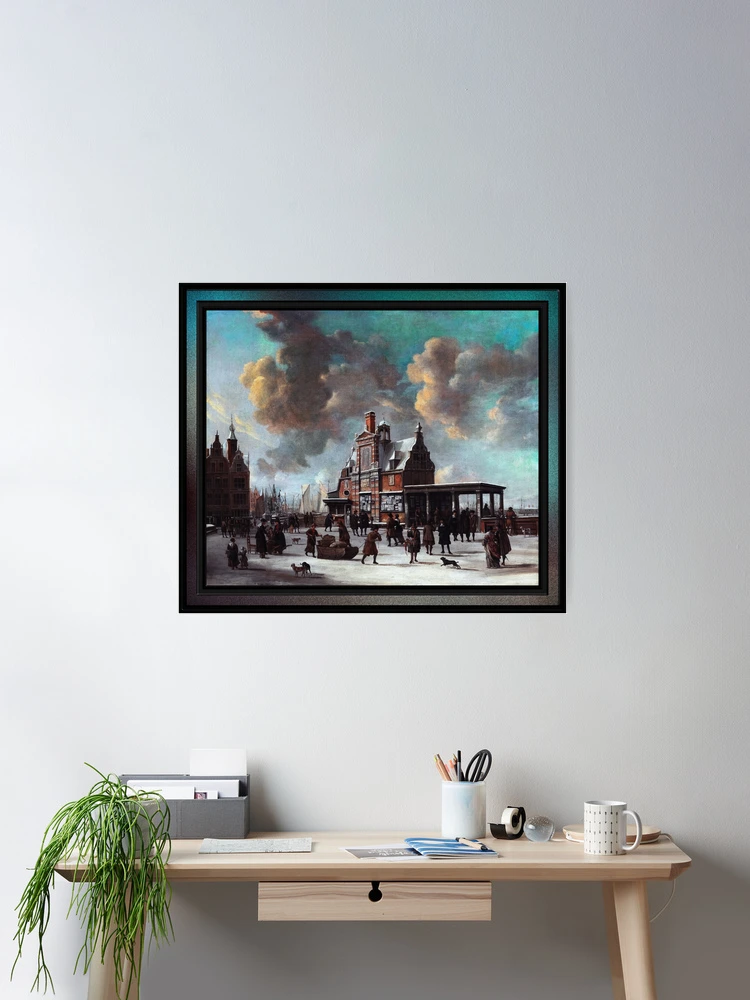
“Paalhuis og den nye broen, Amsterdam, in the Winter” is a remarkable work created around 1640 til 1666 av nederlandsk maler Jan Abrahamsz Beerstraaten (1622 – 1666). This captivating painting embodies the essence of Dutch winter scenes during the Golden Age, showcasing a bustling, frozen landscape with a detailed focus on architectural and social life in Amsterdam. Beerstraaten’s exceptional skill in capturing the atmospheric conditions of winter, combined with his ability to depict the daily activities of people and the urban environment, creates a vivid snapshot of life during this period.
Innholdsfortegnelse
Hovedemnet: A Winter Scene of Amsterdam
The central focus of Beerstraaten’s painting is the depiction of the Paalhuis, a notable building in Amsterdam, and the Nieuwe Brug, the bridge that spans the frozen canal below. The scene unfolds on a cold winter’s day, where a thin layer of snow covers the ground, and the canal is frozen over, making it possible for people and goods to traverse its surface. The Paalhuis, with its intricate design and prominent location, is painted with great attention to architectural detail. The warm glow emanating from the building’s windows offers a contrast to the cold surroundings, suggesting the comfort and warmth that lay inside.
Beerstraaten’s ability to play with light is evident here, as the glowing windows and the dramatic, shifting clouds in the sky provide a rich interplay between the coolness of the outdoors and the warmth of human presence. This contrast highlights not only the technical skill of the artist but also the mood of the painting: a blend of harsh winter reality with the human drive to endure and make life comfortable despite the cold.
Objects and Figures in the Scene
In the foreground of the composition, there are several groups of figures, both individuals and small clusters, engaging in various activities typical for a winter day. Some people are walking across the frozen canal, moving in different directions, with a variety of poses and attitudes. The inclusion of dogs walking alongside the figures helps to create a sense of realism, adding to the bustling, everyday life in this icy world.
Other figures in the painting are interacting with one another, conversing or engaged in tasks such as transporting goods. One man, seen dragging a sled with a large load of sacks, captures the viewer’s attention, emphasizing the utilitarian aspect of the winter season. The distinct style of clothing worn by the figures reflects the period of the 17th century, with their long coats, hatter, and scarves protecting them from the harsh cold.
Interestingly, there is a sense of hierarchy in the positioning of the figures. Those who appear closer to the viewer seem to be of a working class, carrying goods or walking with purpose. I bakgrunnen, other individuals, perhaps wealthier citizens, are seen strolling leisurely, observing the scene around them. This subtle division hints at the social strata within Amsterdam during this time, where the wealthier classes observed the working masses as they went about their duties.
The Terrain and Architectural Elements
The frozen canal in the foreground serves as a vast open space, with figures walking in all directions. It is a dynamic and functional part of the scene, as it allows for the transportation of goods and people in a way that the waterway would not have in the warmer months. The snow-covered ground adds a layer of texture, enhancing the realism of the winter environment. The snow, which can be seen covering the rooftops, streets, and canal, adds a sense of purity and quietude to the otherwise busy scene.
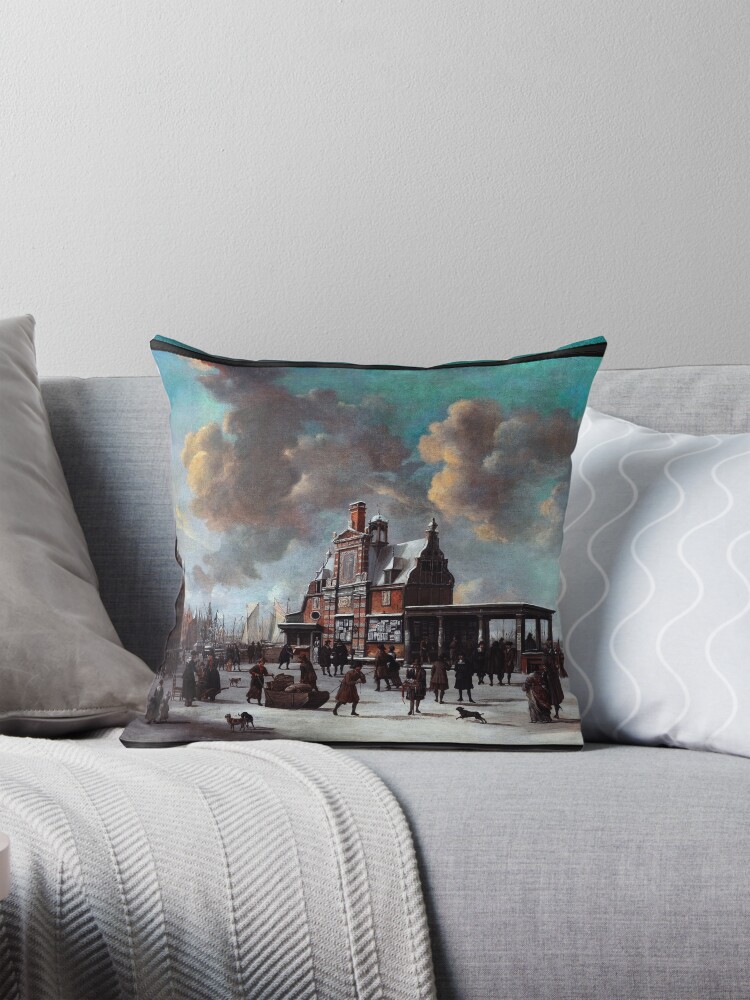
The Paalhuis itself stands as the architectural anchor of the painting. Its imposing yet elegant form, combined with the elaborate detailing of its brickwork and windows, showcases the grandeur of Amsterdam’s 17th-century urban landscape. Til venstre, the Nieuwe Brug arches gracefully over the frozen water, its stonework detailed and its overall shape bringing a sense of movement and flow to the composition.
The figures on the bridge, as well as those near the Paalhuis, help to frame the central structures of the painting, providing a sense of scale and emphasizing the importance of this urban space within the overall scene. In the distance, the expansive sky and the rugged clouds suggest that the weather is rapidly changing, creating a tension between the calmness of the snow and the threatening nature of the winter storm.
The Mood and Style of the Artwork
Beerstraaten’s style reflects the meticulous attention to detail and the realistic tendencies of Dutch Golden Age artists. The clarity of form, the emphasis on light and shadow, and the careful rendering of textures are all hallmarks of the period. The sky, painted in soft tones of blue and grey, is dramatic yet calm, reinforcing the contrast between the natural world and the human activities below.
The mood of the painting is one of cold serenity and quiet activity. While the figures in the scene are moving about, their actions suggest a familiarity with the conditions, indicating that life goes on despite the season’s challenges. Beerstraaten captures this balance between the harshness of winter and the enduring nature of human life with great sensitivity.
The atmosphere is also one of communal life; the people, though engaged in their individual tasks, are part of a larger whole, with the city acting as a backdrop to their shared experience. The lack of dramatic emotion in the figures’ faces may suggest that the work is more about capturing a moment in time, rather than telling a specific story.
Konklusjon
“Paalhuis og den nye broen, Amsterdam, in the Winter” by Jan Abrahamsz Beerstraaten is an exquisite example of Dutch Golden Age painting. Through his deft use of light, farge, og komposisjon, Beerstraaten invites the viewer into a world that blends the harsh reality of winter with the resilient spirit of those who live through it. The painting encapsulates the essence of Amsterdam during this era, where everyday life continues despite the challenges posed by the weather. The precision of detail and the dynamic interplay between figures and architecture allow the viewer to not only appreciate the technical skill of the artist but also to connect with the historical and cultural atmosphere of the time.
Dette er en retusjert digital kunst som gamle mestere gjengir av et offentlig domenebilde.
Artist bio med tillatelse Wikipedia.org
Det er en viss forvirring om identiteten til fire landskapsmalere ved navn Beerstraaten; Johannes, denne Jan Abrahamsz, Abraham, and Anthonie. Jan Abrahamsz, maler, giftet seg i Amsterdam den 30 august 1642.
Fra dette ekteskapet ble elleve barn født, og da han giftet seg for andre gang 1665, en datter ble født. For tiden, RKD registrerer Johannes som den samme personen, og Abraham Beerstraaten regnes for å være hans eldste sønn.
Anthonie Beerstraaten was related to this painter. The RKD has registered two paintings signed Anthonie van Beerstraten: den ene er utsikten over en sørhavshavn fra 1664 (nåværende beliggenhet Enkhuizen) og den andre utsikten over en kirke i Aarlanderveen i det tidligere rådhuset i Alphen aan den Rijn. Basert på disse to maleriene C.
Hofstede de Groot, en tidlig nederlandsk kunsthistoriker, klassifiserte malerier signert A. Beerstraaten som av Anthonie hvis de hadde en dårligere karakter enn de som allerede ble tilskrevet Abraham.