

Peinture 1898
Alphonse Mucha, un artiste tchèque de premier plan, est surtout connu pour ses contributions au mouvement Art Nouveau. L'œuvre intitulée “Peinture 1898 par le peintre tchèque Alphonse Mucha (1860 – 1939)” est un superbe exemple de son style caractéristique, combinant le fluide, formes organiques du mouvement avec une sensibilité au symbolisme et à l'élégance décorative. La pièce présente une figure féminine dans une pose sereine et presque éthérée, incarnant la forme féminine idéalisée au cœur du travail de Mucha.
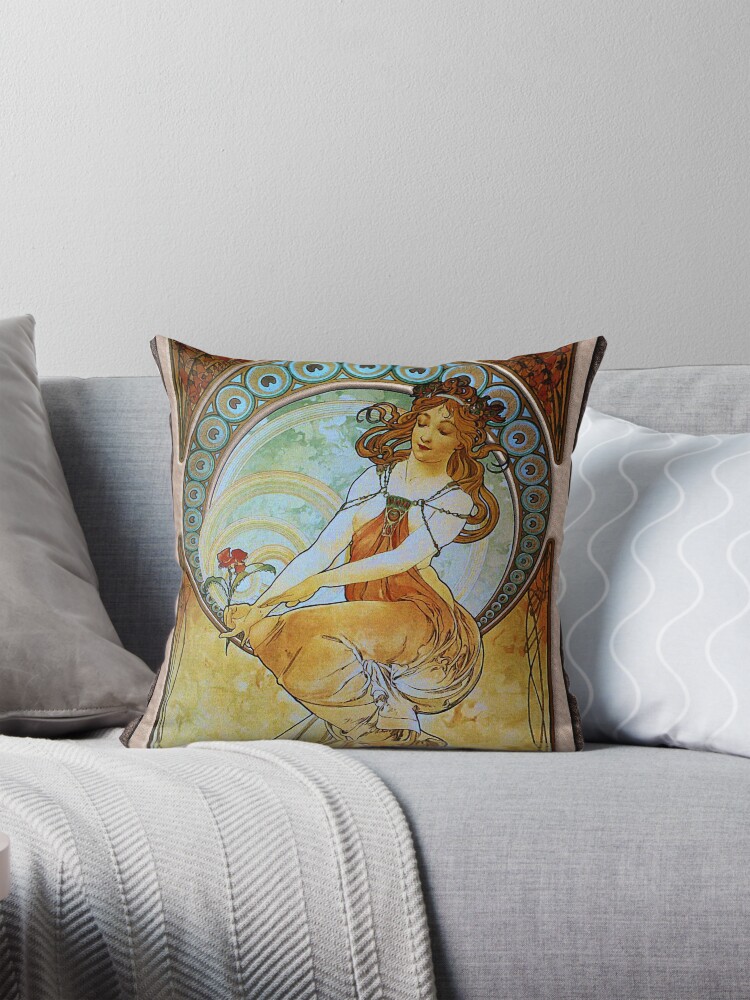
Table des matières
Sujet principal et composition
Au cœur de la composition, une jeune femme est représentée avec des cheveux fluides, cheveux dorés, son regard doux et distant. Elle tient une seule rose dans sa main droite, un symbole de beauté et d'amour. Sa silhouette est habillée d'un doux, robe fluide qui drape élégamment son corps, with the fabric subtly highlighted by the artist’s meticulous use of line and form. The woman’s serene expression suggests a sense of calm and contemplation, drawing the viewer’s attention to the grace and purity of the figure.
Her posture is delicate yet confident, seated with her body angled slightly to the right. She appears almost weightless, suspended within a delicate aura that surrounds her form. This sense of lightness and grace is further accentuated by the use of soft, muted tones in the background, which contrast with the vibrancy of the red rose she holds. Mucha’s skillful use of line, which swirls around the figure and the background, enhances the fluidity of the woman’s movement, creating an organic connection between her and the surrounding space.
Objets et éléments environnants
Les éléments environnants du tableau font partie intégrante de sa composition. Un motif circulaire décoratif encadre le femmele visage et la silhouette, composé de tons bleus doux et de motifs complexes. Ces formes circulaires, commun dans le travail de Mucha, symboliser l'harmonie, unité, et l'éternité. La fluidité des motifs autour d'elle renforce le côté onirique du portrait, suggérant la transcendance du temps et de l'espace.
La palette de couleurs est riche en tons chauds, principalement dans les tons ocre, crème, et de l'or subtil, créer une atmosphère douce et invitante. Ces couleurs contrastent avec les bleus et verts plus froids du cadre circulaire et de la rose.. L'effet global est celui d'une harmonie entre la figure et les éléments décoratifs., une marque caractéristique du style Art Nouveau.
Terrain et arrière-plan
L'arrière-plan de l'œuvre est minimaliste, consisting of soft, sweeping curves that evoke a sense of movement, almost like a gentle breeze or a flowing river. These flowing lines serve to heighten the otherworldly and ethereal quality of the portrait, while also contributing to the organic aesthetic for which Mucha is celebrated. The use of swirling patterns suggests a connection between the subject and nature, elevating the figure of the woman to a divine or symbolic status, one deeply intertwined with natural forces and beauty.
Mucha’s rendering of the background speaks to his mastery of the Art Nouveau style, where form and function are seamlessly blended. The backdrop provides a peaceful, unobtrusive contrast to the more detailed figure, allowing the viewer to focus on the central character while still appreciating the delicate interplay between the figure and her surroundings.
Matériaux et techniques
Mucha’s distinctive use of pastel and watercolor techniques allows the soft, flowing lines of the woman’s gown to emerge with a light, airy texture. The muted hues and blending of colors, especially in the woman’s skin tone and dress, contribute to the gentle mood of the painting. These methods highlight the delicate nature of the subject, while also contributing to the overall sense of harmony and balance in the composition.
The intricate patterns in the circular frame and the floral elements are rendered with sharp, controlled lines that contrast beautifully with the fluidity of the figure. The precision of Mucha’s technique is evident in the fine detailing of the woman’s rose, the curls of her hair, and the careful treatment of light and shadow on her face and body. Each element is rendered with meticulous care, ensuring that the composition feels both detailed and unified.
Thème et humeur
The theme of this artwork revolves around beauty, féminité, et la nature, with the woman in the painting representing an idealized, symbolic figure. The rose in her hand evokes feelings of love, pureté, et grâce, tandis que le doux, flowing lines suggest a connection to the natural world. The figure is not just a portrait of a woman, but rather an embodiment of the feminine ideal as envisioned through the lens of Art Nouveau.
The mood of the painting is tranquil and contemplative, a reflection of the Symbolist elements within Mucha’s work. Il y a une qualité spirituelle ou presque mystique dans la figure, qui apparaît à la fois serein et intouchable, comme si elle existait dans un royaume au-delà du physique. Cet air d'un autre monde est renforcé par le fond éthéré, ce qui distingue la figure du monde dans lequel elle habite, suggérant qu'elle fait à la fois partie de la nature et qu'elle est pourtant élevée au-dessus d'elle.
En conclusion, “Peinture 1898 par le peintre tchèque Alphonse Mucha (1860 – 1939)” est une représentation magistrale du style et de l’approche distinctifs de Mucha. Grâce à l'utilisation de formes fluides, couleurs harmonieuses, et des images symboliques, Mucha capture la beauté intemporelle de la forme féminine, l'élevant au rang de symbole de grâce naturelle et de transcendance spirituelle. L’œuvre témoigne de la célébration de la beauté organique et du design complexe par le mouvement Art nouveau..
Histoire de l’œuvre d’art
La peinture c1898 est l'une des quatre œuvres créées par Mucha pour représenter les quatre genres artistiques, les décomposer en heures de la journée. Avec Morning représentant la danse, Noon représentant la peinture (cette pièce), Après-midi représentant la poésie et la nuit représentant la musique.
Il s'agit d'une reproduction de maîtres anciens d'art numérique retouchée d'une image du domaine public.