

Maleri 1898
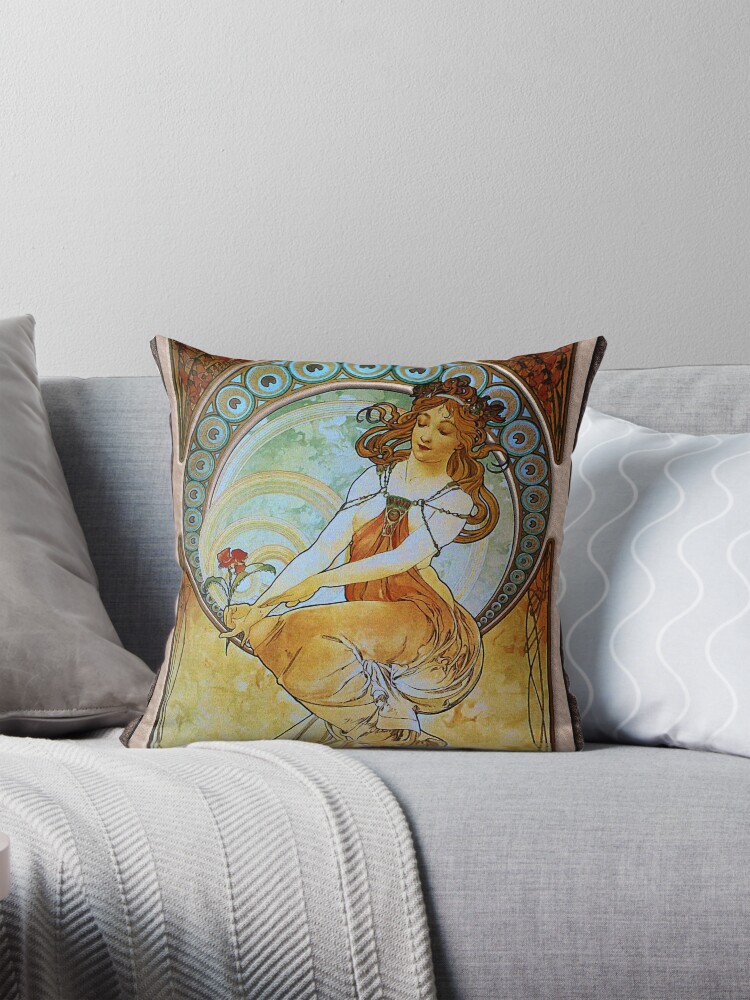
Alphonse Mucha, a prominent Czech artist, is best known for his contributions to the Art Nouveau movement. Kunstverket med tittelen “Maleri 1898 av den tsjekkiske maleren Alphonse Mucha (1860 – 1939)” is a stunning example of his signature style, combining the flowing, organic forms of the movement with a sensibility toward symbolism and decorative elegance. The piece presents a female figure in a serene and almost ethereal pose, embodying the idealized feminine form central to Mucha’s work.
Innholdsfortegnelse
Hovedfag og komposisjon
I kjernen av komposisjonen, a young woman is portrayed with flowing, golden hair, her gaze soft and distant. She holds a single rose in her right hand, a symbol of beauty and love. Her figure is dressed in a soft, flowing gown that drapes elegantly across her body, with the fabric subtly highlighted by the artist’s meticulous use of line and form. The woman’s serene expression suggests a sense of calm and contemplation, drawing the viewer’s attention to the grace and purity of the figure.
Her posture is delicate yet confident, seated with her body angled slightly to the right. She appears almost weightless, suspended within a delicate aura that surrounds her form. This sense of lightness and grace is further accentuated by the use of soft, muted tones in the background, which contrast with the vibrancy of the red rose she holds. Mucha’s skillful use of line, which swirls around the figure and the background, enhances the fluidity of the woman’s movement, creating an organic connection between her and the surrounding space.
Surrounding Objects and Elements
The surrounding elements within the painting are an integral part of its composition. A decorative circular motif frames the kvinne’s face and figure, comprised of soft blue tones and intricate patterns. These circular forms, common in Mucha’s work, symbolize harmony, unity, and eternity. The fluidity of the patterns around her reinforces the dreamlike quality of the portrait, suggesting the transcendence of time and space.
The color palette is rich in warm tones, predominantly in shades of ochre, krem, and subtle gold, creating a soft and inviting atmosphere. These colors contrast with the cooler blues and greens of the circular frame and the rose. The overall effect is one of harmony between the figure and the decorative elements, a characteristic hallmark of Art Nouveau style.
Terreng og bakgrunn
The background of the artwork is minimalist, consisting of soft, sweeping curves that evoke a sense of movement, almost like a gentle breeze or a flowing river. These flowing lines serve to heighten the otherworldly and ethereal quality of the portrait, while also contributing to the organic aesthetic for which Mucha is celebrated. The use of swirling patterns suggests a connection between the subject and nature, elevating the figure of the woman to a divine or symbolic status, one deeply intertwined with natural forces and beauty.
Mucha’s rendering of the background speaks to his mastery of the Art Nouveau style, where form and function are seamlessly blended. The backdrop provides a peaceful, unobtrusive contrast to the more detailed figure, allowing the viewer to focus on the central character while still appreciating the delicate interplay between the figure and her surroundings.
Materialer og teknikk
Mucha’s distinctive use of pastel and watercolor techniques allows the soft, flowing lines of the woman’s gown to emerge with a light, airy texture. The muted hues and blending of colors, especially in the woman’s skin tone and dress, contribute to the gentle mood of the painting. These methods highlight the delicate nature of the subject, while also contributing to the overall sense of harmony and balance in the composition.
The intricate patterns in the circular frame and the floral elements are rendered with sharp, controlled lines that contrast beautifully with the fluidity of the figure. The precision of Mucha’s technique is evident in the fine detailing of the woman’s rose, the curls of her hair, and the careful treatment of light and shadow on her face and body. Each element is rendered with meticulous care, ensuring that the composition feels both detailed and unified.
Tema og stemning
Temaet for dette kunstverket dreier seg om skjønnhet, femininitet, and nature, with the woman in the painting representing an idealized, symbolic figure. The rose in her hand evokes feelings of love, renhet, og nåde, while the soft, flowing lines suggest a connection to the natural world. The figure is not just a portrait of a woman, but rather an embodiment of the feminine ideal as envisioned through the lens of Art Nouveau.
The mood of the painting is tranquil and contemplative, a reflection of the Symbolist elements within Mucha’s work. There is a spiritual or almost mystical quality to the figure, who appears both serene and untouchable, as if she exists in a realm beyond the physical. This air of otherworldliness is enhanced by the ethereal background, which sets the figure apart from the world she inhabits, suggesting that she is both a part of nature and yet elevated above it.
Avslutningsvis, “Maleri 1898 av den tsjekkiske maleren Alphonse Mucha (1860 – 1939)” is a masterful representation of Mucha’s distinctive style and approach. Through the use of flowing forms, harmonious colors, and symbolic imagery, Mucha captures the timeless beauty of the female form, elevating it to a symbol of natural grace and spiritual transcendence. The work stands as a testament to the Art Nouveau movement’s celebration of organic beauty and intricate design.
Artwork Backstory
The Painting c1898 er et av fire verk Mucha laget for å representere de fire kunstneriske sjangere, bryte dem ned i tider på dagen. Med morgen som representerer dans, Middag som representerer maleri (dette stykket), Ettermiddag som representerer poesi og natt som representerer musikk.
Dette er en retusjert digital kunst som gamle mestere gjengir av et offentlig domenebilde.