

Pater Noster
Pater Noster (Our Father) c1900 by Czech Painter Alphonse Mucha (1860 – 1939); baita Art Nouveau Garaiko indar nagusia izan zen Ilustratzaile eta Artista Grafiko bikain bat ere; bere estilizatuagatik ezaguna, antzerki-kartel apaindu eta apaingarriak.
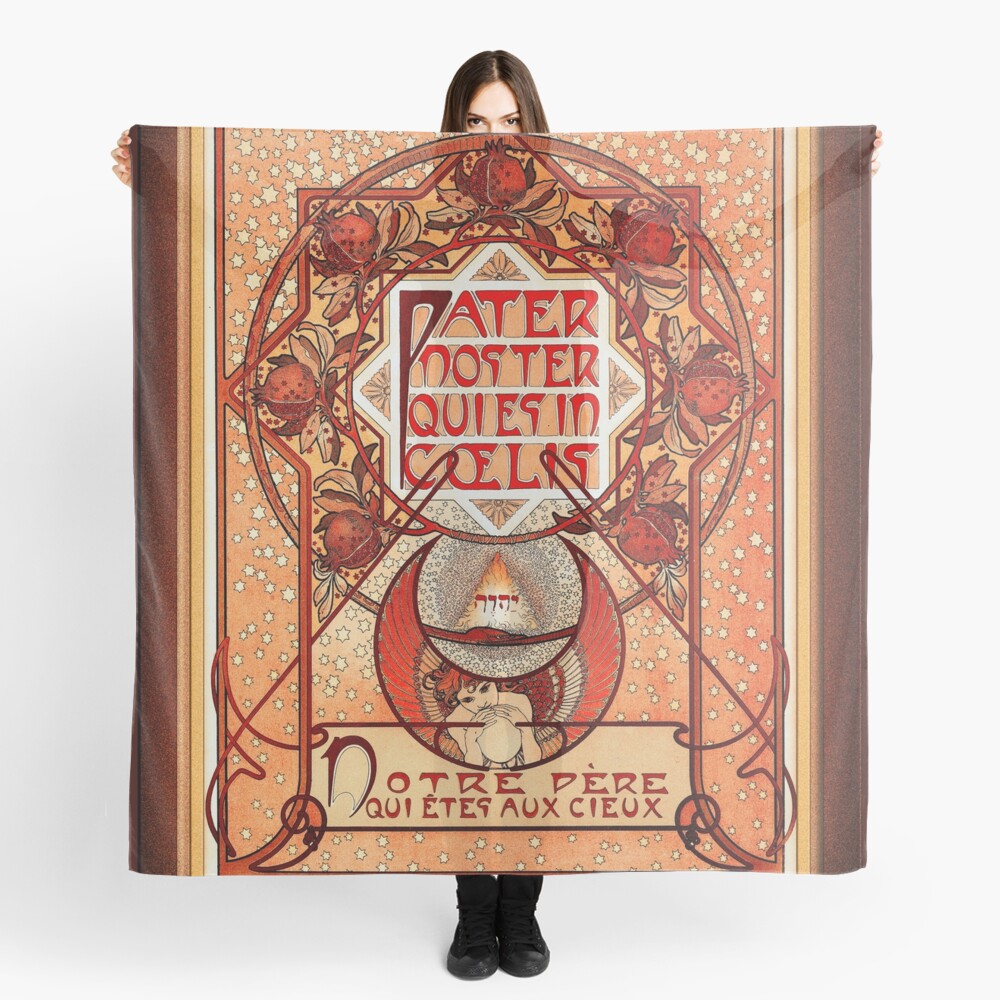
A beautiful illustrated poster that is a tribute to a beloved father that has passed away, with the words Pater Noster Quiesin Coelis (May Our Father Rest In Heaven) at the top and at the bottom the words Notre Pere Qui Etes Aux Cieux (Our Father Who Art In Heaven) that cite the beginning of he Lords prayer.
The top words are surrounded by a representation of the Star of David in the inner layer with a ring around it and a large like representation that also has open pomegranates at each point.
Below the words is another word in Hebrew that is placed in triangle with a fiery appearance, below that a woman grasping a sphere of sorts that has radiant orange, red and white wings; that may represent and angel.
Finally the rest of the illustration has flowing curves that also connect to the Star of David structure giving it a metal frame look with a multitude of starts filling every background space.
Arte digital digital zaharra da, domeinu publiko baten erreprodukzioa linean erosteko eskuragarri dagoen domeinu publiko baten erreprodukzioa ijetzitako mihise inprimatua.
Beheko informazioa Wikipedia.org
Alfons Maria Mucha uztaila 24, 1860 – uztaila 14, 1939), nazioartean Alphonse Mucha izenez ezaguna zen. Txekiar margolari nabarmena izan zen, ilustratzailea eta artista grafikoa, Parisen bizi zen Art Nouveau garaian, eta bere antzerki-kartel estilizatu eta apaingarriengatik da ezaguna, bereziki Sarah Bernhardtenak.
Ilustrazioak egin zituen, iragarkiak, panel apaingarriak, eta diseinuak, garaiko irudi ezagunenen artean bihurtu zena.
Bere ibilbidearen bigarren zatian, urterekin 43, Austriako Bohemia-Moravia eskualdeko jaioterrira itzuli zen eta Eslaviar Epopeia izenez ezagutzen den hogei mihise monumental serie bat margotzen aritu zen., munduko herri eslaviar guztien historia irudikatuz, artean margotu zuena 1912 eta 1926.
In 1928, Txekoslovakiaren independentziaren 10. urteurrenean, seriea aurkeztu zion txekiar nazioari. Bere lanik garrantzitsuena hartu zuen. Orain Pragan dago ikusgai.