

Mała dziewczynka i kot
Overview of the Artwork
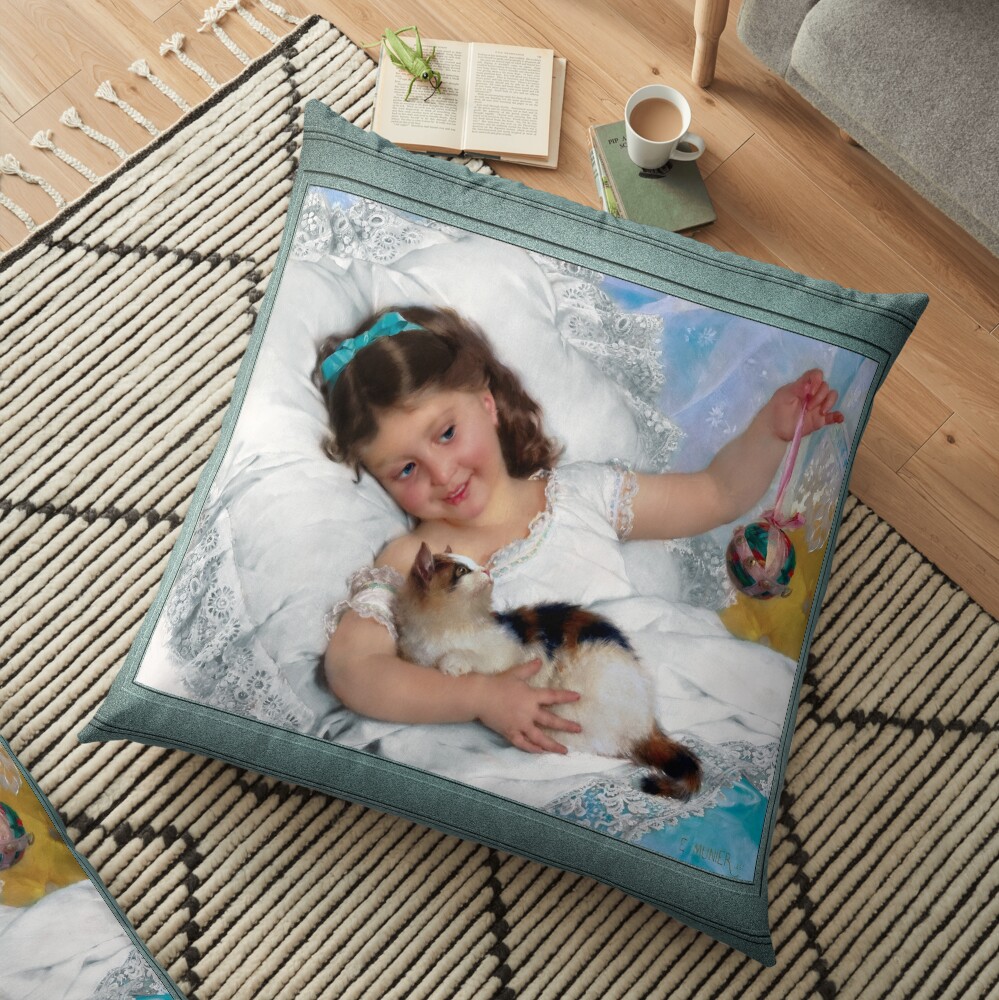
Mała dziewczynka i kot (Młoda dziewczyna z kotem) c1882 is an exquisite example of 19th-century French academic painting, created by Emile Munier (1840 – 1895), a renowned French painter known for his detailed depictions of children and their emotional depth. Painted in 1882, this portrait captures a delicate moment of childhood innocence, perfectly encapsulated through the innocent gaze of a young girl who is lovingly interacting with a cat. Skrupulatna dbałość o szczegóły artysty, his ability to capture human expression, and his expert use of light and color make this piece a standout in the genre of academic realism.
Spis treści
Główny temat: The Young Girl
W sercu “Mała dziewczynka i kot” is the young girl, whose porcelain-like skin and gentle expression convey both fragility and joy. She is depicted in a moment of quiet delight as she reclines on a cushion, her body slightly turned towards the viewer while her gaze is directed downward at the small cat resting beside her. The girl’s soft brown hair is styled in loose waves, with a bright blue ribbon nestled at the crown of her head, adding a touch of playfulness to her appearance. The pale blue ribbon contrasts beautifully with the softness of her white gown, further emphasizing the purity and simplicity of her childhood.
The fabric of her gown is rendered in soft, flowing folds that suggest a fine, luxurious material. Its delicate lace trims at the neckline and sleeves add an element of refinement, capturing the high level of craftsmanship typical of the period. The girl’s posture and demeanor evoke an image of serene contentment, perfectly in tune with the theme of childhood innocence that the artist sought to portray.
The Cat: A Companion in Innocence
The cat, nestled contentedly beside the girl, plays a pivotal role in the composition. It is rendered with extraordinary attention to detail, particularly in its fur, which exhibits the artist’s characteristic skill in portraying texture. The cat’s distinctive coat of fur—patches of white, Pomarańczowy, and brown—creates a sense of realism, while its playful yet peaceful demeanor adds to the tranquil atmosphere of the painting. The young girl’s hand rests gently on the cat’s back, a tender gesture that reinforces the bond between the child and her pet, a universal symbol of innocence and companionship.
The cat’s presence in the painting also serves as a subtle contrast to the girl’s softness and elegance. It represents a more spontaneous and untamed element, yet in this context, it becomes a gentle companion, further enhancing the serene mood of the artwork.
Tło i ustawienie
The background of the painting is as meticulously composed as the figures in the foreground. The setting appears to be an indoor space, possibly a child’s nursery or a drawing room, where the soft textures of a luxurious fabric and a gentle play of light are at the forefront. Behind the young girl and cat, a soft, ethereal blue hue transitions to a creamy pastel yellow, creating a dreamy, almost otherworldly atmosphere. The background is delicately painted, featuring light touches of drapery that hint at the artist’s attention to both the natural light filtering through the space and the textures of the fabrics.
Lace and other delicate elements such as floral patterns also appear in the background, adding complexity and depth to the scene without overwhelming the primary subject. The room, filled with these light, soft tones, emphasizes the purity of childhood, offering a quiet sanctuary where the girl and her cat are free to indulge in their peaceful moment.
The Use of Color and Light
Munier’s use of light and color is central to the emotional impact of “Petite Fille et Chat.” Miękkie, pastel tones—predominantly blues, upławy, and subtle hints of pink—dominate the composition, creating a serene and almost dreamlike quality. The delicate color palette enhances the theme of innocence, furthering the narrative of childhood purity and happiness.
The interplay of light and shadow on the girl’s face and gown is masterfully handled. Munier uses light to bring out the luminous quality of her skin, contrasting it with the subtle shadowing beneath her chin and along her collarbone, which adds depth to her features. The glow of her cheeks and the soft illumination around her eyes suggest a youthful vitality, yet this is contrasted by the calm serenity of the scene.
Emotional Impact and Theme
“Mała dziewczynka i kot” captures a moment of innocence and tranquility. The theme of childhood—its purity, tenderness, and closeness to nature—is rendered with delicate precision. The interaction between the girl and her cat is both intimate and gentle, a visual expression of the love and affection that often characterizes the bond between children and their pets.
The emotional atmosphere of the painting is one of warmth and comfort, a sanctuary from the outside world. Miękkie, intimate moment between the girl and her cat seems to freeze time, inviting the viewer into a quiet, peaceful world where the only concerns are love and companionship. Munier’s portrayal of the girl’s sweet expression and the peaceful setting imbue the work with a sense of nostalgia, evoking a longing for simpler times and the beauty of childhood.
Styl artystyczny: Academic Realism
Emile Munier was a master of academic realism, a style characterized by its focus on the careful study of light, human anatomy, and the natural world. His works often feature children in idyllic settings, exploring themes of innocence, czystość, i głębię emocjonalną. The precision with which Munier renders the details of the girl’s face, the textures of her gown, and the softness of the cat’s fur speaks to his exceptional technical skill and dedication to realism. His careful attention to detail in both the figures and the background elements reflects the high standards of academic painting in the 19th century.
Wniosek
“Mała dziewczynka i kot” is a timeless portrayal of childhood innocence and the beauty of quiet moments shared between a child and her pet. Through his exquisite use of light, kolor, i tekstura, Munier creates a scene that resonates with emotional warmth and tenderness. The piece stands as a perfect example of academic realism, blending technical skill with an intimate portrayal of the human experience.
Petite Fille et Chat to zremasterowana cyfrowa reprodukcja starych mistrzów obrazu z domeny publicznej, która jest dostępna jako druk na płótnie online.
O Artystce
Informacje poniżej pochodzą z Wikipedia.org
Emile urodził się w Paryżu, Francja do Pierre Francois Munier; artysta tapicer w fabryce gobelinów Nationale des Gobelins (w Paryżu Francja) i Marie Louise Carpentier, polerka w młynku kaszmiru.
Miał też dwóch braci François i Florimond; że wraz z nim, który trenował i pracował jako artysta przez pewien czas w Nationale des Gobelins.
W fabryce Emile został przeszkolony na kreślarza przez Abla Lucasa, i nawiąże bliskie relacje z Abelem i jego rodziną, co doprowadziło do małżeństwa Emile z Lucas’ córka Heriette in 1861.
Niestety w 1867, sześć tygodni po tym, jak jego żona urodziła syna Emile Henri, zachorowała na ciężki reumatyzm, i zmarł przedwcześnie.
W 1871 Emile opuścił fabrykę gobelinów, aby kontynuować malowanie w pełnym wymiarze godzin, a także prowadzenie zajęć malarskich dla dorosłych przez trzy noce w tygodniu.
Następnie w 1872 Emile poślubił Sargine Augrand, uczennicę Abela Lucasa i przyjaciółkę Emila i Henrietty; para miała jedną córkę Marie-Louise, kto urodził się w 1874.
W 1884 otrzymał zlecenie od gubernatora Lelanda Stanforda z Kalifornii i jego żony Jane Stanford na stworzenie obrazu ich syna Lelanda Stanforda, Jr., który zmarł w wieku 15 lat; achd zatytułował utwór Anioł pocieszający swoją rozpaczającą matkę; który chłopiec jako anioł, który powrócił na ziemię, aby pocieszyć matkę z ręką położoną na jej ramieniu.
Jednym z najbardziej wpływowych nauczycieli Emila był francuski malarz William-Adolphe Bouguereau (1825 – 1905), i można zobaczyć wpływ, jaki wywarł na Emile'a w wielu utworach, które stworzył, a z czasem zostali również bliskimi przyjaciółmi.
Jedno z jego najsłynniejszych dzieł, zademonstrował ten wpływ jego utwór Trois Amis or Three Friends, którą wystawił na Salonie Paryskim w 1885; który przedstawiał pulchną dziewczynkę bawiącą się na łóżku ze swoim kotkiem i psem.
Ta praca była tak lubiana przez publiczność, że była reprodukowana w wielu formach i była również wykorzystywana w celach reklamowych przez brytyjską firmę mydlaną Pears Soap; która została założona w 1807, produkując pierwsze na świecie przezroczyste mydło.
Obraz ten pomógł mu ugruntować pozycję jednego z czołowych malarzy małych dzieci i ich zwierząt domowych; i nadal malował takie sceny wraz ze scenami połowu zwierząt, pejzaże morskie, krajobrazy, gatunkowe sceny chłopskie, tematyka mitologiczna i religijna od początku lat 90. XIX wieku aż do jego przedwczesnej śmierci w 1895 w wieku 55.