

Nochd Phryne ron Areopagus: A Study in Classical Drama
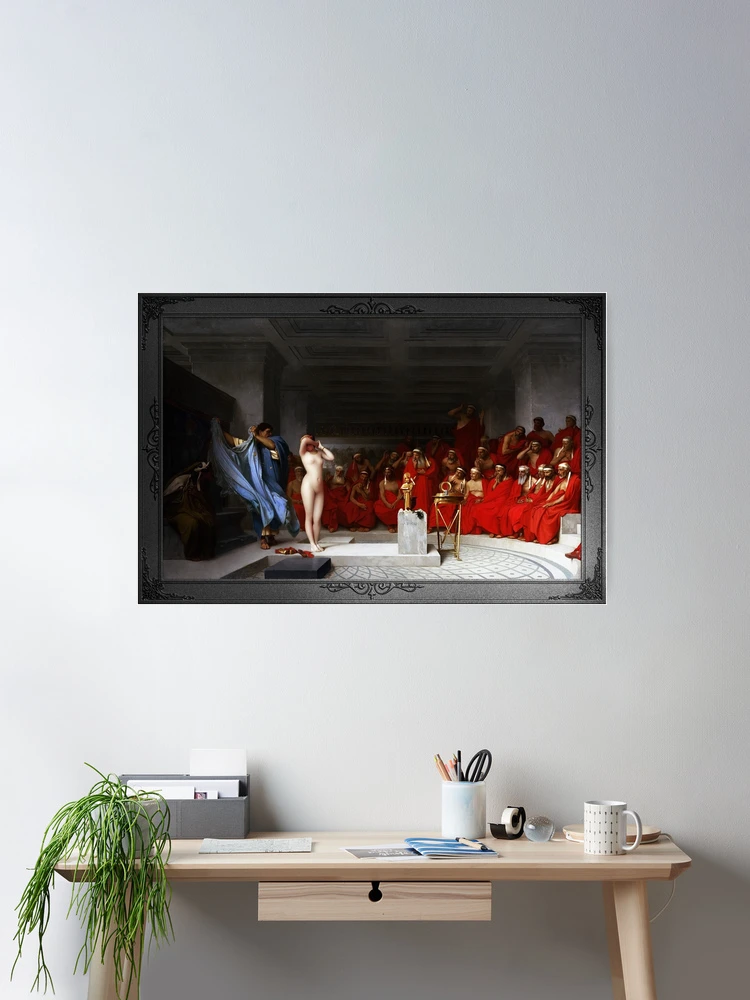
Jean-Leon Gerome’s “Phryne Revealed Before the Areopagus," air a pheantadh mun cuairt 1861, is a compelling work of historical genre painting that draws heavily from classical antiquity. It depicts a dramatic scene rooted in ancient Greek legal proceedings, specifically the trial of Phryne, a celebrated courtesan of Athens. Gérôme was renowned for his meticulous attention to detail and his ability to recreate historical settings with remarkable accuracy, and this piece exemplifies those qualities. The painting is not merely an illustration of a story; it’s a carefully constructed tableau designed to evoke a sense of tension, anticipation, and the weight of societal judgment.
Clàr-innse
Structar co-dhùnaidh & Suidheachadh
The composition is meticulously structured, guiding the viewer’s eye through the unfolding drama. The scene unfolds within a grand hall, likely representing the Areopagus, the ancient Athenian court known for its gravity and importance. Architectural elements dominate the background: tall columns with ornate capitals support a coffered ceiling, suggesting a space of considerable authority and permanence. Light streams in from an unseen source on the left, illuminating the central figures while casting long shadows that heighten the sense of drama. The hall is filled with seated men, iad uile air an còmhdachadh ann an trusganaibh dearg cosmhuil, a 'cruthachadh luchd-èisteachd dùmhail a' coimhead air na gnothaichean. Tha an aonachdachd aca a’ cur cuideam air an àite aca mar bhritheamhan coitcheann, a’ riochdachadh sgrùdadh comann Athenian.
Phryne: Am prìomh fhigear
Aig cridhe na h-sgrìobhaidh tha Phryne fhèin. Tha i air a dealbhachadh nude, a corp air a thoirt seachad le mionaideachd anatomical agus ideòlas clasaigeach mar chuimhneachan air seann snaidheadh Grèigeach. Tha an suidheachadh aice mar aon de so-leòntachd agus follaiseachd; tha e coltach gu bheil i an-dràsta a’ dèanamh dìmeas, 's dòcha mar phàirt de oidhirp air gluasad laghail no mar dhearbhadh air neo-chiontachd. Tha an abairt aice duilich a mhìneachadh gu deimhinnte - dh’ fhaodadh e dùbhlan a nochdadh, a dhreuchd a leigeil dheth, no eadhon beachd air melancholy. Bidh an neach-ealain a 'seachnadh taisbeanadh follaiseach de fhaireachdainnean, instead opting for a subtle and restrained portrayal that allows viewers to project their own interpretations onto her character.
The Legal Processors & Supporting Characters
To Phryne’s left stands a man in Roman attire, likely an advocate or legal representative. He is actively engaged in the scene, holding back a drape of fabric as if revealing Phryne to the court. His posture suggests a degree of authority and control over the unfolding events. Further back, seated figures form the Areopagus itself. Their faces are largely obscured by shadow and their expressions are difficult to discern, contributing to an atmosphere of solemnity and impartiality. A small altar or pedestal stands in the foreground, upon which rests a bronze statue – possibly representing Athena, the goddess of wisdom and justice, subtly alluding to the divine sanction underpinning Athenian law.
Gérôme’s Technical Skill & Buaidh ealain
Gérôme’s mastery of realism is evident throughout the painting. The textures of the fabrics, the smoothness of Phryne’s skin, and the cool marble of the architectural elements are rendered with remarkable fidelity. His use of chiaroscuro – the dramatic contrast between light and shadow – enhances the sense of depth and creates a theatrical atmosphere. The work reflects Gérôme’s deep interest in classical antiquity and his desire to recreate historical scenes with accuracy and authenticity. He was influenced by earlier masters such as Jacques-Louis David, but he developed his own distinctive style characterized by meticulous detail and a focus on narrative clarity. The painting’s composition also draws inspiration from theatrical staging, creating a sense of dramatic tension that engages the viewer directly.
Co-theacs Eachdraidheil & Mìneachadh
The story behind “Phryne Revealed Before the Areopagus” is rooted in ancient Greek history. Phryne was a renowned courtesan known for her beauty and wealth. She was accused of impiety and brought before the Areopagus. According to accounts, she offered a substantial bribe to the court officials, which was then used to fund the construction of a statue of Hermes at the Temple of Ares. The painting captures this moment of legal drama, focusing on the tension between Phryne’s vulnerability and the power of the Athenian court. While Gérôme’s work is based on historical accounts, it also transcends mere illustration; it explores themes of justice, societal judgment, and the complexities of human relationships within a specific cultural context.
Dìleab & Cudromach
“Phryne Revealed Before the Areopagus” remains one of Jean-Léon Gérôme’s most celebrated works. It exemplifies his skill as a historical genre painter and his ability to create compelling narratives through meticulous detail and dramatic composition. The painting has been admired for its technical virtuosity, its evocative atmosphere, and its exploration of timeless themes related to law, moraltachd, and the human condition. It continues to be studied by art historians and appreciated by audiences for its enduring power and historical significance.
Tha sràcan sgeadachaidh air an cleachdadh sa phìos seo rim faighinn aig Seòrsa Dualchais
Neach-ealain bi a thàinig bho Wikipedia.org
Jean-Leon Gerome (11 A 'Chèitean 1824 - 10 Am Faoilleach 1904) na pheantair agus na shnaidheadair Frangach san stoidhle ris an canar an-diugh acadaimigeach. Chaidh na dealbhan aige ath-riochdachadh cho farsaing is a bha e “dh’fhaodar a ràdh gur e an neach-ealain beò as ainmeil san t-saoghal ro 1880.”[1] Am measg an raon obrach aige bha peantadh eachdraidheil, Beul-aithris na Grèige, Orientalism, dealbhan, agus cuspairean eile, a’ toirt an traidisean peantaidh acadaimigeach gu crìoch ealanta. Tha e air a mheas mar aon de na peantairean as cudromaiche bhon ùine acadaimigeach seo.
Ann an 1840 chaidh e gu Paris, far an do rinn e sgrùdadh fo Paul Delaroche, anns an deach e còmhla ris an Eadailt 1843. Thadhail e air Florence, Ròimh, am Bhatican agus Pompeii. Nuair a thill e gu Paris ann an 1844, coltach ri mòran oileanach Delaroche, chaidh e a-steach don taigh-bìdh aig Teàrlach Gleyre agus rinn e sgrùdadh an sin airson ùine ghoirid. Chaidh e an uairsin gu Sgoil nan Ealan Fine. Ann an 1846 dh'fheuch e ri dhol a-steach don Prix de Rome cliùiteach, ach dh'fhàilig e san ìre mu dheireadh oir cha robh an dealbh figear aige iomchaidh.
An dealbh aige The Cock Fight (1846) 'S e eacarsaich acadaimigeach a th' ann a tha a' sealltainn fear òg rùisgte agus boireannach òg le aodach tana le dà choileach sabaid, le Bàgh Naples air a' chùl. Chuir e an dealbh seo gu Salon Paris of 1847, far an d’ fhuair e bonn treas clas. Bha an obair seo air fhaicinn mar phrìomh eisimpleir den ghluasad Neo-Grec a thàinig a-mach à stiùidio Gleyre. (nam measg Henri-Pierre Picou agus Jean-Louis Hamon), agus chaidh a bhrosnachadh leis an neach-càineadh buadhach Frangach Théophile Gautier, rinn an lèirmheas aige Gérôme ainmeil agus chuir e air bhog a chùrsa-beatha gu h-èifeachdach.
Thrèig Gérôme a bhruadar mu bhith a’ buannachadh Prix de Rome agus ghabh e brath air a shoirbheachadh obann. Na dealbhan aige The Virgin, an Leanabh Iosa agus an Naomh Eòin agus Anacreon, Fhuair Bacchus agus Eros bonn den dàrna ìre aig Salon Paris ann an 1848. Ann an 1849, rinn e na dealbhan Michelangelo (ris an canar cuideachd Anns an Stiùidio aige) agus A Portrait of a Lady.
Ann an 1851, sgeadaich e vase a thug an t-Ìmpire Napoleon III na Frainge dhan Phrionnsa Albert an dèidh sin, a-nis mar phàirt den Chruinneachadh Rìoghail aig St. Lùchairt Sheumais, Lunnainn. Sheall e taobh a-staigh na Grèige, Cuimhneachan às an Eadailt, Bacach agus Gràdh, Deoch a-steach 1851; A' phlàigh a-staigh 1852; agus An Idyll a-staigh 1853
Ann an 1852, Fhuair Gérôme coimisean airson dealbh-balla mòr a pheantadh de chuspair alegorical a thagh e. Aois Augustus, breith Chriosd, a chuireadh ri chèile breith Chriosd ri cinnich air an ceannsachadh a' toirt ùmhlachd do Augustus, 's dòcha gun robh e an dùil Napoleon III a dhèanamh rèidh, cò an riaghaltas a bharantaich am balla-balla agus a chaidh ainmeachadh mar a “Augustus ùr.
Thug pàigheadh mòr sìos cothrom do Gérôme siubhal agus rannsachadh, an toiseach 1853 a-steach Constantinople, còmhla ris an actair Edmond Got, agus a-steach 1854 dhan Ghrèig agus dhan Tuirc agus gu cladaichean na Danube, far an robh e an làthair aig cuirm-chiùil de chonscripts Ruiseanach a 'dèanamh ceòl fo bhagairt lash.
Ann an 1853, Ghluais Gérôme dhan Bhocsa Tì, buidheann de stiùidiothan anns an Rue Notre-Dame-des-Champs, Paris. Bhiodh seo na àite coinneachaidh do luchd-ealain, sgrìobhadairean agus cleasaichean, far an do chuir Seòras Sand aoigheachd ris na sgrìobhadairean-ciùil Hector Berlioz, Johannes Brahms agus Gioachino Rossini agus na nobhailean Théophile Gautier agus Ivan Turgenev.
Ann an 1854, chuir e crìoch air coimisean cudromach eile, sgeadachadh Caibeal St. Jerome ann an eaglais St. Severin ann am Paris. An Comanachadh mu dheireadh aige de St. Tha Jerome anns a’ chaibeal seo a’ nochdadh buaidh sgoil Ingres air na h-obraichean cràbhach aige.
Airson an taisbeanadh uile-choitcheann 1855 chuir e Pifferaro ris, Cìobair, agus Aois Augustus, breith Chriosd, ach b’ e am peantadh beag Cur-seachad ann an Campa Ruiseanach a thug an aire as motha…
Tha Phryne Revealed Before The Areopagus na ath-riochdachadh seann mhaighstirean ealain didseatach de ìomhaigh raon poblach.