

פרין נחשף לפני האראופגוס: A Study in Classical Drama
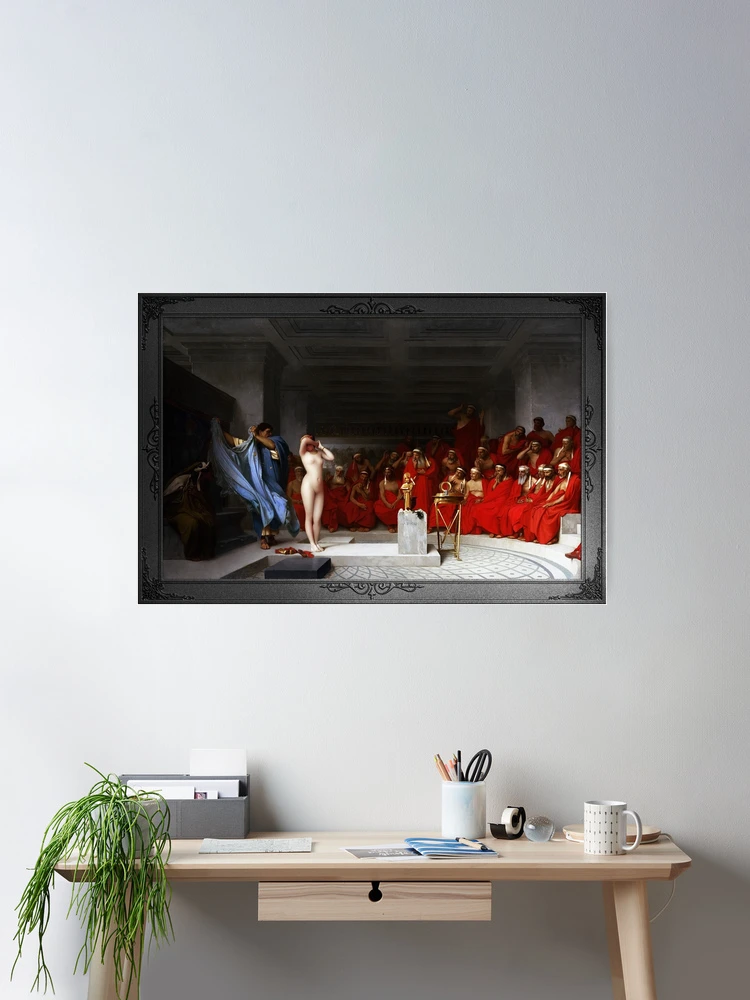
ז'אן לאון ז'רום’s “Phryne Revealed Before the Areopagus,"צבוע סביב 1861, is a compelling work of historical genre painting that draws heavily from classical antiquity. It depicts a dramatic scene rooted in ancient Greek legal proceedings, specifically the trial of Phryne, a celebrated courtesan of Athens. Gérôme was renowned for his meticulous attention to detail and his ability to recreate historical settings with remarkable accuracy, and this piece exemplifies those qualities. The painting is not merely an illustration of a story; it’s a carefully constructed tableau designed to evoke a sense of tension, anticipation, and the weight of societal judgment.
תוכן העניינים
מבנה קומפוזיציוני & סְבִיבָה
The composition is meticulously structured, guiding the viewer’s eye through the unfolding drama. The scene unfolds within a grand hall, likely representing the Areopagus, the ancient Athenian court known for its gravity and importance. Architectural elements dominate the background: tall columns with ornate capitals support a coffered ceiling, suggesting a space of considerable authority and permanence. Light streams in from an unseen source on the left, illuminating the central figures while casting long shadows that heighten the sense of drama. The hall is filled with seated men, all clad in similar crimson robes, forming a dense audience observing the proceedings. Their uniformity emphasizes their role as collective judges, representing Athenian society’s scrutiny.
Phryne: הדמות המרכזית
At the heart of the composition stands Phryne herself. She is depicted nude, her body rendered with anatomical precision and a classical idealization reminiscent of ancient Greek sculpture. Her pose is one of vulnerability and exposure; she appears to be in the process of disrobing, perhaps as part of an attempt at legal maneuvering or a demonstration of innocence. Her expression is difficult to definitively interpret – it could suggest defiance, resignation, or even a hint of melancholy. The artist avoids any overt display of emotion, instead opting for a subtle and restrained portrayal that allows viewers to project their own interpretations onto her character.
The Legal Processors & Supporting Characters
To Phryne’s left stands a man in Roman attire, likely an advocate or legal representative. He is actively engaged in the scene, holding back a drape of fabric as if revealing Phryne to the court. His posture suggests a degree of authority and control over the unfolding events. עוד אחורה, seated figures form the Areopagus itself. Their faces are largely obscured by shadow and their expressions are difficult to discern, contributing to an atmosphere of solemnity and impartiality. A small altar or pedestal stands in the foreground, upon which rests a bronze statue – possibly representing Athena, the goddess of wisdom and justice, subtly alluding to the divine sanction underpinning Athenian law.
Gérôme’s Technical Skill & השפעות אמנותיות
Gérôme’s mastery of realism is evident throughout the painting. The textures of the fabrics, the smoothness of Phryne’s skin, and the cool marble of the architectural elements are rendered with remarkable fidelity. His use of chiaroscuro – the dramatic contrast between light and shadow – enhances the sense of depth and creates a theatrical atmosphere. The work reflects Gérôme’s deep interest in classical antiquity and his desire to recreate historical scenes with accuracy and authenticity. He was influenced by earlier masters such as Jacques-Louis David, but he developed his own distinctive style characterized by meticulous detail and a focus on narrative clarity. The painting’s composition also draws inspiration from theatrical staging, creating a sense of dramatic tension that engages the viewer directly.
הקשר היסטורי & פֵּשֶׁר
The story behind “Phryne Revealed Before the Areopagus” is rooted in ancient Greek history. Phryne was a renowned courtesan known for her beauty and wealth. She was accused of impiety and brought before the Areopagus. According to accounts, she offered a substantial bribe to the court officials, which was then used to fund the construction of a statue of Hermes at the Temple of Ares. The painting captures this moment of legal drama, focusing on the tension between Phryne’s vulnerability and the power of the Athenian court. While Gérôme’s work is based on historical accounts, it also transcends mere illustration; it explores themes of justice, societal judgment, and the complexities of human relationships within a specific cultural context.
מוֹרֶשֶׁת & מַשְׁמָעוּת
“Phryne Revealed Before the Areopagus” remains one of Jean-Léon Gérôme’s most celebrated works. It exemplifies his skill as a historical genre painter and his ability to create compelling narratives through meticulous detail and dramatic composition. The painting has been admired for its technical virtuosity, האווירה המעוררת שלה, and its exploration of timeless themes related to law, מוּסָרִיוּת, and the human condition. It continues to be studied by art historians and appreciated by audiences for its enduring power and historical significance.
הדגשים דקורטיביים המשמשים ביצירה זו זמינים ב HeritageType
אמן ביו שמקורו Wikipedia.org
ז'אן לאון ז'רום (11 מאי 1824 - 10 יָנוּאָר 1904) היה צייר ופסל צרפתי בסגנון המכונה כיום אקדמיות. ציוריו שוכפלו בצורה כה נרחבת “ללא ספק האמן החי המפורסם ביותר בעולם עד 1880.”[1] מגוון יצירתו כלל ציור היסטורי, מיתולוגיה יוונית, מִזְרָחִיוּת, פורטרטים, ונושאים נוספים, מביאים את מסורת הציור האקדמי לשיא אמנותי. הוא נחשב לאחד הציירים החשובים מתקופה אקדמית זו.
ב 1840 הוא נסע לפריז, שם למד אצל פול דלרוש, אליו התלווה לאיטליה 1843. הוא ביקר בפירנצה, רומא, הוותיקן ופומפיי. בשובו לפריז ב 1844, כמו תלמידים רבים של דלרוש, הוא הצטרף לאטלייה של צ'רלס גלייר ולמד שם לזמן קצר. לאחר מכן למד בבית הספר לאמנויות יפות. ב 1846 הוא ניסה להיכנס ל-Prix de Rome היוקרתי, אך נכשל בשלב הסופי כי ציור הדמות שלו לא היה מספק.
הציור שלו מלחמת התרנגולים (1846) הוא תרגיל אקדמי המתאר צעיר עירום ואישה צעירה עטויה דק מאוד עם שני זין קרב, עם מפרץ נאפולי ברקע. הוא שלח את הציור הזה לסלון פריז של 1847, שם זה זיכה אותו במדליה מדרגה שלישית. עבודה זו נתפסה כהתגלמות התנועה הניאו-גרונית שנוצרה מהסטודיו של גלייר (כולל אנרי פייר פיקו וז'אן לואי האמון), ונבחר על ידי המבקר הצרפתי רב ההשפעה תאופיל גוטייה, שהביקורת שלו הפכה את Gérôme למפורסם והזניקה את הקריירה שלו למעשה.
ז'רום נטש את חלומו לזכות בפרי דה רומא וניצל את הצלחתו הפתאומית. ציוריו הבתולה, ישו התינוק וג'ון הקדוש ואנאקריון, בכחוס וארוס לקחו מדליה מדרגה שנייה בסלון פריז ב 1848. ב 1849, הוא הפיק את הציורים מיכלאנג'לו (נקרא גם בסטודיו שלו) ודיוקן של גברת.
ב 1851, הוא עיטר אגרטל מאוחר יותר שהציע קיסר צרפת נפוליאון השלישי לנסיך אלברט, כעת חלק מהאוסף המלכותי ב-St. ארמון ג'יימס, לונדון. הוא הציג פנים יווני, מזכרת מאיטליה, בכחוס ואהבה, שיכור פנימה 1851; המגפה פנימה 1852; ואידיליה ב 1853
ב 1852, ג'רום קיבל עמלה לצייר ציור קיר גדול של נושא אלגורי לפי בחירתו. עידן אוגוסטוס, לידתו של ישו, שתשלב את לידתו של ישו עם אומות נכבשות בכבוד לאוגוסטוס, אולי נועד להחמיא לנפוליאון השלישי, שממשלתו הזמינה את ציור הקיר ומי שזוהה בתור א “אוגוסטוס חדש.
מקדמה ניכרת אפשרה לג'רום לנסוע ולחקור, ראשון פנימה 1853 לקונסטנטינופול, יחד עם השחקן אדמונד גוט, ובתוך 1854 ליוון ותורכיה ולחופי הדנובה, שם הוא נכח בקונצרט של מתגייסים רוסים שעושים מוזיקה תחת איום מלקות.
ב 1853, ג'רום עבר לקופסת התה, קבוצת אולפנים ב-Rue Notre-Dame-des-Champs, פריז. זה יהפוך למקום מפגש לאמנים, סופרים ושחקנים, שבו ג'ורג' סאנד בידר את המלחינים הקטור ברליוז, יוהנס ברהמס וג'ואכינו רוסיני והסופרים תאופיל גוטייה ואיבן טורגנייב.
ב 1854, הוא השלים עוד משימה חשובה, לקשט את הקפלה של St. ג'רום בכנסיית St. סברין בפריז. הטקס האחרון שלו בסנט. ג'רום בקפלה זו משקף את השפעת בית הספר של אינגרס על יצירותיו הדתיות.
לתערוכה האוניברסלית של 1855 הוא תרם לפיפרו, רועה, ועידן אוגוסטוס, לידתו של ישו, אבל זה היה הציור הצנוע בילויים במחנה רוסי שזכה ביותר תשומת הלב...
Phryne Revealed Before The Areopagus הוא רפרודוקציה של אמנות דיגיטלית עתיקת יומין של תמונה ברשות הרבים.