

Phryne opinberað fyrir Areopagus: Nám í klassískri leiklist
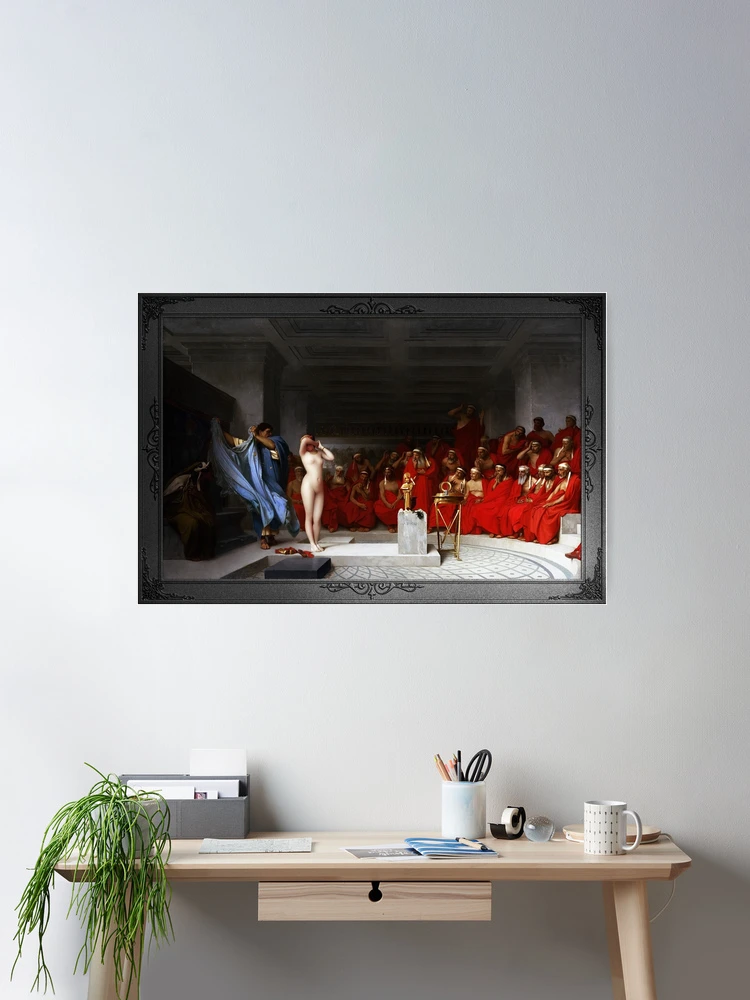
Jean-Leon Gerome„Phryne Revealed Before the Areopagus,“ málað í kring 1861, er sannfærandi verk sögulegrar tegundarmálverks sem sækir mikið í klassíska fornöld. Það sýnir dramatískt atriði með rætur í forngrískum réttarfari, sérstaklega réttarhöldin yfir Phryne, frægur kurteisi í Aþenu. Gérôme var þekktur fyrir nákvæma athygli sína á smáatriðum og getu sína til að endurskapa sögulegar aðstæður með ótrúlegri nákvæmni., og þetta verk sýnir þá eiginleika. Málverkið er ekki bara myndskreyting á sögu; þetta er vandlega smíðað tafla sem er hannað til að vekja spennutilfinningu, tilhlökkun, og vægi samfélagslegrar dómgreindar.
Efnisyfirlit
Samsetningaruppbygging & Stilling
Samsetningin er vandlega uppbyggð, leiðbeina auga áhorfandans í gegnum dramað sem þróast. Atriðið gerist í stórum sal, líklega tákna Areopagus, forn Aþenska hirðin sem er þekkt fyrir þyngdarafl sitt og mikilvægi. Byggingarfræðilegir þættir ráða yfir bakgrunninum: háar súlur með íburðarmiklum hástöfum styðja við kistuloft, sem gefur til kynna rými með verulegu valdi og varanleika. Ljós streymir inn frá óséðum upptökum vinstra megin, lýsa upp miðlægu fígúrurnar en varpa löngum skugga sem eykur tilfinningu fyrir dramatík. Salurinn er fullur af sitjandi mönnum, all clad in similar crimson robes, forming a dense audience observing the proceedings. Their uniformity emphasizes their role as collective judges, representing Athenian society’s scrutiny.
Phryne: Aðalpersóna
At the heart of the composition stands Phryne herself. She is depicted nude, her body rendered with anatomical precision and a classical idealization reminiscent of ancient Greek sculpture. Her pose is one of vulnerability and exposure; she appears to be in the process of disrobing, perhaps as part of an attempt at legal maneuvering or a demonstration of innocence. Her expression is difficult to definitively interpret – it could suggest defiance, resignation, or even a hint of melancholy. The artist avoids any overt display of emotion, í stað þess að velja fíngerða og aðhaldssama lýsingu sem gerir áhorfendum kleift að varpa eigin túlkun á persónu hennar.
Lögfræðingarnir & Stuðningspersónur
Vinstra megin við Phryne stendur maður í rómverskum klæðnaði, líklega talsmaður eða löglegur fulltrúi. Hann er virkur þátttakandi í senunni, halda aftur af dúk eins og hann sýni Phryne fyrir réttinum. Staða hans gefur til kynna ákveðið vald og stjórn á atburðum sem þróast. Lengra til baka, sitjandi fígúrur mynda sjálfan Areopagus. Andlit þeirra eru að mestu hulin af skugga og erfitt er að greina svip þeirra, stuðla að andrúmslofti hátíðleika og óhlutdrægni. Lítið altari eða pallur stendur í forgrunni, Á henni hvílir bronsstytta - sem hugsanlega táknar Aþenu, gyðja viskunnar og réttlætisins, vísar á lúmskan hátt til guðlegrar viðurlögunar sem liggur til grundvallar Aþenskum lögum.
Tæknikunnátta Gérôme & Listræn áhrif
Leikni Gérôme á raunsæi er augljóst í gegnum málverkið. Áferð efnanna, mýkt húðar Phryne, og svalur marmarinn í byggingareiningunum er sýndur af ótrúlegri trúmennsku. Notkun hans á chiaroscuro – dramatísk andstæða ljóss og skugga – eykur dýptartilfinningu og skapar leikrænt andrúmsloft.. Verkið endurspeglar djúpan áhuga Gérôme á klassískri fornöld og löngun hans til að endurskapa sögulegar senur af nákvæmni og áreiðanleika. Hann var undir áhrifum frá fyrri meisturum eins og Jacques-Louis David, en hann þróaði sinn eigin sérstaka stíl sem einkenndist af nákvæmum smáatriðum og áherslu á skýrleika frásagnar.. The painting’s composition also draws inspiration from theatrical staging, creating a sense of dramatic tension that engages the viewer directly.
Sögulegt samhengi & Túlkun
The story behind “Phryne Revealed Before the Areopagus” is rooted in ancient Greek history. Phryne was a renowned courtesan known for her beauty and wealth. She was accused of impiety and brought before the Areopagus. According to accounts, she offered a substantial bribe to the court officials, which was then used to fund the construction of a statue of Hermes at the Temple of Ares. The painting captures this moment of legal drama, focusing on the tension between Phryne’s vulnerability and the power of the Athenian court. While Gérôme’s work is based on historical accounts, it also transcends mere illustration; það kannar þemu réttlætis, samfélagslega dómgreind, og margbreytileika mannlegra samskipta innan ákveðins menningarsamhengis.
Arfleifð & Mikilvægi
„Phryne Revealed Before the Areopagus“ er enn eitt af frægustu verkum Jean-Léon Gérôme. Það sýnir kunnáttu hans sem sögulegs málara og hæfileika hans til að búa til sannfærandi frásagnir með nákvæmum smáatriðum og dramatískri samsetningu.. Málverkið hefur verið dáð fyrir tæknilega virtúósíu, hugvekjandi andrúmsloft hennar, og könnun þess á tímalausum þemum sem tengjast lögfræði, siðferði, og ástand mannsins. Það heldur áfram að vera rannsakað af listfræðingum og metið af áhorfendum fyrir varanlegan kraft og sögulega þýðingu.
Skreyttir kommur sem notaðir eru í þessu verki eru fáanlegir á HeritageType
Listamaður Bio fenginn frá Wikipedia.org
Jean-Leon Gerome (11 maí 1824 – 10 janúar 1904) var franskur málari og myndhöggvari í þeim stíl sem nú er þekktur sem akademísk fræði. Málverk hans voru svo mikið endurgerð að hann var “líklega frægasti núlifandi listamaður heims árið 1880.”[1] Umfang verka hans var meðal annars sögulegt málverk, Grísk goðafræði, Orientalismi, andlitsmyndir, og önnur viðfangsefni, að koma fræðilegri málarahefð á listrænan hápunkt. Hann er talinn einn mikilvægasti málarinn frá þessu fræðitímabili.
Í 1840 hann fór til Parísar, þar sem hann lærði undir Paul Delaroche, sem hann fylgdi til Ítalíu í 1843. Hann heimsótti Flórens, Róm, Vatíkanið og Pompeii. Við heimkomuna til Parísar kl 1844, eins og margir nemendur Delaroche, hann gekk til liðs við atelier Charles Gleyre og stundaði nám þar í stuttan tíma. Hann fór síðan í École des Beaux-Arts. Í 1846 hann reyndi að komast inn í hið virta Prix de Rome, en mistókst á lokastigi vegna þess að fígúruteikning hans var ófullnægjandi.
Málverk hans Hanabardaginn (1846) er akademísk æfing sem sýnir nakinn ungan mann og mjög þunnt drapaða unga konu með tvo slagsmálahana, með Napólí-flóa í bakgrunni. Hann sendi þetta málverk til Parísarstofu í 1847, þar sem það færði honum þriðja flokks verðlaun. Þetta verk var litið á sem fyrirmynd ný-grískrar hreyfingar sem hafði myndast út frá vinnustofu Gleyre (þar á meðal Henri-Pierre Picou og Jean-Louis Hamon), og var keppt af hinum áhrifamikla franska gagnrýnanda Théophile Gautier, umsögn hans gerði Gérôme frægan og hóf feril hans í raun.
Gérôme yfirgaf draum sinn um að vinna Prix de Rome og nýtti skyndilega velgengni sína. Myndir hans The Virgin, Jesúbarnið og heilagur Jóhannes og Anacreon, Bacchus og Eros tóku annars flokks verðlaun á Parísarstofunni í 1848. Í 1849, hann framleiddi myndirnar Michelangelo (einnig kallað In his Studio) og A Portrait of a Lady.
Í 1851, hann skreytti vasa síðar sem Napóleon III Frakklandskeisari bauð Albert prins, nú hluti af konunglega safninu í St. James's Palace, London. Hann sýndi gríska innréttingu, Minjagripur frá Ítalíu, Bakkus og ást, Drukkinn inn 1851; Plágan inn 1852; og An Idyll in 1853
Í 1852, Gérôme fékk umboð til að mála stóra veggmynd af allegórísku efni að eigin vali. Ágústusöld, fæðingu Krists, sem myndi sameina fæðingu Krists og sigraðar þjóðir sem heiðruðu Ágústus, gæti hafa verið ætlað að stæla Napóleon III, sem ríkisstjórnin lét gera veggmyndina og hver var auðkenndur sem a “nýr Ágústus.
Töluverð útborgun gerði Gérôme kleift að ferðast og rannsaka, fyrst inn 1853 til Konstantínópel, ásamt leikaranum Edmond Got, og inn 1854 til Grikklands og Tyrklands og ströndum Dóná, þar sem hann var viðstaddur tónleika rússneskra hermanna við að búa til tónlist undir hótunum um högg.
Í 1853, Gérôme flutti í Boîte à Thé, hópur vinnustofa í Rue Notre-Dame-des-Champs, París. Þetta yrði samkomustaður listamanna, rithöfunda og leikara, þar sem George Sand skemmti tónskáldunum Hector Berlioz, Johannes Brahms og Gioachino Rossini og skáldsagnahöfundarnir Théophile Gautier og Ivan Turgenev.
Í 1854, hann lauk annarri mikilvægri umboði, skreytir kapelluna St. Jerome í kirkjunni St. Séverin í París. Síðasta samfélag hans á St. Jerome í þessari kapellu endurspeglar áhrif skóla Ingres á trúarleg verk hans.
Til allsherjarsýningar á 1855 hann lagði Pifferaro til, Hirðir, og Ágústusöld, fæðingu Krists, en það var hógværa málverkið Afþreying í rússneskum herbúðum sem vakti mesta athygli...
Phryne Revealed Before The Areopagus er lagfærð stafræn list af gömlum meistara eftirgerð af mynd í almenningseign.