

Frine rivelata davanti all'Areopago: Uno studio sul dramma classico
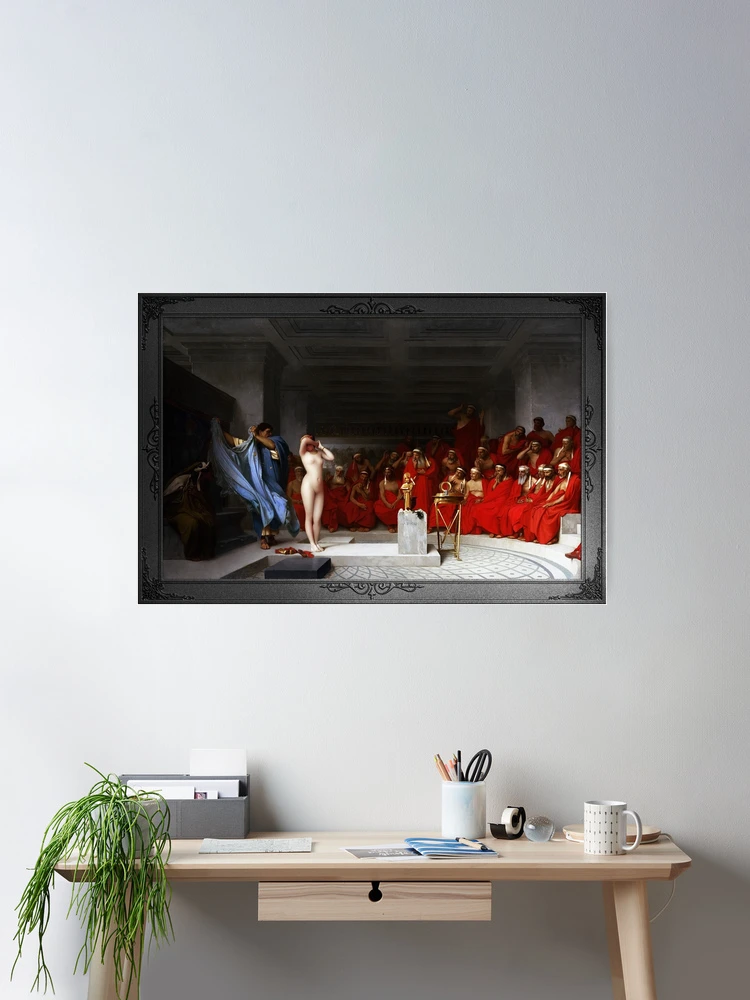
Jean-Léon Gérôme"Fryne rivelata davanti all'Areopago,"dipinto in giro 1861, è un'opera avvincente di pittura di genere storico che attinge fortemente dall'antichità classica. Raffigura una scena drammatica radicata negli antichi procedimenti legali greci, in particolare il processo di Frine, una celebre cortigiana di Atene. Gérôme era rinomato per la sua meticolosa attenzione ai dettagli e la sua capacità di ricreare ambientazioni storiche con notevole accuratezza, e questo pezzo esemplifica quelle qualità. Il dipinto non è semplicemente l’illustrazione di una storia; è un quadro attentamente costruito progettato per evocare un senso di tensione, anticipazione, e il peso del giudizio sociale.
Sommario
Struttura compositiva & Collocamento
La composizione è meticolosamente strutturata, guidando l'occhio dello spettatore attraverso il dramma in svolgimento. La scena si svolge all'interno di una grande sala, probabilmente rappresenta l'Areopago, l'antica corte ateniese nota per la sua gravità e importanza. Gli elementi architettonici dominano lo sfondo: alte colonne con capitelli ornati sostengono un soffitto a cassettoni, suggerendo uno spazio di notevole autorità e permanenza. La luce fluisce da una fonte invisibile a sinistra, illuminando le figure centrali proiettando lunghe ombre che aumentano il senso del dramma. La sala è piena di uomini seduti, tutti vestiti con simili vesti cremisi, formando un folto pubblico che osservava il procedimento. La loro uniformità sottolinea il loro ruolo di giudici collettivi, rappresentando il controllo della società ateniese.
Frine: La figura centrale
Al centro della composizione c'è la stessa Phryne. È raffigurata nuda, il suo corpo reso con precisione anatomica e un'idealizzazione classica che ricorda l'antica scultura greca. La sua posa è di vulnerabilità ed esposizione; sembra che sia in procinto di spogliarsi, forse come parte di un tentativo di manovra legale o di dimostrazione di innocenza. La sua espressione è difficile da interpretare in modo definitivo: potrebbe suggerire una sfida, dimissioni, o anche un pizzico di malinconia. L'artista evita qualsiasi manifestazione palese di emozioni, instead opting for a subtle and restrained portrayal that allows viewers to project their own interpretations onto her character.
I responsabili legali & Personaggi secondari
To Phryne’s left stands a man in Roman attire, likely an advocate or legal representative. He is actively engaged in the scene, holding back a drape of fabric as if revealing Phryne to the court. His posture suggests a degree of authority and control over the unfolding events. Further back, seated figures form the Areopagus itself. Their faces are largely obscured by shadow and their expressions are difficult to discern, contributing to an atmosphere of solemnity and impartiality. A small altar or pedestal stands in the foreground, upon which rests a bronze statue – possibly representing Athena, the goddess of wisdom and justice, alludendo sottilmente alla sanzione divina alla base della legge ateniese.
L'abilità tecnica di Gérôme & Influenze artistiche
La maestria del realismo di Gérôme è evidente in tutto il dipinto. Le texture dei tessuti, la levigatezza della pelle di Frine, ed i freschi marmi degli elementi architettonici sono resi con notevole fedeltà. Il suo uso del chiaroscuro – il drammatico contrasto tra luce e ombra – esalta il senso di profondità e crea un'atmosfera teatrale. L'opera riflette il profondo interesse di Gérôme per l'antichità classica e il suo desiderio di ricreare scene storiche con accuratezza e autenticità. Fu influenzato da maestri precedenti come Jacques-Louis David, ma ha sviluppato il suo stile distintivo caratterizzato da dettagli meticolosi e un focus sulla chiarezza narrativa. The painting’s composition also draws inspiration from theatrical staging, creating a sense of dramatic tension that engages the viewer directly.
Contesto storico & Interpretazione
The story behind “Phryne Revealed Before the Areopagus” is rooted in ancient Greek history. Phryne was a renowned courtesan known for her beauty and wealth. She was accused of impiety and brought before the Areopagus. According to accounts, she offered a substantial bribe to the court officials, which was then used to fund the construction of a statue of Hermes at the Temple of Ares. The painting captures this moment of legal drama, focusing on the tension between Phryne’s vulnerability and the power of the Athenian court. While Gérôme’s work is based on historical accounts, it also transcends mere illustration; esplora temi di giustizia, giudizio sociale, e la complessità delle relazioni umane all'interno di uno specifico contesto culturale.
Eredità & Significato
“Fryne rivelata davanti all’Areopago” rimane una delle opere più celebri di Jean-Léon Gérôme. Esemplifica la sua abilità di pittore di genere storico e la sua capacità di creare narrazioni avvincenti attraverso dettagli meticolosi e composizione drammatica. Il dipinto è stato ammirato per il suo virtuosismo tecnico, la sua atmosfera evocativa, e la sua esplorazione di temi senza tempo legati al diritto, moralità, e la condizione umana. Continua ad essere studiato dagli storici dell'arte e apprezzato dal pubblico per il suo potere duraturo e il suo significato storico.
Gli accenti decorativi utilizzati in questo pezzo sono disponibili su HeritageType
Biografia dell'artista derivata da Wikipedia.org
Jean-Léon Gérôme (11 Maggio 1824 – 10 Gennaio 1904) è stato un pittore e scultore francese nello stile ora noto come accademismo. I suoi dipinti erano così ampiamente riprodotti che lo era “probabilmente l'artista vivente più famoso del mondo nel 1880.”[1] La gamma della sua opera includeva la pittura storica, mitologia greca, orientalismo, ritratti, e altri soggetti, portando la tradizione della pittura accademica a un culmine artistico. È considerato uno dei pittori più importanti di questo periodo accademico.
Nel 1840 è andato a Parigi, dove ha studiato con Paul Delaroche, che accompagnò in Italia in 1843. Ha visitato Firenze, Roma, il Vaticano e Pompei. Al suo ritorno a Parigi nel 1844, come molti studenti di Delaroche, entrò nell'atelier di Charles Gleyre e lì studiò per un breve periodo. Ha poi frequentato la Scuola di Belle Arti. Nel 1846 ha cercato di entrare nel prestigioso Prix de Rome, ma fallì nella fase finale perché il suo disegno di figura era inadeguato.
Il suo dipinto The Cock Fight (1846) è un esercizio accademico che raffigura un giovane nudo e una giovane donna molto drappeggiata con due galli da combattimento, con il Golfo di Napoli sullo sfondo. Ha inviato questo dipinto al Salon di Parigi di 1847, dove gli è valsa una medaglia di terza classe. Questo lavoro è stato visto come l'epitome del movimento Neo-Grec che si era formato dallo studio di Gleyre (inclusi Henri-Pierre Picou e Jean-Louis Hamon), ed è stato sostenuto dall'influente critico francese Théophile Gautier, la cui recensione ha reso famoso Gérôme e lanciato efficacemente la sua carriera.
Gérôme ha abbandonato il suo sogno di vincere il Prix de Rome e ha approfittato del suo improvviso successo. I suoi dipinti La Vergine, il Bambino Gesù e San Giovanni e Anacreonte, Bacco ed Eros hanno vinto una medaglia di seconda classe al Salon di Parigi in 1848. Nel 1849, ha prodotto i dipinti Michelangelo (chiamato anche Nel suo studio) e Ritratto di signora.
Nel 1851, decorò un vaso poi offerto dall'imperatore Napoleone III di Francia al principe Alberto, ora parte della Royal Collection di St. Palazzo di James, Londra. Ha esposto interni greci, Souvenir dall'Italia, Bacco e Amore, ubriaco 1851; a Paestum 1852; e Un idillio in 1853
Nel 1852, Gérôme ha ricevuto l'incarico di dipingere un grande murale di un soggetto allegorico di sua scelta. L'età di Augusto, la nascita di Cristo, che unirebbe la nascita di Cristo con le nazioni conquistate rendendo omaggio ad Augusto, potrebbe essere stato inteso per adulare Napoleone III, il cui governo ha commissionato il murale e che è stato identificato come a “nuovo Augusto.
Un considerevole anticipo ha permesso a Gérôme di viaggiare e fare ricerche, primo 1853 a Costantinopoli, insieme all'attore Edmond Got, e in 1854 in Grecia e Turchia e sulle rive del Danubio, dove era presente a un concerto di coscritti russi che facevano musica sotto la minaccia di una frustata.
Nel 1853, Gérôme si è trasferito al Tea Box, un gruppo di studi in Rue Notre-Dame-des-Champs, Parigi. Questo diventerebbe un luogo di incontro per artisti, scrittori e attori, dove George Sand ha intrattenuto i compositori Hector Berlioz, Johannes Brahms e Gioachino Rossini e i romanzieri Théophile Gautier e Ivan Turgenev.
Nel 1854, ha portato a termine un'altra importante commissione, decorare la Cappella di St. Girolamo nella chiesa di St. Séverin a Parigi. La sua ultima comunione di St. Girolamo in questa cappella riflette l'influenza della scuola di Ingres sulle sue opere religiose.
All'Esposizione Universale di 1855 ha contribuito Pifferaro, Pastore, e L'età di Augusto, la nascita di Cristo, ma è stato il modesto dipinto Ricreazione in un accampamento russo che ha attirato maggiormente l'attenzione...
Phryne Revealed Before The Areopagus è una riproduzione ritoccata di arte digitale di vecchi maestri di un'immagine di pubblico dominio.