

Portrait Bust Of A Young Girl
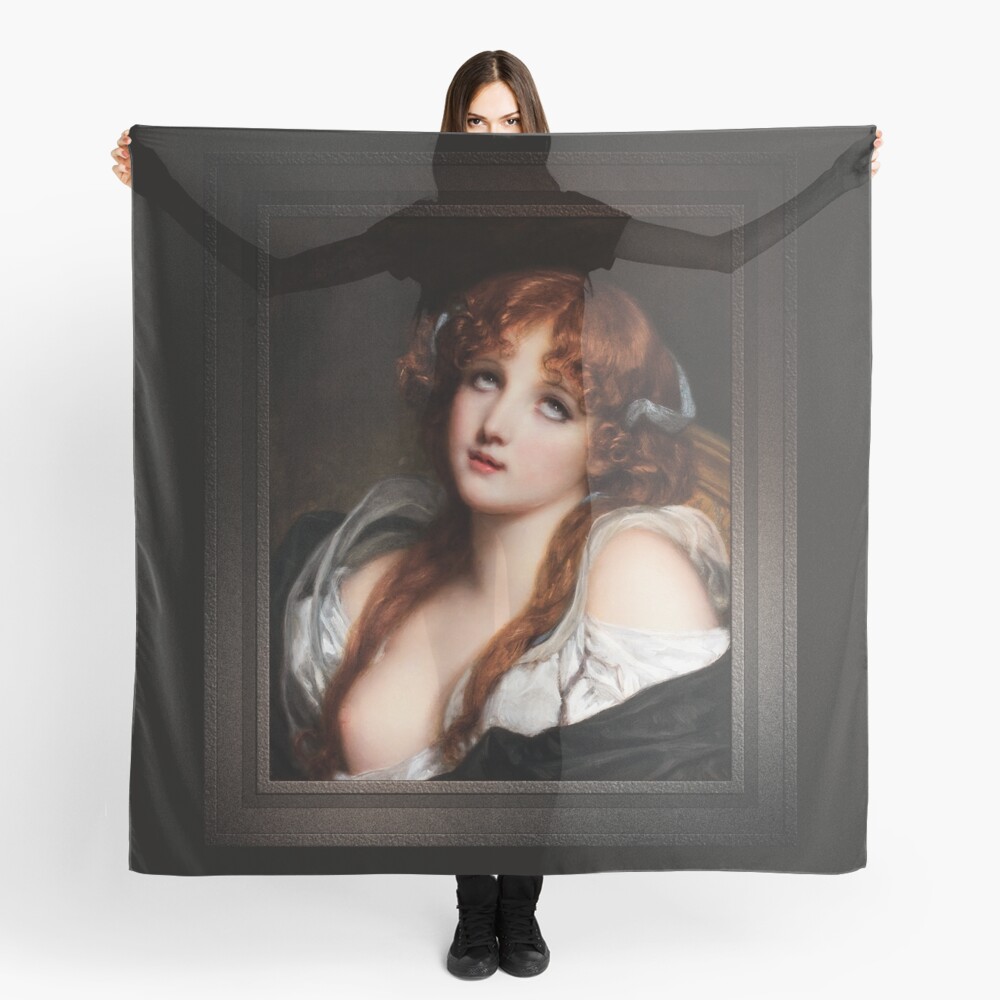
Il dipinto “Portrait Bust Of A Young Girl” creato in 1805 di Jean-Baptiste Greuze (1725 – 1805) captures a moment of delicate yet captivating beauty. Greuze, renowned for his ability to portray both emotional depth and technical precision, paints this young girl in a manner that evokes both innocence and a quiet maturity, fitting seamlessly within the late 18th-century Rococo style. The portrait, though a bust, is rich in detail and expressive in its portrayal of youthful innocence and the unspoken complexities behind a tender gaze.
Sommario
Soggetto e composizione
In questo lavoro, Greuze focuses entirely on the bust of a young girl, her upper body and head filling the frame. The girl is presented in a soft, almost serene posture, her face turned slightly to the left, as if caught in a moment of deep thought or reverie. She gazes upward, her eyes wide yet softened, creating an expression that communicates both youth and vulnerability. Her face is delicately illuminated by soft lighting, which enhances the gentle contours of her cheeks and the curve of her neck, emphasizing her natural beauty.
The subject’s age is hard to determine precisely, though she appears to be in her early teens, a common choice for Greuze in his depictions of young women. This age group, teetering between childhood and adulthood, allows the artist to imbue the portrait with a sense of both innocence and anticipation. The girl’s facial expression remains neutral, though her slightly parted lips and the subtle tilt of her head suggest an underlying introspection or contemplation, as if she is caught between the innocence of childhood and the emerging complexities of adulthood.
The simplicity of her attire adds to the overall elegance of the portrait. The girl is dressed in a loose, flowing white gown, which contrasts subtly against the dark background. The fabric of her dress is rendered with remarkable care, its soft folds accentuating her slender frame and the natural grace with which she holds herself. The artist’s attention to detail in rendering the textures of the fabric against her skin emphasizes the painterly skill that Greuze was known for, as well as his deep understanding of light and shadow.
Background and Mood
The background of the painting is dark and neutral, allowing the viewer’s attention to remain focused on the figure of the girl. Greuze uses a subtle gradient of dark tones to give depth to the composition while ensuring that no element competes with the central subject. The lack of any elaborate or distracting background elements reinforces the mood of quiet introspection. There are no overt distractions or settings in the painting, which allows the subject’s emotional resonance to remain at the forefront.
The mood conveyed by this portrait is one of serenity mixed with a hint of mystery. The young girl’s calm yet slightly melancholic expression, coupled with the soft lighting and simple background, evokes a feeling of nostalgia and tenderness. There is a timeless quality to the work, as though the girl exists in a space removed from the pressures of time and place, captured in a fleeting moment of quiet reflection. The subdued tones and absence of bold contrasts create a soft atmosphere, with no sense of urgency, only the peaceful stillness of a moment frozen in time.
The emotional depth of the portrait can be attributed to Greuze’s mastery in rendering subtle psychological nuances. Unlike many portraits from the period that might showcase overt displays of wealth or status, this painting is deeply personal, focusing instead on the quiet expression of the sitter. The girl’s eyes, though wide, do not appear startled; Piuttosto, they seem to observe the world around her with a sense of quiet thoughtfulness, as if the artist has captured a glimpse into her inner world. This adds a layer of complexity to the painting, inviting viewers to consider what the girl might be thinking or feeling at this moment.
Technique and Materials
Greuze’s technical prowess is evident in every brushstroke of the portrait. His use of oil paint allows for a depth of color and texture that contributes to the lifelike quality of the girl’s skin and the fluidity of her gown. The artist’s careful manipulation of light and shadow, particularly in the depiction of the girl’s soft features, contributes to the depth and three-dimensionality of the portrait. Greuze skillfully blends warm tones in the face and skin with cooler tones in the background, further emphasizing the subject’s warmth and presence within the composition.
One of the most striking features of the painting is the texture of the girl’s hair. Rendered with delicate curls and waves, her hair adds an element of softness and movement to the otherwise still and composed portrait. Greuze’s attention to the fine details of her hair contrasts with the simplicity of the gown, allowing the viewer’s eye to follow the gentle contours of the young girl’s form and to appreciate the artist’s ability to capture the subtleties of the human figure. The shadows are carefully placed, highlighting the natural flow of her hair and the soft curve of her neck, which further adds to the overall realism and fluidity of the composition.
Stile artistico e influenza
As a work from the late 18th century, “Portrait Bust Of A Young Girl” fits squarely within the Rococo tradition, characterized by an emphasis on elegance, refinement, and emotional expressiveness. tuttavia, Greuze’s work also bears the hallmarks of the transition towards Neoclassicism, particularly in his use of simplicity and focus on realism. Unlike the more ornate Rococo portraits of the time, Greuze’s portrayal is less concerned with grandiose embellishments and more focused on capturing the quiet inner life of his subject.
Lo stile rococò, known for its light-hearted and playful themes, is evident in the soft, pastel tones and the focus on youthful beauty. tuttavia, Greuze’s particular brand of Rococo incorporates more serious undertones, blending the frivolity of the period with a sense of emotional depth and psychological insight. This balance between lightness and gravitas is what sets Greuze apart from other artists of his time and gives his portraits their timeless appeal.
Conclusione
“Portrait Bust Of A Young Girl” by Jean-Baptiste Greuze is a masterful representation of a young girl caught in a moment of quiet contemplation. Through his skillful use of light, struttura, and subtle emotional expression, Greuze creates a portrait that transcends its immediate context and offers viewers a glimpse into the complexity of youthful innocence. The mood of serenity and introspection, coupled with the technical mastery on display, makes this painting a timeless work of art that continues to resonate with viewers today.
Questa è una riproduzione di vecchi maestri di arte digitale rimasterizzata di un'immagine di dominio pubblico disponibile come stampa su tela online.
Questa creazione di arte digitale, come tutte le opere d'arte che si possono trovare sul sito Web di Xzendor7 è disponibile per l'acquisto online in una varietà di formati di materiali, comprese le stampe su tela, stampe acriliche, stampe in metallo, stampe su legno, stampe incorniciate, manifesti, e come stampe su tela arrotolata in una varietà di formati da 12 pollici a 72 pollici a seconda delle dimensioni dell'opera d'arte effettiva e del negozio di stampa su richiesta da cui scegli di acquistare l'arte.
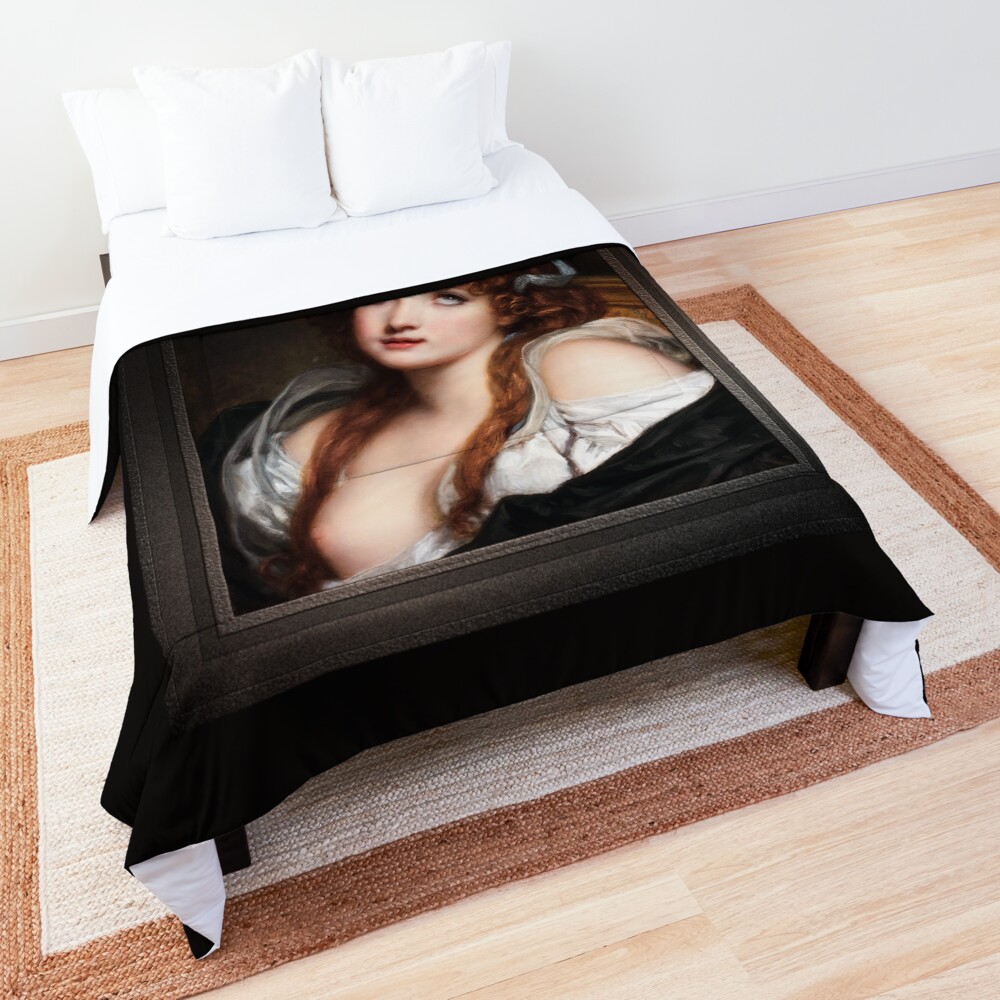
L'opera d'arte è disponibile anche su un'ampia gamma di abbigliamento da uomo e da donna, tazze, borse, sciarpe, quaderni e diari e tanti prodotti per l'arredamento della casa.
Informazioni sull'artista
Le seguenti informazioni sono derivate da La caccia nelle paludi pontine
Jean è nato a Tournus, Francia dentro 1725 come sesto figlio di un maestro piastrellista che riconobbe il suo talento in tenera età; mandandolo a Lione, Francia per studiare con il ritrattista francese Charles Grandon (1691 – 1762).
All'età di circa 30 ha lasciato Lione, e si recò a Parigi, Francia per studiare all'Académie royale de peinture et de sculpture o all'Accademia reale di pittura e scultura; che all'epoca era la principale istituzione artistica della Francia durante l'ultima parte dell'Ancien Régime (Antico Regime ~1500 a 1789), fino alla sua abolizione 1793 durante la Rivoluzione francese.
Fotoritocco del busto ritratto di una giovane ragazza di Jean-Baptiste Greuze
Sebbene di grande talento e di grande successo durante gli anni Sessanta e Settanta del Settecento, avere mecenati del calibro della marchesa de Pompadour (1721 – 1764), L'imperatrice Caterina II di Russia (R. 1762 – 1796), e Ange Laurent di La Live de Jully (1725 – 1779); la sua natura ribelle e i conflitti con i funzionari dell'Accademia e del Salon si sarebbero rivelati la sua sfortuna; soprattutto dopo il suo matrimonio con Anne Marie Babuty nel 1759; il che si sarebbe rivelato un disastro per lui, poiché si sapeva che aveva avuto varie relazioni con i suoi studenti e modelli, che gli causò la perdita di reddito e l'umiliazione pubblica.
Quando il matrimonio finì 34 anni dopo sua moglie ricevette un sostanzioso risarcimento, che lo lasciò in gravi difficoltà finanziarie e al momento della sua morte 1805 all'età di 80 era quasi al verde.