

Portræt af Isabella d Este
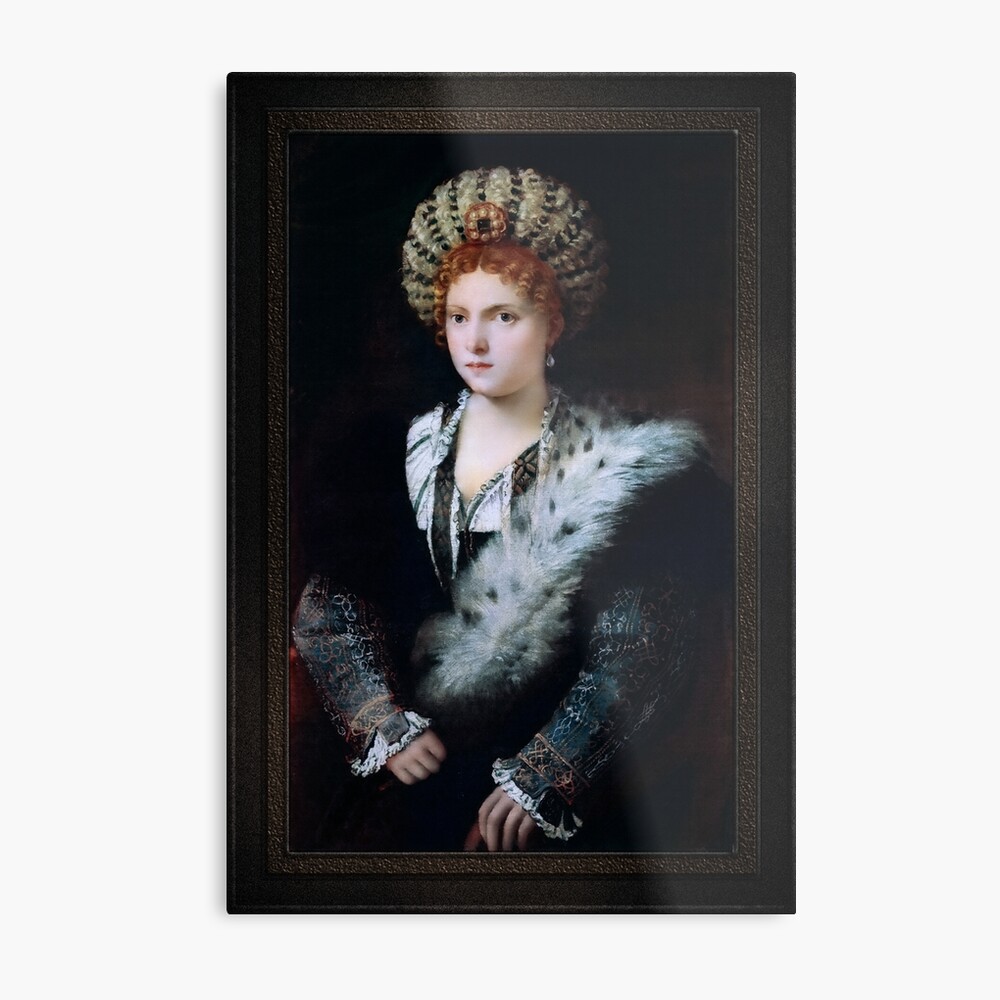
Portræt af Isabella d Este (Portræt af Isabel af Este – 1534 – 1536) af den italienske maler Tiziano Vecellio (Titian 1488 – 1576); var en del af kunstbevægelserne i højrenæssancen og manismen; og blev anset for at være den mest alsidige af italienske malere, der demonstrerede stor dygtighed til at male portrætter, landskabsbaggrunde, mytologiske og religiøse emner.
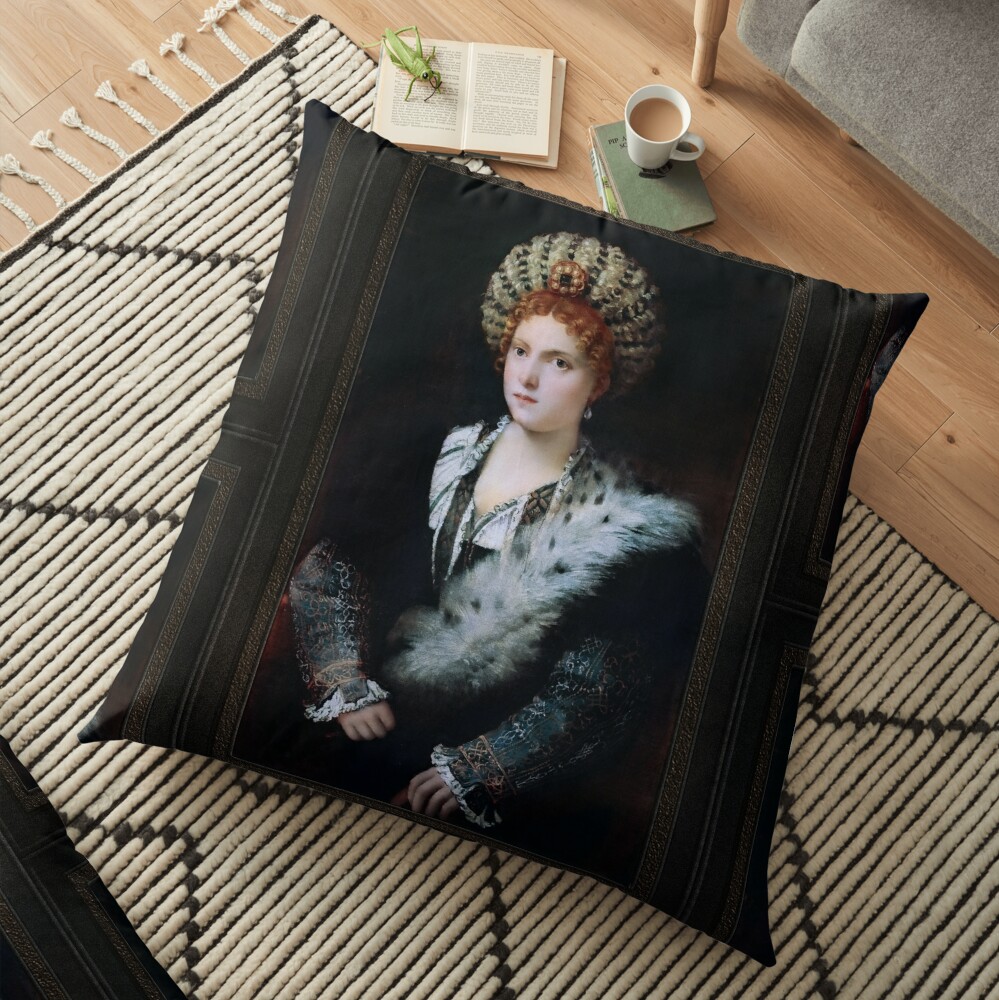
Dette portræt d'Isabella d'Este af Titian er et af to portrætter, han lavede af hende; the other portrait was commissioned in 1529 Isabella in Red (or Aged Isabella); and is known through a copy that was done by Peter Paul Rubens.
The Portrait d’Isabella d’Estedepicted; is not of the much older and mature Isabella. The original portrait displeased her so much, that she commissioned a second idealized portrait (this one) of her from Titian, showing what she may have looked like 40 years earlier (she was about 62 years of age at the time of the second painting).
Hun bestilte også portrætter af andre tidens store kunstnere som Leonardo da Vinci og Andrea Mantegna.
Portrait d'Isabella d'Este er en retoucheret digital kunst gamle mestre gengivelse af et offentligt image.
Info nedenfor stammer fra Wikipedia.org
Tiziano was the sone of Gregorio Vecellio and his wife Lucia. His father was a distinguished councilor, soldier, and the superintendent of the castle of Pieve di Cadore; he also managed the local mines of the region for their owners.

Han blev født i Pieve di Cadore, i nærheden af Belluno, which was at the time, the Republic of Venice; and during his lifetime was called da Cadore, which is taken from his native region; Cadore.
The exact date of his birth is unknown, but he claimed in a letter to Philip II, King of Spain when he was an old man to have been born in 1474; even though many scholars debate this, based on writings of contemporaries his own age; putting his birth as early as 1473 to as late as 1490.
Many of Tiziano’s family members including his grandfather, were notaries and the family was well established in Cadore, which was ruled by Venice; og i en alder af ca 10 eller 12 Tiziano and his brother were sent to one of his uncles in Venice to find an apprenticeship with a painter.
This was accomplished with the help of Sebastian Zuccato a minor painter in Venice, hvis sønner blev kendte mosaikere (Mosaic Artist). Zuccato was able to arrange a position for the brothers to enter the studio of the elderly Gentile Bellini, and later they transferred over to the studio of his brother Giovanni Bellini; who at the time, were the leading artist of the city.
Tiziano Vecelli who is commonly known as Titian was an Italian painter of the Renaissance period, and is considered to be the most important member of the 16th century Venetian school; and his brother later became a respected painter in Venice.
Tiziano is recognized by his contemporaries as “Solen midt i små stjerner”; a statement that recalls the final line of Dante’s Paradiso; as he was one of the most versatile Italian painters that had no painting limitations.
He was equally capable of painting portraits, landskaber, religious and mythological subjects with elegance and grace with ease; and his painting methods especially in the use of color, had a profound influence on the painters of the late Italian Renaissance as well on the future artist of Western art.
Tiziano Vecelli along with Giorgione are considered to be the founders of the Venetian School of Italian Renaissance painting; and his career was established from the start as he was highly sought after by many patrons from Venice, then by the North Italian Princes and lastly by the Habsburgs and the Papacy.
As Tiziano matured as an artist the artwork created by him also changed; and although it was much different than the artwork he created in his youth; his use of color in his pieces did not.
Much of his later pieces do not show the vivid, luminous tints which were a strong point in his early works; but the loose brushwork and subtlety of tone remained and are considered to be without precedent in the history of Western painting.