

Dealbh de bhean-uasal
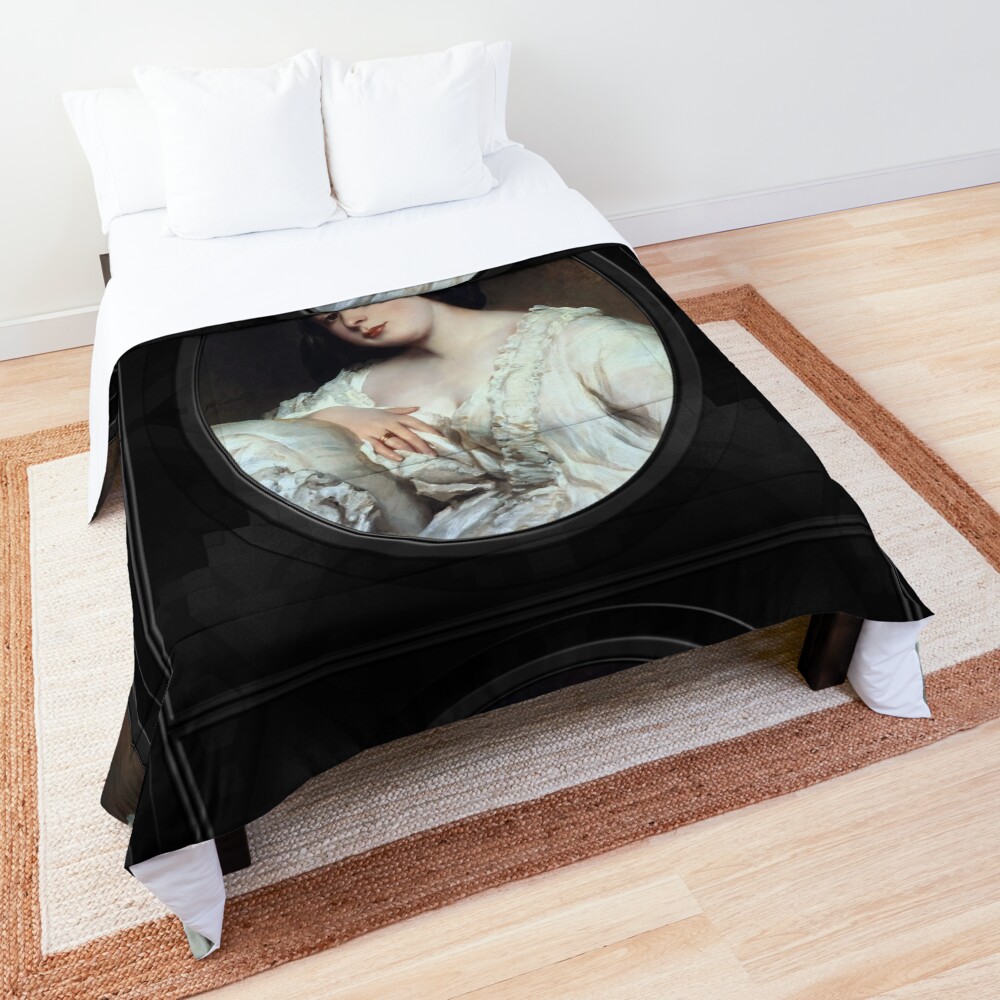
Franz Xaver Winterhalter Dealbh de bhean-uasal (c. 1850s) a’ seasamh mar fhìor riochdachadh de dhealbhan Eòrpach meadhan na 19mh linn. Winterhalter (1805 – 1873), neach-ealain Gearmailteach a tha ainmeil airson a shàr lìomhaidh, obraichean eireachdail; agus bràthair nas sine don pheantair Gearmailteach Hermann Fidel Winterhalter (1808 – 1891), gu tric a 'peantadh uaislean agus elite na Roinn Eòrpa, gan glacadh ann an dòighean a chomharraich an dà chuid an sùbailteachd agus an ùrachadh.
An dealbh seo, eisimpleir de a mhaighstireachd, a’ nochdadh boireannach ann an suidheachadh fìnealta, a faireachdainn brònach fhathast deiseil air a dhealbhadh leis a’ bhog, càileachd cha mhòr ethereal a h-aodach agus an suidheachadh. Tha aire mhionaideach an neach-ealain gu mion-fhiosrachadh, agus a chomas air inneach beò agus tònaichean blàth a chruthachadh, an cuspair a thoirt beò le fìor-eòlas agus gràs iongantach.
Clàr-innse
An cuspair agus an sgrìobhadh
Tha an dealbh faisg air boireannach òg, is dòcha bho na clasaichean àrda Eòrpach, air sgàth sòghalachd agus càileachd an èideadh aice. A ghùn geal, air a chomharrachadh le ruffles bog agus pasgain toinnte, a’ slaodadh gu socair thairis air a guailnean agus a broilleach, cruthachadh mothachadh air gluasad agus gràs.
Tha an dòigh ciùin ach enigmatic aice aig cridhe a’ phìos, a’ tarraing aire an neach-coimhead gu na feartan fìnealta aice. Falt dorcha na mnatha, dealachadh sa mheadhan agus air a stialladh ann an rèidh, dòigh fo smachd, gu math eadar-dhealaichte bho aodach aotrom an dreasa aice, ag àrdachadh an cothromachadh iomlan de sholas is dorcha taobh a-staigh an t-suidheachaidh.
Tha a làmh na laighe gu aotrom air a h-uchd, meuran air an sgaoileadh gu grinn, le fàinne ri fhaicinn air a làimh chlì, a’ comharrachadh a h-inbhe agus ’s dòcha dàimh no dualchas cudromach. Tha an gluasad seòlta a’ cur àile de ghrinn agus de dh’ uaislean ris an t-sealladh, a 'toirt a-steach urram a' chuspair. Bidh Winterhalter a’ glacadh inneach bog a craiceann agus soilleireachd tòn a craiceann leis an aon urram ’s a tha e a’ toirt do aodach a ghùn. Tha seo na chomharradh air an stoidhle aige, obsession le inneach a chuireas ri càileachd beatha nan cuspairean a pheant e.
Stuthan agus innleachd
Bha Winterhalter ag obair le ola, a’ cleachdadh dòigh sreathach a leig leis doimhneachd agus nuance iongantach a choileanadh anns na dathan aige. Am bog, Tha nàdar cha mhòr thar-shoilleir ann an dreasa geal na boireannach a’ nochdadh comas Winterhalter a bhith a’ faighinn eòlas air subtleties aodach, a’ cruthachadh inneach beò a ghlacas an dòigh anns a bheil solas ag eadar-obrachadh le diofar stuthan. Stuth a craiceann, fìnealta agus soilleir, is painted with equal precision, as is the smoothness of her black hair, which appears to shimmer under the light.
The use of shadows in the portrait is also striking. Winterhalter’s mastery of chiaroscuro, where light and dark are carefully balanced, gives the painting a sense of three-dimensionality, making the subject appear as though she could step off the canvas. The background is softly blurred, le dorch, muted tones that help the figure stand out sharply. An innleachd seo, which blurs the boundary between figure and ground, is characteristic of the artist’s work and helps the viewer focus entirely on the subject, free from distraction.
Cuspair agus mood
The overall theme of this portrait can be understood as one of quiet elegance, far a bheil bòidhchead, uaislean, agus tha ùrachadh air a riochdachadh chan ann tro ghluasadan mòra ach tro mhisneachd agus bacadh. A ' bhean-uasal anns an dealbh a, fhad ‘s a bha e air a sgeadachadh ann an dreasa eireachdail, chan eil e a 'cur an cèill aoibhneas no aoibhneas follaiseach. An àite sin, tha àile de mheòrachadh sàmhach no 's dòcha melancholy. Tha an droch abairt aice a’ nochdadh introspection, 's dòcha a' toirt iomradh air a' chuideam no na dùilean sòisealta a chuireadh air boireannaich sa chlas aice rè na h-ùine sin.
Tha faireachdainn an deilbh sàmhach agus urramach. Am paileas dath sàmhach, le cuideam air gealagan bog, dubhagan, agus donn blàth, a’ nochdadh faireachdainn de shàmhchair, fhad ‘s a tha giùlan dèanta na boireannach a’ cur sreath de shòlas ris. A h-gòrach aice, air a stiùireadh beagan air an taobh chlì, coltas meòrachail, mar gu'm biodh i caillte ann an smuain, no 's dòcha a' beachdachadh air rudeigin taobh a-muigh ruigsinneachd an neach-amhairc. Bheir seo càileachd cha mhòr gun ùine don dealbh, as though it captures a fleeting moment in the life of the subject, fear a tha an dà chuid pearsanta agus uile-choitcheann.
An stoidhle Winterhalter
Bha Franz Xaver Winterhalter ainmeil airson a ghrinneachadh, dealbhan rèidh de uaislean agus rìghrean. Tha an stoidhle aige a’ measgachadh eileamaidean de fhìor-eòlas acadaimigeach agus romansachd, a’ glacadh coltas a’ chuspair le mionaideachd agus aig an aon àm a’ dèanamh deagh dhealbh den chruth aca.
Am bog, loidhnichean rèidh, tònaichean feòil a’ soillseachadh, agus tha sgrìobhadh co-chòrdach a’ moladh sealladh eireachdail air an robh fèill mhòr ann am meadhan an 19mh linn, gu h-àraidh anns na cearcaill chùirteil a bhiodh Winterhalter tric a' peantadh airson. Fhad ‘s a tha na cuspairean aige air an toirt seachad gu fìrinneach, tha eileamaid de stoidhleachadh anns an dòigh anns a bheil e a’ cur cuideam air eireachdas agus suidheachadh, a’ taisbeanadh a luchd-suidhe mar pharaganan maise agus gràs.
Fòcas bog an cùl-fhiosrachaidh, le glè bheag de mhion-fhiosrachadh, a’ leigeil leis a’ chuspair a bhith aig cridhe na h-obrach. An innleachd seo, còmhla ri sgil Winterhalter ann a bhith a’ glacadh faireachdainn agus caractar daonna, rinn teaghlaichean rìoghail agus uaislean iarrtas mòr air na dealbhan aige.
Àrainneachd an dealbh, còmhla ri stoidhle caractar an neach-ealain, a’ bruidhinn ri luachan sòisealta is cultarail an ama: air leth freagarrach airson bòidhchead ath-leasaichte, inbhe a’ chuspair, agus miann an neach-ealain a chruthachadh maireannach, ìomhaigh gun ùine de bheatha uaislean.
Co-dhùnadh
Dealbh de bhean-uasal le Franz Xaver Winterhalter fhathast na dheagh phìos de dhealbhan bhon 19mh linn. Le mion-fhiosrachadh eireachdail, aire chùramach do ghiùlan a’ chuspair, agus eadar-chluiche seòlta an t-solais agus an sgàile, tha an obair a’ toirt a-steach a’ ghràs agus an sòghalachd air an robh Winterhalter ainmeil.
Tha an dealbh a’ glacadh chan e a-mhàin coltas corporra a’ chuspair ach bidh e cuideachd a’ togail faireachdainn agus faireachdainn an ama, fear de bhòidhchead agus de shealladh sàmhach. Comas Winterhalter air caractar a’ chuspair a nochdadh, tro gach cuid inneach fìnealta a h-aodach agus an dòigh-labhairt adhartach air a h-aodann, a’ dèanamh an dealbh seo na theisteanas maireannach air àrd ealain dhealbhan-camara ann an linn Bhictòria.
Tha Portrait of a Lady na ath-riochdachadh seann mhaighstirean ealain didseatach de ìomhaigh raon poblach.
Neach-ealain Bios bho Wikipedia.org
Rugadh Franz Xaver Winterhalter ann am baile beag Menzenschwand, (a-nis na phàirt de Sankt Blasien), ann an Coille Dhubh na Gearmailt[1] ann an Luchd-taghaidh Bhàidean, air 20 A 'Ghiblean 1805.[2] B’ esan an siathamh leanabh aig Fidel Winterhalter (1773—1863), tuathanach agus riochdaire roisinn anns a’ bhaile, agus a bhean Eva Meyer (1765—1838), na bhall de theaghlach Menzenschwand a bha stèidhichte o chionn fhada.
Bha athair de luchd-tuatha agus bha buaidh chumhachdach aige na bheatha. De na h-ochdnar bhràithrean is pheathraichean, cha mhair ach ceathrar 'nan leanabachd. Fad a bheatha dh ’fhan Franz Xaver gu math faisg air a theaghlach, gu sònraichte dha bhràthair Hermann (1808–1891), a bha cuideachd na pheantair.
Às deidh dha a dhol dhan sgoil aig manachainn Bhenedictine ann an St.. Blasien, Dh ’fhàg Winterhalter Menzenschwand a-steach 1818 aig aois 13 sgrùdadh a dhèanamh air dealbh agus gràbhaladh. Rinn e trèanadh mar neach-dealbhaidh agus lithographer ann am bùth-obrach Karl Ludwig Schüler (1785–1852) ann am Freiburg im Breisgau. Ann an 1823, aig aois 18, chaidh e gu Munich, le taic bhon neach-gnìomhachais Baron von Eichtal (1775–1850).
Ann an 1825, chaidh stìpean a thoirt dha le Ludwig I., Grand Duke of Baden (1763–1830) agus thòisich e air cùrsa sgrùdaidh aig Acadamaidh nan Ealan ann am Munich còmhla ri Peter von Cornelius (1783–1867), bha na dòighean acadaimigeach aige ga fhàgail mì-chofhurtail. Lorg Winterhalter comhairliche nas congenial anns an dealbhadair fasanta Eòsaph Karl Stieler (1781–1858). Rè na h-ùine seo, thug e taic dha fhèin ag obair mar lithographer.
Chaidh Winterhalter a-steach do chearcaill cùirte nuair a bha e a-staigh 1828 thàinig e gu bhith na mhaighstir dealbhaidh gu Sophie Margravine à Baden, aig Karlsruhe.[6] Thàinig an cothrom aige e fhèin a stèidheachadh taobh a-muigh ceann a deas na Gearmailt 1832 nuair a bha e comasach dha siubhal dhan Eadailt, 1833–1834, le taic bho Grand Duke Leopold à Baden. Anns an Ròimh rinn e seallaidhean gnè romansach ann an dòigh Louis Léopold Robert agus cheangail e e fhèin ri cearcall stiùiriche Acadamaidh na Frainge, Horace Vernet. Nuair a thill e gu Karlsruhe, pheant e dealbhan de Grand Duke Leopold à Baden agus a bhean, agus chaidh ainmeachadh mar pheantair don chùirt grand-ducal.
A dh'aindeoin sin, dh ’fhàg e Baden gus gluasad dhan Fhraing, far an do tharraing an sealladh gnè Eadailteach Il dolce Farniente fios aig Salon of 1836. Chaidh Il Decameron bliadhna an dèidh sin a mholadh cuideachd; tha an dà dhealbh nan sgrìobhaidhean acadaimigeach ann an stoidhle Raphael. Ann an Salon of 1838 sheall e dealbh de Phrionnsa Wagram còmhla ri a nighean òg. Cha b’ fhada gus an deach a chùrsa-beatha mar pheantair dhealbhan a dhèanamh cinnteach nuair a pheant e Louise Marie à Orleans san aon bhliadhna, Banrigh na Beilge, agus a mac. Is dòcha gur ann tron dealbh seo a thàinig Winterhalter gu aire Maria Amalia às an Dà Sicilies, Banrigh na Frainge, màthair Banrigh na Beilge.