

Portrait of a Lady c1941
Style and Artistic Approach
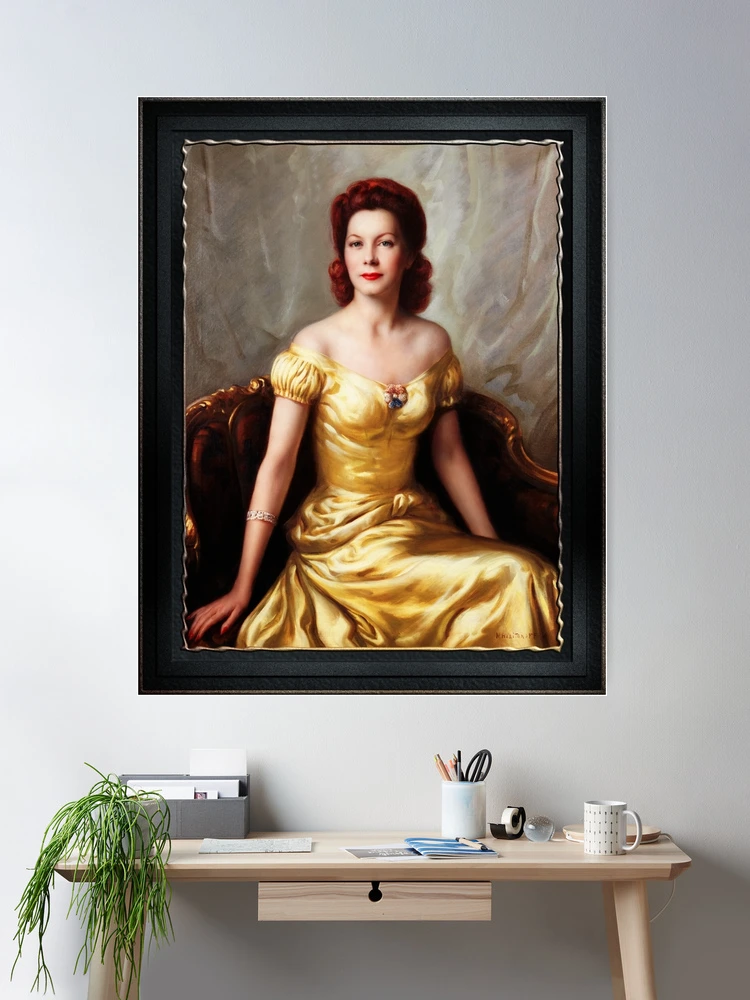
Het schilderij “Portret van een dame” van 1941 by Russian artist Nikolai Vasilievich Kharitonov (1880 – 1944), also known as Nicholas Basil-Haritonoff, is an exquisite example of classical portraiture executed with masterful precision. The artist blends elements of realism with a softer romantic sensibility, capturing the sitter in a moment of dignified grace.
De zachte, gentle contours of the lady’s face, alongside the textured fabrics of her gown, reveal Kharitonov’s profound understanding of human expression and the interplay between light and shadow. His technique appears painstakingly deliberate, from the subtle gradations of color on her complexion to the delicate rendering of her lush, red hair.
The style adheres to the tradition of 19th-century portraiture that emphasizes the character and personality of the sitter. Kharitonov’s precise yet fluid brushwork displays his deep reverence for classical art forms, while also incorporating his own softer touches to create a fresh, modern elegance in the portrait. The piece invites viewers to engage deeply with both the sitter’s inner and outer world, presented through the use of luminous textures and nuanced shading.
Inhoudsopgave
The Subject and Composition
At the heart of the composition is the lady herself, seated with regal composure. Her soft yellow gown, with delicate puffed sleeves, is a striking focal point, and its rich texture seems to flow naturally with the contours of her body. The luxurious fabric of the dress is rendered with remarkable attention to detail, capturing the play of light on its satin surface. De jurk, a symbol of sophistication and refinement, not only enhances the sitter’s noble stature but also adds a sense of timeless beauty to the portrait.
Haar haar, a deep shade of red, is styled in soft waves that frame her face and cascade gently over her shoulders. The meticulously painted curls add a layer of complexity to her personality, suggesting a sense of elegance and a well-maintained poise, suggesting a woman of both confidence and grace. Kharitonov has chosen to focus on the woman’s face, with minimal distractions in the background, allowing the viewer to become fully absorbed in her expression and the subtleties of her attire.
Color Palette and Materials
The artist employs a refined color palette, utilizing warm hues of golden yellow, soft browns, and cream to emphasize both the fabric of the gown and the warmth of the lady’s complexion. The palette of gold and yellow in the dress suggests the affluence and sophistication of the subject.
The soft background tones of beige and gray further enhance the lady’s presence, enveloping her in a light, airy atmosphere. The highlights on her face and shoulders are painted with a luminous quality that lends her a gentle, ethereal presence, almost as though she is illuminated by an inner light. The subtlety of the color transitions, from the darker tones of the folds of her gown to the lighter highlights around her face, speaks to Kharitonov’s expertise in rendering three-dimensionality on a flat canvas.
Kharitonov’s careful use of these colors suggests a careful mastery of oil paint, as the artist has used the medium’s natural properties to create a glowing, almost tactile effect. The intricate shading of the lady’s skin, the softness of the light falling across her features, and the smoothness of the fabric showcase his understanding of texture and depth. Each brushstroke, each layer of paint, builds upon the last to evoke a sense of living, breathing realism.
Expression and Mood
The mood of the portrait is one of quiet elegance and serene dignity. The lady’s expression is calm, composed, and slightly reserved, with her lips held in a soft, almost imperceptible smile. This small, controlled expression suggests an air of mystery and contemplation, inviting the viewer to delve into the inner world of the subject. Haar houding, sitting upright with her hand gently resting on the arm of her chair, reinforces the idea of a woman of noble demeanor and inner strength.
There is an unspoken sense of poise that emanates from the sitter, and Kharitonov’s subtle choices in depicting her facial features—her clear eyes, the soft curve of her cheekbones, and the smoothness of her skin, add to the portrait’s aura of grace. The overall mood is one of quiet refinement, and it evokes a sense of nostalgia for a bygone era of sophistication.
Historical Context and Artist’s Influence
Created during the early 1940s, a time when Russia was embroiled in the Second World War, this portrait seems to stand in stark contrast to the harsh realities of the world. Yet it reflects the enduring resilience of culture, kunst, and beauty amid turmoil. The fashion in the portrait, with its opulent detailing, is reminiscent of the styles popular in the late 19th and early 20th centuries, creating a sense of continuity in Russian portraiture.
Nikolai Vasilievich Kharitonov, like many of his contemporaries, embraced the stylistic principles of the Russian Academy of Arts, grounded in classical traditions. This approach, echter, was infused with his unique sensitivity to light, textuur, and the delicate portrayal of human emotion. His legacy as an artist who deftly merged classical realism with a more contemporary approach to portraiture ensures that works like “Portret van een dame” endure as iconic representations of Russian elegance.
Key Elements
- The Lady: De centrale figuur, poised and graceful, embodies both physical and emotional refinement.
- Gown: The rich golden yellow dress, carefully detailed, becomes a symbol of both opulence and quiet dignity.
- Red Hair: The lady’s red hair, styled in soft waves, adds a layer of depth to her personality.
- Expression: Her gentle, reserved smile hints at a thoughtful and introspective character.
- Samenstelling: The simplicity of the composition, with a minimalistic background, draws the viewer’s attention entirely to the subject.
- Verlichting: The light play across her skin and gown is rendered with an ethereal quality that enhances her presence.
- Achtergrond: The muted beige and gray tones in the background allow the lady’s figure to dominate the space, highlighting her significance.
- Penseelwerk: The soft blending of colors and brushstrokes suggests Kharitonov’s skill in creating lifelike textures.
- Mood: A serene, dignified mood pervades the portrait, evoking both admiration and curiosity.
- Historische context: Created during the turmoil of the Second World War, the painting represents a moment of stillness amidst the chaos.
- Kleurenpalet: Soft tones of gold, geel, and cream contrast with the deeper reds of the lady’s hair.
- Textuur: The smooth rendering of skin and fabric suggests Kharitonov’s mastery of oil painting.
- Simplicity: The lack of complex elements in the background creates a quiet, reflective atmosphere.
- Soft Focus: The softening of features and use of light gives the painting a slightly dreamlike quality.
Portret van een dame is een geretoucheerde digitale kunst oude meesters reproductie van een afbeelding uit het publieke domein.
Artist Bio Courtesy RA-galerij – Russische en internationale beeldende kunst
Nikolai Kharitonov (Nicholas Basil Haritonoff) was een prominente Russische schilder van de Academische School, beschouwen als een briljant portrettist en een meester in het landschapsgenre. Hij was ook een leerling van I. E. Repin, die vroeger ook realisme en impressionistische tendensen in zijn kunstwerken combineerde.
Nikolai Kharitonov werd geboren op december 9, 1880, in een eenvoudige boerenfamilie in het dorp Plishkino (gelegen in de landelijke nederzetting Dubrovskoye, Yelovsky-district, Perm Krai, Rusland), die niet meer bestaat.
Na zijn afstuderen aan de landelijke school, op twaalfjarige leeftijd, Kharitonov ging naar zijn leven met zijn familieleden in St. Petersburg, en kreeg daar een baan in de papierwinkel, en, later, werkte in een werkplaats die gespecialiseerd was in de productie van uithangborden voor winkels.
Nikolai Vasilyevich begon toen zijn artistieke opleiding en carrière op een nogal eigenaardige manier. In de omgeving van 1895 hij ging naar het eiland Valaam, waar hij leerling werd in het Spaso-Preobrazhensky-klooster; terwijl hij daar het grootste deel van zijn tijd doorbracht met het schilderen van iconen en religieuze afbeeldingen gedurende twee jaar; nauwgezet deze oude schilderkunst van de monniken bestuderen.
Bij zijn terugkeer naar St. Petersburg, Kharitonov begon toen lessen te volgen aan de Tekenschool van de Keizerlijke Vereniging voor de Aanmoediging van de Kunsten en begon zijn vaardigheid in tekenen te ontwikkelen in een privé-atelier van een getalenteerde academische schilder en etser, L. E. Dmitriev-Kavkazsky.
In 1901, Nikolai Vasilievich trad toe tot de schilderafdeling van de Hogere Kunstacademie van de Academie voor Beeldende Kunsten, en een jaar later begon hij met trainen in de studio van de beroemde en uitstekende artiest – I. E. Repin.