

Portráid de Mhuire le lucht leanúna
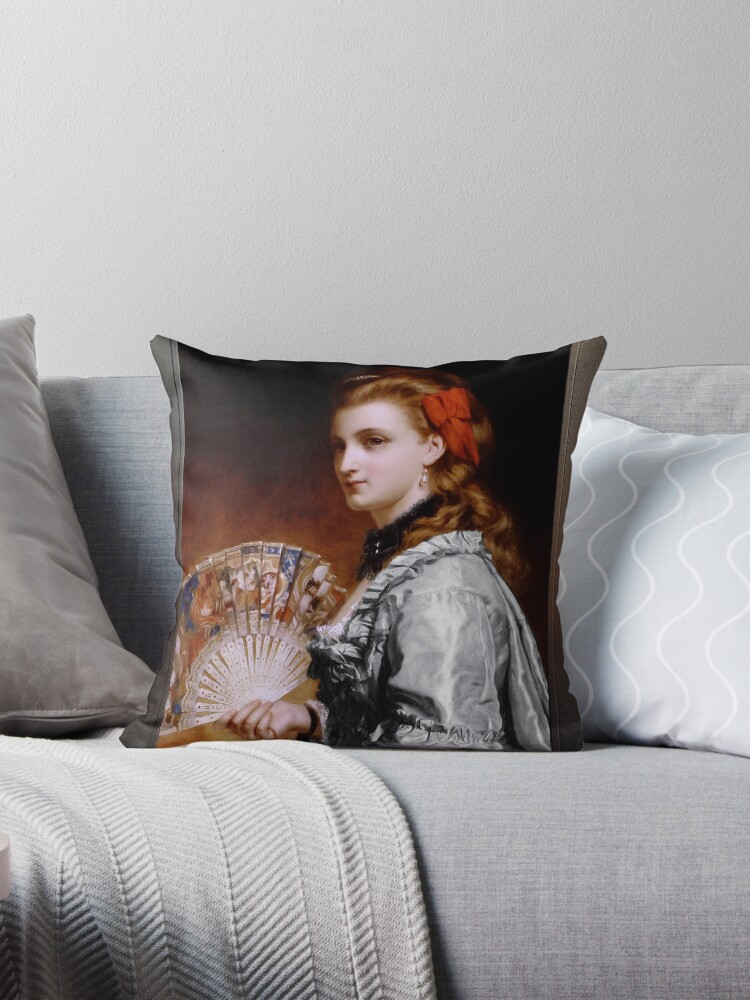
“Portráid de Mhuire le lucht leanúna” Is sampla fíorálainn é den fhócas sa ré Victeoiriach ar phortráidíocht ard-shochaí, críochnaithe ag an bpéintéir mór le rá Briotanach Sir Francis Bernard Dicksee. Rugadh i 1853 agus rith isteach 1928, Bhain Dicksee cáil amach as a chuid léirithe casta agus mothúchánacha de mhná, sonraí míne a chumasc le doimhneacht mhothúchánach. An phortráid seo, críochnaithe ag deireadh an 19ú haois, léiríonn sé bean óg scagtha a bhfuil a galántacht agus a staid féin gafa le cruinneas iontach. Tugann staidiúir galánta an ábhair agus rindreáil máistreacht na n-ábhar a úsáidtear sa saothar ealaíne aer uaisleachta dó., idéalachas, agus charm.
Clár na nÁbhar
Ábhar agus Meon an tSaothair Ealaíne
At the heart of the portrait is the lady herself, who is captured in profile, a subtle smile resting on her lips. She holds an ornately decorated fan delicately in her hand, and her gaze is directed slightly toward the viewer, suggesting an air of contemplation or quiet confidence. Her rich auburn hair is arranged in soft curls, adorned with a vibrant red ribbon, which enhances the visual harmony of the composition. The fan itself, an exquisite object, is displayed prominently in the foreground and serves as a symbolic object of refinement, an accessory typically associated with elegance in Victorian society.
The lady’s attire is equally refined. She wears a flowing gown of soft, cool tones, predominantly gray, with delicate lace and ruffled edges that emphasize the rich textures and fabrics of the time. The fabric drapes gracefully around her figure, suggesting both movement and stillness, a perfect balance that captures the era’s fashion trends. A staidiúir, serene yet assured, exemplifies the quiet dignity expected of a woman in her social standing. The colors and tones in the portrait are warm and inviting, creating an atmosphere of sophistication and tranquility.
The mood of the piece is contemplative, yet there’s a subtle undercurrent of strength. The lady’s expression, though poised and composed, hints at the complex character of a woman who occupies a space between societal expectations and personal depth. She is not simply a passive figure; her presence demands attention, and her posture conveys a sense of self-assurance. There is no rush in her demeanor, amhail is dá mbeadh sí ann lasmuigh de shrianta ama, bascadh i só chiúin a timpeallacht.
Na Ábhair agus Teicníc
Bhí cáil ar Sir Francis Bernard Dicksee as an aird ghéar a thug sé ar mhionsonraí, agus is eiseamláir é an phortráid seo a scil maidir le caolchúis uigeachta agus solais a ghabháil. Ceadaíonn an úsáid a bhaint as péinteanna ola sa saothar ealaíne seo saibhir, bailchríocha lustrous a thugann beatha do na hábhair agus na dromchlaí laistigh den radharc. An bog, Is cosúil go bhfuil fabraic fhrithchaiteach an gúna beagnach inláimhsithe, agus le tuiscint ó sheen jewelry na mná agus an lucht leanúna íogair láimhseáil casta an tsolais agus an scáth. Is teist ar a mháistreacht ar a cheird é cumas Dicksee míne craiceann na mná a thabhairt amach agus chomh casta is atá a gúna lása.
An lucht leanúna, réad áilleachta ann féin, is painted with remarkable detail. The tiny scenes illustrated on the fan—a testament to Victorian artistic tastes—are rendered with precision, the colors and details mirroring the overall mood of the painting. The inclusion of this accessory, combined with the lady’s stance, suggests a narrative of refinement and social standing. The fan does not only serve as an object of beauty but becomes a symbol of grace, communication, and the gentility of the aristocracy.
The background of the portrait is rendered in warm, dark tones that fade softly into the distance. This choice of color not only emphasizes the lady in the foreground but also serves to create a sense of depth within the scene. The subtle gradation of tones between the figure and the background enhances the focus on the subject, allowing her to remain the central element in the composition. The smooth blending of light and shadow gives the portrait a lifelike quality, making it almost seem as if the woman could step out of the frame at any moment.
Stíl agus Téama
Dicksee’s style is rooted in academic realism, which was a dominant artistic approach during the Victorian period. His detailed portrayals of the human figure and his ability to capture the essence of his subjects reflect the high standards of the Royal Academy, where he studied. This portrait is a prime example of his ability to fuse realistic detail with emotional depth, creating works that go beyond mere representation to evoke a sense of personality and atmosphere.
The theme of the portrait reflects Victorian ideals of beauty, mionchoigeartú, agus femininity. Women of the era were often depicted in portraits such as these, which highlighted their societal roles as symbols of elegance and decorum. The portrait’s focus on beauty and grace, coupled with the attention to intricate detail, reflects the period’s preoccupation with portraying the idealized image of womanhood. Fós féin, there is a sense of individuality in this lady’s portrayal, as she seems to transcend the conventional role of the passive subject to emerge as a figure of quiet strength and intelligence.
Conclúid
“Portráid de Mhuire le lucht leanúna” by Sir Francis Bernard Dicksee is a stunning example of Victorian portraiture, encapsulating both the external beauty and the quiet internal strength of its subject. Through his precise technique and understanding of human nature, Dicksee captures the essence of aristocratic elegance, while also suggesting a deeper narrative beneath the surface. The fine details in the gown, seodra, and fan, combined with the warm palette and soft lighting, create a portrait that feels both timeless and intimate. It is a work that honors both the woman it depicts and the artistic tradition it represents.
Seo atáirgeadh seanmháistrí ealaíne digiteach athmháistrithe d’íomhá fearainn phoiblí atá ar fáil mar phriontáil chanbhás ar líne.
Artist Bio Derived from Wikipedia.org
Francis Dicksee was the son of English painter Thomas Francis Dicksee (1819 – 1895) on November 27, 1853; and who along with his sister Margaret Dicksee (1858 – 1903) was taught by his father.
Ag aois 17 Francis enrolled in the British Royal Academy of Art; achieving early success as an artist, and was elected as a member of the Academy in 1891.
I 1921 Francis presented a piece at the first exhibition of the Society of Graphic Art in London, then at the age of 71, became President of the Royal Academy and in 1925 was knighted and named to the Royal Victorian Order by King George V, two years later.