

Portrait Of A Woman c1660
הציור שכותרתו “Portrait of a Woman c1660,” created by the Dutch artist Jan Mytens (1614-1670), is an exquisite representation of 17th-century portraiture during the Dutch Golden Age. In this captivating piece, Mytens expertly captures both the elegance and beauty of his subject while also revealing his skillful use of oil painting techniques. The portrait exudes a sense of aristocratic grace and offers insight into the cultural and social norms of the time, particularly in its depiction of fashion, compositional elements, and the subject’s role in the society of the period.
תוכן העניינים
The Subject of the Portrait
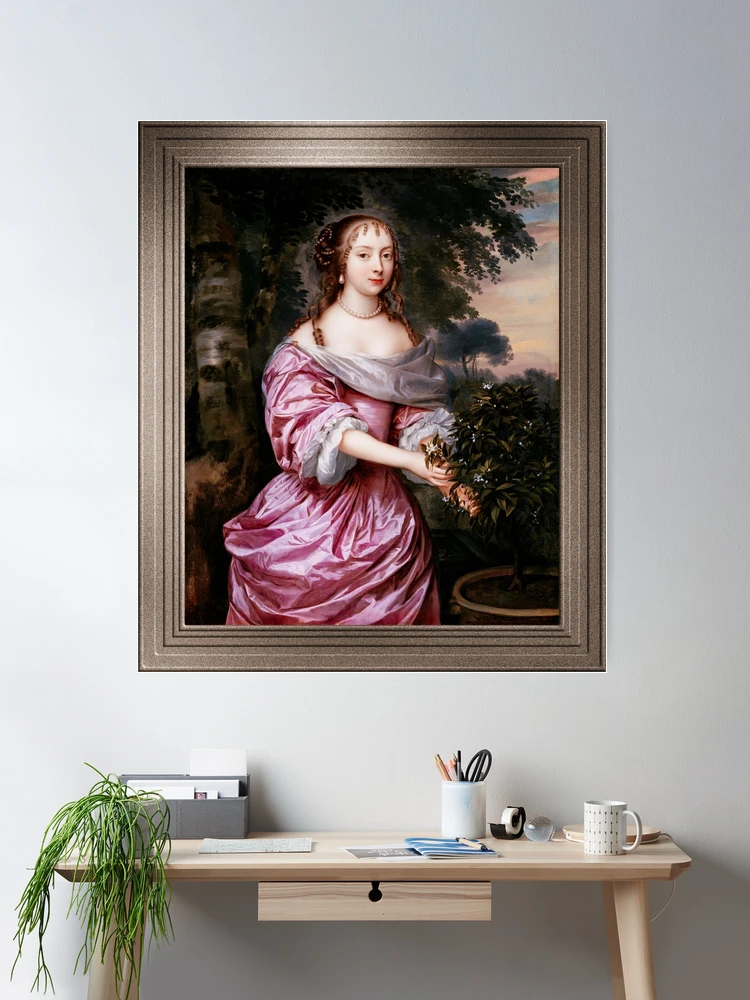
The central figure of the painting is a דיוקן של אישה צעירה whose identity remains unknown, yet she embodies the ideal of feminine beauty in Dutch aristocracy during the 17th century. The woman is portrayed in an outdoor setting, standing slightly to the left, her body turned in a graceful posture.
She is dressed in a luxurious gown made from soft, flowing fabric, predominantly pink and accented with a silvery-grayish drapery across her shoulders and chest. The intricate folds of the dress are rendered with a sense of realism, as they cascade down her body in an almost lifelike manner. The texture of the fabric, especially the smooth, shiny texture of the silken material, highlights Mytens’ exceptional attention to detail.
The woman’s hair is styled in soft, elaborate curls that frame her face and fall down her back. She wears a delicate pearl necklace around her neck, which serves to emphasize her aristocratic status. Her expression is poised, with her soft gaze directed slightly to the side, as if lost in thought or engaged in a distant contemplation. This calm, serene demeanor speaks to the gentle nature attributed to women of high society during this period, portraying an air of refinement and grace.
ההגדרה והרקע
The background of the portrait is equally significant, providing context to the subject’s standing within society. מאחורי האישה, one can observe a lush, גן ירוק, with trees and shrubs carefully arranged to create a sense of depth and tranquility. The foliage, dark and rich, stands in stark contrast to the soft, light hues of the woman’s dress, which allows her to stand out as the focal point of the painting. The sky in the background is painted in subtle tones of light blue and peach, suggesting the time of day as late afternoon or early evening, as if the scene was captured in the quiet hours of a summer day.
The garden setting also holds symbolic meaning. Gardens were often associated with the idea of paradise, a space of cultivated beauty and serenity. בהקשר זה, the garden not only highlights the subject’s elevated social standing but also serves as a metaphor for her own cultivated beauty and refinement. The lush greenery surrounding her further emphasizes her connection to nature and the classical ideals of beauty that were highly regarded during the Dutch Golden Age.
מצב הרוח והאווירה
The overall mood of the portrait is one of calmness and nobility. The softness of the lighting, the serene expression of the subject, and the harmonious blending of colors in the background evoke a sense of peace and tranquility. There is a sense of intimacy between the subject and the viewer, as if the woman is offering a quiet invitation into her world of high society. The balance between the luxurious fabrics of her dress and the natural elements in the background reflects a perfect union between nature and civilization, echoing the cultural ideals of the time.
The lighting in the painting is soft and diffused, with light seeming to come from the left side of the canvas. This gentle illumination casts subtle shadows across the folds of her dress, accentuating the texture and movement of the fabric. The play of light and shadow also serves to bring out the fine details in the face, שֵׂעַר, and hands, adding a sense of three-dimensionality to the portrait.
הסגנון והטכניקה האמנותית
Jan Mytens was a highly skilled portraitist who specialized in capturing the aristocracy and elite members of Dutch society during the Golden Age. His style is characterized by a focus on realism, תשומת לב לפרטים, and a masterful use of light and shadow. בדיוקן הזה, Mytens demonstrates his ability to render the subject’s features with precision and accuracy, while still allowing for a sense of elegance and idealization.
The use of color is particularly striking in this painting. The soft pinks and silvers of the woman’s attire contrast beautifully with the deep greens and earthy tones of the garden behind her. This combination of warm and cool colors creates a pleasing visual harmony, drawing the viewer’s eye towards the subject while also providing a rich, detailed backdrop.
The texture of the painting is also noteworthy. The artist’s brushwork is delicate and refined, particularly in the depiction of the woman’s skin, which appears smooth and luminous. The fabric of her dress is rendered with meticulous attention, showing the movement and flow of the material as it interacts with light. Mytens’ use of oil paints allows him to create layers of depth and richness, giving the portrait a lifelike quality.
מַסְקָנָה
ב “Portrait of a Woman c1660,” Jan Mytens captures not only the physical appearance of his subject but also the essence of her social standing, יוֹפִי, וחסד. Through his skillful technique and meticulous attention to detail, Mytens creates a timeless image that reflects the values of the Dutch Golden Age. The combination of realism, אידיאליזציה, and symbolic elements in the composition make this painting a stunning example of 17th-century Dutch portraiture.
Portrait Of A Woman הוא רפרודוקציה של אמנות דיגיטלית עתיקת יומין של תמונה ברשות הרבים.
האמן ביו באדיבות Getty.edu ו Wikipedia.org
בנו של אוכף אוכף, יאן מיטנס למד לצייר מדודיו אנתוני ואן אופסטל ומאוחר יותר מאת ניקולס ואן דר הורסט עוד כשהיה נער.
בשנות העשרים המוקדמות שלו, הוא התקבל לגילדת הציירים של האג; חמש עשרה שנים מאוחר יותר, הוא הפך למושל הגילדה.
הוא צייר עבור בני מלוכה הולנדים והתמחה בציור דיוקנאות, קטעי ז'אנר, ואלגוריות היסטוריות. Mytens היה מיומן במיוחד בעיבוד הבגדים של הולנדים אמידים.
בעשור האחרון לחייו, הוא הקים את הציירים’ חברת ציור (על ציור), שם בילה את שארית הקריירה שלו ללמד תלמידים על ציור דיוקן.
כל חייו היה מיטנס צייר דיוקנאות אופנתי בהאג. הוא קיבל עמלות מאזרחים בולטים, חברי האצולה, ופקידי ממשל בעלי מעמד גבוה. ניתן לחלק את הדיוקנאות שלו לשתי קבוצות עיקריות: אורך שלושה רבעים בגודל טבעי, ודיוקנאות בחצי אורך של יחידים וקבוצות משפחתיות בקנה מידה קטן. הוא העביר את יושביו’ מעמד גבוה על ידי תיאורם לובשים בגדים ותכשיטים מפוארים.