

Portráid de Bhean Galánta
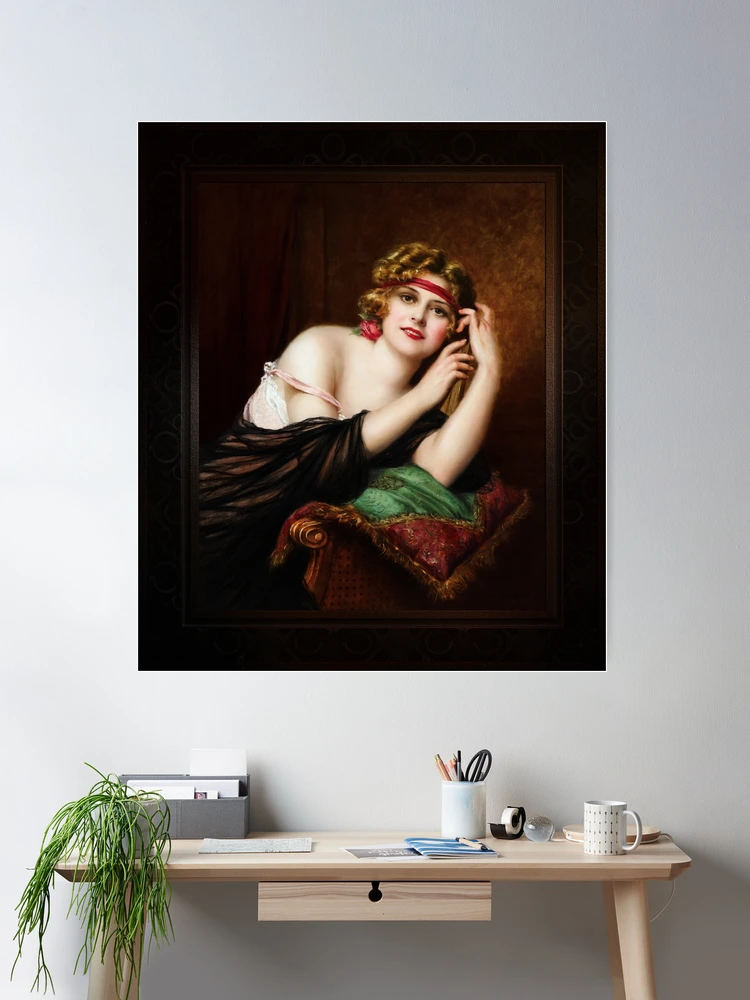
Tá an “Portráid de Bhean Galánta” is péintéireacht iontach é a chruthaigh an t-ealaíontóir Francach François Martin-Kavel (1861 – 1931). Is sampla iontach é an saothar ealaíne de phortráidíocht na Fraince ó dheireadh an 19ú haois agus tús an 20ú haois, ag glacadh le sofaisticiúlacht agus mionchoigeartú na ré. Bhí aithne ag Martin-Kavel ar a mhionsonraithe, pictiúir rómánsaithe de mhná, agus ní haon eisceacht é an píosa seo. Léiríonn an t-ealaíontóir bean a léiríonn grásta, áilleacht, agus allure, ag léiriú a scil i rindreáil uigeachta, éadrom, agus mothúcháin ina ábhar.
Clár na nÁbhar
Ábhar agus Comhdhéanamh
Is í ábhar lárnach na portráide bean atá ina suí go galánta, dhírigh a súil beagán ar shiúl ón lucht féachana. Tá a staidiúir íogair agus a hiompar galánta buailte láithreach. Suíonn sí ar mhaolú saibhir adorned, le luxurious, fabraic glas agus ór balbhaithe thar a hucht, ag cur braistint opulence leis an gcomhdhéanamh. Tá a lámh chlé lúbtha go réidh, ag luí ar an mhaolú, agus a lámh dheas suite in aice a ceann agus í ag coigeartú an ribín dearg a adorns a wavy, gruaig fionn. Ní hamháin go dtugann an comhartha seo nóiméad de elegance ciúin ach cuireann sé béim freisin ar na mionsonraí míne i gruaig an ábhair., atá péinteáilte go cúramach chun toirt agus uigeacht a thabhairt dó.
Tá a léiriú bog ach ag tabhairt cuireadh, le beagán, aoibh gháire a fhios agam a chuireann aer mistéire agus teas leis an giúmar iomlán. Tarraingíonn codarsnacht subtle a craiceann pale i gcoinne an chúlra dorcha aird ar a gnéithe, further emphasizing the artist’s ability to create harmony and balance in his works.
Feisteas agus Gabhálais
The woman in the portrait is dressed in a luxurious, semi-transparent gown made from fine materials. Her attire includes a soft, pink ribbon that rests just above her shoulder and contrasts against the dark, flowing fabric draped across her body. The gown appears to be partially off the shoulder, a style that was fashionable during the late 19th century and evokes a sense of both sensuality and modesty. The artist has paid careful attention to the fabric, capturing its light, delicate texture as it catches the light, which helps convey the richness of the materials used.
Her accessories, including the red ribbon in her hair, provide a subtle but vibrant pop of color against the otherwise soft tones of the portrait. The use of such a detail not only gives the painting an extra layer of depth but also draws attention to the subject’s refined appearance and attention to detail.
Cúlra agus Socrú
The background of the portrait is dark and understated, using muted brown and sepia tones. This choice of background serves to highlight the subject, making her the focal point of the piece. It creates a strong contrast with the woman’s pale complexion, further enhancing her presence in the composition. The softness of the background suggests a sense of tranquility and quiet intimacy, allowing the viewer to focus solely on the woman’s elegant pose and the intricate details of her attire.
While there are no elaborate objects or intricate scenery in the background, the artist uses the cushion and the fabric beneath the subject to convey a sense of luxury and comfort. The subtle gradients and shading in the background reflect the artist’s mastery of light and shadow, drawing the viewer’s attention toward the subject without overwhelming the scene with unnecessary detail.
Stíl agus teicníc
François Martin-Kavel’s style is characterized by his attention to detail and his ability to capture the softness and refinement of his subjects. The painting reflects the academic traditions of the time, with its focus on lifelike portrayal and an emphasis on elegance. The smooth brushwork, particularly in the rendering of the skin and fabric, creates a sense of realism while maintaining a romanticized atmosphere.
Martin-Kavel’s use of light is also significant in the painting. The soft interplay of light and shadow enhances the texture of the fabric and skin, creating a three-dimensionality that brings the portrait to life. The shadows around the subject’s figure add depth to the composition, while the subtle highlights on her face and hands draw attention to the most delicate features, giving the viewer an intimate glimpse into the woman’s serene beauty.
The overall mood of the portrait is one of elegance and grace. It embodies the ideals of femininity and refinement that were celebrated during the turn of the century. The artist’s choice to depict the subject in a moment of quiet contemplation adds a layer of emotional depth, as if the woman is lost in thought or reflecting on something personal. This adds an element of intrigue, inviting the viewer to imagine her story and the world she inhabits.
Téama agus giúmar
The theme of the painting centers on beauty, galánta, agus femininity. It captures a moment of timeless grace, emphasizing the inner strength and delicate nature of the subject. The mood is tranquil, suaimhneach, and contemplative, inviting the viewer to appreciate the quiet allure of the woman in the portrait. There is no urgency in her expression or posture; ina ionad, she embodies a sense of poise and confidence, which is enhanced by the artist’s careful rendering of her features and attire.
The use of muted tones in the background and the rich, opulent fabrics in the foreground also contribute to the overall theme of refinement and luxury. The viewer is invited to not only admire the subject’s beauty but to also appreciate the artist’s skill in capturing a moment of elegance that transcends time.
Conclúid
François Martin-Kavel’s “Portráid de Bhean Galánta” is a stunning representation of late 19th-century French portraiture. The artist’s technical mastery and attention to detail bring the subject to life, highlighting the softness of the fabrics, the smoothness of the skin, and the intricate details of the accessories. The portrait captures the timeless beauty of femininity, creating a narrative of grace, poise, and contemplation. Through this painting, Martin-Kavel invites the viewer into a world of elegance, áit a bhfuil neart ciúin agus draíocht an ábhair ag teacht le tarraingteacht gan teorainn.
Is é atá i gceist leis seo ná sean-mháistrí ealaíne digití atáirgeadh ar íomhá fearainn phoiblí.
Ealaíontóir Bith Díorthaithe Ó Artnet.com
Péintéir seánra Francach ba ea François Martin-Kavel is fearr aithne air mar gheall ar a phortráidí idéalaithe de mhná óga áille, a léirigh sé go minic i bhfeistis coimhthíocha nó i dteidil nocht.
Is minic a phéinteáil Martin-Kavel a phortráidí mná go minic i gcomhdhéanamh láraithe a bhí timpeallaithe ag cúlraí dorcha fabraice, agus soilsithe go hamharcach amhail is dá mba trí aire a bhí ag taitneamh ar an tsamhail.
Cé go bhfuil aithne ag François air mar gheall ar a phortráidí mná coitianta, bhí cáil air freisin mar gheall ar a shaothar ealaíne bláthanna agus a phictiúir tírdhreacha; agus bhí sé ina thaispeántóir rialta ag an Salon des Artistes Français.
Mar bhall den salon, bronnadh bonn air as a chuid oibre ealaíne i 1881.