

Dealbh de bhoireannach eireachdail
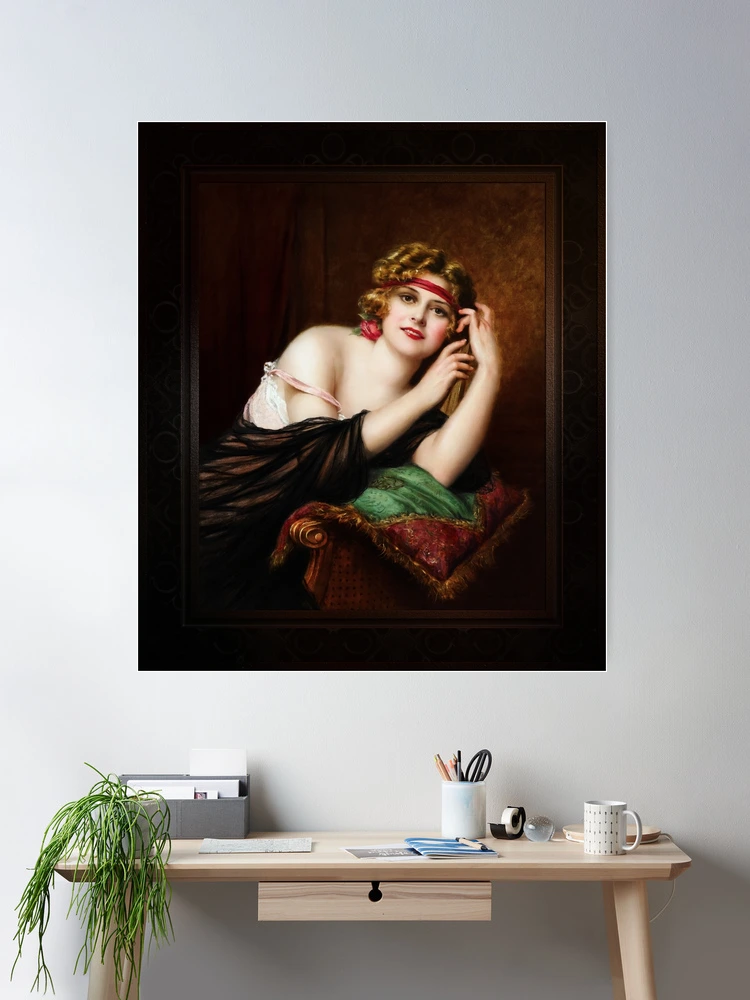
Tha an “Portrait of an Elegant Woman” is a remarkable painting created by the French artist François Martin-Kavel (1861 – 1931). The artwork is a stunning example of late 19th and early 20th-century French portraiture, capturing the sophistication and refinement of the era. Martin-Kavel was known for his detailed, romanticized depictions of women, agus tha am pìos seo mar eisgeachd. The artist portrays a woman who exudes grace, bòidhchead, agus Uachdalachd, showcasing his skill in rendering texture, Solas, and emotion in his subject.
Clàr-innse
Cuspair agus sgrìobhadh
The central subject of the portrait is a woman who is seated gracefully, her gaze directed slightly away from the viewer. Tha a suidheachadh fìnealta agus a giùlan eireachdail a’ dol air adhart sa bhad. Tha i na suidhe air cuisean le deagh sgeadachadh, le sòghail, aodach glas agus òir air a cur thairis air a h-uchd, a’ cur faireachdainn de opulence ris a’ cho-sgrìobhadh. Tha a gàirdean clì air a lùbadh gu socair, a' gabhail fois air a' chluasaig, fhad ‘s a tha a làmh dheas faisg air a ceann agus i ag atharrachadh an rioban dearg a tha a’ sgeadachadh a thonn, fionnadh. Tha an gluasad seo chan ann a-mhàin a’ toirt seachad mionaid de bhòidhchead sàmhach ach tha e cuideachd a’ soilleireachadh mion-fhiosrachadh ann am falt a’ chuspair, a tha air a pheantadh gu faiceallach gus meud agus inneach a thoirt dha.
Tha an abairt aice bog ach tarraingeach, le beagan, fios gàire a chuireas faireachdainn de dhìomhaireachd agus blàths ris an fhaireachdainn iomlan. Tha an eadar-dhealachadh seòlta eadar a craiceann bàn agus an cùl-raon dorcha a’ tarraing aire gu na feartan aice, a’ cur cuideam nas motha air comas an neach-ealain co-sheirm agus cothromachadh a chruthachadh na chuid obrach.
Aodach agus Accessories
Tha am boireannach san dealbh air a sgeadachadh ann an aodach sòghail, èideadh leth-fhollaiseach air a dhèanamh de stuthan grinn. Tha an t-aodach aice a’ toirt a-steach bog, rioban pinc a tha na laighe dìreach os cionn a gualainn agus a tha eadar-dhealaichte bhon dorchadas, aodach sruthadh air a chòmhdach thairis air a corp. Tha e coltach gu bheil an dreasa gu ìre far a’ ghualainn, stoidhle a bha fasanta aig deireadh an 19mh linn agus a tha a’ toirt a-mach mothachadh air ciall agus modhalachd. Tha an neach-ealain air aire chùramach a thoirt don aodach, a' glacadh a solas, inneach fìnealta mar a ghlacas e an solas, a chuidicheas le bhith a’ cur an cèill beairteas nan stuthan a thathar a’ cleachdadh.
Na goireasan aice, nam measg an rioban dearg na falt, thoir seachad dath soilleir ach beòthail an aghaidh tònaichean bog an deilbh. Tha cleachdadh a leithid de mhion-fhiosrachadh chan ann a-mhàin a’ toirt ìre a bharrachd de dhoimhneachd don dealbh ach bidh e cuideachd a’ tarraing aire gu coltas grinn a’ chuspair agus aire gu mion-fhiosrachadh.
Cùl-fhiosrachadh agus suidheachadh
Tha cùl-raon an deilbh dorcha agus gun fhiosta, a’ cleachdadh tònaichean ciùin donn is sepia. Bidh an roghainn cùl-fhiosrachaidh seo a’ soilleireachadh a’ chuspair, ga dhèanamh na mheadhan aig a’ phìos. Bidh e a’ cruthachadh eadar-dhealachadh làidir le dreach bàn na boireannaich, ag àrdachadh a làthaireachd anns an sgrìobhadh tuilleadh. Tha cho bog sa chùl-raon a’ nochdadh faireachdainn de shàmhchair agus dlùth-chàirdeas, a’ leigeil leis an neach-coimhead fòcas a-mhàin air suidheachadh eireachdail a’ bhoireannaich agus mion-fhiosrachadh toinnte a h-aodach.
While there are no elaborate objects or intricate scenery in the background, the artist uses the cushion and the fabric beneath the subject to convey a sense of luxury and comfort. The subtle gradients and shading in the background reflect the artist’s mastery of light and shadow, drawing the viewer’s attention toward the subject without overwhelming the scene with unnecessary detail.
Stoidhle agus innleachd
François Martin-Kavel’s style is characterized by his attention to detail and his ability to capture the softness and refinement of his subjects. The painting reflects the academic traditions of the time, with its focus on lifelike portrayal and an emphasis on elegance. The smooth brushwork, particularly in the rendering of the skin and fabric, a’ cruthachadh faireachdainn de fhìor-eòlas agus aig an aon àm a’ cumail faireachdainn romansach.
Tha cleachdadh solais Martin-Kavel cuideachd cudromach anns an dealbh. Bidh an eadar-chluich bog de sholas is dubhar a’ cur ri inneach an aodaich agus a’ chraicinn, a’ cruthachadh trì-mheudachd a bheir an dealbh beò. Bidh na faileasan timcheall figear a’ chuspair a’ cur doimhneachd ris a’ cho-sgrìobhadh, fhad ‘s a tha na seallaidhean seòlta air a h-aodann agus a làmhan a’ tarraing aire gu na feartan as fìnealta, a’ toirt sealladh dlùth don neach-coimhead air bòidhchead ciùin a’ bhoireannaich.
Tha faireachdainn iomlan an deilbh mar aon de eireachdas agus gràs. Tha e a’ toirt a-steach na h-ideals a thaobh boireannachd agus grinneas a chaidh a chomharrachadh aig toiseach na linne. The artist’s choice to depict the subject in a moment of quiet contemplation adds a layer of emotional depth, as if the woman is lost in thought or reflecting on something personal. This adds an element of intrigue, inviting the viewer to imagine her story and the world she inhabits.
Cuspair agus mood
The theme of the painting centers on beauty, eireachdas, agus boireannachd. It captures a moment of timeless grace, emphasizing the inner strength and delicate nature of the subject. The mood is tranquil, sàmhach, agus meòrachail, inviting the viewer to appreciate the quiet allure of the woman in the portrait. There is no urgency in her expression or posture; an àite sin, she embodies a sense of poise and confidence, which is enhanced by the artist’s careful rendering of her features and attire.
The use of muted tones in the background and the rich, Bidh aodach opulent air a bheulaibh cuideachd a’ cur ri cuspair iomlan grinneas agus sòghalachd. Thathas a’ toirt cuireadh don neach-coimhead chan ann a-mhàin a bhith a’ coimhead air bòidhchead a’ chuspair ach cuideachd a bhith a’ cur luach air sgil an neach-ealain ann a bhith a’ glacadh mionaid de bhòidhchead a tha a’ dol thairis air ùine..
Co-dhùnadh
François Martin-Kavel's “Portrait of an Elegant Woman” tha e na riochdachadh iongantach de dhealbhan Frangach deireadh na 19mh linn. Bheir maighstireachd teignigeach an neach-ealain agus aire gu mion-fhiosrachadh an cuspair beò, a’ comharrachadh bogachd an aodach, rèidh a 'chraicinn, agus mion-fhiosrachadh toinnte nan goireasan. Tha an dealbh a’ glacadh bòidhchead boireannachd gun ùine, cruthachadh aithris gràis, suidheachadh, agus cnuasachadh. Tron pheantadh seo, Tha Martin-Kavel a’ toirt cuireadh don neach-coimhead gu saoghal de bhòidhchead, far a bheil neart sàmhach agus seun fìnealta a’ chuspair a’ freagairt ri tarraing gun ùine.
Is e seo ath-riochdachadh seann mhaighstirean ealain didseatach ath-riochdachadh de ìomhaigh raon poblach.
Neach-ealain bi a thàinig bho Artnet.com
Bha François Martin-Kavel na pheantair gnè Frangach a tha ainmeil airson nan dealbhan air leth freagarrach de bhoireannaich òga breagha, a bhiodh e gu tric a ’sealltainn ann an èideadh coimheach no ann a bhith a’ cur sìos air suidheachadh lomnochd.
Gu tric bhiodh Martin-Kavel a ’peantadh nan dealbhan boireann aige ann an sgrìobhaidhean meadhanaichte a bha air an cuairteachadh le cùl-aodach dorcha, agus air a lasadh gu taigh-cluiche mar gum biodh le spotlight a ’deàrrsadh air a’ mhodail.
Eadhon ged a tha François ainmeil airson na dealbhan figear boireann aige, bha e ainmeil cuideachd airson obair ealain fhlùraichean agus dealbhan cruth-tìre; agus bha e na thaisbeanadh cunbhalach aig an Salon des Artistes Français.
Mar bhall den salon, fhuair e bonn airson na rinn e ann an ealain 1881.