

Portread o Anna Elizabeth Hansen
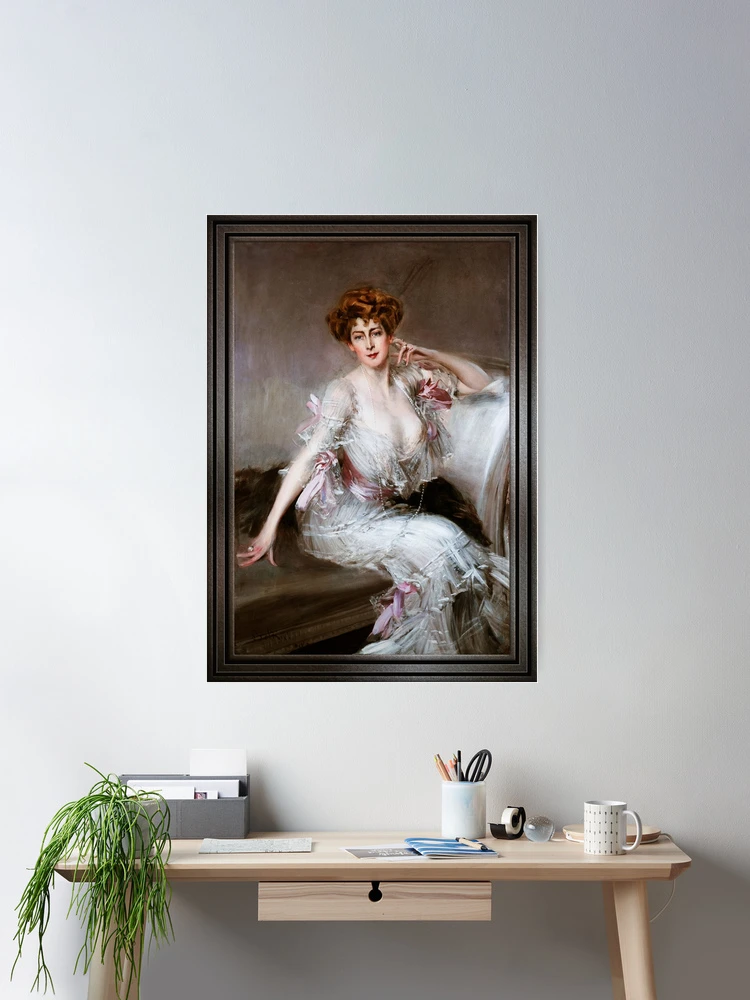
Mae'r “Portread gan Anna Elizabeth Hansen” yn gynrychiolaeth goeth o arddull a meistrolaeth yr arlunydd Eidalaidd enwog Giovanni Boldini (1842 – 1931). Mae'r portread hwn yn bortread cain o'r eisteddwr, Anna Elizabeth Hansen, wedi'i ddal mewn eiliad o fawredd parod. Boldini, yn adnabyddus am ei waith brwsio deinamig a'i allu i ennyn ceinder cymdeithas uchel yn ystod oes Belle Époque, yn trwytho'r gwaith hwn gyda'i ddull nodedig o ddal golau, gwead, a phersonoliaeth. Mae’r portread yn adlewyrchu nid yn unig esthetig ffasiynol y cyfnod ond hefyd yn datgelu prydferthwch coeth y gwrthrych a’i ras yng ngolwg yr artist..
Tabl Cynnwys
Y Testun a'r Cyfansoddiad
Testun y portread, Anna Elizabeth Hansen, sits in a serene and confident pose. Her body is positioned slightly to the left, though she gazes directly toward the viewer with an air of quiet composure and contemplation. The artist has skillfully captured her facial features, emphasizing her delicately drawn eyes and strong jawline, which exude a sense of both serenity and strength.
Her auburn hair is styled in a softly swept-up manner, with loose tendrils falling gracefully to frame her face, suggesting both order and a hint of natural disarray that softens her regal appearance. The sitter’s expression is calm and sophisticated, yet her subtle smile invites a deeper connection with the observer, giving the portrait an intimate and engaging quality.
The artist’s use of vibrant colors and fluid brushstrokes is evident in the luxurious gown Anna wears. Y ffrog, composed of pale white and ivory fabrics, flows effortlessly with the soft curves of her body. Boldini’s talent for depicting texture is on full display here, as he masterfully renders the fabric’s delicate sheen and the ethereal quality of the silken dress.
The gown is adorned with soft pink ribbon accents that add a touch of warmth and femininity to the composition, contrasting beautifully with the cool tones of her attire and the surrounding background. The soft blush of the ribbons, along with the drape of the gown, is emphasized by the sweeping, almost fluid motion of the artist’s brushstrokes.
Mae'r lleoliad y caiff Anna ei phortreadu ynddo yn syml ond eto'n soffistigedig. Nid oes unrhyw gefndir cymhleth na thynnu sylw; yn lle, diffinnir awyrgylch y portread gan un anniffiniedig, cefndir wedi'i gysgodi'n feddal, sy'n tynnu sylw at y pwnc heb gystadlu am ffocws. Mae'r dechneg hon yn gwella agosatrwydd y cyfansoddiad ac yn sicrhau bod syllu'r gwyliwr yn gwbl sefydlog ar y pwnc.
Arddull a Thechnegau Artistig
Roedd Giovanni Boldini yn adnabyddus am ei allu i ddal personoliaethau a nodweddion ei destunau trwy arddull fynegiannol a hylifol.. Mae ei bortreadau o ddiwedd y 19eg ganrif a dechrau’r 20fed ganrif yn cael eu dathlu am eu darluniau byw o elit ffasiynol y Belle Époque., gan gyfuno realaeth ag ansawdd bron yn freuddwydiol. Yn y portread hwn o Anna Elizabeth Hansen, Mae Boldini yn cyflogi'r cyflym, strôc ystumiol a ddaeth yn nod masnach iddo, gan ddal nid yn unig gyffelybiaeth ei destyn ond hefyd ei hanfod.
Un o nodweddion diffiniol Boldini yn ei waith yw ei ddefnydd o waith brws deinamig, sydd yma yn ennyn ymdeimlad o symudiad. Tra y mae y testyn yn eistedd mewn tawelwch, dull cyfansoddi, mae'n ymddangos bod trawiadau brwsh yr arlunydd yn awgrymu bywiogrwydd mewnol, creu ymdeimlad o hylifedd sy'n animeiddio'r cynfas.
Gwead y ffabrig, meddalwch y tonau cnawd, ac mae sgleinrwydd ei gemwaith i gyd yn cael eu cyfleu'n fanwl trwy'r trawiadau brwsh egnïol hyn, creu ymdeimlad o uniongyrchedd yn y gwaith. Boldini’s light touch in areas such as the sitter’s face and the flowing folds of her gown contrasts with his more deliberate strokes in detailing the pearls and the delicate flowers of her attire. This balance of energetic and controlled strokes is one of the hallmarks of Boldini’s portraiture, allowing him to convey both grace and motion.
Yn y portread, the interplay of light and shadow is another defining characteristic of Boldini’s work. The light falls gently on Anna Elizabeth Hansen’s face, casting soft shadows across her cheekbones and highlighting the contours of her face and neck. This nuanced play of light lends the portrait an almost three-dimensional quality, elevating the realism of the sitter while maintaining an element of the idealized.
Hwyliau ac Atmosffer
The mood of the painting is one of quiet elegance and sophistication, characteristic of the upper echelons of European society in the early 20th century. The sitter’s composed demeanor suggests an inner confidence, one that may be a reflection of her social status or simply an innate grace. Fodd bynnag, there is also a subtle play of emotions captured in her expression, which suggests a thoughtful, introspective personality. This delicate balance between poise and vulnerability is perhaps what gives the portrait its enduring power.
The neutral tones of the background further contribute to the sense of calm and refinement. Boldini’s masterful control over his palette ensures that the colors do not overwhelm but instead work together to create a harmonious atmosphere that allows the subject to shine. The soft contrasts between the light and dark areas, along with the graceful curves of the sitter’s posture and gown, give the composition a sense of timelessness. This portrait, like many of Boldini’s works, conveys a sense of fleeting beauty, one that captures a moment in time, yet feels eternal in its execution.
Nghasgliad
Mae'r “Portrait of Anna Elizabeth Hansen” is a striking example of Giovanni Boldini’s ability to combine fashion, personality, and a masterful technique into a single, evocative image. Through his dynamic use of brushstrokes and his exceptional rendering of light and texture, Boldini brings to life the elegance and refinement of his sitter. This portrait stands as a testament to the painter’s prowess and his sensitivity to the nuances of human emotion and social status. It is a work that not only captures the physical likeness of Anna Elizabeth Hansen but also reflects the spirit of an era defined by elegance and sophistication.
hwn Portread Of Anna Elizabeth Hansen is a retouched digital art old masters reproduction of a public domain image.
Bio artist yn deillio o Wikipedia.org
Ganed Boldini yn Ferrara, Eidal ym mis Rhagfyr 31, 1842, i fab peintiwr o bwnc crefyddol. Yn 1862 yn oed 20, aeth i Fflorens am chwe blynedd i astudio a dilyn paentio.
Dim ond yn anaml y byddai'n mynychu dosbarthiadau yn Academi'r Celfyddydau Cain, ond yn Fflorens, cwrdd ag arlunwyr realaidd eraill a elwir y Macchiioli, a oedd yn rhagflaenwyr Eidalaidd i Argraffiadaeth.
Gwelir eu dylanwad yn nhirweddau Boldini sy’n dangos ei ymateb digymell i fyd natur, er mai am ei bortreadau y daeth yn fwyaf adnabyddus
Symud i Lundain, Cafodd Boldini lwyddiant fel portreadwr. Cwblhaodd bortreadau o brif aelodau cymdeithas gan gynnwys y Fonesig Holland a Duges San Steffan.
Yn 1872 symudodd i Paris, lle y cyfarfu a daeth yn ffrindiau ag Edgar Degas. Ar ddiwedd y 19eg ganrif daeth yn arlunydd portreadau mwyaf ffasiynol ym Mharis, gydag arddull syfrdanol o beintio sy'n amlygu peth o ddylanwad Macchiioli a brio sy'n atgoffa rhywun o waith artistiaid iau, megis John Singer Sargent a Paul Helleu.
Yn 1889, enwebwyd ef yn gomisiynydd adran Eidalaidd y Paris Exposition, a derbyniodd y Légion d'honneur ar gyfer y penodiad hwn. Yn 1897 roedd ganddo arddangosfa unigol yn Ninas Efrog Newydd; a chymerodd ran hefyd yn Biennale Fenis yn 1895, 1903, 1905, a 1912.