

Retrat d'Anna Sten c1934
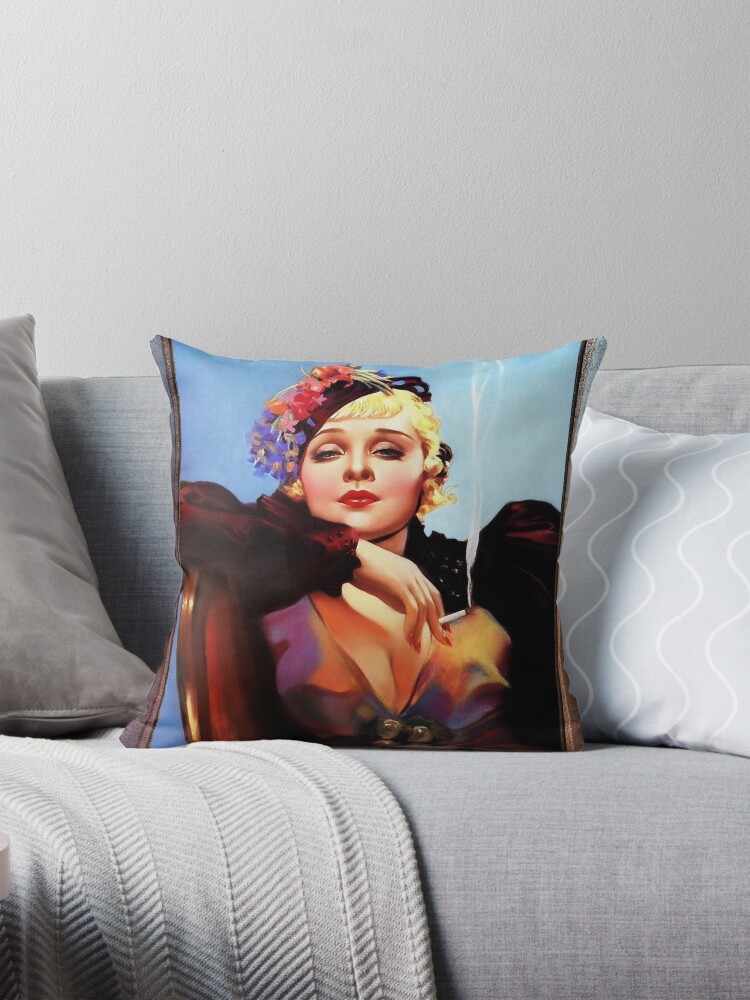
“Retrat d'Anna Sten c1934” és una peça notable del famós artista peruà Alberto Vargas, conegut pel seu icònic art pin-up i retrat. Nascut a 1896 i passant-hi 1982, Vargas es va convertir en sinònim de capturar la bellesa i l'atractiu de les dones en el seu estil distintiu. En aquesta obra d'art, il·lustra magistralment el seu enfocament característic del retrat, combinant l'elegància amb la sensualitat en una època definida pel glamur i el refinament. Aquesta peça, creat a 1934, interpreta l'actriu Anna Sten, una figura important en el panorama cinematogràfic de principis del segle XX.
Taula de continguts
Tema principal i estil
El tema del retrat és Anna Sten, una actriu d'origen soviètic que va assolir cert grau de fama a Hollywood durant la dècada de 1930. La representació de Sten en aquesta obra d'art reflecteix l'estil luxós però sensual pel qual Vargas és conegut. Mira l'espectador amb serena, expressió gairebé enigmàtica que suggereix tant confiança com atractiu tranquil. La seva postura està equilibrada, però hi ha una suavitat innegable en la seva presència, emfatitzat per la suau corba del seu coll i la col·locació del seu braç.
L'estil de la pintura reflecteix la reputació de Vargas per representar la forma humana amb corbes suaus i radiants, pell brillant. Hi ha un èmfasi particular en els trets facials del subjecte – des dels seus pòmuls perfectament esculpits fins als seus llavis delicats i els seus ulls penetrants. L'ús de la llum i l'ombra per part de Vargas és excepcional, creant profunditat i emfatitzant la textura de la seva pell i cabell. La suavitat dels colors contrasta amb la definició més nítida dels seus trets, destacant l'ull agut de l'artista per a l'equilibri i el detall.
El fons de la pintura és suau, degradat barrejat de blaus, una elecció de color que no només afegeix la calma general de la imatge, sinó que també fa que la figura de Sten destaqui com a punt focal. Vargas no desordena el fons amb detalls innecessaris, permetent a l'espectador centrar-se completament en la bellesa i l'elegància del subjecte.
Objectes i Materials
Anna Sten va vestida amb un sofisticat, vestit bordeus profund que s'envolta al voltant de les espatlles amb teixit fluid, que complementa el color dels seus llavis. El vestit està subtilment destacat amb una sèrie de patrons florals, especialment a la zona del coll, which enhance the romantic and classic nature of the portrait. The sheer delicacy of the fabric is captured by Vargas with extraordinary finesse, with the light reflecting off it in a way that showcases the texture and softness of the material.
In her hand, Sten holds a cigarette, the smoke trailing upwards in a faint wisp, further enhancing the mood of sophistication and elegance. The inclusion of the cigarette adds to the narrative of allure, subtly referencing the glamor of the 1930s film industry and the social norms of the time. Her other hand rests gently on the armrest of the chair, drawing attention to her nails, which are painted in a deep, vibrant red. This small yet significant detail conveys both attention to detail and an understanding of the subject’s social status — the polished nails hint at the high society to which Anna Sten belonged.
The smoke curling from the cigarette adds an ethereal, almost surreal element to the portrait, guiding the viewer’s eye upward, creating a dynamic contrast to the otherwise static, composed figure of the actress. This element adds to the overall fluidity of the composition, allowing the piece to breathe and remain lively despite its formal nature.
Terreny i Entorn
El terreny dins “Portrait of Anna Sten” is minimal, with Vargas choosing to focus entirely on the subject herself rather than the environment. The portrait does not present a traditional setting, such as a lavish interior or outdoor landscape. En canvi, the scene is stripped of superfluous elements, with Sten placed in a neutral space where her presence alone is the defining characteristic.
The chair upon which she rests appears to be of rich wood, though it is not overly detailed. Its presence is understated, serving primarily to provide the necessary support for the subject without distracting from the portrait’s main theme. The rest of the space around Sten is left to the viewer’s imagination, the abstract use of color in the background and soft lighting giving the impression of an intimate, ambient gairebé oníric.
Tema i estat d’ànim
The theme of the painting is one of refined beauty and captivating grace, capturing a moment of calm yet compelling confidence. The mood is one of quiet contemplation and poise, evoking a sense of nostalgia for a time when Hollywood icons like Anna Sten were at the height of their fame. Vargas’s rendering of the subject is both intimate and grandiose, suggesting the duality of being a public figure — admired by many, yet always somewhat removed in their personal space.
The color palette of the portrait further reinforces this mood. The cool tones in the background are balanced by the warm hues of Sten’s skin and the vibrant reds of her lips and nails, creating a harmony between the figure and the environment. The smoothness of her skin is paired with the soft, almost dreamlike texture of the background, highlighting Vargas’s ability to capture not just the outward beauty of his subjects, but also their inner radiance.
There is an underlying sense of sophistication in the composition, with the actress portrayed not as an object of desire, but as a woman of power and elegance. The inclusion of the cigarette and the regal nature of the attire communicate an air of confidence, while the softness of her expression adds depth and complexity to her character.
Conclusió
Alberto Vargas’s “Portrait of Anna Sten c1934” is a stunning example of portrait art that transcends simple representation, offering a glimpse into the refined elegance of a bygone era. The painting exudes a timeless quality, capturing the spirit of the 1930s with its glamorous yet understated style. Through his expert use of color, llum, i composició, Vargas has crafted an artwork that speaks not only to the subject’s outer beauty but also to the era’s cultural fascination with grace, sofisticació, and feminine power.
Portrait Of Anna Sten c1934 by Peruvian Artist Alberto Vargas (1896 – 1982); pel seu atractiu i exquisit art de noies pin-up i considerat el més famós del gènere d’artistes pin-up.
This is a portait of the beautiful blonde Ukranian born American actress Anna Sten (Anna Petrovna Fesak 1908 – 1993); in a pose from the pre-code era movie Nana, produced by Samuel Goldwyn.
Anna sitting in a high back chair resting her right arm on the back of the chair holding a lighted cigarette between her index and middle finger of her right hand.
She is wearing a wine red jacket (possibly a bolero jacket) and an evening dress with a large buckle sash that has 5 large metallic orbs.
On her head she is wearing a wine red hat that is adorned with blue, red and orange flowers; with the complete attire making her a picture of 1930s fashion elegance.
Portrait Of Anna Sten is a retouched digital art old masters reproduction of a public domain image.
Artista Bio
Informació a continuació de Wikipedia.org
Nascut a Arequipa, Perú, era fill del conegut fotògraf peruà Max T. Vargas. Alberto Vargas es va traslladar als Estats Units a 1916 després d'estudiar art a Europa, Zuric, i Ginebra abans de la Primera Guerra Mundial.
Mentre estava a Europa va conèixer la revista francesa La Vie Parisienne, amb una portada de Raphael Kirchner, que va dir que va influir molt en la seva obra.
La seva primera carrera a Nova York va incloure treballs com a artista per als Ziegfeld Follies i per a molts estudis de Hollywood. Ziegfeld va penjar la pintura d'Olive Thomas al teatre, i se la va considerar com una de les primeres noies de Vargas.
Vargas’ la peça més famosa del treball cinematogràfic va ser per al pòster del 1933 pel·lícula El pecat de Nora Moran, que mostra una Zita Johann gairebé nua en una postura de desesperació. El cartell és sovint anomenat com un dels millors cartells de pel·lícules que s'han fet mai.
Es va fer famós a la dècada de 1940 com a creador de les icòniques pin-ups de l'era de la Segona Guerra Mundial per a la revista Esquire coneguda com “Vargas Girls.” Entre 1940 i 1946 Vargas va produir 180 quadres per a la revista.
L'art nasal de molts avions nord-americans i aliats de la Segona Guerra Mundial es va inspirar i adaptar a partir d'aquests connectors d'Esquire, així com els de George Petty, i altres artistes.