

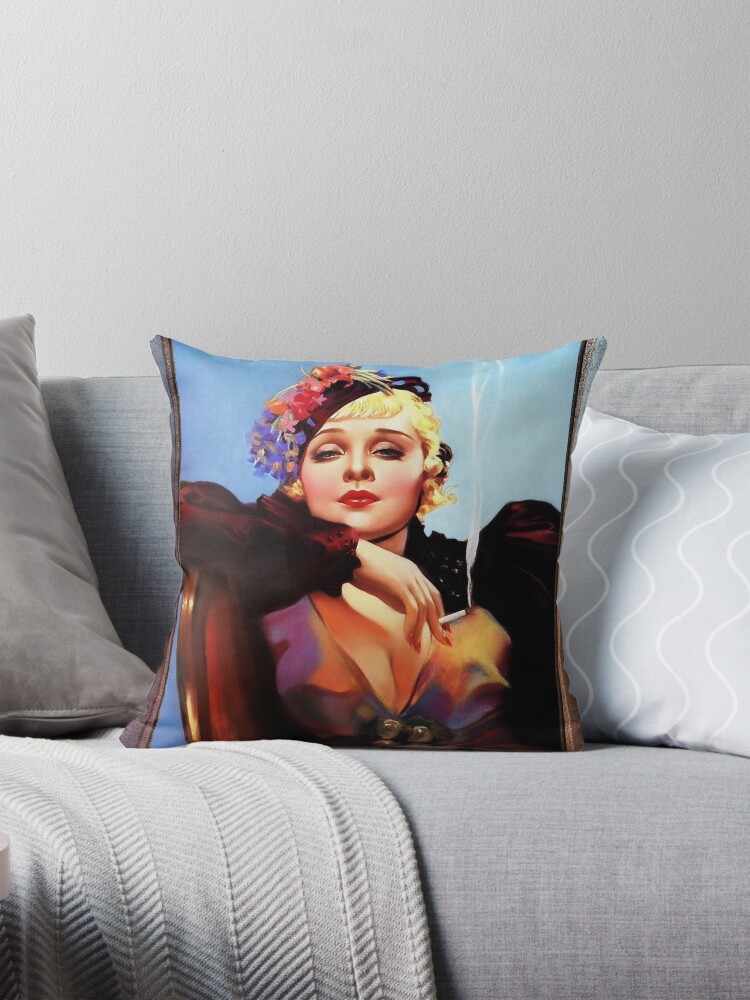
Portrait Of Anna Sten c1934
“Portrait Of Anna Sten c1934” is a remarkable piece by the celebrated Peruvian artist Alberto Vargas, known for his iconic pin-up art and portraiture. Nasceu em 1896 e passando 1982, Vargas became synonymous with capturing the beauty and allure of women in his distinctive style. Nesta obra de arte, he masterfully illustrates his signature approach to portraiture, blending elegance with sensuality in an era defined by glamour and refinement. Esta peça, criado em 1934, portrays the actress Anna Sten, an important figure in the early 20th century cinematic landscape.
Índice
Main Subject and Style
The subject of the portrait is Anna Sten, a Soviet-born actress who achieved some degree of fame in Hollywood during the 1930s. Sten’s portrayal in this artwork reflects the luxurious yet sensual style that Vargas is known for. She gazes at the viewer with a serene, almost enigmatic expression that suggests both confidence and quiet allure. Her posture is poised, yet there is an undeniable softness to her presence, emphasized by the gentle curve of her neck and the placement of her arm.
The style of the painting reflects Vargas’s reputation for depicting the human form with soft curves and radiant, pele brilhante. There is a particular emphasis on the subject’s facial features – from her perfectly sculpted cheekbones to her delicate lips and piercing eyes. Vargas’ use of light and shadow is exceptional, creating depth and emphasizing the texture of her skin and hair. The softness of the colors contrasts with the sharper definition of her features, highlighting the artist’s keen eye for balance and detail.
The background of the painting is a soft, blended gradient of blues, a color choice that not only adds to the overall calmness of the image but also makes the figure of Sten stand out as the focal point. Vargas does not clutter the background with unnecessary details, allowing the viewer to fully focus on the subject’s beauty and elegance.
Objetos e materiais
Anna Sten is dressed in a sophisticated, deep burgundy gown that wraps around her shoulders in flowing fabric, which complements the color of her lips. The gown is subtly highlighted with a series of floral patterns, particularly at the collar area, which enhance the romantic and classic nature of the portrait. The sheer delicacy of the fabric is captured by Vargas with extraordinary finesse, with the light reflecting off it in a way that showcases the texture and softness of the material.
In her hand, Sten holds a cigarette, the smoke trailing upwards in a faint wisp, further enhancing the mood of sophistication and elegance. The inclusion of the cigarette adds to the narrative of allure, subtly referencing the glamor of the 1930s film industry and the social norms of the time. Her other hand rests gently on the armrest of the chair, drawing attention to her nails, which are painted in a deep, vibrant red. This small yet significant detail conveys both attention to detail and an understanding of the subject’s social status — the polished nails hint at the high society to which Anna Sten belonged.
The smoke curling from the cigarette adds an ethereal, almost surreal element to the portrait, guiding the viewer’s eye upward, creating a dynamic contrast to the otherwise static, composed figure of the actress. This element adds to the overall fluidity of the composition, allowing the piece to breathe and remain lively despite its formal nature.
Terrain and Surroundings
O terreno entrou “Portrait of Anna Sten” is minimal, with Vargas choosing to focus entirely on the subject herself rather than the environment. The portrait does not present a traditional setting, such as a lavish interior or outdoor landscape. Em vez de, the scene is stripped of superfluous elements, with Sten placed in a neutral space where her presence alone is the defining characteristic.
The chair upon which she rests appears to be of rich wood, though it is not overly detailed. Its presence is understated, serving primarily to provide the necessary support for the subject without distracting from the portrait’s main theme. The rest of the space around Sten is left to the viewer’s imagination, the abstract use of color in the background and soft lighting giving the impression of an intimate, almost dreamlike atmosphere.
Tema e humor
The theme of the painting is one of refined beauty and captivating grace, capturing a moment of calm yet compelling confidence. The mood is one of quiet contemplation and poise, evoking a sense of nostalgia for a time when Hollywood icons like Anna Sten were at the height of their fame. Vargas’s rendering of the subject is both intimate and grandiose, suggesting the duality of being a public figure — admired by many, yet always somewhat removed in their personal space.
The color palette of the portrait further reinforces this mood. The cool tones in the background are balanced by the warm hues of Sten’s skin and the vibrant reds of her lips and nails, creating a harmony between the figure and the environment. The smoothness of her skin is paired with the soft, almost dreamlike texture of the background, highlighting Vargas’s ability to capture not just the outward beauty of his subjects, but also their inner radiance.
There is an underlying sense of sophistication in the composition, with the actress portrayed not as an object of desire, but as a woman of power and elegance. The inclusion of the cigarette and the regal nature of the attire communicate an air of confidence, while the softness of her expression adds depth and complexity to her character.
Conclusão
Alberto Vargas’s “Portrait of Anna Sten c1934” is a stunning example of portrait art that transcends simple representation, offering a glimpse into the refined elegance of a bygone era. The painting exudes a timeless quality, capturing the spirit of the 1930s with its glamorous yet understated style. Through his expert use of color, luz, e composição, Vargas has crafted an artwork that speaks not only to the subject’s outer beauty but also to the era’s cultural fascination with grace, sophistication, and feminine power.
Retrato de Anna Sten c1934, do artista peruano Alberto Vargas (1896 – 1982); por sua arte de pin-up atraente e requintada e considerada a mais famosa do gênero de artista pin-up.
Este é um retrato da bela atriz loira norte-americana nascida na Ucrânia, Anna Sten (Anna Petrovna Fesak 1908 – 1993); em uma pose da era pré-código do filme Nana, produzido por Samuel Goldwyn.
Anna sentada em uma cadeira de encosto alto, com o braço direito apoiado no encosto da cadeira, segurando um cigarro aceso entre o indicador e o dedo médio da mão direita.
Ela está vestindo uma jaqueta vinho tinto (possivelmente uma jaqueta bolero) e um vestido de noite com uma grande faixa de fivela que tem 5 grandes orbes metálicas.
Na cabeça, ela está usando um chapéu vermelho vinho adornado com azul, flores vermelhas e laranja; com o traje completo tornando-a uma imagem da elegância da moda dos anos 1930.
Retrato de Anna Sten é uma reprodução retocada dos antigos mestres de arte digital de uma imagem de domínio público.
Biografia do artista
Informações abaixo de Wikipedia.org
Nasceu em Arequipa, Peru, ele era filho do famoso fotógrafo peruano Max T. Vargas. Alberto Vargas mudou-se para os Estados Unidos em 1916 depois de estudar arte na Europa, Zurique, e Genebra antes da Primeira Guerra Mundial.
Enquanto ele estava na Europa, ele encontrou a revista francesa La Vie Parisienne, com capa de Raphael Kirchner, que ele disse ter sido uma grande influência em seu trabalho.
Seu início de carreira em Nova York incluiu trabalho como artista para o Ziegfeld Follies e para muitos estúdios de Hollywood. Ziegfeld pendurou sua pintura de Olive Thomas no teatro, e ela foi considerada uma das primeiras Vargas Girls.
Vargas’ o trabalho cinematográfico mais famoso foi para o pôster do 1933 filme O Pecado de Nora Moran, que mostra Zita Johann quase nua em uma pose de desespero. O pôster é frequentemente considerado um dos melhores pôsteres de filmes já feitos.
Ele se tornou amplamente conhecido na década de 1940 como o criador das icônicas pin-ups da era da Segunda Guerra Mundial para a revista Esquire, conhecidas como “Vargas Girls.” Entre 1940 e 1946 Vargas produziu 180 pinturas para a revista.
A arte do nariz de muitas aeronaves americanas e aliadas da Segunda Guerra Mundial foi inspirada e adaptada dessas pin-ups da Esquire, bem como as de George Petty, e outros artistas.