

Portrait of Elisabeth of Bavaria
In the painting titled Portrait of Elisabeth (Kaiserin Elisabeth von Österreich (1837 – 1898)) של בוואריה, קיסרית אוסטריה (c.1853) and Queen of Hungary by marriage to Emperor Franz Joseph I at the age of 16 years by Austrian painter Franz Schrotzberg (1811 – 1889), we encounter a breathtaking example of 19th-century European portraiture. This artwork, celebrated for its meticulous attention to detail and mastery of classical technique, captures Empress Elisabeth, affectionately known as Sisi, in a moment of regal grace and poise. הציור, done in oil on canvas, showcases the traditional styles of the era, while highlighting the delicate beauty and elegance of its subject.
תוכן העניינים
נושא והרכב
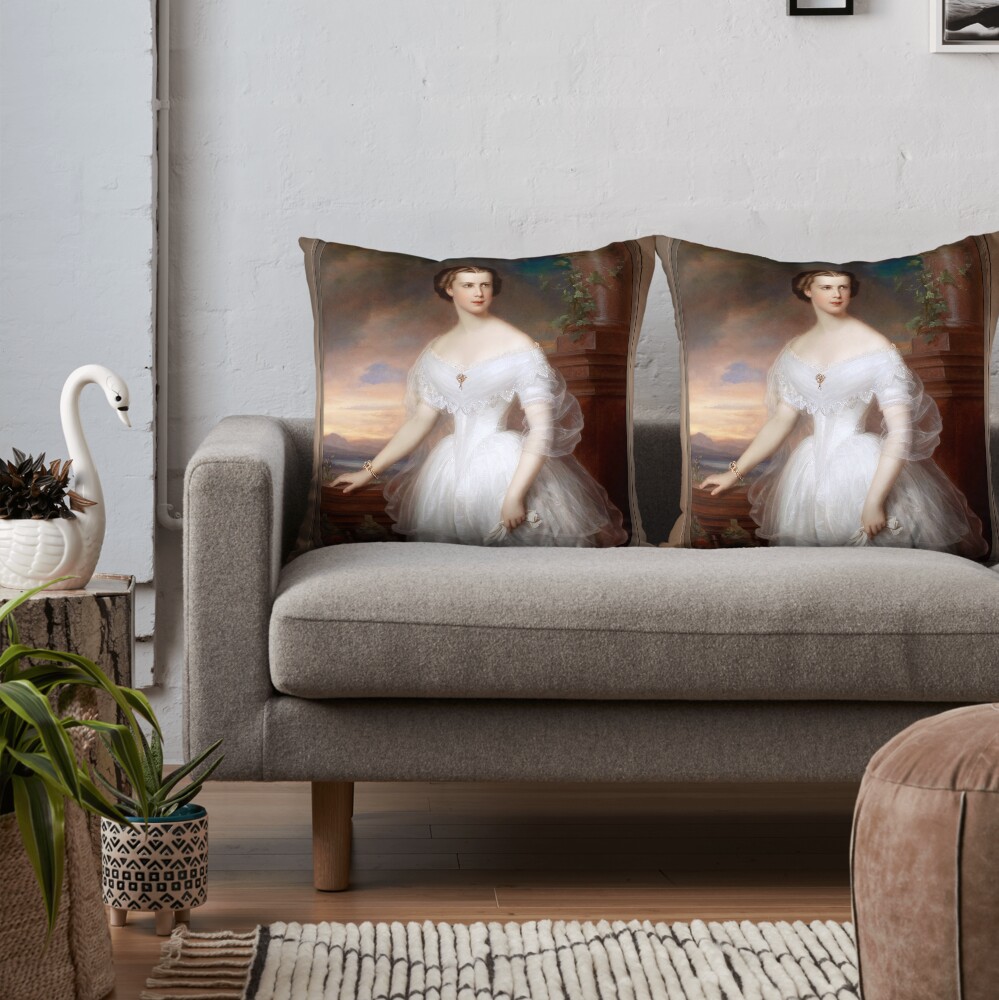
זֶה beautiful portrait presents Empress Elisabeth standing, slightly turned to the side, but with her gaze directed outward, subtly engaging the viewer. Elisabeth is dressed in an exquisite white gown, which gently flows from the waist down, accentuating the grandeur of her attire. The soft folds and ruffles of the fabric are meticulously painted, revealing the skillful technique used to depict the delicacy and movement of the material. The gown features intricate lace and ribbon detailing that speak to the refined fashion of the time. The translucent quality of the fabric adds a sense of lightness to the portrayal, enhancing the ethereal quality of the subject.
Elisabeth’s figure is delicate and slender, her posture exuding grace. The soft and rounded lines of her body are emphasized by the subtle, almost imperceptible shading in the painting, giving the figure a sense of lifelike three-dimensionality. הפנים שלה, framed by soft waves of dark hair, radiates a youthful elegance, with her expression conveying both serenity and confidence. הרך, light complexion of her skin contrasts with the darker tones of the background, further emphasizing her porcelain-like beauty.
Her attire is adorned with a pendant, which hangs gracefully around her neck, drawing attention to the elegance of the neckline. The juxtaposition of her simple yet lavish gown against the opulence of the gold pendant evokes the Empress’s status, combining simplicity with nobility. ביד אחת, she holds a pair of white gloves, which further adds a sense of refined sophistication to the portrait. The overall composition, בעוד רשמי, is not stiff, but rather exudes an air of effortless grace.
רקע וסביבה
רקע הציור מוסיף לדיוקן תחושת פאר רומנטית. רך, נוף מטושטש משתרע על פני האופק, עם רמזים להרים רחוקים ורוגע, שמים אינסופיים לכאורה. צבעי השמיים עוברים מכחול רך לכתום חמים, מרמז על שחר או בין ערביים. החם הזה, נראה שאור טבעי מאיר את דמותה של אליזבת, מטיל זוהר עדין המדגיש את תווי פניה העדינים. המשחק העדין של אור וצל לאורך היצירה תורם לתחושת הריאליזם והעומק הכוללת.
בחזית, הנושא עומד ליד מעקה אבן, מעוטר בקיסוס זוחל, יצירת עדין, מסגרת טבעית סביב הקיסרית. עבודת האבן של המעקה, אמנם לא מפורט בגלוי, מספק ניגוד רך לאלמנטים העדינים יותר של הקומפוזיציה, כמו השמלה של אליזבת והירוק. The ivy symbolically ties the painting to nature, suggesting the harmony between the Empress’s beauty and the world she inhabits.
Mood and Tone
The mood of the portrait is one of serene dignity. Empress Elisabeth is portrayed not only as a monarch but as a woman of grace and poise, with the softness of her expression and posture indicating a quiet strength. The painting captures a moment in time where her regal status and personal elegance are harmoniously intertwined. לוח הצבעים, dominated by soft pastels and warm hues, reinforces this sense of tranquility, with the contrast of darker tones in the background adding a layer of depth and gravitas. The overall tone of the portrait is one of timeless beauty, with an emphasis on the subject’s aristocratic elegance rather than on any external political or emotional drama.
Schrotzberg’s use of light and shadow, particularly around Elisabeth’s face and gown, enhances the realism of the work, but there is an almost dreamlike quality to the way the subject is presented. השימוש ברך, diffused light creates a sense of intimacy, as though the viewer is being granted a private glimpse of the Empress. Despite her formal attire, the delicate presentation suggests an underlying vulnerability beneath the majestic exterior, making the portrait feel personal and relatable.
סגנון וטכניקה
Schrotzberg, known for his mastery in portrait painting, uses classical techniques to achieve a sense of realism while infusing the composition with a certain romanticism. The artist’s technique in rendering the gown is remarkable, with its intricate lace details and the soft folds of fabric that seem to move in the air. The facial features of the Empress are painted with great precision, capturing the subtleties of her expression with a soft yet firm hand. Schrotzberg’s skill in using light to bring out the textures of skin, בַּד, and background further enhances the depth and realism of the piece.
The artist’s brushwork is delicate yet confident, with a focus on smooth transitions between light and shadow. The palette is carefully selected, using shades of white, קרֶם, and soft pastels for the gown, contrasted against the deeper, more muted tones in the background. The treatment of the skin tones is soft and lifelike, נותן לדמות זוהר שנראה כמעט אוורירי.
הקומפוזיציה המאוזנת של הציור, עם אליזבת ממוקמת במרכז, מזמין את הצופה להתפעל הן מהדמות והן מהפרטים ברקע. הגישה של שרוצברג מכבדת את מעמדה המלכותי של הקיסרית וגם רגישה לאלגנטיות האישית שלה., יצירת ייצוג הרמוני הן של הפרסונה הציבורית והן של החן הפנימי שלה.
מַסְקָנָה
ה Portrait of Elisabeth of Bavaria, קיסרית אוסטריה מאת פרנץ שרוצברג היא דוגמה נצחית לציור דיוקנאות מהמאה ה-19, לוכדת גם את הקומה המלכותית וגם את האלגנטיות האישית של אחד המלכים המפורסמים בהיסטוריה. באמצעות תשומת לב קפדנית לפרטים, שימוש מופתי באור ובצל, והתמקדות ביופי טבעי, שרוצברג מעלה את נושאו לדמות של חסד ועידון מתמשכים. הדיוקן נותר עדות נוקבת למורשת המתמשכת של הקיסרית, preserving not only her beauty but also the grandeur of the era she represented.
זהו רפרודוקציה של אמנות דיגיטלית מחודשת של אמן ישן של תמונה ברשות הרבים הזמינה בתור א הדפסת קנבס באינטרנט.
אמן ביו שמקורו Wikipedia.org
Franz was a successful portrait painter (though he did not start out as one) of the mid 19th century, who started his artistic studies at the Vienna Academy of Fine Arts in Austria from 1825 ל 1831; ובעודו שם, was given a scholarship and was awarded three prizes for his artistic accomplishments.
כשהוא היה 19 years of age he became friends with the Slovakian landscape painter Károly Markó the Elder (1791 – 1860), who had a major influence over Franz’s artistic style. ובתוך 1832 would make his first exhibitions with a series of portraits and mythological scenes.
ב 1837 he took an extended trip to Italy to study; and after five years there, went on to Belgium in 1842; ובתוך 1843 became a member of the Academy of Fine Arts and would also visit Paris and London.
By the time he was 39 בן שנים פרנץ הפך לאחת מציירות הדיוקנאות המבוקשות ביותר בווינה אוסטריה; והיה גם צייר בני האצולה, וכן מורה שנתנה הדרכה באקדמיה.