

Portread o Hortense Mancini Duchesse de Mazarin, fel Aphrodite
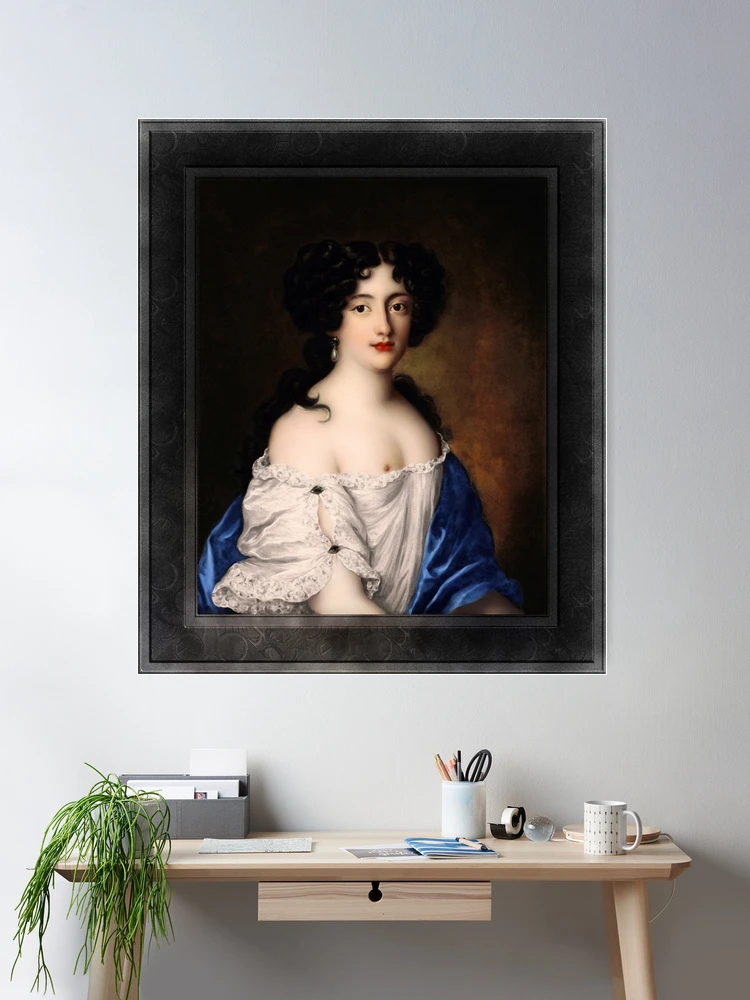
Jacob Ferdinand Voet‘s (1639 – 1689) “Portread o Hortense Mancini (1646 – 1699), Duges Mazarin, fel Aphrodite,” creu o gwmpas 1675, presents a striking and graceful depiction of Hortense Mancini, one of the most celebrated women of her time. Born into the illustrious Mancini family, she was the niece of Cardinal Mazarin, and her life was marked by intrigue, gyfoeth, a harddwch. Voet’s painting exemplifies the opulence of the late 17th century, particularly the French court’s fascination with classical mythology, combining both her aristocratic status and mythological grandeur. Hortense Mancini is portrayed as Aphrodite, the goddess of love, harddwch, and desire, a figure whose essence permeates the entire composition.
Tabl Cynnwys
Pwnc a Chyfansoddiad
The central figure of the painting, Hortense Mancini, is the epitome of refined elegance. She is depicted with soft yet assertive poise, her gaze meeting the viewer with a sense of subtle confidence. Voet carefully captures her beauty, infusing the painting with a sense of nobility and mythological grandeur. Hortense’s classical features, including a high forehead, gwefusau llawn, and well-shaped eyes, are meticulously rendered, adding an ethereal quality to the portrait.
Ei gwisg, a striking combination of rich fabrics, is an immediate visual focus. The loose, partially draped gown, made from a shimmering white material, is held together by delicate clasps, creating an illusion of effortless luxury. The gown’s neckline is open and flowing, its folds evoking the natural movement of fabric, which draws attention to the softness of the skin and the graceful contours of her body. The deep blue robe, draped over her shoulders and cascading down her back, contrasts beautifully with the white dress. It serves to highlight the goddess-like radiance that Hortense exudes, enhancing her role as Aphrodite.
Aphrodite is often depicted with flowing, gwallt swmpus, and here, Voet adheres to this tradition. Hortense’s hair, dark and luxuriant, is styled in soft waves, flowing over her shoulders and further emphasizing her divine femininity. Her curls, meticulously painted, frame her face in a way that enhances the sensuality and softness of her expression.
To further emphasize her connection with the classical goddess, Voet includes subtle elements of the mythological world. A delicate pearl earring is visible in her ear, symbolizing both her wealth and divine status, while her hands rest gently on her gown, one hand slightly raised as though inviting the viewer into her world of beauty. These small yet significant details further elevate Hortense from a mere aristocratic subject to a symbolic embodiment of love and beauty.
Y Cefndir a'r Gosodiad
The background of the portrait remains intentionally subdued, with deep, dark hues that allow the figure of Hortense to emerge almost from the shadows. The rich, velvety tones of the backdrop are characteristic of many Flemish and Baroque portraits of the time. The lack of a clear, detailed setting allows the viewer to focus entirely on the figure of Hortense and her symbolic role as Aphrodite. The subtle interplay of light and shadow helps create a sense of depth, with light subtly illuminating the folds of her gown and her radiant face, enhancing her almost otherworldly presence.
While the background remains neutral, the overall composition evokes the idealized and mythological, much like the romanticized depictions of classical goddesses. Voet, much like other artists of his time, understood that portraits of aristocratic women were often not just representations of physical beauty but also reflections of their power, statws, and symbolic roles in society.
Arddull a Thechneg Artistig
Voet’s style reflects the Baroque tradition, with a focus on opulence, Manylion cywrain, and emotional intensity. His rendering of texture, particularly in the depiction of fabrics, wallt, and skin, is masterful. The play of light on the different surfaces—glossy pearls, velvety fabric, and soft flesh—demonstrates his exceptional skill in capturing realism while still maintaining an idealized, almost dreamlike quality in the subject’s presentation.
Y defnydd o feddal, blended brushstrokes creates a seamless transition between light and shadow, contributing to the overall sense of harmony in the composition. Voet’s technique is refined and meticulous, particularly evident in the way he captures the luminous quality of Hortense’s complexion, which contrasts beautifully with the darker hues of the background. The detail in her gown, especially the delicate folds, highlights the artist’s attention to the tactile quality of fabric, an important element in portraits from the Baroque period, where the representation of wealth was a key factor in symbolizing nobility.
Naws a Thema
The mood of the portrait is one of quiet dignity, a delicate blend of sensuality and power. Hortense’s pose and expression suggest both vulnerability and control, inviting the viewer into a world where beauty transcends the ordinary. By casting her as Aphrodite, Voet elevates her image from that of an aristocratic woman to a figure of mythological significance. The themes of love, harddwch, and divine grace are interwoven throughout the painting, as Voet uses classical references to elevate the subject beyond her earthly role.
The portrait also suggests the complex and often contradictory nature of Hortense’s life. While she was celebrated for her beauty and status, her life was also marked by personal and political struggles. As Aphrodite, she becomes an idealized symbol of love and beauty, but this idealization also creates a distance from the complexities of her reality. The contrast between the idealized image and her actual life serves to deepen the emotional resonance of the painting, as it highlights the tension between appearance and reality that is often present in aristocratic portraiture.
Nghasgliad
Jacob Ferdinand Voet’s “Portrait of Hortense Mancini as Aphrodite” is a stunning work that combines meticulous technical skill with deep symbolic meaning. Through the lens of classical mythology, Voet transforms Hortense into a timeless figure of beauty and love, elevating her to a status beyond the earthly realm. The rich textures, the dramatic use of light and shadow, and the serene yet powerful expression on Hortense’s face all contribute to a portrait that speaks to both her personal elegance and her mythological significance. It remains an exemplary piece of 17th-century portraiture, combining the baroque fascination with mythological symbolism with the personal grandeur of an aristocratic subject.
Cefndir Gwaith Celf
Dyma bortread hardd o Hortense Mancini (Ffrangeg) neu Ortensia Mancini (Eidaleg), nith y Cardinal Mazarin o'r Eidal (1602 – 1661), diplomydd, gwleidydd, a phrif weinidog Ffrainc i Frenhinoedd Ffrainc Louis XIII a Louis XIV o 1642 hyd ei farwolaeth yn 1661.
Hi oedd meistres Siarl II, Brenin Lloegr, Alban, ac Iwerddon; a hi oedd y bedwaredd o'r pum chwaer enwog Mancini, sydd ynghyd â dwy o'u cefndryd Martinozzi benywaidd, yn llys Brenin Louis XIV o Ffrainc fel y Mazarinettes.
Yn y portread hwn mae hi i fod i gynrychioli'r Dduwies Roegaidd Aphrodite, y Dduwies sy'n gysylltiedig â chariad,pleser, angerdd, harddwch a chenhedlu.
Mae hwn yn atgynhyrchiad hen feistri celf ddigidol wedi'i atgynhyrchu o ddelwedd parth cyhoeddus.
Bio artist trwy garedigrwydd Wikipedia.org
Ychydig o fanylion am fywyd cynnar Voet, hyfforddiant a gyrfa wedi'u cadw. Ganed Voet yn Antwerp yn fab i'r arlunydd Elias Voet. Yr oedd yn un o'r pymtheg o blant; symudodd ei frawd hŷn Carlo i Amsterdam a phriodi yn 1661 merch i'r cyfoethog Joan Coymans a Sophia Trip. Gadawodd Jacob ei fro enedigol Antwerp a theithio i Rufain lle roedd yn byw 1663 i 1680.
Daeth Voet yn aelod o'r Bentvueghels, cymdeithas o artistiaid Iseldiraidd a Ffleminaidd yn bennaf sy'n weithgar yn Rhufain. Tynnodd Voet lun mewn siarcol o holl aelodau'r Bentvueghels ar wal gwyngalchog tafarn yn Rhufain a oedd yn fan cyfarfod poblogaidd i'r grŵp hwn. Roedd y llun yn ddigon gwerthfawr i'w arbed pan fyddai'r waliau'n cael eu hailbeintio.
Yn Rhufain roedd galw mawr am sgiliau Voet fel peintiwr portreadau yn llys y Pab a chan uchelwyr y Rhufeiniaid., gan gynnwys teuluoedd amlwg Colonna ac Odescalchi. Cafodd ei noddi gan Christina, Brenhines Sweden, yr hwn oedd y pryd hyny yn preswylio yn Rhufain. Peintiodd ei phortread yn ogystal â phortread ei ffrind, Cardinal Azzolino. Comisiynodd Saeson ac Ewropeaid eraill a ymwelodd â Rhufain ar eu Taith Fawr hefyd bortreadau gan Voet.
Yn 1671 – 1672 Derbyniodd Voet gomisiwn gan Cardinal Chigi i beintio portreadau o fenyw ifanc a oedd yn amlwg yn y gymdeithas Rufeinig. Creodd gyfres gyntaf o 37 portreadau o ferched mwyaf hudolus Rhufain ('Oriel o Harddwch') rhwng 1672 a 1678 ar gyfer ystafell fwyta Cardinal Chigi yn ei balas yn Ariccia (ym mryniau Alban y tu allan i Rufain). Yn ddiweddarach copïodd a hyd yn oed ehangu'r gyfres ar gyfer teuluoedd bonheddig Rhufeinig ac Eidalaidd eraill. Dechreuodd hyn gynddaredd ar gyfer portreadau o ferched ifanc yn Rhufain a thramor.